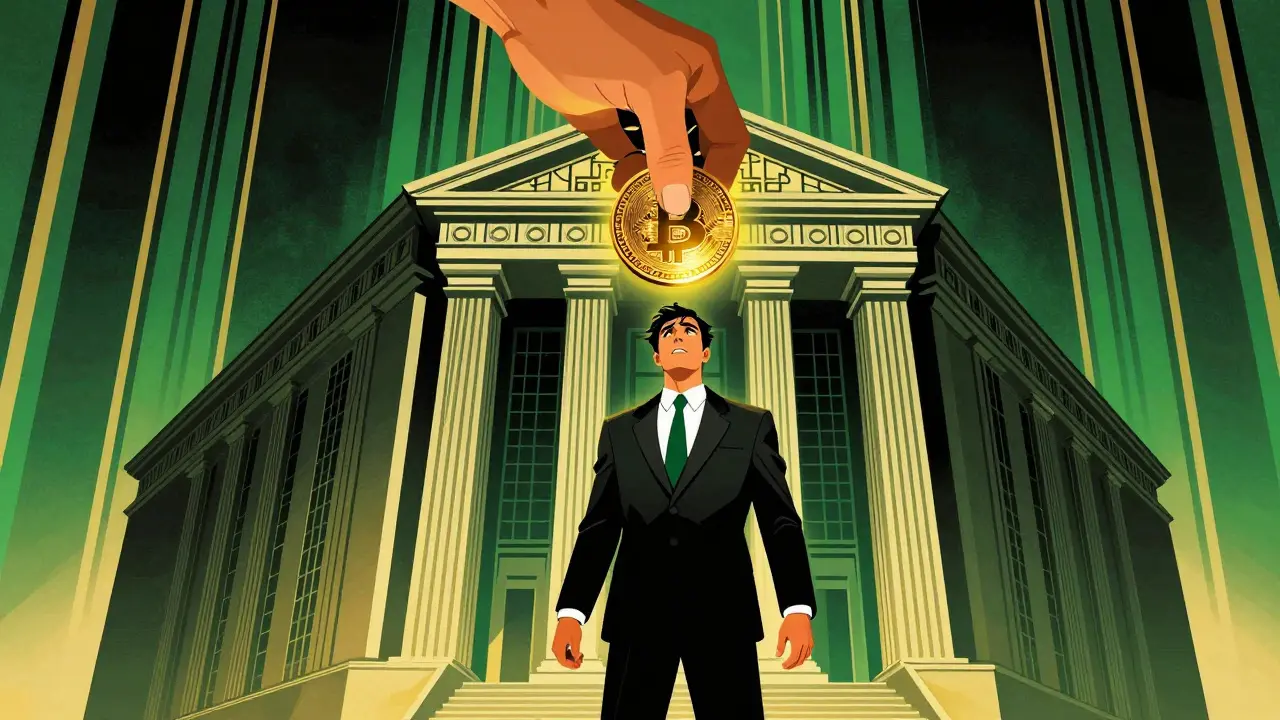
Imagine buying a digital asset that everyone talks about, only to find out your bank account gets frozen the moment you try to cash out. This is the daily reality for hundreds of thousands of people in Bangladesh, a country where owning cryptocurrency like Bitcoin is not explicitly illegal by statute, but using it violates multiple financial laws, creating a dangerous legal gray zone. While you might think simply holding Bitcoin in a wallet is safe, the enforcement landscape here is complex and aggressive. The government doesn't just ignore crypto; they actively hunt down transactions that touch foreign exchange or money laundering statutes.
If you are looking at the headlines from July 2026, the stance remains unchanged: strict prohibition. But what does that actually mean for you? Are you going to jail for having 0.1 Bitcoin? Or will you just lose your money? To understand the risk, we have to look past the vague warnings and into the specific laws, recent arrests, and the underground mechanisms people use to trade anyway.
The Regulatory Framework: Why It's Banned
The confusion starts with the fact that there is no single law titled "The Crypto Ban Act." Instead, the prohibition is built on a patchwork of older financial regulations enforced by the Bangladesh Bank (the central bank) and the Bangladesh Financial Intelligence Unit (BFIU). The timeline began with a warning in December 2014, followed by a stronger circular in February 2016. That 2016 circular stated that using cryptocurrencies could violate the Foreign Exchange Regulation Act of 1947 and the Money Laundering Prevention Act of 2012.
In 2017, the Bangladesh Bank declared that cryptocurrencies "are not legal tender" and strictly prohibited their use as a medium of exchange, store of value, or investment vehicle. Even though no new legislation was passed to criminalize mere ownership, the central bank’s interpretation makes any transaction involving crypto effectively illegal if it involves converting Taka to dollars or vice versa without state approval.
Current Governor Dr. Abdur Rouf Talukder has maintained this position since taking office in May 2022, issuing regular warnings approximately every quarter. The logic, according to the central bank's 2025 Financial Stability Report, is that crypto adoption threatens monetary policy implementation, especially given that remittances constitute 6.1% of GDP (about $21.1 billion annually). They fear capital flight and loss of control over the currency supply.
Legal Consequences: Fines, Jail Time, and Asset Seizure
So, what happens if you get caught? Since there is no specific "crypto crime" statute, authorities charge traders under ancillary laws. The primary tool is the Money Laundering Prevention Act (amended in 2012 and 2015). Section 6 of this act criminalizes transactions involving proceeds from illegal activities. Authorities interpret cryptocurrency transactions as inherently suspicious or linked to illegal activities because they bypass regulated banking channels.
- Imprisonment: Penalties can range from 1 to 10 years in prison depending on the severity and volume of transactions deemed to be money laundering.
- Fines: Fines can range from 10,000 to 1,000,000 Bangladeshi Taka (BDT), though in high-value cases, the seized assets themselves are often forfeited entirely.
- Asset Seizure: This is the most common immediate consequence. Police seize phones, laptops, hard drives, and any physical wallets containing private keys.
Consider the case of Mohammad Ali, a Dhaka-based trader. In February 2023, authorities seized 127 Bitcoin from him. At the time, this was worth approximately 1.3 billion BDT ($12.1 million). He wasn't just fined; his entire portfolio was confiscated. Another example occurred in July 2022, when the Criminal Investigation Department (CID) arrested 14 individuals in Dhaka for operating an unlicensed cryptocurrency exchange. These individuals faced charges related to operating a business without a license and facilitating money laundering, with total transactions amounting to $2.3 million.
The Legal Gray Zone: Ownership vs. Trading
Here is where it gets tricky. In November 2021, the Bangladesh Bank formally communicated to the CID in Case No. 1147/2021 that "trading, owning cryptocurrency [is] not illegal" by itself. Legal expert Barrister Rokibul Hasan describes this as a "dangerous legal limbo." You aren't breaking the law just by having Bitcoin in a cold storage wallet sitting in your drawer. However, the moment you try to convert that Bitcoin into Taka through a bank transfer, you trigger the Foreign Exchange Regulation Act.
This contradiction means users risk prosecution not for owning the asset, but for the method of moving funds. If you receive Taka from a local buyer and deposit it into your bank account, the bank’s automated systems may flag the source of funds. If the bank reports this to the BFIU, you become a suspect in a potential money laundering investigation. The burden of proof often shifts to you to explain why you received money from an unregulated peer-to-peer network.

How Enforcement Works in Practice
You might wonder how they catch small-time traders. They don't need to hack the blockchain; they just watch the banks. The Bangladesh Bank monitors international card transactions through the Bangladesh Automated Clearing House (BACH). In Q4 2024 alone, 127 suspicious crypto-related transactions were flagged.
Furthermore, mobile financial services (MFS) like bKash and Nagad are heavily monitored. In 2024, these providers reported blocking 2,843 accounts for suspected crypto activity. If you frequently send large amounts of Taka to unknown individuals who then send you USDT (Tether) via P2P platforms, your bKash account will likely be frozen. According to a May 2025 survey by a Dhaka-based fintech researcher, 68% of 350 surveyed crypto users reported having at least one bank or MFS account frozen in 2024.
University students are also not immune. In May 2024, seven university students in Chittagong were investigated by the BFIU for facilitating $85,000 in monthly cryptocurrency transactions through peer-to-peer networks. They weren't running a massive exchange; they were just helping friends and family convert funds. Yet, they faced serious legal scrutiny.
The Underground Market: Risks Beyond Law
Despite the bans, an estimated 500,000 to 700,000 Bangladeshis actively participate in crypto trading, according to a 2024 report by the Blockchain Association of Bangladesh. How do they do it? They rely on underground channels that carry significant non-legal risks.
| Method | Risk Level | Cost/Fee | Legal Exposure |
|---|---|---|---|
| Local Agents (OTC) | High | 3-5% Commission | Direct link to bank transfers; high freeze risk |
| P2P Platforms (via VPN) | Medium-High | Platform fees + spread | IP masking helps, but payment trails remain |
| Crypto ATMs | Very High | 8-12% Fees | Physical presence required; easy to track |
| Gift Cards/Vouchers | Medium | Variable discount | Harder to trace, but limited liquidity |
The most common method is using local agents who charge 3-5% commissions for converting Tether (USDT) to Bangladeshi Taka. This is extremely risky. In June 2024, 23 traders lost approximately $350,000 when an agent named 'Sohel Rana' disappeared after collecting Taka payments. Because these transactions are illegal, victims cannot go to the police. They have no recourse. This is the hidden cost of the ban: you trade state protection for market access.
Apps like Binance and KuCoin remain available on the Google Play Store in Bangladesh, with Sensor Tower data from March 2025 showing 150,000 to 200,000 active monthly users. However, accessing them requires a Virtual Private Network (VPN) to bypass internet service provider blocks, adding another layer of technical complexity and potential detection.
Taxation: The Unspoken Cost
While the government bans crypto, the National Board of Revenue (NBR) still wants its share. There are no specific crypto tax regulations, but Commissioner Md. Moniruzzaman confirmed in a February 15, 2025 press briefing that profits are subject to the general Income Tax Ordinance of 1984.
This means:
- Corporate Tax: If you trade through a registered company, profits are taxed at the standard 25% rate.
- Personal Income Tax: For individuals, profits are added to annual income and taxed at the marginal rate, which can reach 30% for higher earners.
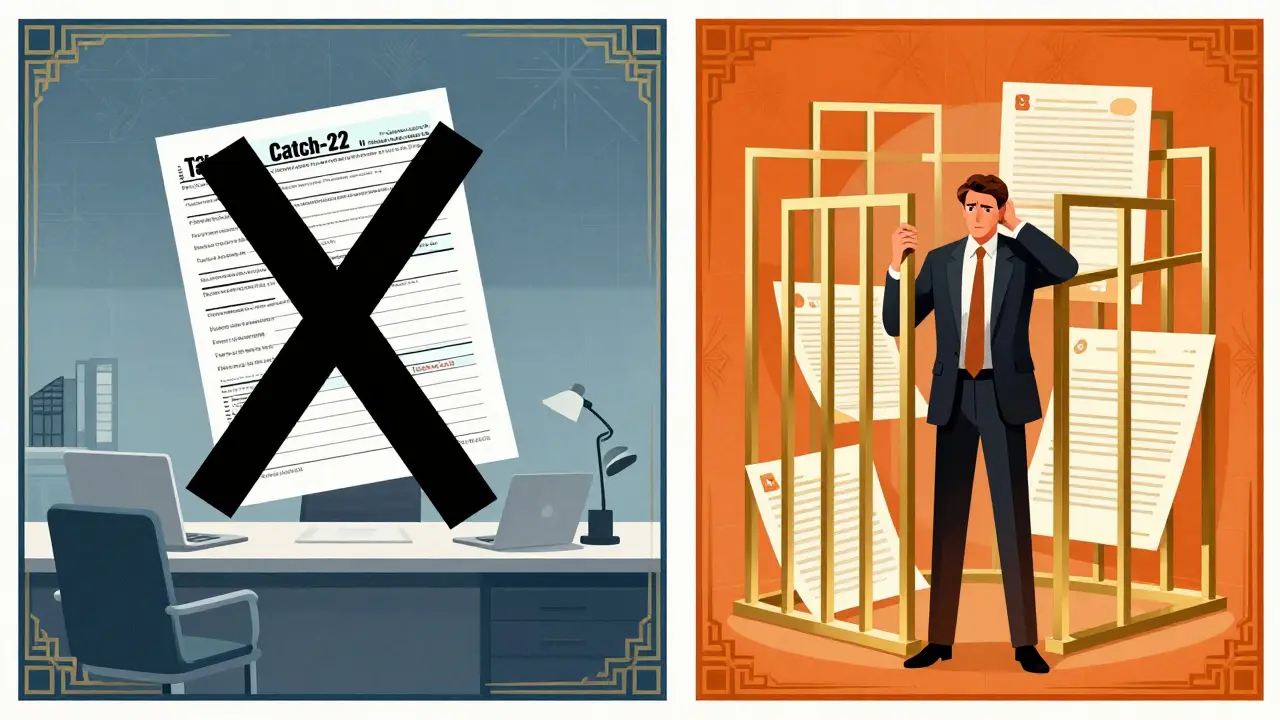
The problem? You can't legally declare these earnings because the underlying activity is prohibited. If you declare the income, you admit to violating the Foreign Exchange Regulation Act. If you don't declare it, you face tax evasion charges. It is a catch-22 designed to squeeze compliance from those willing to navigate the gray areas.
Regional Context: Why Bangladesh Lags Behind
It is worth noting how isolated Bangladesh's stance is compared to neighbors. India implemented a 30% tax on crypto gains while allowing trading, resulting in 15 million active users in 2025. Pakistan began exploring Bitcoin reserves in early 2025. Sri Lanka drafted a regulatory framework in late 2024. Meanwhile, Bangladesh maintains "strict prohibition with no shift," according to the June 2025 CoinDCX Crypto Currents Newsletter.
This isolation costs the country. Dr. B M Mainul Hossain, Professor of Finance at Dhaka University, argued in his April 2024 paper that the ban costs Bangladesh approximately $150 million annually in potential tax revenue and stifles blockchain innovation. The government acknowledges the technology's potential-the 2020 National Blockchain Strategy recognizes blockchain for digital transformation-but explicitly excludes cryptocurrencies. The central bank's Innovation Hub even launched a sandbox for non-crypto blockchain applications in January 2025, suggesting a future distinction between the technology and the token.
Future Outlook and Advice
Finance Minister Abul Hassan Mahmood Ali stated in a March 10, 2025 parliamentary session that "there are no plans to reconsider the cryptocurrency ban." Despite pressure from tech entrepreneurs and citizens reliant on remittances, the political will to change is absent. The focus remains on financial stability and controlling capital flight.
For anyone considering trading Bitcoin in Bangladesh, the advice is clear: proceed with extreme caution. Do not use your primary bank accounts for crypto-related transfers. Be aware that local agents are a major point of failure. Understand that while owning Bitcoin isn't a crime, converting it to Taka is where the legal hammer falls. The system is designed to make participation difficult and risky, ensuring that only the most determined-and potentially reckless-individuals engage in the market.
Is it illegal to own Bitcoin in Bangladesh?
Owning Bitcoin itself is not explicitly criminalized by a specific statute. However, the Bangladesh Bank prohibits its use as a medium of exchange. Therefore, while possession might not lead to immediate arrest, any attempt to trade, sell, or convert Bitcoin into Bangladeshi Taka violates the Foreign Exchange Regulation Act and Money Laundering Prevention Act, making the act of utilizing your holdings illegal.
What are the penalties for trading cryptocurrency in Bangladesh?
Penalties are enforced under the Money Laundering Prevention Act. They can include imprisonment ranging from 1 to 10 years and fines from 10,000 to 1,000,000 BDT. More commonly, authorities seize digital assets, such as the 127 Bitcoin confiscated from a trader in 2023, and freeze bank accounts associated with the transactions.
Can I use Binance or other exchanges in Bangladesh?
Technically, apps like Binance and KuCoin are accessible, often requiring a VPN to bypass ISP blocks. However, funding these accounts is the challenge. Using local bank cards or mobile financial services like bKash to buy crypto will likely result in account freezes and reporting to the Bangladesh Financial Intelligence Unit (BFIU).
Are crypto profits taxable in Bangladesh?
Yes, although there is no specific crypto tax law. The National Board of Revenue applies the general Income Tax Ordinance of 1984. Profits are subject to standard corporate tax rates (25%) or personal income tax rates (up to 30%). However, declaring these profits admits to engaging in prohibited financial activities, creating a legal dilemma for traders.
Why is Bangladesh so strict on crypto compared to neighbors?
Bangladesh relies heavily on remittances, which make up 6.1% of its GDP. The central bank fears that widespread crypto adoption could lead to capital flight, undermining monetary policy and the stability of the Bangladeshi Taka. Unlike India or Pakistan, which have moved toward regulation and taxation, Bangladesh prioritizes strict prohibition to maintain control over foreign exchange flows.