
You have built an incredible AI application. It generates text, analyzes data, or automates workflows using powerful models. But there is a wall standing between your product and its users: the payment system. Traditional credit card processors charge high fees, hold funds in escrow, and threaten to freeze your account if they decide your "AI service" is too risky. Worse, they allow chargebacks, meaning a user can pay for thousands of dollars worth of compute power and then reverse the transaction.
This is where crypto billing becomes more than just a trend; it is a structural necessity for the next generation of software. By selling prepaid API credits funded by cryptocurrency, you create a frictionless, secure, and globally accessible monetization layer. This approach aligns perfectly with the emerging agent economy, where autonomous bots need to pay each other instantly without human intervention.
The Problem with Traditional AI Monetization
Most AI applications today rely on a simple subscription model or direct pass-through billing from providers like OpenAI. While this works for basic chatbots, it fails when you are building complex tools that require variable usage. If you charge a flat monthly fee, heavy users drain your margins while light users feel ripped off. If you try to bill per-token via Stripe, you face two massive headaches: high processing fees (often 2.9% plus fixed costs) and the constant risk of fraudulent disputes.
Consider the scenario where a user runs a script that accidentally loops, consuming $500 worth of API calls in minutes. With a credit card, that user can contact their bank, claim unauthorized activity, and get a full refund. You lose the money, you lose the customer, and you might even get flagged by your payment processor. In contrast, cryptocurrency transactions are final. Once the funds settle on the blockchain, they cannot be reversed. This eliminates chargeback fraud entirely.
Furthermore, traditional banking rails are slow. Settlements can take days, locking up your working capital. For solo founders and indie hackers who operate on thin margins, waiting weeks to access revenue is unsustainable. Crypto offers near-instant settlement, allowing you to reinvest in infrastructure immediately.
How Crypto-Powered API Credits Work
The architecture for selling API credits with crypto is elegant in its simplicity. Instead of charging users directly for every single API call, you sell them packs of credits. A user connects their wallet, purchases a bundle-say, 1,000 credits for $10 worth of stablecoins-and those credits are stored in their account ledger.
- Define Your Credit Economy: Assign a value to each action. A simple query might cost 1 credit, while generating a long report costs 50. This abstraction protects you from fluctuating token prices and varying model costs.
- Crypto On-Ramp: The user initiates a purchase. Your system generates a unique invoice address linked to your own hardware wallet.
- Settlement: The blockchain confirms the transaction. Because the payment is non-custodial, the funds go straight to your wallet, bypassing any middleman.
- Ledger Update: Your backend receives a webhook notification confirming the payment. It atomically adds the purchased credits to the user's balance.
- Deduction at Use: When the user makes an API request, your middleware checks their balance, deducts the required credits, and only then forwards the request to the AI model provider.
This flow ensures that you never give away free compute. The user must have sufficient credits before the system processes their request. It also allows for granular control over usage limits and prevents abuse.
Why Non-Custodial Gateways Are Essential
Not all crypto payment processors are created equal. Many platforms act as custodians, meaning they hold your funds in their own wallets until you request a withdrawal. This introduces counterparty risk. If the platform goes bankrupt, gets hacked, or freezes your account due to regulatory pressure, your business stops. You become dependent on a third party that holds the keys to your revenue.
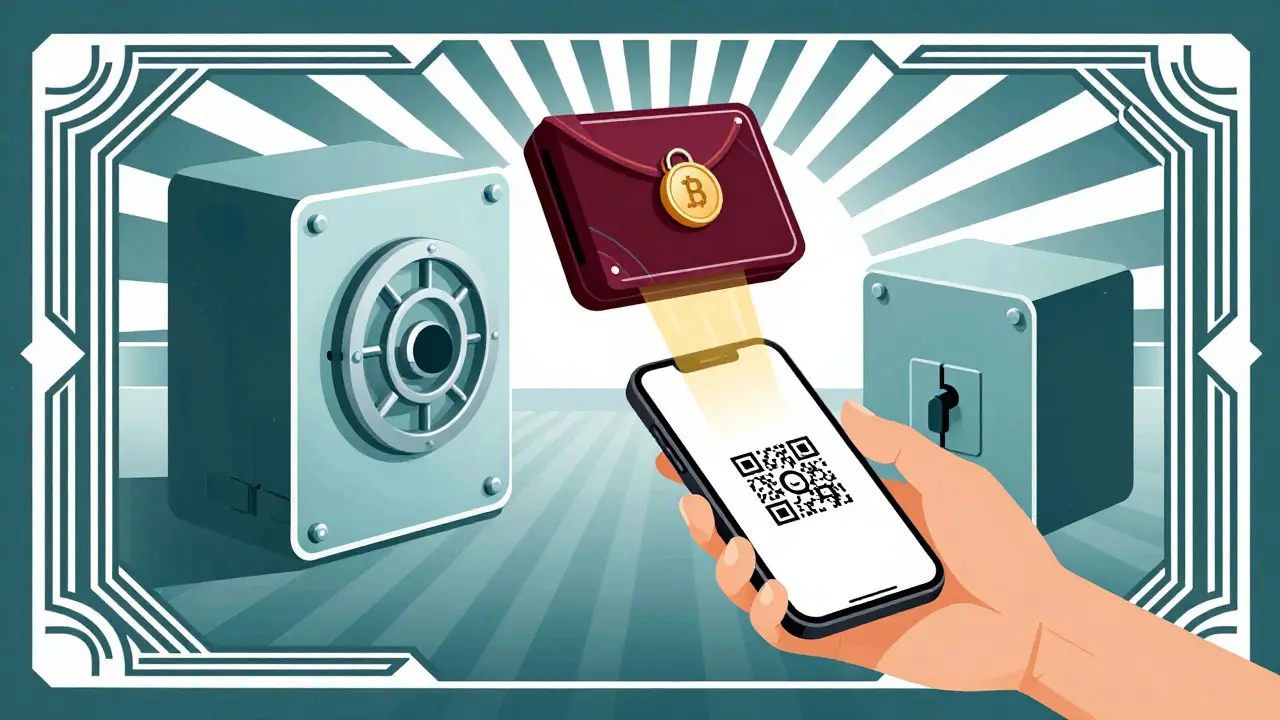
A better approach is using a non-custodial crypto payment gateway like TxNod. These systems are designed specifically for developers who want total control. Instead of sending funds to the gateway's wallet, the gateway derives a unique payment address from your own extended public key (xpub). When a user pays, the funds land directly in your Ledger or Trezor wallet. The gateway merely facilitates the communication and verification process.
This architecture provides several critical advantages:
- No Account Freezes: Since the gateway never touches your money, it cannot freeze your assets. You own your private keys, and therefore, you own your business.
- Zero Take Rates: Custodial platforms often charge a percentage of every transaction. Non-custodial gateways typically charge a flat subscription fee, which is far more predictable for scaling businesses.
- Trustless Verification: Advanced SDKs allow your server to independently verify that the payment address matches your xpub. You do not have to trust the gateway's word that the address is correct; you can prove it mathematically.
For an AI app builder, this means you can focus on building your product rather than worrying about whether your payment processor will suddenly change its terms of service.
The Rise of the Agent Economy
We are moving toward a future where artificial intelligence agents interact with each other autonomously. An agent booking travel for a user needs to pay an airline's agent. An agent analyzing market data needs to pay a data provider's agent. These interactions happen at machine speed, often requiring sub-second responses.
Traditional banking cannot support this. Initiating a wire transfer or processing a credit card authorization takes time and requires human oversight for exceptions. Crypto, however, is programmable. Smart contracts and automated payment rails enable atomic transactions where the payment and the service delivery happen simultaneously.
If you build an AI tool today that accepts crypto billing, you are positioning it for this future. Your API can be called by humans with wallets, but eventually, it can be called by other bots. This opens up a vast new market of B2B2Agent revenue streams that are currently inaccessible to fiat-only services.
| Feature | Credit Card (Stripe/PayPal) | Custodial Crypto Processor | Non-Custodial Gateway (e.g., TxNod) |
|---|---|---|---|
| Chargeback Risk | High | Low (Platform may mediate) | None |
| Fees | 2.9% + $0.30 per tx | 1-3% volume fee | Flat subscription (0% volume) |
| Settlement Time | 2-7 days | Hours to days | Instant (on-chain) |
| Account Freeze Risk | High | Medium | None |
| Global Accessibility | Limited by banking borders | Better | Universal (Internet access) |
Implementation Strategy for Developers
Integrating crypto billing does not require you to become a blockchain expert. Modern developer tools abstract away the complexity. You start by defining your credit packs in your database. Then, you integrate a payment SDK that handles invoice creation and webhook listening.
When a user clicks "Buy 1000 Credits," your backend calls the payment gateway to create an invoice. The gateway returns a QR code and a wallet address. The user scans or copies this address, sends the exact amount from their wallet, and broadcasts the transaction. The gateway monitors the blockchain, detects the incoming payment, and sends a signed webhook to your server. Your server verifies the signature, updates the user's credit balance, and logs the transaction.
Crucially, you should implement idempotency checks. Network issues can cause duplicate webhooks. Your system must ensure that a single payment does not result in double credits. Most robust SDKs provide utilities to handle this safely.
For testing, use sandbox environments. They allow you to simulate transactions without spending real money. This lets you debug your webhook handlers and ledger logic before going live. Some platforms offer AI-agent-ready integrations, where you can paste a prompt into tools like Cursor or Claude Code to generate the integration boilerplate automatically. This reduces setup time from days to hours.

Pricing Psychology and User Experience
Selling crypto credits requires careful attention to user experience. Many potential users are intimidated by blockchain technology. Your goal is to make the payment flow feel as seamless as buying coffee with a card.
Display prices in familiar fiat terms alongside crypto equivalents. Show "$10.00 (approx. 10 USDC)" so users understand the value immediately. Support popular stablecoins like USDC and USDT on low-fee networks such as Polygon or Base. This minimizes gas fees for the user and avoids volatility issues for you.
Offer small entry-level packs. A $5 minimum top-up lowers the barrier to trial. Users are more likely to experiment with a new AI tool if the initial commitment is low. As they gain trust and see value, they will upgrade to larger packs.
Provide clear dashboards showing remaining credits, estimated usage, and expiration dates. Transparency builds trust. If users know exactly how many queries they have left, they are less likely to feel anxious about running out mid-task.
Future-Proofing Your Business
The landscape of AI and payments is evolving rapidly. Regulations around crypto vary by jurisdiction, but the underlying technology continues to mature. By adopting a non-custodial model now, you insulate yourself from regulatory shifts that target centralized exchanges and custodial platforms.
As AI models become more expensive and specialized, the need for efficient, transparent billing will grow. Crypto billing provides the auditability and automation required to scale. Every transaction is recorded on the blockchain, providing an immutable record of sales and usage. This simplifies accounting and tax reporting.
Moreover, you open your doors to a global audience. In countries with unstable currencies or limited banking infrastructure, crypto is often the primary method of digital commerce. By accepting crypto, you tap into markets that traditional processors ignore.
Is it legal to accept crypto for API credits?
In most jurisdictions, yes. Accepting cryptocurrency as payment for goods and services is generally treated similarly to accepting foreign currency. However, you must comply with local tax laws regarding income reporting. Always consult with a legal professional in your specific region to ensure compliance.
What happens if the crypto price crashes after a user buys credits?
If you accept stablecoins like USDC or USDT, the value remains pegged to the dollar, so there is no volatility risk. If you accept volatile assets like Bitcoin, you can either convert them to stablecoins immediately upon receipt or adjust your credit pricing dynamically. Most serious builders prefer stablecoins for billing to maintain predictable margins.
Do I need a company to use a non-custodial gateway?
Many modern non-custodial gateways, such as TxNod, do not require KYC or registered company documentation for individual operators. They focus on the technical integrity of the payment flow rather than identity verification, making them ideal for solo founders and indie hackers.
How do I prevent users from sharing their API keys?
By using a credit-based system tied to user accounts rather than raw API keys, you retain control. Each request is authenticated against the user's session, and credits are deducted from their specific balance. Even if a key is leaked, you can revoke it instantly without affecting other users. Additionally, rate limiting helps mitigate abuse.
Can AI agents automatically pay for my API?
Yes. With a well-designed API and crypto billing infrastructure, autonomous agents can detect low credit balances, trigger a payment transaction from their own wallets, and resume operation seamlessly. This is a key feature for building interoperable AI ecosystems.



Kenneth Riley
June 25, 2026 AT 12:17look i have been in the payment industry for twenty years and this is absolute garbage advice you are selling people on here. chargebacks exist for a reason because fraud is real and crypto does not stop it it just moves it to irreversible scams that leave victims with nothing. you think non-custodial gateways are safe? they are full of bugs and exploits that will drain your wallet faster than any stripe dispute ever could. stop pretending blockchain is magic when it is just a ledger for criminals to hide money from regulators. nobody wants to deal with gas fees and private key management for a simple api call. this is a solution looking for a problem that does not exist.
Benjamin Eisen
June 25, 2026 AT 17:07i totally get where you are coming from kenneth but maybe there is some merit to trying this out for smaller indie projects? i mean if you are building something niche traditional payments can be a real headache with all the verification steps and holds on funds. i am not saying crypto is perfect but having instant settlement could help cash flow for solo devs who need that money right away to pay for server costs. what do you think about using stablecoins to avoid the volatility issue?
Kenneth Riley
June 27, 2026 AT 06:19volatility is the least of your worries benjamin. the whole premise of trustless systems is flawed because humans are involved at every step from the exchange you buy the coin on to the wallet software you use to store it. one phishy link and your entire revenue stream is gone forever with no recourse. stripe might freeze your account but they also provide customer support and legal frameworks to resolve issues. crypto gives you none of that. it is wild west stuff disguised as innovation.
Tim Lefebvre
June 28, 2026 AT 11:55hey guys im actually working on an ai app right now and i was thinking about integrating crypto billing but i keep getting confused by the setup process. does anyone have a simple guide or tutorial on how to set up the webhook listeners properly? i tried following the docs for txnod but i kept getting errors with the signature verification part. also should i use polygon or base for lower fees? any tips would be greatly appreciated since im still learning the backend stuff
JEVON HALL
June 29, 2026 AT 11:28yo tim definitely go with base network it has super low fees and fast finality which is great for microtransactions like api credits. for the webhook stuff make sure you are checking the timestamp on the payload to prevent replay attacks. i used cursor to generate most of my boilerplate code and it saved me hours of debugging. just paste the sdk docs into the prompt and ask it to create a secure handler function. it works pretty well 🚀💻
JEVON HALL
June 29, 2026 AT 18:48also dont forget to implement idempotency keys in your database so you dont accidentally credit users twice if the webhook fires multiple times due to network hiccups. its a common mistake but easy to fix once you know about it. good luck with the build man you got this 💪✨
Terry Hyland
July 1, 2026 AT 12:53this is exactly why i distrust these tech elites pushing decentralization. they want to remove oversight so they can operate outside the law. non custodial means no accountability and no way to track illegal activities. governments are already cracking down on crypto for money laundering reasons and soon they will ban these types of transactions entirely. you are building your business on sand that will wash away when regulations tighten. stick to traditional banking if you want to survive long term.
ravi mahla
July 1, 2026 AT 14:19oh come on terry relax a bit. innovation always faces resistance from old guard institutions. look at how banks hated paypal initially and now everyone uses it. crypto is just the next step in financial evolution especially for global developers who cannot easily access us banking systems. besides if regulations change we adapt. thats how startups work. stop being such a buzzkill and embrace the future instead of fearing it 😂
Terry Hyland
July 3, 2026 AT 01:49paypal operates within a regulated framework and complies with anti money laundering laws. crypto platforms often ignore these rules until it is too late. i am not afraid of technology i am afraid of unregulated chaos that hurts ordinary people. you call it buzzkilling i call it realism. history shows that unchecked speculation leads to crashes and losses for everyday users.
Monica Pathammavong
July 3, 2026 AT 21:53actually terry you are missing the point completely. the agent economy requires machine to machine payments which fiat simply cannot handle efficiently. imagine thousands of bots negotiating services in milliseconds. credit cards take days to settle. crypto settles in seconds. this is not about avoiding regulation it is about technical necessity for the next generation of ai infrastructure. your fear based arguments are outdated and irrelevant to developers building scalable solutions.
Matthew Malone
July 5, 2026 AT 07:05let us be clear here american developers should not be relying on foreign blockchains that are subject to censorship by hostile nations. while the technology has merits we must ensure our digital sovereignty is protected. accepting crypto from anywhere in the world without proper kyc is a security risk. we need robust domestic alternatives that align with our values and laws. do not let overseas entities dictate our payment rails.
dan kaffeman
July 5, 2026 AT 14:27matthew makes a valid point about security but his tone is unnecessarily aggressive. however the core issue remains that crypto enables illicit finance flows that undermine national security interests. as someone who deals with high net worth clients i see firsthand how anonymous transactions facilitate tax evasion and corruption. we should not normalize these practices under the guise of technological progress. integrity matters more than convenience.
Meg Gran
July 6, 2026 AT 16:04you guys are really overthinking this. yes there are risks with crypto but there are also huge benefits for privacy and autonomy. not everyone wants their financial data tracked by corporations or governments. besides the post clearly explains how to mitigate many of these concerns through proper implementation. instead of lecturing people on morality why not focus on practical advice for those actually trying to build products? sarcasm aside the tech is here to stay whether we like it or not.
aaliyah zahid
July 7, 2026 AT 08:53i agree with meg. it feels like everyone is arguing past each other. some people care about compliance others care about speed and efficiency. both perspectives have value depending on the use case. for ai agents specifically the ability to transact autonomously is crucial. maybe we can find a middle ground where compliant crypto solutions emerge that satisfy both regulators and developers. collaboration rather than conflict seems like the better path forward.
Alexander DeVries
July 8, 2026 AT 14:40excellent points aliayah. as a coach i always tell my mentees to focus on solving problems rather than getting bogged down in ideological debates. if crypto billing helps your ai app scale faster and reach global users then it is worth exploring. just make sure you understand the tradeoffs and implement strong security measures. remember that user experience is paramount so abstract away the complexity as much as possible. keep pushing forward and do not let naysayers discourage you.
Mark Corpuz
July 9, 2026 AT 23:33the discussion highlights important considerations regarding regulatory compliance and technical implementation. while cryptocurrency offers advantages in terms of transaction speed and reduced fees it also introduces complexities related to security and legal adherence. developers must carefully evaluate their specific requirements and risk tolerance before adopting such systems. ultimately the choice depends on balancing innovation with responsibility.