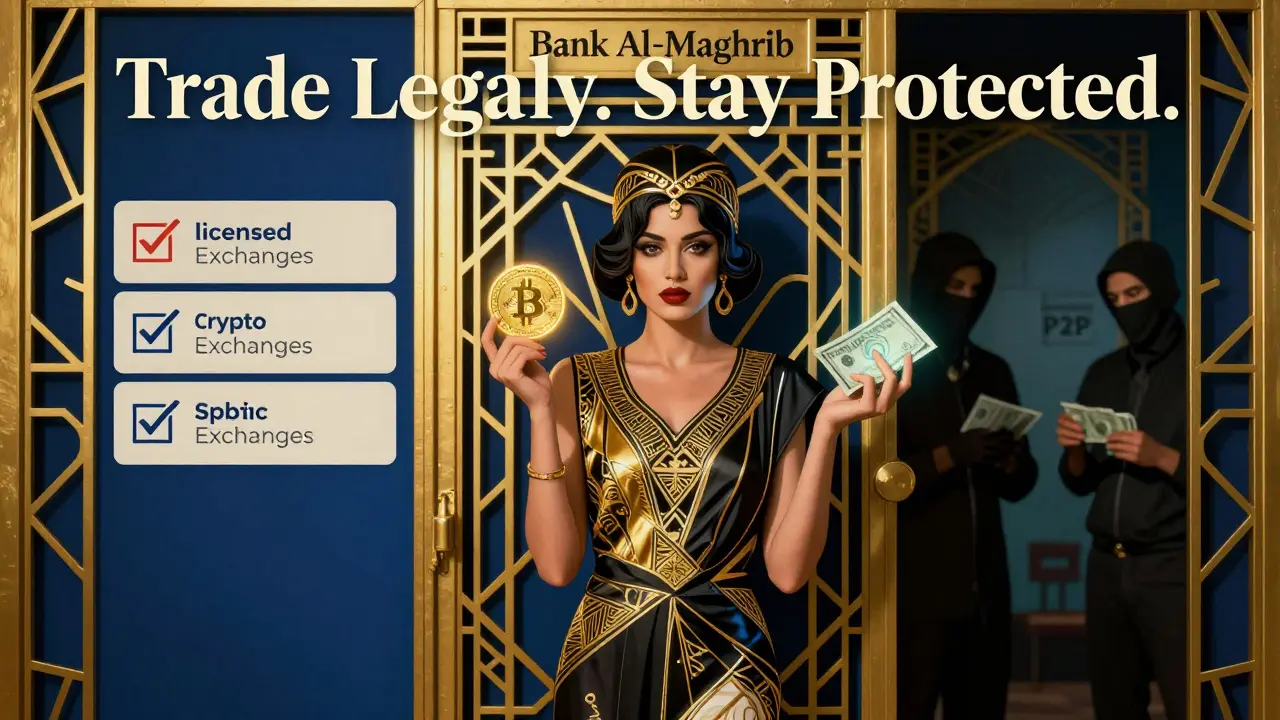
When Morocco banned all cryptocurrency transactions in November 2017, it wasn’t just about fear of new tech. It was about foreign exchange violations. The central bank, Bank Al-Maghrib, saw crypto as a backdoor for people to move money out of the country without oversight - a direct threat to the nation’s currency controls. For years, that ban held firm. But in 2025, everything changed. Morocco didn’t lift the ban. It rewrote it.
From Total Ban to Controlled Access
From 2017 to 2024, using Bitcoin, Ethereum, or any other crypto in Morocco was illegal. Not just discouraged - outright banned. The reason? Foreign exchange laws. Morocco has strict rules about how money moves across borders. You can’t just send dirhams abroad without approval. Cryptocurrency, with its decentralized nature, bypassed those controls entirely. People were buying crypto overseas, trading it, and converting it back to cash - all without going through banks. That’s exactly what the government wanted to stop. Then came 2025. After years of pressure from users, businesses, and global regulators, Morocco passed a new law. It didn’t legalize crypto. It licensed it. Now, you can trade cryptocurrency - but only through platforms approved by Bank Al-Maghrib. These licensed exchanges must follow strict rules: Know Your Customer (KYC), Anti-Money Laundering (AML), and full reporting of all transactions. They’re also required to keep user funds in segregated accounts and submit regular audits. But here’s the catch: this only applies to trading. You still can’t use crypto to pay for goods or services in Morocco. Businesses can’t accept Bitcoin for exports. You can’t send crypto to a supplier in Turkey or pay for a cloud server in the U.S. with Ethereum. For those transactions, you still need traditional banking channels. The government isn’t trying to kill crypto - it’s trying to cage it.Penalties for Breaking the Rules
If you’re caught trading crypto outside the licensed platforms, the penalties are serious. For individuals, fines range from MAD 20,000 to MAD 100,000 - that’s $2,000 to $10,000 USD. Repeat offenders? You could face criminal charges under Morocco’s financial crimes code. For companies, the fines go up to MAD 500,000 ($50,000 USD). Authorities aren’t just targeting random users. They’re going after unlicensed trading platforms, OTC brokers operating in secret, and businesses trying to use crypto for international payments. The government tracks violations through bank monitoring, tax audits, and reports from licensed exchanges. If you’re buying crypto on Binance or Coinbase and withdrawing it to a personal wallet without reporting it, you’re breaking the law. Even if you’re not selling - just holding - you still need to declare it when filing taxes. Profits from crypto trades are taxed at 15%, and failure to report can lead to fines, asset freezes, or worse.Crypto Mining? Still Illegal
While trading is now allowed under license, mining is still completely banned. Why? Because mining doesn’t just move money - it moves energy and equipment. Miners need powerful hardware, which they often import from abroad. That’s foreign currency leaving Morocco. They also use a lot of electricity, which the government subsidizes. A large-scale mining operation could strain the national grid and drain public funds. Morocco doesn’t want to become the next Kazakhstan or Canada - countries where cheap power and crypto mining boomed. Instead, it wants to keep control. If you’re caught running a mining rig in your garage or setting up a farm in the Atlas Mountains, you’re not just violating crypto rules - you’re violating foreign exchange and energy laws. Penalties for mining are even harsher than for trading, with possible confiscation of equipment and criminal prosecution.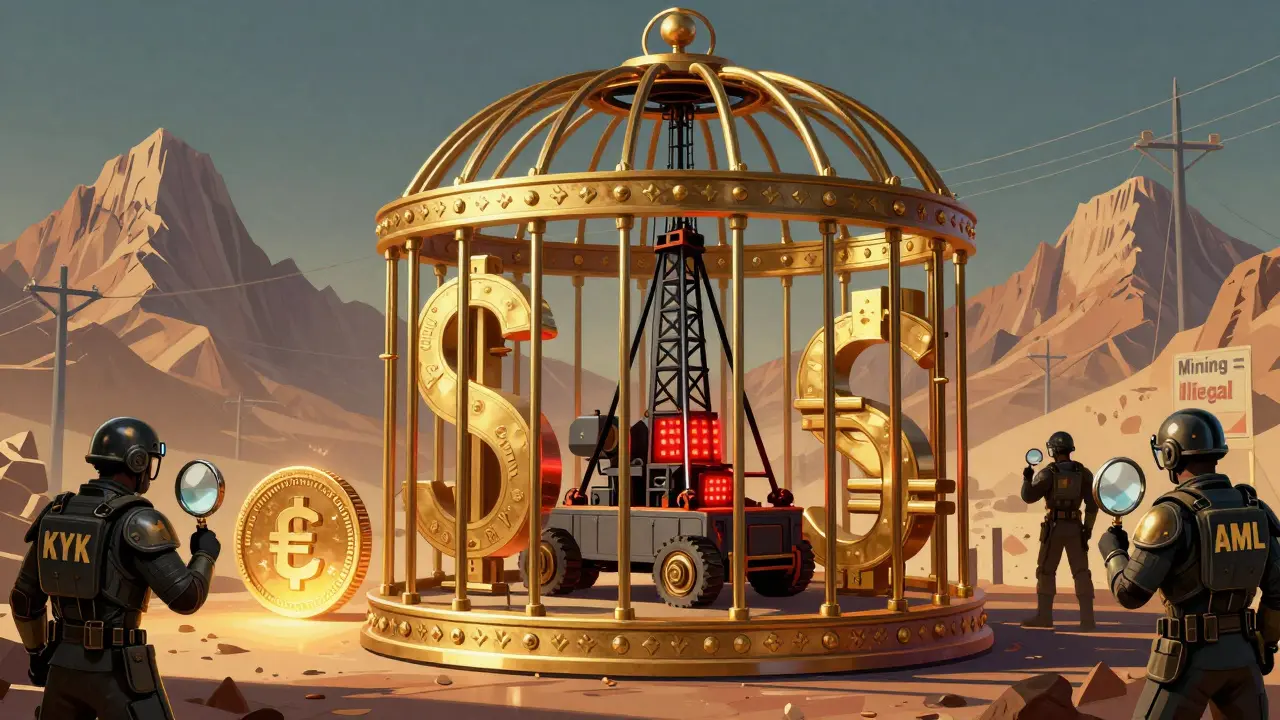
How People Are Still Using Crypto
Despite the rules, crypto use in Morocco hasn’t died - it’s gone underground. Many Moroccans still use peer-to-peer (P2P) platforms like LocalBitcoins or Paxful to buy and sell crypto. They meet in person, use cash, and avoid bank records. Others use OTC desks in Casablanca or Marrakech, where brokers handle large trades in dirhams and crypto without going through licensed platforms. This isn’t legal - but it’s common. The government knows it’s happening. That’s why they’ve increased surveillance on bank transfers linked to crypto-related keywords. If you’re sending $5,000 to a foreign wallet and your bank says “crypto-related transaction,” you’ll get flagged. Some users now use stablecoins like USDT to avoid direct exposure to volatile coins, but even those are monitored under the new law.What About the e-Dirham?
Morocco isn’t just regulating crypto - it’s building its own version. The central bank has completed two phases of its e-Dirham pilot, a digital currency backed by the government. Unlike Bitcoin or Ethereum, the e-Dirham is centralized, traceable, and fully controlled by Bank Al-Maghrib. Its goal? To reduce cash usage and give the government full visibility into every transaction. The e-Dirham could eventually replace the need for private crypto altogether. If you can send money across borders using a government digital currency that’s monitored and secure, why risk using unregulated crypto? The collaboration with Egypt and the World Bank shows Morocco is thinking regionally - not just nationally. If successful, the e-Dirham could become a model for other African countries trying to balance innovation with control.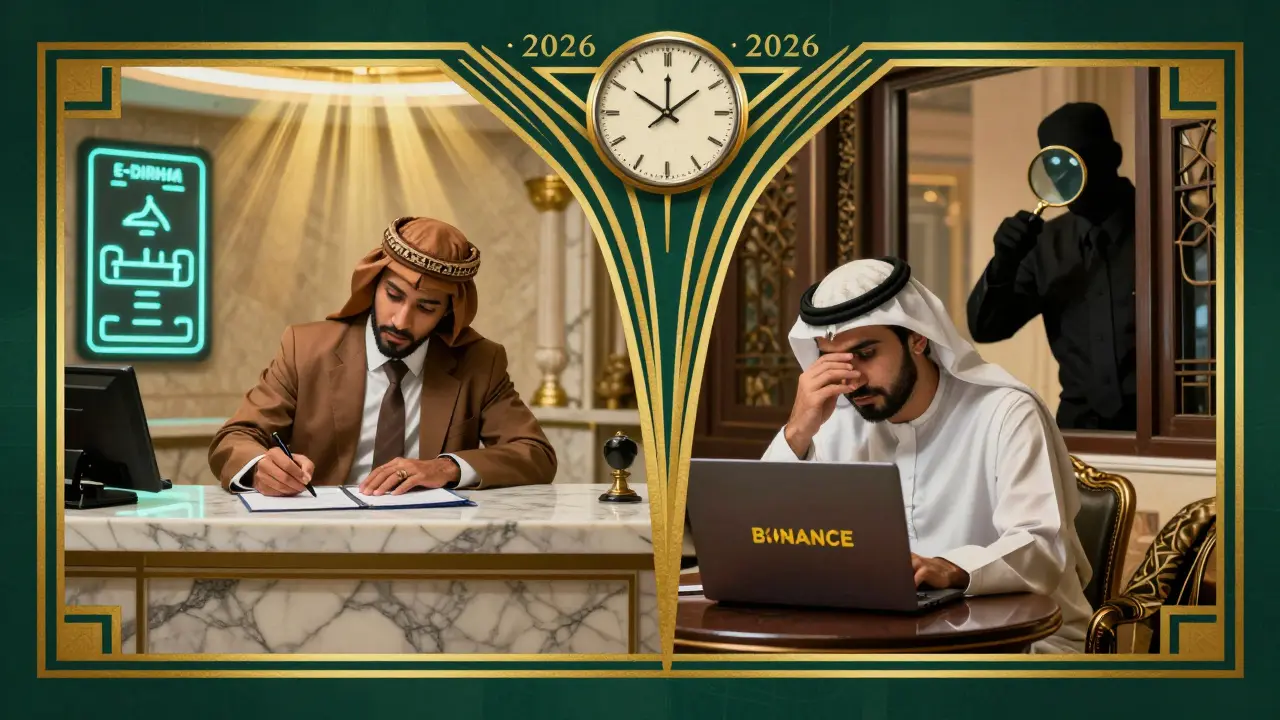
What’s Next?
The crypto market in Morocco is growing fast - projected to hit $280 million in 2026. But it’s growing under strict conditions. The government’s message is clear: you can participate, but only on our terms. Licensed platforms are the only legal way in. Mining? No. Payments? No. OTC? Risky. Taxes? Mandatory. If you’re a Moroccan citizen, your best move is to use a licensed exchange, report all gains, and avoid any activity that looks like it’s trying to bypass foreign exchange rules. If you’re a business, forget crypto payments. Stick to traditional banking. And if you’re thinking of mining - don’t. The risks far outweigh any potential rewards. Morocco’s approach isn’t about stopping crypto. It’s about controlling it. The country’s goal isn’t to be a crypto hub - it’s to be a financial fortress. And for now, that means strict rules, heavy penalties, and zero tolerance for foreign exchange violations.Is it legal to buy Bitcoin in Morocco in 2026?
Yes, but only if you use a platform licensed by Bank Al-Maghrib. Buying Bitcoin on unlicensed exchanges, peer-to-peer apps, or OTC desks is still a violation of foreign exchange laws and can lead to fines or legal action.
Can I use crypto to pay for goods or services in Morocco?
No. The 2025 law prohibits using cryptocurrency for commercial payments, including buying products, paying bills, or settling international invoices. All business transactions must go through traditional banking channels.
What happens if I’m caught mining crypto in Morocco?
Mining crypto remains illegal. If caught, authorities can seize your mining equipment, impose fines up to MAD 500,000, and pursue criminal charges. The ban exists because mining involves importing hardware and using subsidized electricity - both of which violate foreign exchange and energy regulations.
Are crypto profits taxed in Morocco?
Yes. All profits from cryptocurrency trading are subject to a 15% capital gains tax. You must report these earnings in your annual tax return. Failure to do so can result in penalties, audits, or asset freezes.
Can Moroccan businesses accept crypto payments from foreign clients?
No. Even if your client pays you in crypto from abroad, it’s still considered a foreign exchange violation. Moroccan businesses must receive international payments through licensed banks and cannot use cryptocurrency as a settlement method.
Is the e-Dirham replacing crypto in Morocco?
Not replacing - complementing. The e-Dirham is a government digital currency designed to replace cash, not crypto. But it offers a controlled, traceable alternative to private cryptocurrencies, which may reduce public demand for unregulated crypto over time.
How do authorities detect crypto violations?
Bank Al-Maghrib monitors bank transfers for keywords linked to crypto exchanges and wallets. Licensed exchanges report all transactions. Tax authorities cross-check income reports with wallet activity. Suspicious patterns trigger investigations, and in some cases, bank accounts are frozen pending review.



Sarah Hammon
March 17, 2026 AT 00:50So Morocco basically said 'you can trade crypto but only if we watch you like a hawk'... honestly? Kinda smart. I get that they’re trying to protect their currency, but I also feel bad for regular folks just trying to hedge against inflation. Still, I’d rather use a licensed platform than risk fines. I’ve seen too many people lose everything to shady OTC brokers.
Also, typo: 'formalities' not 'formalities' in the AML section lol. But hey, we all make mistakes.
iam jacob
March 18, 2026 AT 05:31lmao so they banned crypto but then made it a licensed circus? classic. like 'you can have your fun but only if you sign this 12-page waiver and let us audit your underwear drawer.'
Jesse Pals
March 18, 2026 AT 08:19Man Morocco’s move is wild but kinda genius 😎
They didn’t try to stop the tide-they built a seawall with GPS tracking. Licensed exchanges? KYC? Audits? That’s not fear-that’s strategy.
And mining? Still banned? Perfect. Don’t let your garage turn into a power-sucking dragon. I’ve seen crypto farms in Texas burn through whole neighborhoods’ electricity bills. Morocco’s just saying: ‘Nope. Not here.’
Also-e-Dirham? That’s the real MVP. Gov-backed digital cash that doesn’t require you to trust a random guy on Telegram. I’m low-key rooting for this.
Still… I’d love to see them let people send USDT to family abroad. Like… why punish remittances? But hey, I’m just a guy with a wallet and a dream 🤷♂️
Diane Overwise
March 18, 2026 AT 20:37How delightfully authoritarian. Truly, the pinnacle of financial governance: 'You may own Bitcoin, but only if you beg for permission.'
How quaint. In the 21st century, we have decentralized networks, yet Morocco insists on playing 1970s Soviet economic planning with a side of tax forms. How... poetic.
And yet-I must admit-the e-Dirham sounds like a beautifully controlled dystopia. I’d love to see the UI. Probably has a mandatory pop-up that says, 'Are you sure you want to send money without government approval?'
Ann Liu
March 18, 2026 AT 22:11The 2025 regulatory framework is remarkably well-structured. Licensing exchanges with mandatory KYC/AML protocols, segregated custody, and audited reporting aligns with FATF recommendations and mitigates systemic financial risk. The 15% capital gains tax is fiscally prudent, and the exclusion of crypto-as-payment preserves monetary sovereignty. Mining prohibition is logically consistent with energy subsidy policy. This is a textbook case of pragmatic regulation.
Dionne van Diepenbeek
March 20, 2026 AT 02:01Graham Smith
March 21, 2026 AT 19:29It’s fascinating how Morocco has operationalized a hybrid financial architecture-leveraging blockchain’s transparency while neutering its decentralization. The licensed exchange model effectively transforms crypto from a disintermediated asset class into a regulated, centralized financial instrument. One might argue this constitutes a form of crypto-washing-where the underlying technology is preserved, but the ethos of permissionless innovation is systematically excised. The e-Dirham, by contrast, represents a sovereign digital asset with embedded surveillance architecture. It’s not a currency-it’s a governance tool.
Jerry Panson
March 23, 2026 AT 09:48While I respect Morocco’s intent to safeguard its monetary system, I must emphasize that the current enforcement approach may inadvertently alienate its youth and tech-savvy population. A more constructive strategy would involve public education campaigns and phased integration with fintech ecosystems. The penalties are severe, and while deterrence is valid, long-term compliance stems from understanding-not fear. I urge policymakers to consider a regulatory sandbox for pilot projects involving cross-border remittances via licensed platforms.
Katrina Smith
March 24, 2026 AT 01:16Anastasia Danavath
March 24, 2026 AT 21:57so like... you can own bitcoin but can't use it? 😐
cool cool cool
also mining is illegal?? lmao
my dog could mine more than my phone 🐶💸
anshika garg
March 26, 2026 AT 12:33It’s strange how the world moves in circles. We were promised freedom through decentralization, and now we’re trading one cage for another-this time with a government logo and a tax form.
In Morocco, they’re not fighting crypto. They’re fighting the chaos it represents. The fear isn’t of technology-it’s of losing control. And isn’t that what every empire does? Try to lock the door after the horse has left?
But maybe… maybe the e-Dirham is the real revolution. Not because it’s better-but because it’s honest. It says: 'We will digitize your life. But we will do it with your name on it.'
And maybe… that’s the only kind of future we’re allowed to have.
Bruce Doucette
March 27, 2026 AT 02:49Oh wow, Morocco’s 'licensed crypto' is just a cosplay of DeFi with a government ID badge. Pathetic. You don’t get to call it innovation when you turn Bitcoin into a bank form. And mining? Still banned? Who do you think you are, North Korea with solar panels?
Meanwhile, real crypto users are using Monero and Zcash through Tor. Morocco’s system is a paper tiger. It’s not protecting the economy-it’s protecting bureaucrats from having to think.
Marie Vernon
March 27, 2026 AT 23:10I love how Morocco is doing this. Not because it’s perfect, but because it’s trying. Most countries either ban crypto outright or let it run wild. Morocco? They’re trying to build a bridge. Maybe it’s clunky. Maybe it’s over-controlled. But at least they’re talking to their people.
I’m from the U.S.-we’ve got crypto everywhere, and half the population doesn’t even know what KYC means. Morocco’s system might feel restrictive, but it’s teaching responsibility. And honestly? That’s more than most nations are doing.
Also, e-Dirham? That’s the future. Not because it’s flashy-but because it’s real. It’s not about replacing Bitcoin. It’s about giving people a safe way to move money without needing to trust strangers on the internet. And that? That’s peace of mind.