
For years, losing money to a crypto scam felt like watching your funds vanish into thin air. You’d click a link, send the Bitcoin, and then… silence. The bad guys were somewhere else, behind layers of privacy coins and decentralized exchanges, while local police shrugged and said they couldn’t help. That era is ending. In 2025 and early 2026, we saw a massive shift. Authorities aren’t just talking anymore; they are acting together across borders, recovering hundreds of millions of dollars that experts once called “irretrievable.”
This isn’t magic. It’s the result of intense international cooperation on crypto crime enforcement, a coordinated effort between global law enforcement agencies, private blockchain analytics firms, and financial institutions. If you’ve ever wondered if stolen crypto can actually be recovered, or how countries work together to catch digital criminals, the answer lies in these new joint operations.
Key Takeaways
- Recovery is possible: Operations like HAECHI VI have recovered over $439 million, proving that lost funds can be tracked and seized.
- Criminals are adapting: With direct transfers to exchanges down, scammers now use complex cross-chain bridges and no-KYC swaps to hide money.
- Technology is key: Tools from companies like Chainalysis and Elliptic allow police to trace transactions in real-time across different blockchains.
- Global coordination works: INTERPOL acts as the central hub, connecting 195 countries to bypass jurisdictional roadblocks.
The End of "Lost Forever": Real Recovery Numbers
Let’s start with the most important question: does this actually work? For a long time, the narrative was that once crypto left your wallet, it was gone. Theos Badege, Director pro tempore of INTERPOL’s Financial Crime and Anti-Corruption Centre, has been pushing back against that myth hard. He points to the results of recent operations as proof that recovery is not just theoretical-it’s happening right now.
Take Operation HAECHI VI, which ran from April to August 2025. This wasn’t a small task force; it involved 40 countries working simultaneously. They targeted seven specific types of cyber-enabled financial crimes, including voice phishing (vishing) and romance scams. The result? A record-breaking recovery of USD 439 million. To put that in perspective, that’s nearly half a billion dollars returned to victims who thought they had no hope.
Another example comes from Korea. When a Korean steel company fell victim to a sophisticated fraud involving forged shipping documents, KRW 6.6 billion (about USD 3.91 million) was sent to an illegitimate bank account in Dubai. Instead of giving up, the Korean National Police Agency worked directly with Emirati authorities. They traced the flow, identified the accounts, and recovered the funds. These cases show that when jurisdictions talk to each other, money moves back.
How It Works: The New Global Infrastructure
So, how do they pull this off? It used to be that if a criminal in Germany scammed someone in Côte d’Ivoire, the two countries had no easy way to share evidence or freeze assets quickly. That gap is closing thanks to new technical frameworks.
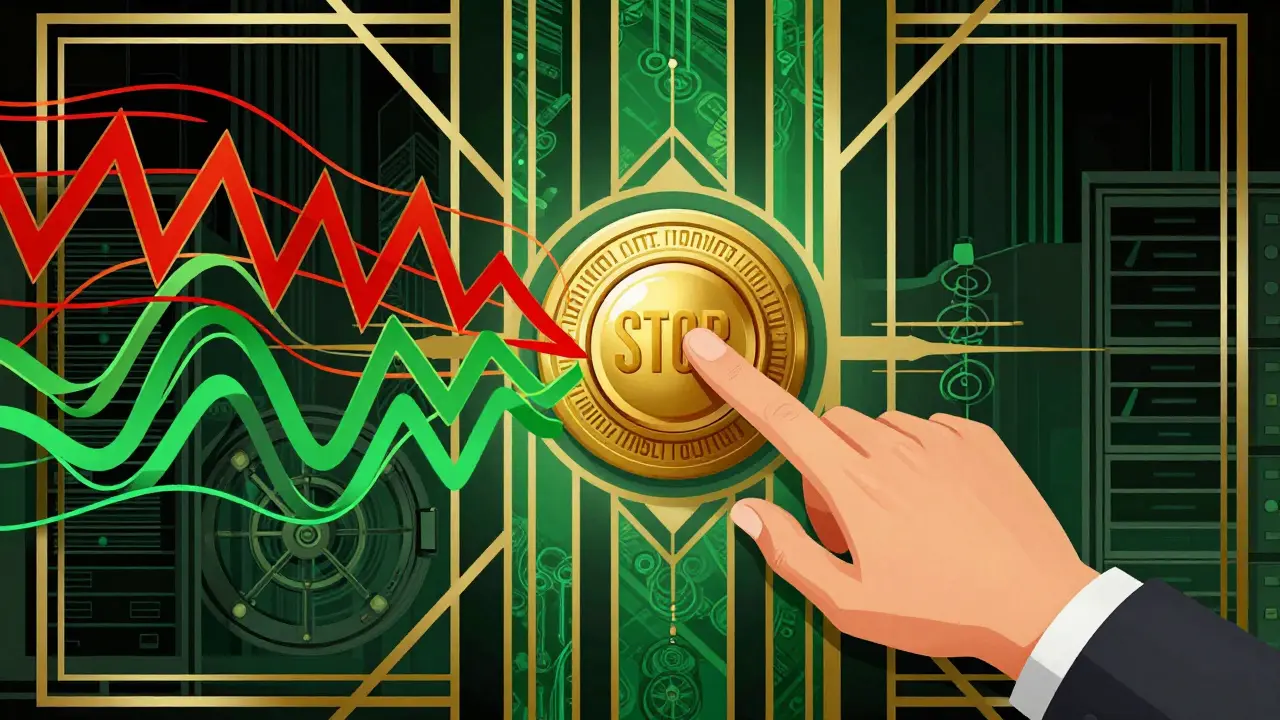
The backbone of this effort is INTERPOL. Established as the central coordinating body for 195 member countries, INTERPOL launched its Global Financial Crime Programme in 2014. But the real game-changer came in 2022 with the launch of I-GRIP (Global Rapid Intervention of Payments). Think of I-GRIP as a global stop-payment button. It enables real-time communication between financial intelligence units across borders. When a suspicious transaction is flagged, alerts go out instantly to banks and exchanges worldwide, allowing them to freeze funds before they can be moved further.
Sean Doyle, Lead of the Cybercrime Atlas Initiative at the World Economic Forum, explains that each operation builds on the last. “Each INTERPOL-coordinated operation builds on the last, deepening cooperation, increasing information sharing and developing investigative skills across member countries,” he says. This means that the arrests made in one operation provide data that helps catch criminals in the next.
The Criminals Are Getting Smarter Too
If you think catching crypto criminals is getting easier, think again. While enforcement is improving, so is the sophistication of the criminals. They know they are being watched, so they are changing their tactics.
In 2021 and 2022, a large portion of illicit crypto-about 40% quarterly value-was transferred directly from criminal wallets to regulated exchanges where KYC (Know Your Customer) laws applied. By Q2 2025, that number collapsed to around 15%. Why? Because criminals realized that sending money directly to Coinbase or Binance was too risky. Instead, they are using more complex methods to launder funds.
According to Chainalysis, illicit entities held nearly $15 billion in 2025, with stolen funds making up the largest category. But here’s the tricky part: wallets downstream from these illicit entities hold over $60 billion. This suggests that criminals are moving money through multiple layers before cashing out.
Elliptic, another major player in blockchain analytics, highlights a growing threat: cross-chain laundering. Their 2025 research found that more than $21.8 billion in illicit and high-risk crypto was laundered using cross-chain methods. This involves moving funds between different blockchains (like from Ethereum to Solana) using decentralized exchanges, bridges, and no-KYC coin swap services. This makes tracing incredibly difficult because investigators have to follow the money across different technological ecosystems.
| Criminal Tactic | Enforcement Countermeasure | Effectiveness in 2025 |
|---|---|---|
| Direct transfer to centralized exchanges | KYC freezes and account closures | High (Transfers dropped to 15%) |
| Cross-chain bridging | Automated cross-chain tracing tools | Moderate (Requires advanced tech) |
| No-KYC coin swaps | Heuristic analysis of wallet clusters | Challenging (High volume of noise) |
| Romance/Voice Phishing | Real-time I-GRIP alerts | High (Fast interception possible) |
Who Are the Key Players?
You can’t fight a borderless crime with just local police. The current ecosystem relies on a mix of government bodies and private sector partners.
- INTERPOL: The central hub. They coordinate simultaneous actions across multiple jurisdictions. For example, during Operation Serengeti 2025, arrests happened across Africa, Europe, and Asia at the same time, preventing suspects from warning each other.
- World Economic Forum (WEF): Through the Cybercrime Atlas, the WEF aggregates intelligence from multiple sources to support enforcement actions. They focus on the strategic side, helping to identify trends and allocate resources.
- Blockchain Analytics Firms: Companies like TRM Labs, Chainalysis, and Elliptic are essential. Law enforcement doesn’t have the internal capacity to analyze billions of transactions manually. These firms provide the software and expertise to identify threat actors and trace illicit flows. TRM Labs’ 2025 report notes that sanctioned entities and terrorist groups are shifting tactics in response to crackdowns, requiring constant updates to detection algorithms.
- National Agencies: The US Department of Justice, Europol, and national police forces (like the Korean NPA) execute the actual seizures and prosecutions. The DOJ, for instance, focused on criminal prosecutions in late 2024, charging 17 individuals for market manipulation using bots.

Challenges and Limitations
It’s not all smooth sailing. Despite the successes, there are significant hurdles.
First, speed remains an issue. Asset recovery takes time. Even with I-GRIP, the legal processes required to seize and return funds can take months or even years. During this time, criminals may move remaining assets.
Second, attribution is still difficult for smaller, decentralized crimes. Large-scale operations like the Zambia-based investment scam that defrauded 65,000 victims of $300 million are easier to target because they leave a larger footprint. But what about the individual hacker stealing from a single DeFi protocol? Tracing those funds often requires manual investigation that can take hours or days, by which time the money is gone.
Third, there is a skills gap. Effective cross-border crypto investigations require specialized training. INTERPOL reported that officers participating in Operation Serengeti 2025 underwent 120 hours of specialized training in cryptocurrency tracing techniques. Not every local precinct has access to this level of education, creating uneven enforcement capabilities globally.
What This Means for You
If you are a crypto user, this news should give you some cautious optimism. The days of total impunity for major scams are fading. However, it doesn’t mean you can let your guard down.
Criminals are targeting people through social engineering-romance scams, fake investment opportunities, and voice phishing. No amount of international cooperation can protect you if you voluntarily send your private keys or seed phrase to a stranger. The technology can trace the money after the fact, but prevention is still your responsibility.
Also, be aware that “recovery” services online are often scams themselves. Legitimate recovery happens through official channels like INTERPOL-coordinated operations and national police forces, not through random websites promising to hack back your funds.
The Future of Crypto Enforcement
Looking ahead, the trend is clear: more integration and automation. Elliptic was the first to release holistic cross-chain screening capabilities, reducing manual investigation time from hours to minutes. As these tools become standard, the window for criminals to launder money will shrink.
We also expect to see more harmonization of regulations. With 87% of INTERPOL member countries now reporting dedicated cryptocurrency investigation units (up from 62% in 2022), the infrastructure is in place. The challenge will be keeping pace with new technologies like privacy-enhancing protocols and state-sponsored cyber threats.
As Sean Doyle noted, “With more contributions and shared expertise, the results keep growing in scale and impact.” The fight against crypto crime is a marathon, not a sprint, but for the first time, the world is running it together.
Can I get my stolen crypto back if I was scammed?
Yes, it is increasingly possible, though not guaranteed. Major international operations like HAECHI VI have recovered hundreds of millions of dollars. However, you must report the crime immediately to your local authorities and provide all transaction details. Recovery depends on whether the funds can be traced to a centralized exchange or a known illicit entity before they are laundered further.
What is I-GRIP and how does it help?
I-GRIP (Global Rapid Intervention of Payments) is a system launched by INTERPOL in 2022. It allows financial intelligence units across different countries to communicate in real-time. When a suspicious transaction is detected, I-GRIP enables rapid alerts to banks and exchanges to freeze funds, acting like a global stop-payment mechanism.
Why are criminals using cross-chain methods?
Criminals use cross-chain methods to make tracing harder. By moving funds between different blockchains (e.g., from Bitcoin to Ethereum via a bridge), they obscure the trail. In 2025, over $21.8 billion was laundered this way. Traditional tracking tools often struggle to follow funds across different networks without advanced automated software.
Which companies help police track crypto crimes?
Private blockchain analytics firms play a crucial role. Key players include Chainalysis, Elliptic, and TRM Labs. These companies provide law enforcement with software that analyzes public blockchain data to identify illicit addresses, trace transaction flows, and link crypto wallets to real-world identities.
Is international cooperation effective against small-scale scams?
International cooperation is highly effective against large-scale operations like investment scams or ransomware groups. For smaller, individual scams, it is more challenging due to resource constraints and the speed at which funds can be moved. However, improved tools and training are gradually making it easier to investigate even smaller cases.



Jessie Smith
July 11, 2026 AT 02:37its not magic, its just bureaucracy finally catching up to the code. the real irony is that we spent a decade telling everyone crypto was about freedom from state control, and now the state is using the ledger itself to hunt us down. it’s a fascinating paradox of surveillance capitalism meeting decentralized tech.
Linda Hilliard
July 11, 2026 AT 05:37Oh, please. Don't pretend this is some great victory for justice when you know full well that 99% of retail victims are still left holding the bag because they lacked the basic financial literacy to use a hardware wallet correctly. It is frankly embarrassing how many people fall for these 'romance scams' despite the warnings being everywhere. The recovery numbers are nice PR for INTERPOL, but let's not delude ourselves into thinking the average joe can rely on international law enforcement to babysit their private keys. You have to be sophisticated enough to understand the risk in the first place. :)
Kristine Lawson
July 12, 2026 AT 01:36I must respectfully disagree with the notion that victim-blaming is an acceptable discourse here; furthermore, the assertion that international cooperation is merely "PR" is factually incorrect given the tangible seizure amounts cited in the article. While it is true that individual responsibility plays a role, the systemic changes outlined-specifically the I-GRIP protocol-represent a significant paradigm shift in global financial oversight. To dismiss this as insufficient is to ignore the empirical data regarding the $439 million recovered during Operation HAECHI VI. One must acknowledge the efficacy of coordinated action over isolated efforts.
Winston Lacewing
July 12, 2026 AT 18:54Wait a minute... so you're telling me that while all these big agencies are shaking hands and cutting ribbons, my cousin lost his life savings to a guy named 'CryptoKing_88' who vanished into thin air? 🤨 That feels like a massive betrayal of trust! We pay our taxes so these people can catch the small fish while the whales swim away? It’s absolutely outrageous that the system only works for the big cases. Where is the accountability for the everyday person? 😡
Tuan Nguyen
July 13, 2026 AT 03:25The structural inefficiency of current enforcement models is glaring. Focusing on high-value targets like Operation HAECHI VI creates a false sense of security for the broader market participants. The criminal adaptation to cross-chain bridges demonstrates that the threat vector is evolving faster than the regulatory framework can adapt. This is not a solution; it is a temporary patch on a leaking vessel. The reliance on private analytics firms like Chainalysis introduces a centralization point that contradicts the fundamental ethos of the technology being policed.
Josephine Finlayson
July 14, 2026 AT 06:33I think it is wonderful that countries are working together---and I truly hope this helps more people feel safe again. It is important to remember that every dollar recovered is a dollar back in someone's pocket. Let's keep supporting these initiatives and stay vigilant. 💙
Deep Rahman
July 15, 2026 AT 08:15When we look at the deeper implications of this global coordination, we begin to see a shift in how sovereignty is defined in the digital age. The ability of one nation to freeze assets in another without traditional diplomatic friction suggests a new kind of supranational power structure emerging. This is not just about crime; it is about the consolidation of financial authority. As the barriers between jurisdictions dissolve through tools like I-GRIP, we must ask ourselves what happens to the concept of privacy when every transaction is potentially visible to a global network of observers. The philosophical question remains: is security worth the total loss of anonymity?
Tawny Holmes
July 16, 2026 AT 05:31Cross-chain laundering is the only thing keeping criminals alive right now.
Melissa Beckwith
July 16, 2026 AT 08:42I have been following the developments in blockchain analytics for quite some time, and it is becoming increasingly apparent that the arms race between illicit actors and forensic investigators is intensifying rather than resolving. The mention of Elliptic's research regarding the $21.8 billion laundered via cross-chain methods is particularly concerning because it highlights the limitations of current heuristic analysis. I find myself wondering if the current investment in training local police forces will yield sufficient returns given the rapid pace of technological obsolescence in tracing algorithms. It seems we are building infrastructure that may already be outdated by the time it is fully deployed.
Hazel Fruitman
July 18, 2026 AT 07:21i mean its good they are trying i guess but honestly most of these scammers are just regular people desperate for money too. its sad really. why do we have to be so harsh on them? maybe if we helped them more they wouldnt need to scam ppl. just a thought. xD
Drew M
July 18, 2026 AT 20:05This is actually huge news! 🚀 Finally, some real progress in the space. It’s amazing to see how far we’ve come from the wild west days. Keep up the great work, everyone! ✨👏