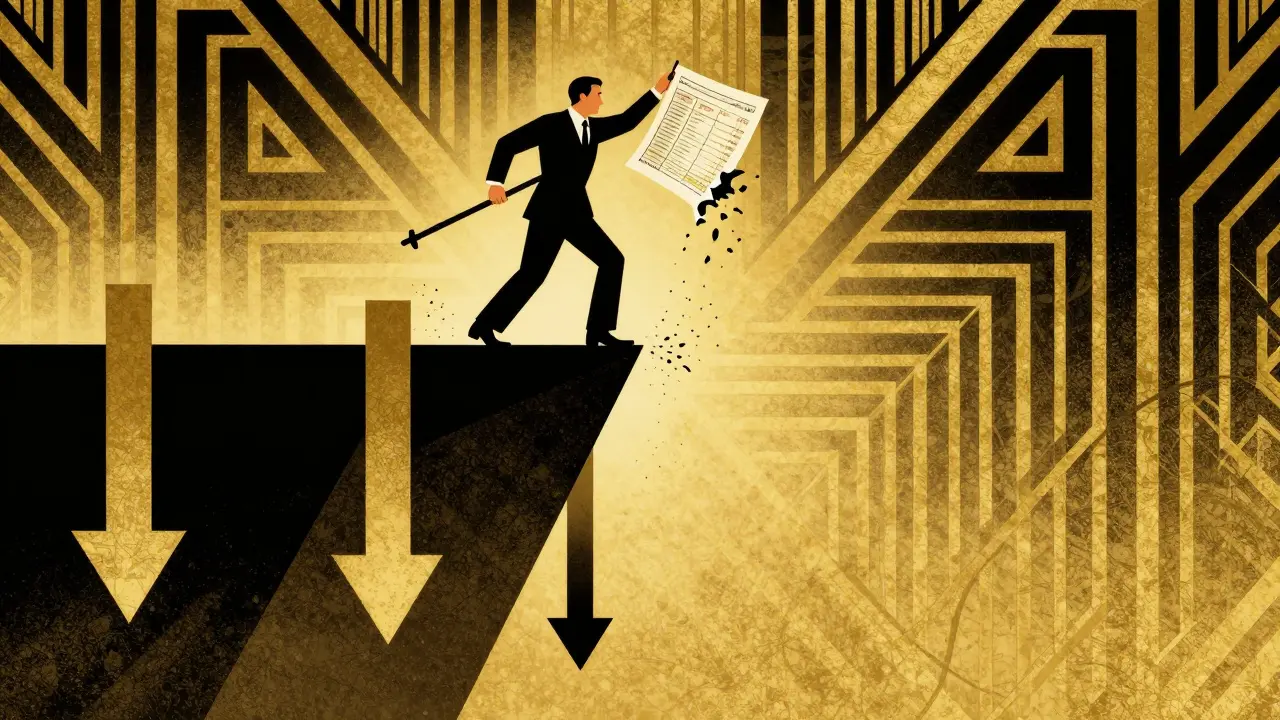
You put money into a trade, the market dips slightly, and suddenly your broker or exchange wipes out your position. You didn't lose because you were wrong about the direction; you lost because of leverage. This is the harsh reality of margin calls and liquidation events in leveraged trading. These mechanisms are designed to protect the lender, not you. Understanding how they work is the difference between surviving a volatile market and losing your entire capital overnight.
Whether you are trading stocks on platforms like Interactive Brokers or crypto on exchanges like Binance.US, the core concept remains the same. You borrow money to increase your position size. If the value of that position drops below a certain threshold, the lender demands more cash (a margin call) or sells your assets immediately (liquidation). In 2023, retail traders faced a surge in these events, with FINRA reporting a 214% increase in margin liquidation violations since 2019. The stakes have never been higher.
How Margin Calls Actually Work
A margin call is not a suggestion; it is a formal demand from your broker or exchange. It happens when the equity in your account falls below the required maintenance margin level. Think of it as a safety net for the lender. When you use leverage, you are borrowing funds. If the collateral (your money) shrinks too much, the lender’s risk increases. They step in to ensure they can get their money back.
The math is straightforward but brutal. Let's say you have $10,000 and use 2x leverage to buy $20,000 worth of assets. If those assets drop by 10%, your $20,000 position is now worth $18,000. After paying back the $10,000 loan, you are left with $8,000. You have lost 20% of your initial capital from a 10% market move. If the price drops further, hitting your maintenance margin requirement (often 25-30%), the system triggers a margin call. You must deposit more funds immediately, or the platform will take action.
In traditional finance, Regulation T requires investors to fund at least 50% of a purchase in cash. However, maintenance margins vary. FINRA Rule 4210 sets a baseline of 25% for most securities, but brokers like Fidelity and Charles Schwab often require 30-40% for volatile stocks. In crypto, the rules are even tighter and faster. Exchanges like Kraken and PrimeXBT trigger alerts when available margin hits specific percentages, often leaving you mere minutes to react before automatic systems engage.
Liquidation: The Point of No Return
If you ignore a margin call or cannot meet it in time, liquidation occurs. This is the forced sale of your assets to repay the borrowed funds. The key danger here is timing and price. During high volatility, markets can gap down instantly. Your stop-loss might be set at $100, but if the market opens at $90, your position is liquidated at $90. You bear the loss of that gap.
Different platforms handle this differently. Traditional brokers like Fidelity may sell specific positions that caused the deficiency. Crypto exchanges like Kraken often use a first-in-first-out (FIFO) basis and execute at the best possible market price, regardless of how low that price is. During the March 2020 crash, data showed that 68% of margin accounts at retail brokers experienced liquidations at prices 15-25% worse than pre-crash levels due to illiquidity. That means you didn't just lose your principal; you potentially owed more money to the broker if the liquidation wasn't sufficient to cover the debt.
Timeframes are critical. While FINRA rules theoretically allow four business days to meet a call, most brokers impose 24-48 hour deadlines. In crypto, liquidation can happen in seconds. Automated algorithms monitor your margin ratio continuously. If your account equity deteriorates, forced liquidation begins immediately. There is no negotiation with an algorithm.

Traditional Finance vs. Crypto: A Comparison
| Platform Type | Maintenance Margin | Margin Call Trigger | Liquidation Style |
|---|---|---|---|
| Interactive Brokers (Stocks) | 25% (Equities) | Real-time alerts | Sells specific positions |
| Fidelity (Stocks) | 30% (Minimum) | 24-48 hours notice | Sells deficient positions |
| Binance.US (Crypto) | 25% | 130% Ratio (76.9% Utilization) | Auto-liquidation |
| Kraken (Crypto) | Variable | Real-time tracking | FIFO, Market Price |
The table above highlights a crucial distinction: crypto exchanges are generally more aggressive. Binance.US issues margin calls at a utilization rate of nearly 77%, whereas traditional brokers might give you more breathing room. However, crypto markets trade 24/7, meaning there is no "market close" to pause the bleeding. A weekend dip in Bitcoin can wipe out a leveraged position while you sleep, with no opportunity to intervene during traditional banking hours.
Risk Management Strategies That Actually Work
Surviving leveraged trading isn't about predicting the market perfectly; it's about managing your exposure. Experts recommend maintaining a "liquidity buffer" of at least 15% above the minimum maintenance requirement. A study by Financial Edge Training found this simple habit reduced margin call incidents by 63% among active traders. If your maintenance margin is 25%, aim to keep your equity above 40%. This gives you room to breathe during sudden spikes or drops.
Another vital tool is understanding your Special Memorandum Account (SMA). For many new traders, SMA calculations are a black box. Fidelity reports that 78% of new margin traders misunderstand SMA, leading to unexpected violations when they try to sell positions to meet a call. Learning how SMA works allows you to withdraw excess equity or add buying power without triggering a deficit. Use tools like TradingView’s margin calculators, which 62% of active margin traders rely on, to simulate scenarios before going live.
Hedging is also essential. Institutional traders often use options or inverse ETFs to hedge against downside risk. Retail traders can mimic this by keeping a portion of their portfolio in stablecoins or cash. If you are long on Tesla stock, consider holding a small put option or cash reserve to absorb shocks. Dr. Robert R. Johnson, a finance professor, notes that margin calls crystallize paper losses at the worst possible moment. Hedging prevents that crystallization by offsetting losses in one asset with gains in another.

Common Pitfalls and How to Avoid Them
One of the biggest mistakes traders make is over-leveraging. Using 10x or 20x leverage sounds exciting until the market moves 5% against you. At 10x leverage, a 5% drop wipes out 50% of your equity. A 10% drop results in total liquidation. Keep leverage low. Most successful traders stick to 2x or 3x maximum. High leverage is a time accelerator for losses. As Liz Ann Sonders, Chief Investment Strategist at Charles Schwab, warns, a 20% decline in a 4:1 leveraged position triggers a 100% loss.
Ignoring alerts is another fatal error. Many platforms send email or SMS notifications when your margin level approaches the danger zone. Treat these as emergencies. If you get a margin call alert, act immediately. Deposit funds, reduce position size, or close the trade. Do not hope the market will rebound. Algorithms do not care about your hopes. They care about your collateral.
Finally, beware of illiquid assets. Trading penny stocks or obscure altcoins on margin is risky because spreads widen during volatility. If you need to liquidate, you might not find a buyer at your expected price. Stick to highly liquid assets like major indices, large-cap stocks, or top-tier cryptocurrencies like Bitcoin and Ethereum. Liquidity ensures you can exit positions at fair prices.
The Future of Margin Trading Regulations
Regulators are watching closely. The SEC identified margin lending as a high-risk area for broker-dealers, issuing 147 deficiency letters in 2022 alone. New rules proposed by FINRA would require brokers to display real-time margin utilization percentages on trading platforms, making it harder for traders to overlook their risk. In Europe, ESMA implemented leverage caps of 30:1 for retail forex traders, which reduced margin call incidents by 52% but also decreased participation. Similar measures could come to the U.S. and crypto sectors.
Technology is also evolving. Interactive Brokers launched "Margin Escape," a feature that automatically converts eligible positions to cash upon a margin call for a small fee. This has helped thousands of users avoid full liquidation. Expect more platforms to introduce such safety nets. However, these tools are not foolproof. They work best when combined with disciplined risk management. The goal is not to eliminate risk entirely but to control it so it doesn't control you.
What is the difference between a margin call and liquidation?
A margin call is a warning and demand from your broker to deposit more funds because your account equity has fallen below the maintenance margin. Liquidation is the forced sale of your assets by the broker or exchange to repay the borrowed funds if you fail to meet the margin call. The margin call gives you a chance to save your position; liquidation ends it.
How much leverage is safe for beginners?
For beginners, it is safest to avoid leverage entirely or use very low leverage, such as 1.5x to 2x. Higher leverage amplifies both gains and losses. A 2x leverage means a 50% drop in asset price wipes out your entire equity. Start with spot trading to learn market dynamics before introducing borrowed funds.
Can I owe money after my position is liquidated?
Yes, especially in traditional finance and some crypto contracts. If the market gaps down rapidly and your liquidation price is significantly lower than the entry price, the proceeds from selling your assets might not cover the full loan amount. You may receive a debit balance, meaning you owe the broker the difference. Always check your platform's terms regarding negative balances.
Why do crypto exchanges liquidate faster than stock brokers?
Crypto markets operate 24/7 and are known for extreme volatility. Exchanges use automated algorithms to manage risk in real-time. Unlike stock brokers who might give you 24-48 hours to respond to a margin call, crypto platforms liquidate instantly to prevent losses from exceeding the collateral. This protects the exchange from insolvency risks associated with rapid price swings.
What is a liquidity buffer and why do I need one?
A liquidity buffer is extra equity you keep in your account above the minimum maintenance margin requirement. For example, if the requirement is 25%, keeping 40% equity creates a 15% buffer. This cushion protects you from sudden market spikes or drops that could otherwise trigger a margin call or liquidation. It buys you time to react rather than being forced out by an algorithm.



Ellie Riddell
May 23, 2026 AT 23:12Another day, another post explaining why leverage is a trap for the unwary. It’s almost poetic how the house always wins when you’re borrowing their money to bet against them. 🙄
Jesse Alston
May 25, 2026 AT 20:55I really appreciate this breakdown because so many new traders skip right over the risk management section and jump straight into 10x leverage on meme coins 😅 The part about the liquidity buffer is gold. I used to think keeping extra cash in my account was just 'dead money' but after getting liquidated during the March crash, I learned that it's actually insurance. If you're using Interactive Brokers or even Binance.US, calculate your SMA properly. It’s not just a number; it’s your breathing room. Don’t let the algorithm eat your lunch! 🍽️💸
John Gonzalez Bentham
May 26, 2026 AT 05:15thats all well and good but most people here arent reading past the title anyway they want the quick fix and you cant teach a pig to sing no matter how much time you have with them the system is designed to fail you and complaining about margin calls is like complaining about gravity its just how it works stop crying about it
Gavin Wonnacott
May 26, 2026 AT 10:41You clearly don't understand the nuances of institutional hedging strategies which is why you're still trading retail garbage. Real professionals use delta-neutral portfolios and dynamic rebalancing algorithms that adjust exposure in milliseconds, not some amateur hour 'buffer' strategy. Your entire premise relies on the assumption that retail traders have any agency in a market dominated by HFT bots. It’s pathetic.
Sudarshan Anbazhagan
May 27, 2026 AT 14:03it is indeed a fascinating observation that one would presume such simplistic heuristics as maintaining a mere fifteen percent buffer could possibly mitigate the systemic risks inherent in leveraged positions within highly volatile markets particularly when one considers that the underlying asset classes themselves are often subject to manipulative practices by large capital entities who operate with far greater sophistication and resources than the average retail participant thus rendering such rudimentary advice largely obsolete and potentially misleading if taken as a comprehensive solution to the complex problem of margin maintenance
Sarah C
May 27, 2026 AT 17:23I think Jesse makes a great point about the buffer. It’s easy to get caught up in the hype, but having that safety net really does help keep stress levels down. I’ve been trying to stick to spot trading mostly, and it feels much more peaceful knowing I won’t wake up to a zero balance.
Shelby Cantu
May 29, 2026 AT 11:26Stick to spot. Low leverage. Stay safe.
Kimberly Herbstritt
May 31, 2026 AT 01:06Actually, I disagree with the idea that low leverage is the only way. Sometimes you need higher leverage to make meaningful gains on small accounts. The article assumes everyone has a six-figure portfolio to play with safely. For us little guys, 5x or 10x might be the only way to grow the account fast enough to matter. Risk is part of the game.
Jan Gilmore
May 31, 2026 AT 23:46That is exactly the mindset that gets you wiped out. You think you’re special? You’re not. The math doesn’t care about your ‘little guy’ narrative. A 10% drop at 10x leverage wipes you out completely. There is no ‘growing the account fast’ if there is no account left. Read the section on illiquid assets again. Penny stocks and altcoins will spread wide and you’ll be stuck holding the bag while the algos feast on your liquidity. Wake up.
Sharada Vakkund
June 1, 2026 AT 23:02Let’s bring everyone back to the core concept here. Whether you are in Mumbai or New York, the mechanics of a margin call are universal. What matters is education. Many of us come from backgrounds where we didn’t have access to this financial literacy early on. That’s why posts like this are vital. We should support each other in learning these tools rather than mocking those who are still figuring it out. Knowledge is power, and sharing it inclusively helps us all survive the volatility.
Destiny Kilby
June 2, 2026 AT 09:44i find the comparison between traditional finance and crypto interesting because while both are predatory in their own ways the speed at which crypto executes liquidations leaves no room for error or negotiation it is cold and efficient and perhaps that is what we deserve for wanting to gamble with borrowed money
Sheldon Friesen
June 3, 2026 AT 09:41Oh, look at you, being all philosophical about your losses! 😂 But seriously, the FIFO method Kraken uses is brutal if you’ve been layering positions. I lost a chunk of change last year because my oldest position got nuked first, even though my newer ones were safer. Always check your entry dates. And for god’s sake, set alerts! 🔔📉
Tricia Alach
June 4, 2026 AT 09:10the universe balances itself through loss and gain and when we try to cheat the balance with leverage we are essentially asking for a lesson in humility which usually comes in the form of a margin call so perhaps we should embrace the liquidation as a spiritual cleansing rather than a financial disaster dont u think?
Jerry CUNNINGHAM SR
June 5, 2026 AT 07:24While the spiritual perspective is intriguing, we must remain grounded in practical application. The regulatory changes mentioned in the post, specifically the proposed FINRA rules for real-time utilization displays, are significant steps toward transparency. As responsible investors, we should advocate for these protections. Ignorance of the margin requirements is no excuse for negligence. Let us encourage our peers to utilize the calculators provided by platforms like TradingView to ensure they are fully informed before taking on debt.