You’ve probably seen ads for the "Microchain" crypto exchange promising insane returns or exclusive access. Maybe you clicked through, saw a sleek interface, and wondered if this was the next big thing in decentralized finance. Before you transfer a single dollar, stop. There is a massive red flag waving here that most casual investors miss immediately.
The hard truth? Microchain is not a legitimate cryptocurrency exchange. In fact, there is no credible evidence that a platform by this name exists as a functional trading venue. What you are likely encountering is either a complete fabrication, a phishing site designed to steal your funds, or a confusion with a low-value token called MicroChains Gov Token (MCG). This distinction matters because it changes everything about your risk profile. If you’re looking for a place to trade Bitcoin or Ethereum, this is not it. If you’re being pitched an investment opportunity based on this name, you are walking into a trap.
The Critical Misunderstanding: Token vs. Exchange
To understand why you should stay away, we need to clear up a common mix-up in the crypto world. Many new users see the word "Chain" and assume they are dealing with a blockchain network or an exchange platform. They see "Gov" and think of governance rights that might yield dividends. But MicroChains Gov Token (MCG) is a utility/governance token within a specific, obscure ecosystem, not a platform where you can buy or sell other cryptocurrencies.
An exchange like Binance or Coinbase is a marketplace. You deposit money, you get an account, you trade assets. These platforms have regulatory compliance teams, customer support, and audited security protocols. MCG, on the other hand, is just a digital asset-an ERC-20 token on the Ethereum blockchain. It has no infrastructure to hold your funds safely, no mechanism to process fiat deposits, and no team to help you if things go wrong. Confusing a speculative token with a service provider is how people lose their life savings.
Red Flags That Scream "Scam"
If you are evaluating any crypto project, especially one with a vague name like Microchain, look for these warning signs. The data surrounding MCG and its associated branding fails every single test.
- Lack of Regulatory Presence: Legitimate exchanges register with financial authorities. In the US, they file FinCEN reports; in Europe, they comply with MiCA regulations. There is zero record of a "Microchain Exchange" holding such licenses. The absence of legal oversight means you have no recourse if the site disappears overnight.
- Obscure Listings: Major tokens are listed on reputable aggregators and top-tier exchanges. MCG does not appear in the top picks of major reviews from platforms like MEXC or CoinCodex. It is barely visible on aggregator sites like SwapSpace, which suggests extremely low liquidity. If you can’t easily find it, you certainly can’t easily sell it.
- No Verifiable Team: Who built this? Where are they? Established projects like Avalanche or Arbitrum have public founders, active GitHub repositories, and transparent development roadmaps. MicroChains offers none of this. Anonymous teams behind high-risk assets are a classic hallmark of pump-and-dump schemes.
- Extreme Volatility Without Utility: A token’s price should reflect its use. Does MCG pay fees? Does it grant voting power on significant decisions? The documentation is vague at best. When a token lacks clear utility but promises high rewards, it is usually driven solely by hype-and hype fades fast.
The Financial Reality: Price and Predictions
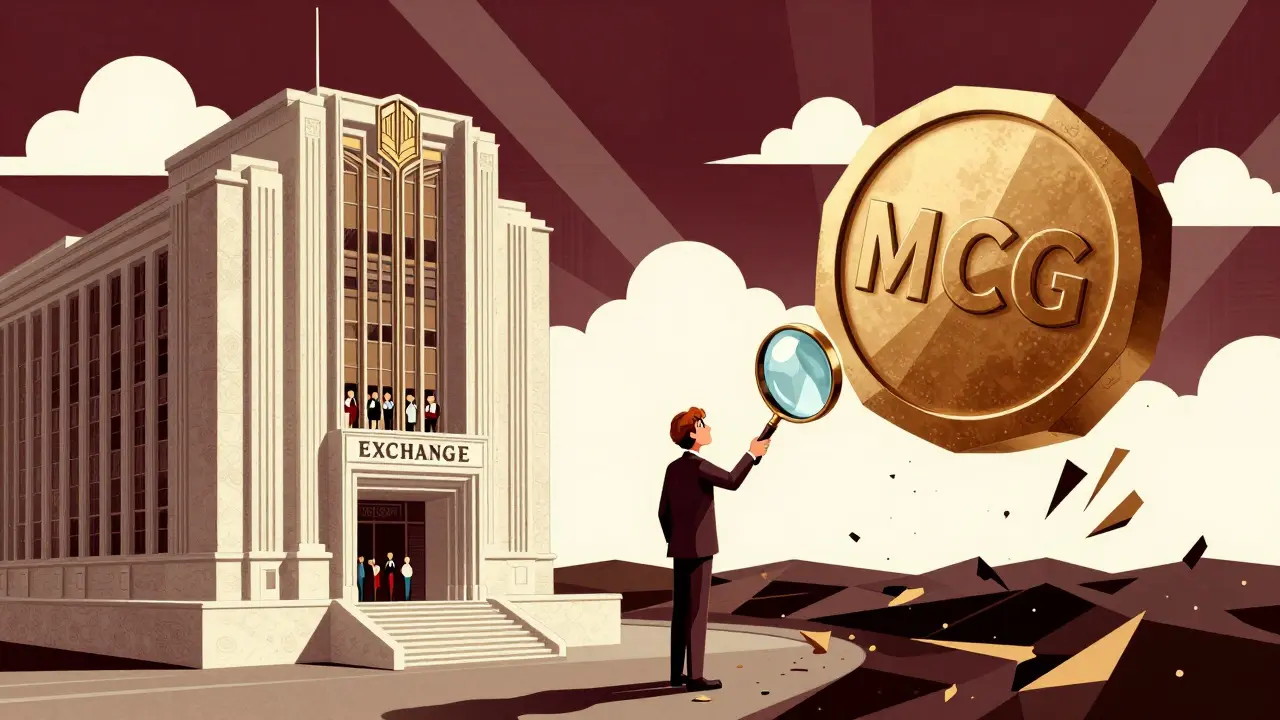
Let’s look at the numbers, because they tell a grim story. As of early 2026, MCG trades at a fraction of a cent-around $0.000139. While some beginners see a low price as a bargain, it actually indicates severe dilution and lack of demand. For context, BNB, the native token of Binance, commands a market cap over $6 billion because it powers a real economy of traders and developers. MCG’s market cap hovers below $1.5 million. It is a micro-cap asset with negligible influence.
Analyst predictions for 2026 are overwhelmingly negative. Algorithmic forecasts from sources like WalletInvestor predict a catastrophic decline, potentially dropping to $0.000005 by the end of the year. That represents a loss of nearly 96%. Even the most optimistic models suggest only marginal gains that wouldn’t cover transaction fees on the Ethereum network. Why would anyone invest in an asset with such poor fundamentals and no growth trajectory? Usually, it’s because they were misled by marketing.
| Feature | Top-Tier Exchange (e.g., Coinbase) | Microchain / MCG Context |
|---|---|---|
| Regulatory Status | Fully licensed, KYC/AML compliant | No verifiable license or legal entity |
| Market Cap | Billions (stable liquidity) | Under $1.5 million (illiquid) |
| Utility | Trading, staking, fee discounts | Vague governance claims, no real-world app |
| Security | Audited, insured custodial storage | Smart contract risks, no insurance |
| Support | 24/7 customer service | Non-existent or bot-only |
Why Do These Fake Platforms Exist?
You might wonder why someone would create a fake exchange or promote a worthless token. The answer is simple: profit extraction. Scammers use sophisticated websites that mimic the look of professional platforms. They use terms like "AI-driven trading," "quantitative analysis," or "governance rights" to sound technical and appealing.
In many cases, these sites are designed to harvest your private keys or seed phrases. Once you connect your wallet to interact with the "Microchain" platform, smart contracts may drain your existing holdings. Other variants operate as "honeypots," allowing you to buy the token but preventing you from selling it. You watch your balance grow on paper, but when you try to cash out, the transaction fails. This is a well-documented tactic in the crypto space, targeting inexperienced users who trust flashy interfaces over due diligence.

Safer Alternatives for Trading in 2026
If your goal is to participate in the crypto market, you don’t need obscure tokens or unverified exchanges. The industry has matured significantly by 2026, offering secure, regulated options that protect your capital.
For beginners, centralized exchanges remain the safest entry point. Kraken is known for its strong security posture and transparency. Coinbase offers ease of use and direct integration with traditional banking systems. Both platforms undergo regular security audits and comply with strict anti-money laundering laws. If you prefer decentralization, consider using established Layer-2 solutions like Optimism or Arbitrum to reduce gas fees while interacting with verified DeFi protocols.
Always verify the URL before entering credentials. Bookmark the official sites of major exchanges rather than clicking links from social media ads. Use hardware wallets like Ledger or Trezor to store significant amounts of crypto offline. These steps might seem tedious, but they are the difference between building wealth and losing it to fraud.
How to Verify Any Crypto Project
Before trusting any platform or token, run this quick checklist:
- Check Domain Age: Use tools like WHOIS to see when the website was registered. Scam sites often launch weeks before gaining traction.
- Search for Community Feedback: Look beyond the project’s own Telegram or Discord. Search Reddit or independent forums for user experiences. If there are no complaints, be suspicious-legitimate projects always have some noise.
- Verify Contract Addresses: For tokens, check the contract address on Etherscan. Look at the holder distribution. If one wallet holds more than 50% of the supply, it’s a centralization risk.
- Look for Audits: Reputable projects hire firms like CertiK or OpenZeppelin to audit their code. If no audit report is available, do not connect your wallet.
Is Microchain a legitimate crypto exchange?
No. There is no evidence that Microchain operates as a regulated or functional cryptocurrency exchange. It appears to be either a fraudulent platform or a misunderstanding of the MicroChains Gov Token (MCG), which is a low-value utility token, not a trading venue.
What is the MicroChains Gov Token (MCG)?
MCG is an ERC-20 token on the Ethereum blockchain intended for governance within the MicroChains ecosystem. It has a very low market cap (under $1.5 million) and extreme volatility. Analysts predict significant price declines in 2026, making it a high-risk speculative asset with little proven utility.
Can I lose money by connecting my wallet to Microchain?
Yes. If the platform is a phishing site or uses malicious smart contracts, connecting your wallet could allow scammers to drain your existing crypto holdings. Always verify the legitimacy of any dApp before granting approval.
Where can I safely trade cryptocurrencies in 2026?
Stick to regulated, well-known exchanges like Coinbase, Binance, Kraken, or MEXC. These platforms offer security features, customer support, and compliance with financial laws, reducing the risk of fraud.
Why is MCG so cheap?
The low price reflects low demand, high supply dilution, and lack of utility. Unlike tokens that power major networks, MCG has no widespread adoption or revenue model, leading analysts to forecast continued depreciation.