Did you miss the PandoLand crypto gaming project that distributed $PANDO tokens in early 2025? If you were scrolling through Twitter in March 2025 and saw everyone talking about pandas and free money, you weren't imagining things. The $PANDO token airdrop was a real event, but it is now history. For those catching up or wondering if they missed out on a life-changing sum of crypto, here is the unvarnished truth about what happened, how much was given away, and why this specific drop matters for the future of Play-to-Earn (P2E) gaming.
The Quick Facts: What Was the PandoLand Airdrop?
Let’s cut straight to the chase. The PandoLand airdrop ran from March 4 to March 10, 2025. It was not an open-ended quest where you grind points for months. It was a tight, one-week window designed to distribute a fixed amount of value to a specific number of people.
Here are the hard numbers that defined the event:
- Total Token Supply: 1,000,000,000 (1 billion) $PANDO tokens.
- Airdrop Allocation: 500,000 $PANDO tokens (just 0.05% of the total supply).
- Total Value Distributed: $500,000 USD.
- Number of Winners: Exactly 500 participants.
- Average Win Size: $1,000 USD per winner.
Unlike massive ecosystem drops like 0G, which used complex NFT holder snapshots and progressive distributions announced later in September 2025, PandoLand kept it simple. They picked 500 lucky winners and handed out the keys. If you weren’t one of those 500, you got nothing. No consolation prizes, no partial refunds. It was binary: you won or you didn’t.
How Did People Qualify? (The Mechanics)
You might be asking, "Was I eligible?" Well, the doors are closed now, but understanding the mechanism helps explain why so many people felt left out. The barrier to entry was surprisingly low, which is both its strength and its weakness.
To qualify, you didn’t need to stake thousands of dollars in ETH or hold rare NFTs. You needed an active Twitter account. That was it. The tasks involved standard social media engagement:
- Following the official PandoLand accounts.
- Retweeting promotional content.
- Engaging with community posts (likes, replies).
This approach prioritized broad accessibility over technical expertise. Unlike Play AI Network, which required users to accumulate "Aura" points through ongoing activity leading up to their Token Generation Event (TGE) in Q4 2025, PandoLand wanted immediate hype. They wanted noise on social media.
However, this simplicity attracted a mixed crowd. While genuine gamers joined, many speculative traders also signed up just for the free tokens, with zero interest in playing the game. This is a common trap in the Play-to-Earn space: attracting mercenaries rather than missionaries.
PandoLand vs. The Competition in 2025
To understand where PandoLand stood, we have to look at what else was happening in the crypto gaming world during that same period. The landscape in 2025 was crowded, and projects had to fight hard for attention.
| Project | Token | Distribution Method | Scale / Scope | Status (as of Aug 2026) |
|---|---|---|---|---|
| PandoLand | $PANDO | Social Media Tasks (Twitter) | Small (500 winners, $500k total) | Completed (March 2025) |
| Arena Two | $ATWO | Tournament-based mechanics | Large (1B supply, extended timeline) | Ongoing (through April 2026) |
| Play AI Network | $PLAI | Point Accumulation ("Aura") | Medium-Large (Ongoing TGE prep) | TGE Expected Q4 2025 |
| 0G Labs | 0G | NFT Holder Snapshots | Very Large (Progressive distribution) | Active Distribution |
As you can see, PandoLand occupied a mid-tier position. It wasn’t as massive as the 0G drop, which targeted existing NFT holders with sophisticated snapshotting algorithms. But it was more immediate than Arena Two, which stretched its rewards out over tournaments extending into 2026. PandoLand’s advantage was clarity: you knew exactly when it started and when it ended. Its limitation was exclusivity: only 500 people could win, creating a lot of frustration among the thousands who participated but didn’t make the cut.
The Tech Behind the Panda: Ethereum and NFTs
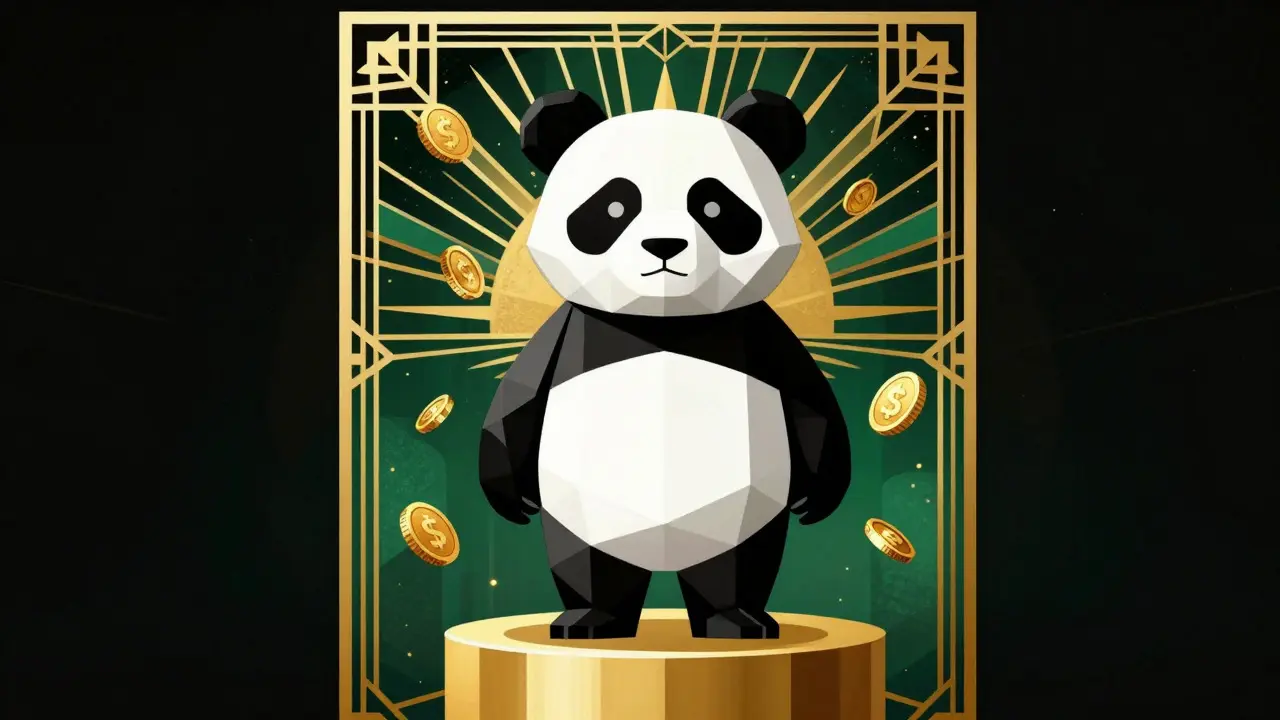
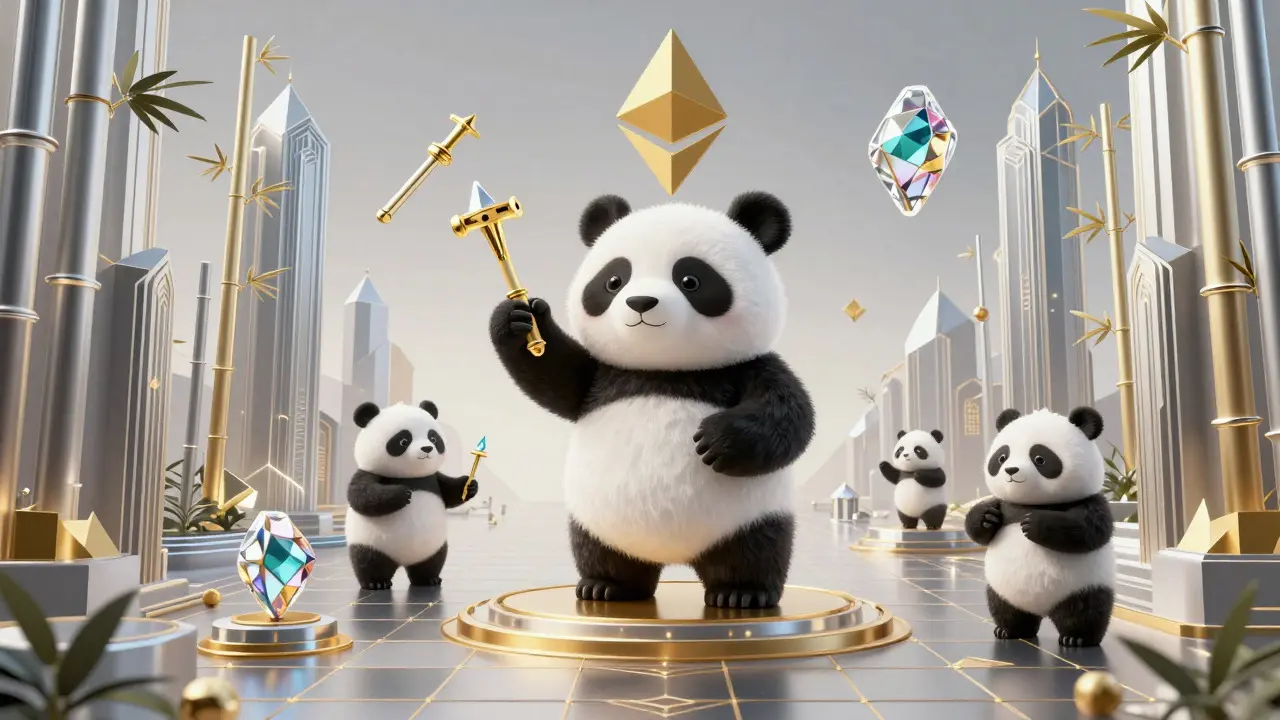
Beyond the free money, what actually is PandoLand? At its core, it is a blockchain game built on the Ethereum blockchain. The developers marketed it as a "safe, fair, and secure" environment, leveraging Ethereum’s robust security model to protect user assets.
The gameplay revolves around exploring a virtual world inspired by pandas. But this isn’t just a cartoon; it’s an economy. Players own digital assets via Non-Fungible Tokens (NFTs). These include:
- Characters: Your avatar in the game.
- Items: Tools, weapons, or cosmetic upgrades.
- Land Parcels: Virtual real estate that can generate passive income.
The economic model allows players to start without an initial investment (thanks to the airdrop) and then earn cryptocurrency through quests and exploration. All earned items are stored on-chain, meaning true ownership. You can trade them on marketplaces, sell them for profit, or use them to enhance your gameplay. This "play-and-earn" loop is designed to keep users engaged long after the initial airdrop hype fades.
Community Reaction: Hype vs. Reality
How did people feel about it? The reaction was split, as is typical in crypto. On one side, Avni Patel, a crypto writer with nearly a year of experience in blockchain analysis, praised PandoLand as one of the "best airdrops in the crypto space" during March 2025. She highlighted the seamless combination of gaming utility with earning potential, noting that the straightforward claiming process was a breath of fresh air compared to complex point systems.
On the other side, industry observers raised valid concerns. The primary critique focused on sustainability. Can a P2E game survive once the free tokens run out? Many critics argued that the Twitter-based qualification attracted speculators who would dump their tokens immediately upon claiming, causing price volatility and harming the long-term health of the ecosystem. Social media discussions were dominated by questions like "When do I claim?" and "Why wasn’t I selected?" rather than deep dives into game mechanics or lore.
This highlights a critical challenge for all P2E projects: retaining players who care about the game, not just the payout. PandoLand’s small winner pool created a sense of exclusivity that generated anticipation, but it also bred resentment among the majority who participated and received nothing.
Is There Still Time to Join?
Here is the bottom line: The airdrop is over. As of August 2026, the distribution of those 500,000 tokens is complete. If you didn’t claim yours back in March 2025, it’s gone. There is no retroactive claim process.
However, that doesn’t mean PandoLand is dead. The project continues to operate, and you can still buy $PANDO tokens on secondary markets or purchase NFTs to enter the game. The question now shifts from "How do I get free tokens?" to "Is the game fun enough to justify buying in?"
For new players entering in 2026, the strategy changes. You’re no longer relying on luck or social media tasks. You’re investing based on the quality of the gameplay, the strength of the community, and the performance of the Ethereum network. Keep an eye on the project’s development updates. Are they releasing new content? Is the player base growing? These are the metrics that matter now.
Lessons Learned for Future Airdrops
If you missed PandoLand, don’t panic. Use this as a case study for the next big thing. Here is what you should take away:
- Speed Matters: Airdrops with short windows (like PandoLand’s 7 days) require constant vigilance. Set alerts for projects you follow.
- Read the Fine Print: Understand if the drop is based on social tasks, NFT holdings, or testnet participation. Each requires a different preparation strategy.
- Beware of Speculation: Projects that rely solely on social buzz may struggle with retention. Look for games with actual playable demos before launch.
- Diversify Your Efforts: Don’t put all your eggs in one basket. Engage with multiple projects like Arena Two or Play AI Network to increase your chances across the board.
The crypto gaming sector is evolving rapidly. Regulatory scrutiny is increasing, and players are becoming more discerning. The era of easy, risk-free money is fading, replaced by a meritocratic system where engagement and skill determine rewards. PandoLand was a glimpse into this transition-a small, sharp burst of opportunity that rewarded the quick and connected.
Can I still claim the PandoLand $PANDO airdrop in 2026?
No. The PandoLand airdrop officially concluded on March 10, 2025. All 500,000 allocated tokens were distributed to the 500 selected winners during that week. There is no current mechanism to claim missed tokens retroactively.
What was the average value of the PandoLand airdrop?
The total value distributed was $500,000 USD among 500 winners, resulting in an average allocation of $1,000 USD worth of $PANDO tokens per participant.
How did PandoLand select its winners?
Winners were selected based on completion of specific social media tasks on Twitter, including following official accounts, retweeting promotional content, and engaging with community posts. The selection was limited to exactly 500 participants.
Is PandoLand built on Ethereum?
Yes. PandoLand is a Play-to-Earn game built on the Ethereum blockchain, utilizing smart contracts for secure asset ownership and transactions.
How does PandoLand compare to other 2025 airdrops?
Compared to larger-scale operations like 0G or tournament-based models like Arena Two, PandoLand was smaller in scope (0.05% of supply) but faster in execution. It offered immediate distribution rather than long-term point accumulation.
Do I need NFTs to play PandoLand now?
While the initial airdrop allowed free entry, ongoing gameplay typically involves owning NFTs such as characters, items, or land parcels. These can be purchased on secondary markets if you missed the initial free distribution.