Imagine sending a letter to someone. In a transparent world, the post office writes your name and theirs on the envelope for everyone to see forever. That is how most blockchains work. But what if you could send that same letter inside an unmarked box? Only the recipient knows where it came from or who it was meant for. This is the power of stealth addresses, a cryptographic tool used in privacy-focused cryptocurrencies like Monero.
If you have ever wondered how people keep their financial history private on public ledgers, stealth addresses are half the answer. They break the link between a transaction and the person receiving the money. Without them, every payment would be tied to a permanent, public wallet address, making it easy for anyone to track your spending habits.
How Stealth Addresses Actually Work
You might think hiding money means creating a secret account no one can find. Stealth addresses work differently. They create a unique, one-time address for every single transaction. Even if you receive payments from ten different people, each payment lands in a different address. To an outsider looking at the blockchain, these addresses look like random noise. There is no obvious pattern linking them back to you.
Here is the simple breakdown of the process:
- The Setup: You (the recipient) generate two keys. One is public, which you share with others so they can send you money. The other is private, which you keep secret. These combine to form your "stealth address" infrastructure.
- The Send: When someone wants to pay you, they use your public key and a random number. They run this through a mathematical formula to create a brand-new, one-time-only address just for that specific transaction.
- The Receive: The money sits at this new address on the blockchain. Because you hold the private key, your wallet software scans the entire blockchain, checks every transaction against your private key, and identifies which ones belong to you. You see the funds; the rest of the world sees only a string of characters.
This system relies on elliptic curve cryptography, specifically using algorithms like Curve25519. It ensures that while the sender can calculate the correct destination, no one else can reverse-engineer the math to find out who the recipient really is.
Monero vs. Other Privacy Coins
Not all privacy coins handle stealth addresses the same way. Monero (XMR) made stealth addresses mandatory for every transaction. This means all users benefit from the privacy features automatically. You don't have to opt-in or worry about whether the person paying you also opted in.
Other coins take different approaches:
| Coin | Primary Tech | Privacy Default? | Tracing Difficulty |
|---|---|---|---|
| Monero | Stealth Addresses + Ring Signatures + RingCT | Yes (Mandatory) | Very High (Only ~12% traceable) |
| Zcash (ZEC) | zk-SNARKs (Zero-Knowledge Proofs) | No (Optional Shielded Pool) | Moderate (~65% traceable if not shielded) |
| Dash (DASH) | PrivateSend (CoinJoin Mixing) | No (Optional) | Low (~87% traceable) |
Zcash uses zero-knowledge proofs to hide transaction details entirely, but only about 3.5% of its transactions actually use the private "shielded" pool. Most Zcash transactions remain transparent. Dash uses a mixing technique called PrivateSend, which shuffles coins together. However, researchers have shown that sophisticated analysis can still link most Dash transactions back to their origins. Monero’s combination of stealth addresses, ring signatures (to hide the sender), and Ring Confidential Transactions (RingCT, to hide the amount) creates a much stronger privacy layer.
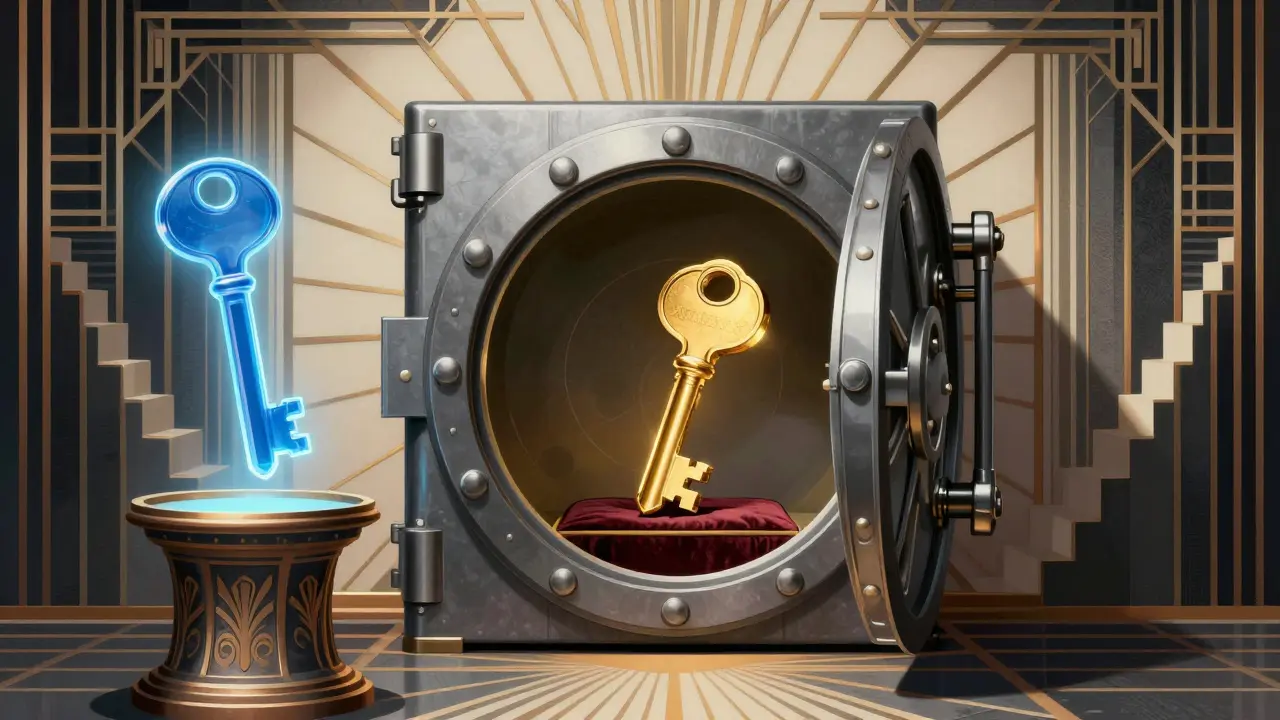
The Trade-Offs: Privacy Comes at a Cost
Nothing is free in computer science, and stealth addresses are no exception. While they provide excellent anonymity, they introduce several challenges that affect usability and network performance.
Transaction Size and Speed
Because stealth addresses require more complex cryptographic data, transactions become larger. A typical Monero transaction averages around 13.2 kilobytes. Compare that to Bitcoin, where a standard transaction might be just 250 bytes. Larger transactions mean slower verification times-approximately 1.8 seconds for Monero versus 0.3 seconds for Bitcoin. If you are trying to make microtransactions worth less than a dollar, the fees associated with processing this extra data can eat up a significant portion of the value.
Verification Challenges
In business, you often need proof of payment. With transparent blockchains, you simply share a transaction hash. With stealth addresses, the recipient’s wallet is the only place the transaction is clearly visible as "yours." To prove you received funds without revealing your entire transaction history, you must use a view key. This allows a third party to see incoming transactions but not outgoing ones or the total balance. Managing these keys adds a layer of complexity for non-technical users.
Regulatory Scrutiny
Governments dislike opacity. The Financial Action Task Force (FATF) has flagged privacy-enhancing technologies as high-risk for anti-money laundering compliance. As a result, many centralized exchanges in Europe and North America have delisted privacy coins like Monero. This limits liquidity and makes it harder for average users to buy and sell these assets legally.
Why Stealth Addresses Matter Beyond Anonymity
You might assume stealth addresses are only useful for illegal activities. That is a common misconception. In reality, they serve critical legitimate needs.
Financial Privacy as a Human Right
When you use cash, the store doesn’t know your salary, your medical bills, or your political donations. Digital payments should offer the same baseline privacy. Stealth addresses prevent companies and governments from building detailed profiles of your spending habits based on your wallet address.
Protection for Activists and Journalists
Whistleblowers, journalists, and activists in oppressive regimes rely on untraceable payments. If a donor sends funds to a charity supporting human rights, a transparent blockchain could expose both the donor and the organization to retaliation. Stealth addresses break this link.
Corporate Security
Companies use privacy coins to protect sensitive financial data. Revealing exactly when and how much a company pays for cybersecurity services or legal consultations can give competitors an edge. Discretion is a business asset.

Getting Started with Stealth Addresses
If you want to use stealth addresses, you don’t need to be a cryptographer. The technology runs in the background. Here is how to set it up safely:
- Choose the Right Wallet: Download an official Monero wallet like the GUI wallet or Cake Wallet. Avoid unofficial forks that may compromise security.
- Generate Your Keys: Upon creation, the wallet automatically generates your primary address, view key, and spend key. Write down your 25-word mnemonic seed phrase on paper. Never store it digitally.
- Understand Subaddresses: Modern wallets allow you to generate unlimited subaddresses. Use a different subaddress for each merchant or service. This adds another layer of obfuscation, making it even harder to link your various purchases together.
- Sync Carefully: When restoring a wallet, ensure you sync with a trusted node. Some public nodes may log your IP address, compromising your location privacy even if your transaction privacy is intact.
The learning curve is moderate. Most users report grasping the basics within 15-30 minutes. The main hurdle is understanding that you cannot easily "check the balance" on a public block explorer. You must trust your local wallet software to scan the chain and identify your funds.
The Future of Stealth Technology
The landscape for privacy coins is evolving rapidly. Regulatory pressure is increasing, but so is the demand for financial privacy. Monero continues to upgrade its protocol to stay ahead of tracing techniques. Recent updates like "Fluorine Flame" have reduced transaction sizes by 12% without sacrificing privacy. Future plans include quantum-resistant cryptography to protect against future computing threats.
As blockchain analytics firms invest millions into de-anonymization tools, the arms race between privacy advocates and surveillance entities will intensify. Stealth addresses remain one of the most robust defenses available today, but they are not foolproof. Timing analysis and exchange Know Your Customer (KYC) data can still leak information. For maximum privacy, users must adopt good operational security practices beyond just using the right coin.
Are stealth addresses legal?
Using stealth addresses is generally legal in most jurisdictions. However, using privacy coins to evade taxes, launder money, or finance illegal activities is a crime. Regulations vary by country; some nations have banned exchanges from listing privacy coins, making it difficult to convert them to fiat currency legally.
Can I use stealth addresses on Bitcoin?
No, Bitcoin does not support native stealth addresses. Its protocol is designed for transparency. While there are second-layer solutions like Lightning Network that offer some privacy, they do not provide the same level of recipient anonymity as Monero's built-in stealth address system.
What is the difference between a stealth address and a regular address?
A regular address is static and reused for every transaction, allowing anyone to track your entire history. A stealth address is dynamic and generated uniquely for each transaction, ensuring that external observers cannot link multiple payments to the same recipient.
Do stealth addresses hide the transaction amount?
No, stealth addresses only hide the recipient's identity. To hide the transaction amount, you need additional technology like Ring Confidential Transactions (RingCT), which is integrated into Monero. Without RingCT, the amount sent would still be visible on the blockchain.
Is Monero completely untraceable?
While Monero provides strong privacy, no system is 100% untraceable. Sophisticated analysis combining timing patterns, exchange KYC data, and behavioral metadata can potentially de-anonymize a small percentage of transactions. Best practices include using secure networks and avoiding predictable transaction behaviors.