Bitcoin imports Iran: How Bitcoin flows into Iran despite sanctions
When we talk about Bitcoin imports Iran, the movement of Bitcoin into Iran through informal and technical channels to bypass financial restrictions. Also known as Bitcoin smuggling, it's not about legal trade—it's about survival, access, and keeping value safe when banks won't help. Iran’s economy has been under heavy international sanctions for years. The U.S., EU, and others have blocked Iranian banks from the global financial system. That means no SWIFT, no international wire transfers, no access to dollars or euros through normal channels. But Bitcoin? It doesn’t care about borders or embargoes. People in Iran have found ways to bring Bitcoin in—through peer-to-peer trades, local miners, foreign remittances, and even cash-for-Bitcoin deals at markets or border towns.
This isn’t theoretical. In 2023, Iranian users were among the top 5 countries globally for P2P Bitcoin trading volume on platforms like LocalBitcoins and Paxful. They buy Bitcoin with cash, gift cards, or even gold. Some traders fly into neighboring countries, buy Bitcoin in Turkey or the UAE, and bring it back in hardware wallets. Others use mining rigs powered by cheap electricity to generate Bitcoin locally. The government doesn’t officially recognize Bitcoin, but it also doesn’t stop it—partly because it can’t, and partly because it needs the foreign currency that flows in when Bitcoin is sold for rials. This creates a strange, unofficial economy where Bitcoin acts like a parallel currency. It’s not just for speculators. It’s for families sending money home, small businesses buying supplies, and students paying for online courses.
Related to this are crypto sanctions, government restrictions that block financial access but fail to stop digital asset flows, and Bitcoin adoption, the real-world use of Bitcoin as a medium of exchange or store of value outside traditional systems. These aren’t just buzzwords—they’re daily realities for millions. And while regulators in Washington or Brussels debate whether to punish crypto exchanges, people in Tehran, Mashhad, and Isfahan are already using Bitcoin to pay rent, buy medicine, or send money to relatives abroad. The same tools that make Bitcoin powerful globally—decentralization, censorship resistance, and peer-to-peer networks—are the ones that make it indispensable in places like Iran.
What you’ll find below isn’t theory. It’s real cases: how Bitcoin moves, who’s moving it, and what happens when governments try to block what can’t be stopped. You’ll see stories of miners in dusty garages, traders risking fines to swap cash for crypto, and families keeping their savings alive with a single hardware wallet. This isn’t about speculation. It’s about access. And if you want to understand how Bitcoin survives under pressure, you start here—with Bitcoin imports Iran.
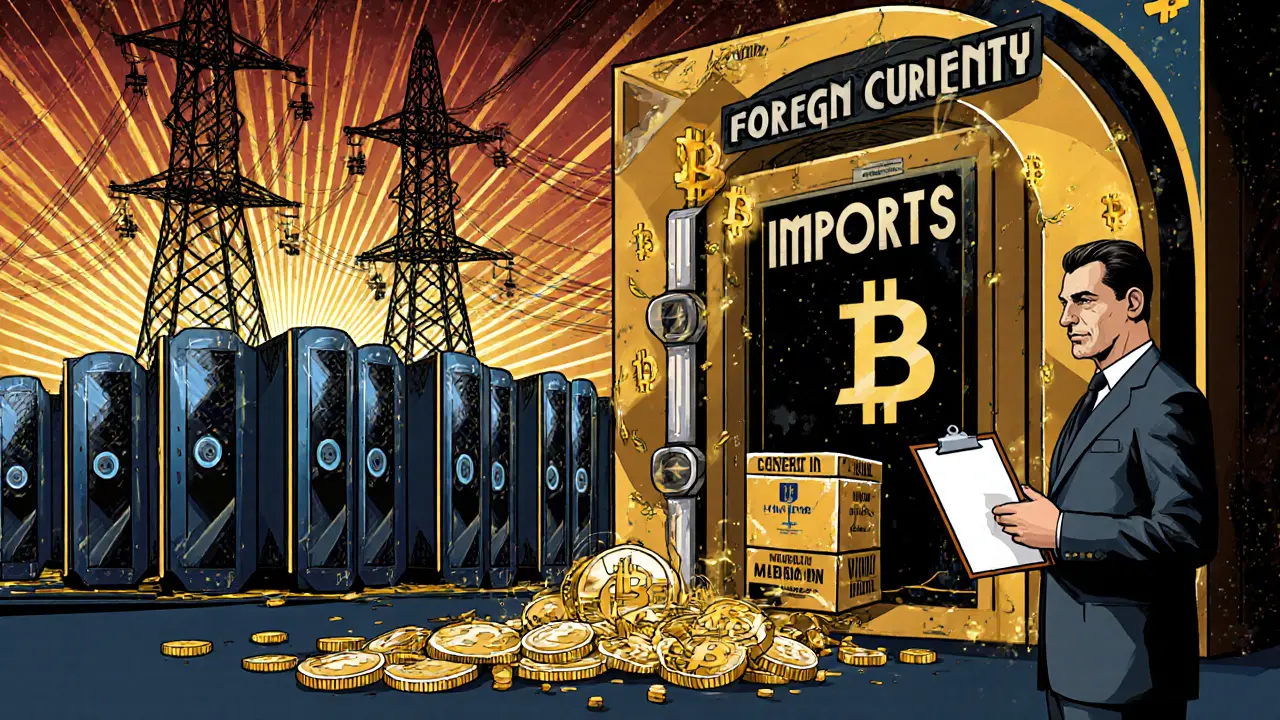
How Bitcoin Enables Imports in Iran Amid Sanctions
Iran uses Bitcoin mining to bypass sanctions and fund critical imports, turning cheap electricity into foreign currency through a state-controlled system that keeps crypto out of citizens' hands but fuels its economy.