Crypto Mining Ban Venezuela: What Happened and How It Changed Crypto in Latin America
When Venezuela, a country with hyperinflation and broken banking, tried to ban crypto mining in 2021, it didn’t shut down Bitcoin—it pushed it deeper underground. The government claimed it was protecting the national power grid, but the real reason was simple: they couldn’t control it. Bitcoin mining in Venezuela wasn’t just a technical activity—it became a survival tool for millions. People turned their homes into mini-data centers, running rigs on stolen electricity, trading mined Bitcoin for food, medicine, and rent. This wasn’t speculation. It was necessity.
What followed wasn’t silence. It was adaptation. While official mining stopped, crypto adoption, the use of digital assets to bypass broken financial systems exploded. Venezuelans started using peer-to-peer platforms like LocalBitcoins and Paxful to buy Bitcoin with cash, then traded it for USDT to protect savings from the peso’s collapse. cryptocurrency regulations Venezuela, a patchwork of conflicting policies and ignored laws became meaningless in daily life. The state couldn’t cut power to every home, and it couldn’t arrest every miner. So it did nothing. Meanwhile, neighbors started sharing mining rigs, forming local crypto collectives where one person’s rig could power five families’ wallets. This wasn’t tech innovation—it was human resilience.
Other countries watched. Argentina, Brazil, and Colombia saw how Venezuela turned a ban into a workaround. They didn’t copy the ban—they copied the behavior. In places where banks freeze accounts and inflation hits 200%, crypto isn’t an investment. It’s a utility. The crypto mining shutdown, a policy meant to control digital assets ended up proving that you can’t stop people from using money that works. Today, Venezuela’s crypto scene runs on solar panels, smuggled ASICs, and WhatsApp groups. Miners don’t talk about hash rates—they talk about how many kilos of rice they bought this week with their Bitcoin. The ban didn’t kill crypto. It made it more real.
Below, you’ll find deep dives into how crypto thrives under bans, what happens when governments lose control of money, and the real stories behind the tokens and exchanges people actually use when the system fails. These aren’t speculative coins or hype-driven airdrops. These are survival tools.
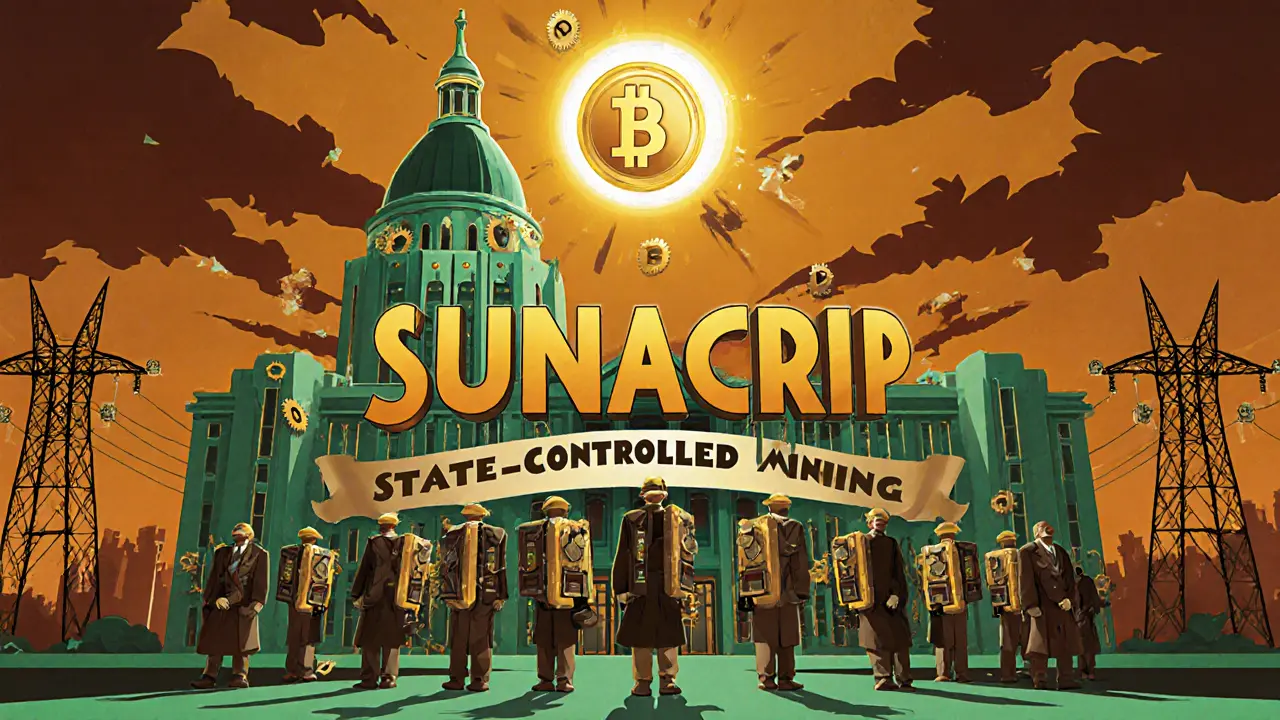
State Control of Crypto Mining in Venezuela: How the Government Manages and Restricts Digital Mining
Venezuela's government controls all crypto mining through SUNACRIP, requiring licenses, state-run mining pools, and strict compliance. Despite cheap electricity, broken infrastructure and corruption have made the system chaotic-yet millions still use crypto daily to survive hyperinflation.