Cryptocurrency Mining in Iran: Rules, Risks, and Realities
When you hear cryptocurrency mining in Iran, the practice of using electricity-intensive hardware to validate blockchain transactions and earn crypto rewards. Also known as crypto mining in Iran, it's not just a tech trend—it's a survival strategy for many amid economic sanctions and currency collapse. Between 2021 and 2023, Iran became the third-largest Bitcoin mining hub in the world, behind only the U.S. and Kazakhstan. Why? Cheap electricity, a population desperate for stable income, and government tolerance—until it wasn’t.
Iran’s government initially encouraged mining to earn hard currency and reduce power waste. Miners plugged in rigs in basements, garages, and even mosques. But by 2024, the country faced massive blackouts. Power grids buckled under the load. The government responded with sudden bans, electricity caps, and raids on unlicensed farms. Today, mining is legal only if you’re registered, pay high fees, and use government-approved energy quotas. Most miners operate in the gray zone—running rigs at night, using stolen power, or hiding behind fake businesses.
It’s not just about Bitcoin. Miners in Tehran and Mashhad are also chasing Ethereum Classic, Litecoin, and even newer coins like GPTON, a gaming token on the TON blockchain that can be mined with low-end hardware. The hardware? Mostly used Antminer S19s, second-hand GPUs from China, and custom rigs built from spare parts. Many miners trade their crypto for stablecoins like USDT, then use peer-to-peer platforms to exchange them for Iranian rials or cash.
But the risks are real. The government can shut down your power in minutes. Customs seizes imported rigs at the border. And if you’re caught mining without a license, you could face fines, jail, or both. Even so, demand stays high. For families in cities like Isfahan or Tabriz, mining is one of the few ways to earn dollars without leaving the country.
What you’ll find below are real stories, hard facts, and practical breakdowns of what’s happening on the ground. From how crypto mining hardware, specialized machines designed to solve complex cryptographic puzzles for blockchain rewards is smuggled into Iran, to how miners avoid detection, to why some are quitting and switching to DeFi staking instead. You’ll also see how Iran’s crackdown connects to global trends—like how Iran crypto regulations, the shifting legal framework governing digital asset mining and trading in Iran mirror what’s happening in Russia, Venezuela, and even parts of the U.S. This isn’t theory. It’s what people are living every day. And if you’re thinking about mining anywhere, you need to know what’s happening here.
How Bitcoin Enables Imports in Iran Amid Sanctions
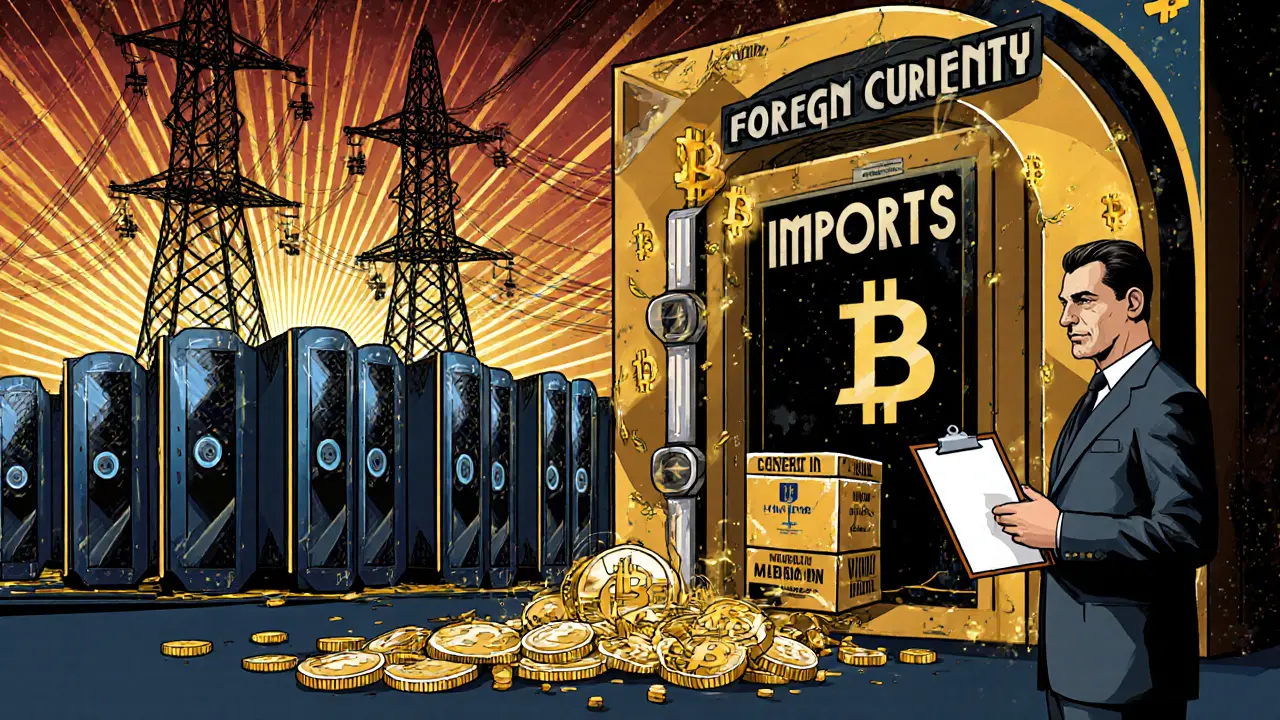
Iran uses Bitcoin mining to bypass sanctions and fund critical imports, turning cheap electricity into foreign currency through a state-controlled system that keeps crypto out of citizens' hands but fuels its economy.