Privacy Blockchain: Secure, Anonymous, and Decentralized Networks Explained
When you think of privacy blockchain, a type of blockchain designed to hide transaction details like sender, receiver, and amount. Also known as anonymous blockchain, it’s not just about secrecy—it’s about control. While Bitcoin shows every transaction on a public ledger, privacy blockchains ensure only you know what you sent, to whom, and when. This isn’t theory. Real users in Iran, Venezuela, and Russia rely on these networks to move value without government oversight or financial surveillance. And it’s not just for activists—anyone who values financial autonomy needs to understand how they work.
Not all blockchains claim privacy, but only a few deliver it. Monero, a cryptocurrency built from the ground up to obscure transaction data using ring signatures and stealth addresses is the gold standard. It doesn’t just hide amounts—it hides who’s involved. Then there’s Zcash, a blockchain that lets users choose between transparent and shielded transactions using zero-knowledge proofs. These aren’t gimmicks. They’re engineering solutions to real threats: tracking, censorship, and asset seizure. Meanwhile, most so-called "private" coins are just marketing. Tokens like SQR, TON, or HBAR may offer speed or low fees, but they don’t protect your financial privacy. If your transaction history is visible on a block explorer, it’s not a privacy blockchain.
Privacy isn’t optional anymore. With regulators demanding KYC on every exchange and analytics firms mapping wallet links across chains, anonymity is the last line of defense. That’s why projects like Garantex and Iran’s mining networks lean on privacy coins to bypass sanctions. It’s why Venezuela’s hyperinflation survivors use Monero to buy groceries online. And it’s why the few remaining users of NEM or SMOLE—despite their other flaws—still care about whether their holdings can be traced. The real question isn’t whether you need privacy. It’s whether you’re using a network that actually gives it to you.
Below, you’ll find real breakdowns of coins that prioritize anonymity, exchanges that support private transactions, and scams hiding behind the word "privacy." Some posts expose dead tokens pretending to be confidential. Others show how governments are trying—and failing—to stop these networks. You won’t find fluff. Just facts about what works, what doesn’t, and why your next crypto move should be private by design.
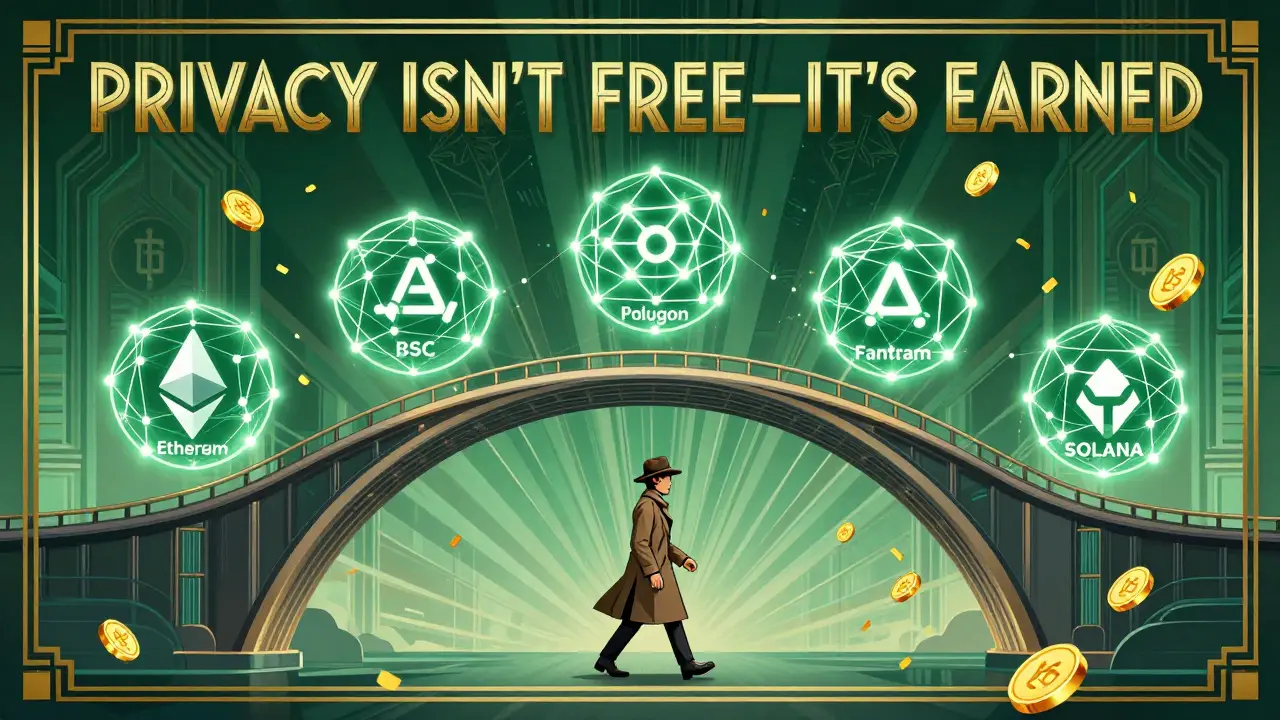
MCASH Airdrop by Monsoon Finance: What Really Happened and How to Earn Tokens
Monsoon Finance never did a traditional MCASH airdrop. Instead, users earn tokens by using its privacy bridge across blockchains. Learn how anonymity mining works, where to get MCASH, and why the price is so low.