Remittances Nepal: How Crypto Is Changing Money Transfers for Families
When someone in Nepal relies on money sent from a relative working overseas, they’re part of a system that’s been broken for decades. Remittances Nepal, the flow of money from abroad to families in Nepal, accounts for nearly 25% of the country’s entire economy. Also known as overseas worker remittances, it’s not just cash—it’s school fees, medicine, roof repairs, and survival. Traditional channels like Western Union or MoneyGram charge up to 10% in fees, and many rural areas have no bank branches within miles. That’s why more Nepalis are turning to cryptocurrency, digital money that moves across borders without middlemen. Also known as crypto remittances, it’s becoming a quiet revolution.
People in Kathmandu might get USDT from a cousin in Malaysia via Telegram, then cash it out at a local exchange booth for Nepali rupees. In Dang or Bajhang, where ATMs are rare, someone might receive Bitcoin through a mobile app, convert it to cash using a trusted local agent, and pay their child’s tuition the same day. No paperwork. No 3-day wait. No hidden fees. This isn’t speculation—it’s daily life for thousands. The digital finance Nepal, the shift from legacy banking to peer-to-peer digital transfers. Also known as crypto-based remittances, it’s not about getting rich. It’s about getting paid. And while regulators in Nepal still warn against crypto, the reality on the ground is different: people are using it because the old system failed them.
Some use decentralized exchanges like those on Solana or BSC to move value fast and cheap. Others trade USDT through local WhatsApp groups, avoiding banks entirely. The tools aren’t perfect—some apps are sketchy, some agents disappear—but the demand is real. And it’s growing. Behind every transaction is a mother paying for insulin, a student buying books, or a farmer fixing a tractor. This isn’t a trend. It’s a necessity. Below, you’ll find real stories, broken platforms, scam alerts, and tools people actually use to send and receive money in Nepal. No fluff. Just what works—and what to avoid.
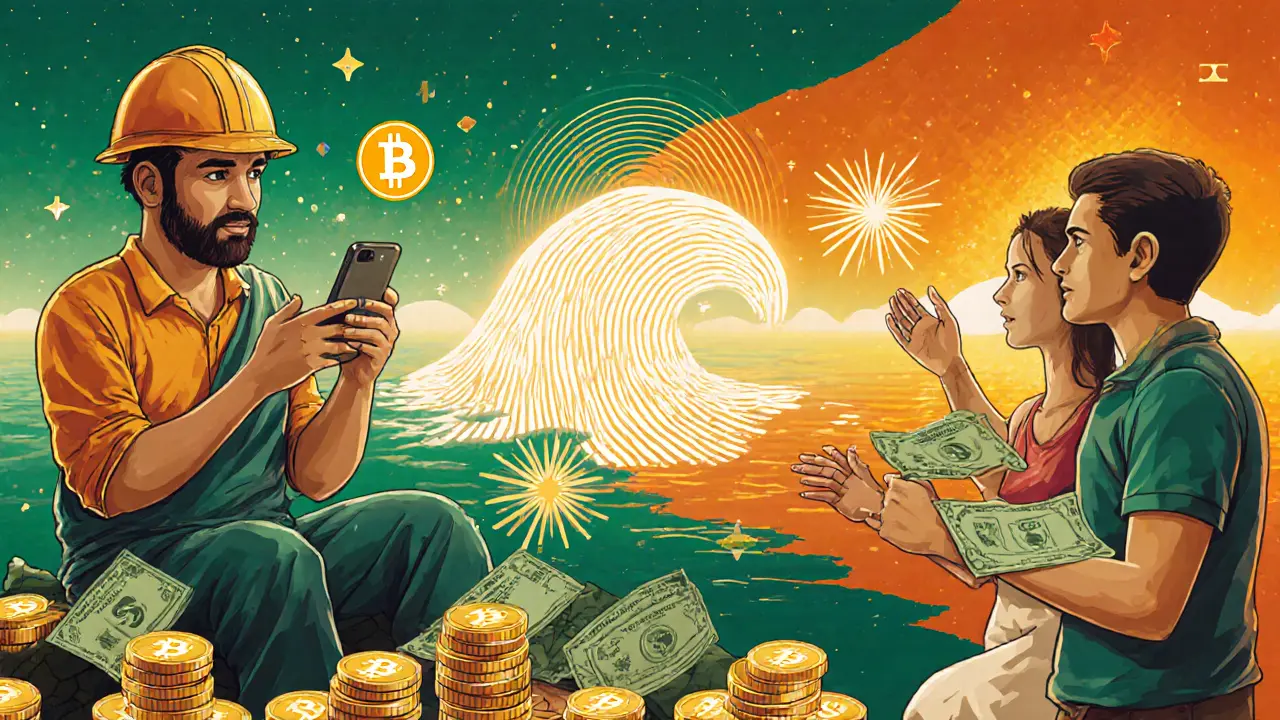
How Nepalis Use Cryptocurrency Despite Complete Ban
Despite a total ban on cryptocurrency in Nepal, citizens use it daily for fast, cheap remittances. With banks slow and expensive, people turn to underground crypto networks - risking jail to send money home.