Smart Contracts: What They Are, How They Work, and Why They Matter in Crypto
When you hear smart contracts, self-executing code on a blockchain that runs without human intervention. Also known as blockchain scripts, they’re the quiet engines behind nearly every crypto transaction you’ve ever made—whether you knew it or not. Unlike traditional contracts signed on paper, smart contracts run on networks like Ethereum and automatically trigger actions when conditions are met. No middleman. No delays. Just code doing what it’s told.
They’re not magic—they’re logic. If you send 1 ETH to a contract address, it might send you tokens back. If a staking pool hits its target, it might distribute rewards. If a trade on a decentralized exchange matches your price, it executes instantly. That’s a smart contract in action. You see them every time you use DeFi, a system of financial apps built on open blockchains without banks—like OraiDEX or Aura Finance—where your funds are managed by code, not a person. They also power blockchain automation, tools like Gelato that handle repetitive tasks like yield farming or liquidation protection, so you don’t have to monitor your positions 24/7.
But smart contracts aren’t flawless. They’re only as good as the code written. A bug can cost millions—just look at the ByBit hack or the collapse of shady tokens like HiveSwap. That’s why some projects, like POOH or RyuJin, make their contracts fully renounced—meaning no one can change them after launch. Others, like OpenLeverage, use them to enable margin trading across DEXs. And then there’s gas fees, the cost of running code on Ethereum, paid in ETH—a barrier that account abstraction is now solving by letting users pay in other tokens or have fees covered by sponsors.
Smart contracts don’t just enable crypto—they define it. They’re why airdrops like VDR or SHO can be distributed fairly, why NFTs can unlock access to games, and why governments can’t easily freeze your assets. They’re the reason you can trade crypto without a bank, lend without a broker, or stake without trusting a third party. But they also demand you understand what you’re signing up for. A contract with zero taxes doesn’t mean it’s safe. A token with a quadrillion supply doesn’t mean it’s valuable. The code doesn’t lie—but the people behind it might.
Below, you’ll find real-world breakdowns of how smart contracts shape everything from meme coins to DeFi protocols, from airdrops to exchange security. Some are clever. Some are dangerous. All are built on the same foundation: lines of code that run without asking permission.
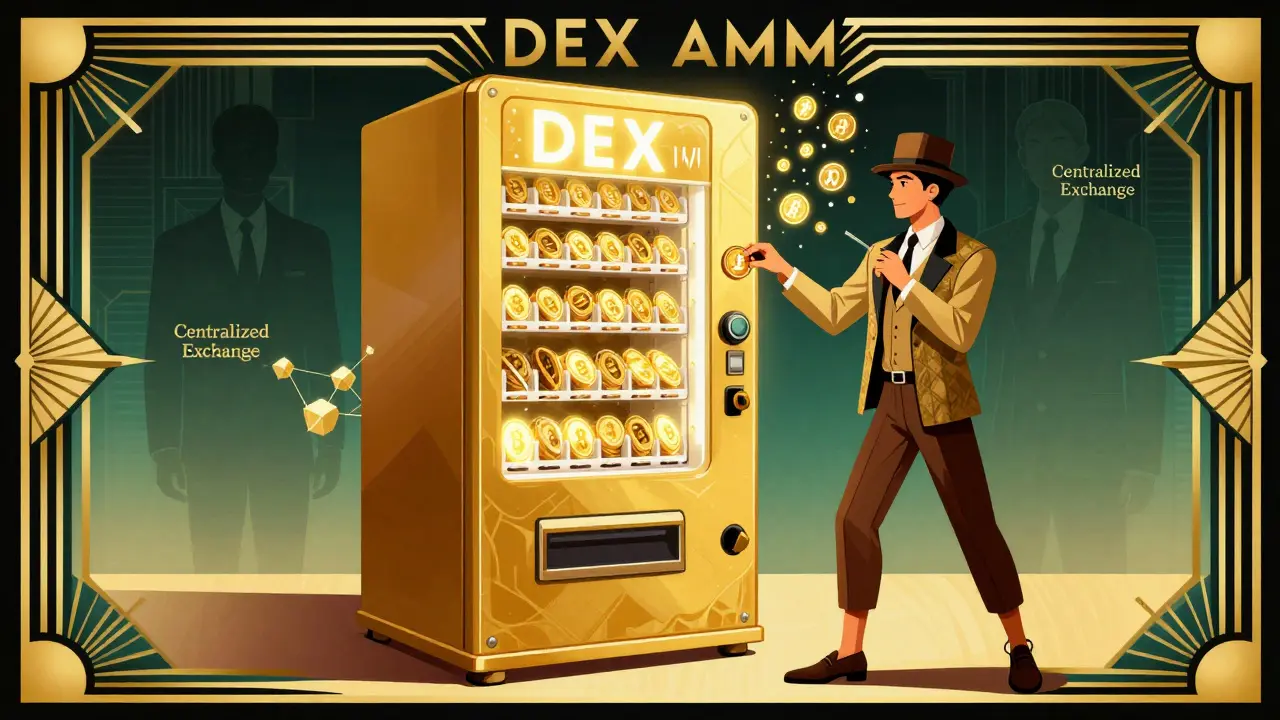
What Are Decentralized Exchanges? A Simple Guide to Peer-to-Peer Crypto Trading
Decentralized exchanges let you trade crypto peer-to-peer without intermediaries. They use smart contracts instead of banks, offer unlimited token options, and keep your funds in your wallet. But they come with risks like gas fees, scams, and complex interfaces.
Benefits of Blockchain Energy Trading
Blockchain energy trading lets households and businesses buy and sell renewable power directly, cutting costs, reducing waste, and empowering communities with transparent, automated peer-to-peer energy markets.
How Microgrids and Blockchain Technology Are Reshaping Local Energy Markets
Microgrids powered by blockchain enable peer-to-peer energy trading, cutting costs and boosting renewable use. Learn how smart contracts, local energy markets, and decentralized tech are transforming electricity.