SUNACRIP: What It Is, Why It Matters, and What You Need to Know
When you hear SUNACRIP, a low-market-cap cryptocurrency token often promoted through social media hype with no clear use case or team. Also known as a ghost coin, it’s one of thousands of tokens that appear overnight, spike briefly, then vanish—leaving traders with nothing but a wallet full of worthless digital scraps. These aren’t investments. They’re digital lottery tickets with odds stacked against you.
What makes SUNACRIP similar to other tokens like Ponke (PONKE), a Solana-based meme coin with a chaotic mascot and zero real utility, or Sunny Side Up (SSU), a Solana DeFi token that crashed 99.9% and lost all trading volume? They all share the same red flags: no team, no roadmap, no community, and no reason to exist beyond a tweet or a Discord hype post. These aren’t projects. They’re distractions. And they’re everywhere—especially on chains like Solana and BSC, where launching a token costs less than a coffee.
Why do people still buy them? Because they see a price of $0.00001 and think, "What if it goes to $1?" But here’s the truth: if a token has no utility, no adoption, and no team behind it, its price doesn’t reflect value—it reflects hope. And hope doesn’t pay bills. Real crypto projects, like Hifi Finance (HIFI), a DeFi protocol offering fixed-rate lending with actual financial mechanics, solve problems. SUNACRIP doesn’t. It just takes your money.
You’ll find posts here that expose exactly how these tokens die—how they vanish from exchanges, how their wallets go silent, how their Discord servers turn into ghost towns. Some of these coins had airdrops, fake listings, or viral memes. None of it mattered. The market doesn’t care about hype. It cares about substance. And SUNACRIP? It has none.
Below, you’ll see real case studies of tokens that looked like opportunities but turned out to be traps. You’ll learn how to spot the next one before you buy. And you’ll understand why the safest crypto move isn’t chasing the next moonshot—it’s knowing when to walk away.
State Control of Crypto Mining in Venezuela: How the Government Manages and Restricts Digital Mining
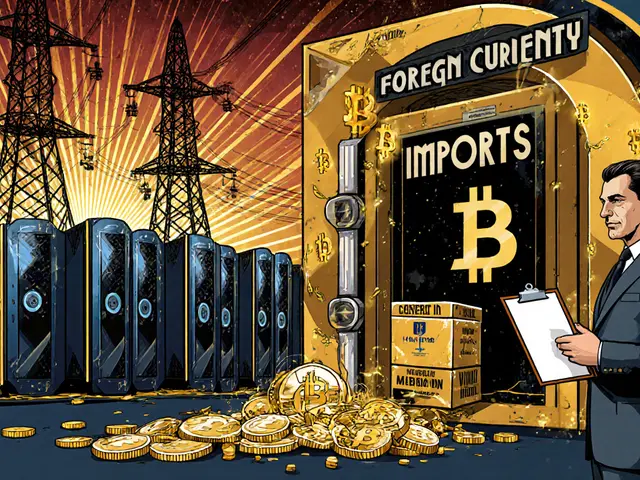
Venezuela's government controls all crypto mining through SUNACRIP, requiring licenses, state-run mining pools, and strict compliance. Despite cheap electricity, broken infrastructure and corruption have made the system chaotic-yet millions still use crypto daily to survive hyperinflation.