
Ever wonder why some traders seem to predict a price drop just before it happens? They aren't using a crystal ball; they're watching the money move. In the world of crypto, transparency is everything. Because blockchains are public ledgers, we can see exactly when massive amounts of assets move into or out of a centralized exchange. These movements, known as exchange inflow and outflow is the process of tracking digital assets as they are deposited into or withdrawn from centralized trading platforms, act as a real-time heartbeat of market sentiment.
If you're trying to figure out if the market is about to pump or dump, looking at these metrics is far more reliable than following a random "influencer" on social media. When you see a sudden spike in coins hitting an exchange, it's usually a sign that people are getting ready to sell. Conversely, when coins vanish from exchanges into private wallets, it often means investors are "HODLing" for the long term. Here is how to make sense of these flows to improve your trading strategy.
The Basics: What Exactly Are Inflows and Outflows?
At its simplest level, an inflow happens when a user sends crypto from a private wallet (like a Ledger or MetaMask) to an account on a centralized exchange (CEX) like Binance or OKX. An outflow is the exact opposite: moving assets off the exchange and back into a private wallet.
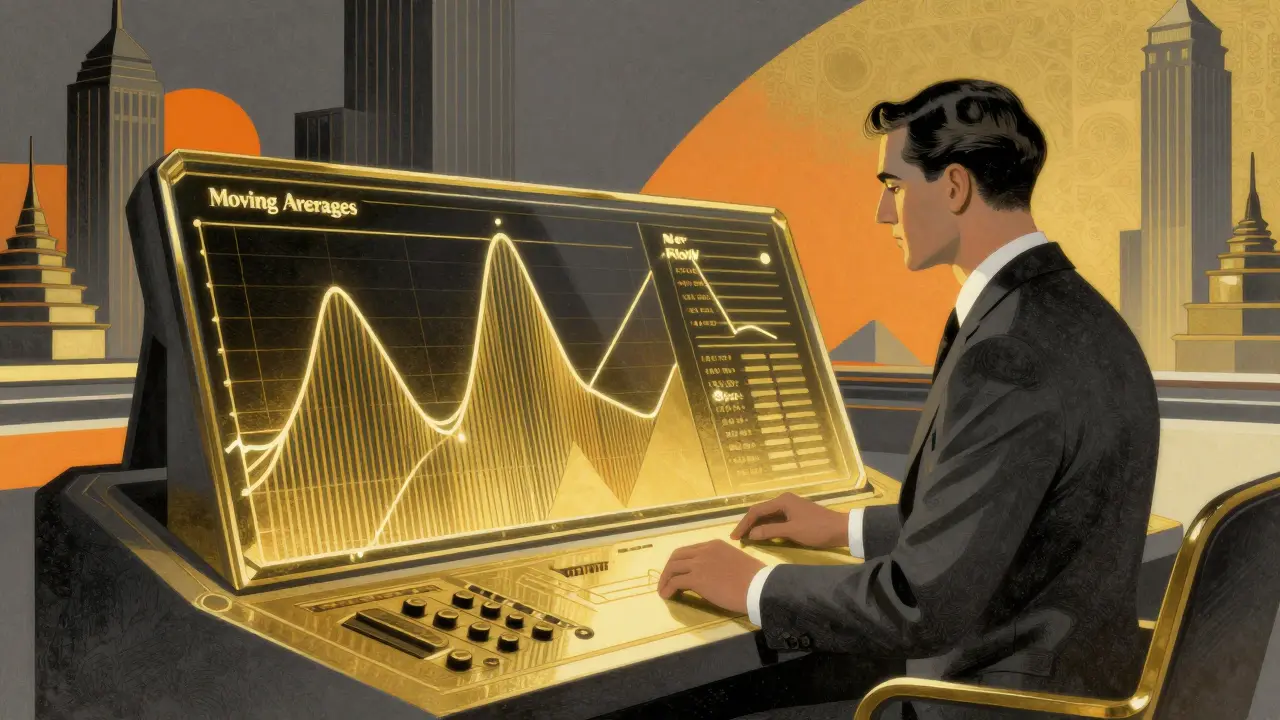
To get a clear picture, professional analysts don't just look at the total amount. They break the data down into specific measurements to avoid being misled by a single "whale" moving funds. For instance, they track the Inflow Mean, which is the average amount per transaction. If the total inflow is high but the mean is low, it means thousands of small retail traders are depositing. If the mean is huge, it's likely a few institutional players making moves. Many traders also use a 7-day moving average (MA7) to smooth out the daily noise and spot the actual trend.
Reading the Market: Bullish vs. Bearish Signals
How do you actually use this data to make money? It comes down to understanding the psychology of the holder. When someone moves Bitcoin onto an exchange, they are essentially putting it "on the shelf" for sale. They can't sell a coin if it's sitting in a cold storage wallet; it has to be on the platform first.
Therefore, a massive surge in Exchange Inflows is typically a bearish signal. It suggests that a large number of holders are preparing to take profits or panic sell. On the flip side, Exchange Outflows are generally bullish. When assets leave an exchange, the available supply for sale drops. This creates a supply shock-if demand stays the same but there are fewer coins available to buy, the price naturally tends to move upward.
| Metric | Action | Typical Sentiment | Likely Outcome |
|---|---|---|---|
| High Inflow | Depositing to CEX | Bearish | Increased selling pressure / Price drop |
| High Outflow | Withdrawing to Cold Storage | Bullish | Reduced liquid supply / Price rise |
| Stable Reserves | No major movement | Neutral | Consolidation or sideways movement |

The Role of Exchange Reserves
While inflows and outflows tell us about the movement, Exchange Reserves tell us about the inventory. This is the total amount of a specific cryptocurrency held in all known exchange wallets. Think of it like a warehouse. If the warehouse is emptying (reserves are dropping), it means the broader market is moving toward long-term accumulation.
However, not all outflows are the same. Sometimes, a massive outflow doesn't mean a retail investor is hiding their coins in a vault. It could be an institutional move to an OTC (Over-the-Counter) desk for a massive private trade, or moving funds into DeFi (Decentralized Finance) protocols to earn yield as collateral. This is why it's vital to combine flow data with other on-chain metrics to get the full story.
Practical Tools for On-Chain Analysis
You don't have to manually scan the blockchain (which would be nearly impossible) to find this data. Several platforms do the heavy lifting by clustering wallet addresses and tagging them as "Exchange Wallets." CryptoQuant, Glassnode, and Coin Metrics are the industry standards here. They track dozens of the biggest exchanges, including KuCoin, Gate.io, and MEXC.
For a beginner, the best way to start is by looking at the "Net Flow." Net Flow is simply Inflows minus Outflows. If the number is positive, more coins are coming in than leaving. If it's negative, the exchange is losing assets. Watching this number during high-volatility events-like the US elections or a major Fed interest rate announcement-can give you a massive edge over traders who only look at candlestick charts.
Avoiding Common Pitfalls
It's easy to see a spike in inflows and immediately hit the "sell" button, but that's a mistake. On-chain data should be a piece of the puzzle, not the whole picture. For example, some exchanges move funds between their own internal "hot" and "cold" wallets for security reasons. These are internal transfers, not user deposits, but they can sometimes look like massive inflows or outflows on a basic chart.
Another thing to remember is the lag in human reaction. By the time a massive inflow is reported and visible on a dashboard, the whales who moved the money might have already executed their trades. The key is to look for sustained trends rather than single-day spikes. If inflows are steadily climbing over two weeks, that's a much stronger warning sign than a one-off spike that disappears the next day.
The Future of Flow Tracking
As we move further into 2026, flow analysis is getting smarter. We're seeing the rise of machine learning algorithms that can recognize "wallet signatures." This means analysts can now distinguish between a retail user moving 0.1 BTC and a hedge fund moving 1,000 BTC with much higher precision. We're also seeing a shift toward cross-chain analysis. Since many users now jump between Ethereum, Solana, and Layer 2s, tracking how money moves across different bridges into exchanges is becoming the new frontier of professional trading.
Does a high exchange inflow always mean the price will drop?
Not always, but it increases the probability. High inflows show that more assets are available to be sold, which increases selling pressure. However, if there is an even stronger surge in buying demand at the same time, the price could still go up or stay flat. Always use this metric alongside volume and price action.
What is the difference between 'Total Inflow' and 'Inflow Mean'?
Total Inflow is the sum of all coins deposited. Inflow Mean is the total divided by the number of transactions. If Total Inflow is high but the Mean is low, it's a crowd of retail investors. If the Mean is very high, it indicates that a few "whales" are moving large amounts of capital.
Why do investors move coins to cold storage?
Investors move coins to cold storage (outflows) to protect them from exchange hacks, avoid the risk of exchange bankruptcy, or simply because they intend to hold the asset for years without trading it. This reduces the liquid supply on exchanges, which is generally bullish.
Which platforms are best for tracking these metrics?
The most respected platforms for this data are CryptoQuant, Glassnode, and Coin Metrics. These services cluster thousands of blockchain addresses to identify which ones belong to specific exchanges, providing a cleaned-up view of the flow.
Can I trust a single day's outflow data?
It's risky. A single day's data can be skewed by internal exchange movements or a few massive transfers. It's much better to look at the 7-day moving average (MA7) to see if the overall trend is shifting toward accumulation or distribution.



Andrew Southgate
April 17, 2026 AT 05:59This is such a great breakdown for anyone just starting out with on-chain analysis! I remember when I first started, I just stared at the charts and hoped for the best, but once you integrate these flow metrics, you really start to see the invisible hand of the whales moving things around. It is absolutely vital to remember that the MA7 is your best friend here because the daily volatility can be a total nightmare and lead you to make emotional decisions that you will regret later in the week. If you combine this with a bit of patience and maybe some basic sentiment analysis from other sources, you'll find that the probability of your trades hitting their targets increases significantly over time. Just keep grinding and never stop learning because the market evolves every single day and what worked in 2021 might not work in 2026!
Alex Long
April 18, 2026 AT 20:36boreing.
Prachi Bhadarge
April 20, 2026 AT 13:37Imagine actually believing a single dashboard tells you the whole truth about the market. Like, sure, inflows are bearish, but wait until you realize the exchange is just shuffling coins between wallets to make it look like someone is dumping. It's almost cute that people still think these tools are a magic bullet for profit.
Ian Chait
April 21, 2026 AT 19:46wake up sheeple!! these "exchange wallets" are just fronts for the globalist cabal and their algorithmic manipulation of the fiat sysstem. its all just a big psyop to get you to move your funds into "cold storage" where they can track your hardware ID through the bridge protocols. the real alpha is in the dark pools where the real money hides from these basic glassnode charts. dont trust the centralized data feed, its all rigged by the banks to keep us broke!!
Robert Preston
April 21, 2026 AT 21:41Actually, for those who are confused, you should look into the difference between a hot wallet and a cold wallet within the exchange's own infrastructure. Many of the spikes we see aren't users depositing, but the exchange moving assets to a more secure offline vault. It's an important distinction to make so you don't panic sell based on a fake signal.
Shantal Sanjur
April 23, 2026 AT 06:00Oh, sure, let's just trust the "industry standards" like Glassnode. I'm sure they're totally unbiased and not just reporting what the biggest exchanges want them to report to keep the retail herd in line. It's almost like the whole concept of "transparency" in crypto is a joke we're all pretending to believe in while the whales laugh at us from their private islands.
Joshua Salwen
April 24, 2026 AT 07:44OMGGGG I tried this last week and it totally worked!! i saw a massive inflow spike and sold my bag just before it crashed 10 percent!! i am literally a god at this now!! some people just dont get the vison but im out here makin bank while others are just sleepin on the data!! absolute game changer!!
Shannon Kelly Smith
April 24, 2026 AT 08:37Love the energy here! 🚀 Everyone should definitely try taking their coins off the exchange if they are long-term holders. It's the safest way to play the game! Let's all grow together and master these tools! 📈💎
Saurav Bhattarai
April 26, 2026 AT 01:26The sheer simplicity of this explanation is almost insulting to those of us who have studied market micro-structure for years. It's quite quaint that you think a 7-day moving average is a sophisticated tool in today's high-frequency environment. Truly a basic guide for the masses who can't handle real quantitative analysis.
Gaurav Undirwade
April 26, 2026 AT 06:41It is quite distressing to see such a lack of moral discipline in these trading strategies. One must prioritize the ethical implications of profit-seeking over these sterile metrics. You speak of "whales" as if they are not merely symptoms of a greed-driven society that has forgotten the value of stability and virtue.
Gillian Kent
April 26, 2026 AT 22:38i think its laovely that we can see the money move like this. its like a big digital map of human behavior. i just hope everyone stays safe and doesnt lose too much money triing to predict the dip.
John and Lauren Busch
April 28, 2026 AT 08:22Sure, the data is cool. Just don't forget that a whale can spoof the flow just to trap retail longs.
Sean Douglas
April 29, 2026 AT 07:28The sheer agony of watching a massive inflow spike while your stop-loss is just a few cents away is a level of torture I wouldn't wish on my worst enemy! It's an absolute rollercoaster of emotions that leaves me breathless and shaking in my boots! My portfolio is basically a horror movie at this point!
nathan jones
April 30, 2026 AT 09:43Fair points. Just gotta keep an eye on the net flow.