Most cryptocurrencies are built to move money fast or replace banks. But 5ire (5IRE) is different. It’s not just another blockchain trying to be faster or cheaper. It was built to make the world more sustainable - and it’s betting that blockchain can actually help fix climate change, corporate greenwashing, and broken ESG reporting.
What exactly is 5ire?
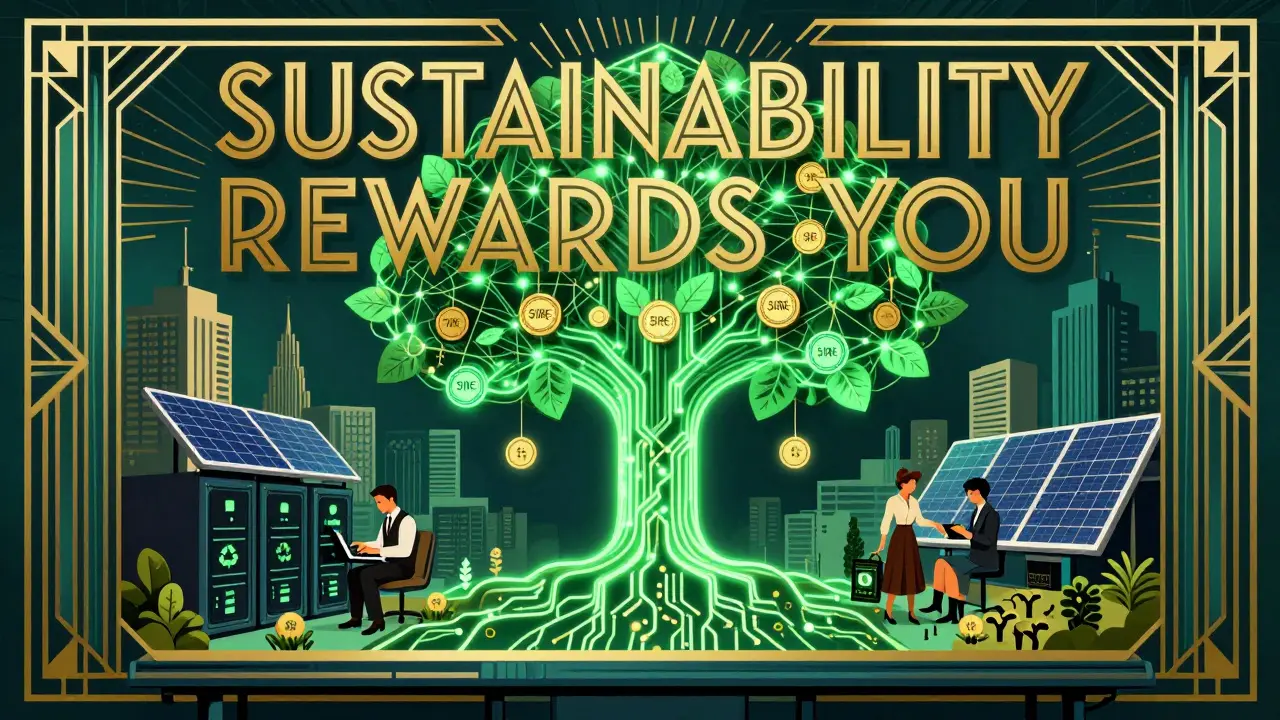
5ire is a Layer 1 blockchain that runs on a unique system called Sustainable Proof of Stake (SPoS). Unlike Bitcoin or even Ethereum, which use energy-heavy or just energy-efficient consensus models, 5ire rewards validators - the people who keep the network running - based on how much they do to help the environment and society. If your data center runs on solar power, if you recycle e-waste, if you hire locally in underserved communities - you get more rewards. That’s the core idea.
It’s not theoretical. The team behind 5ire built it to directly support the United Nations’ 2030 Agenda for Sustainable Development. That means every feature, from the code to the tokenomics, is tied to real-world sustainability goals. The blockchain doesn’t just track transactions - it tracks impact.
How does the SPoS consensus work?
Traditional blockchains like Ethereum use Proof of Stake (PoS), where validators are chosen based on how much crypto they stake. 5ire adds a new layer: sustainability performance.
Here’s how it works in practice:
- Validators submit proof of sustainable practices - like using renewable energy or reducing carbon emissions from their hardware.
- These claims are verified by third-party auditors or on-chain sustainability oracles.
- Those who score higher on sustainability metrics get a bigger share of block rewards.
- Those who don’t meet the bar get less - or nothing.
This flips the script. Instead of just rewarding who has the most coins, 5ire rewards who does the most good. It’s the first major blockchain to make sustainability a measurable, enforceable part of its consensus mechanism.
Why dual-chain architecture matters
5ire runs on two parallel chains: one compatible with Ethereum’s EVM (Ethereum Virtual Machine), and another using WebAssembly (WASM). This means developers can build apps using either Solidity (like on Ethereum) or Rust, Go, or other WASM-friendly languages.
That’s not just a technical detail - it’s a strategic move. Most blockchains force developers to pick one ecosystem. 5ire lets them choose. Want to port an existing Ethereum dApp? Easy. Building a new high-performance app for carbon credit tracking? Use WASM for speed and efficiency.
The dual-chain setup also helps with scalability. EVM handles familiar DeFi apps, while WASM powers heavy-duty enterprise tools like supply chain tracking or government ESG reporting systems.

The 5ire ecosystem: Tools you can actually use
5ire didn’t just launch a coin. It built a full toolkit:
- 5ire Wallet - Manage your tokens and stake your 5IRE.
- 5ire Explorer - View all transactions and sustainability scores in real time.
- 5ire Validator & Nominator Apps - Run or support a validator node with sustainability tracking built in.
- 5ire IDE - A development environment with templates for building ESG-focused smart contracts.
These aren’t prototypes. They’re live on the testnet. Over 250,000 wallets were created in the first month of the Thunder testnet in mid-2023, and more than 2 million transactions were processed. That’s real activity - not just hype.
What is ESG as a Service (ESGaaS)?
This is where 5ire gets really interesting. The team is building ESG as a Service (ESGaaS) - a way for companies and governments to report their environmental, social, and governance metrics directly on the blockchain.
Right now, corporate ESG reports are full of guesswork. Companies say they’re “carbon neutral,” but there’s no way to prove it. 5ire changes that. Imagine a factory uploading real-time energy usage data from IoT sensors. That data gets hashed onto the 5ire chain. Auditors can verify it. Investors can see it. Regulators can trust it.
This isn’t just for big corporations. Municipalities in India and Southeast Asia are already exploring partnerships with 5ire to track public infrastructure sustainability - like solar-powered streetlights or waste recycling rates.
How does 5ire compare to other blockchains?
Let’s be clear: 5ire isn’t trying to beat Solana on speed or Cardano on academic rigor. It’s carving out a new category.
| Feature | 5ire | Ethereum | Cardano | Solana |
|---|---|---|---|---|
| Consensus Mechanism | Sustainable Proof of Stake (SPoS) | Proof of Stake (PoS) | Proof of Stake (PoS) | Proof of History + PoS |
| Sustainability Incentives | Yes - rewards tied to real-world impact | No | Claims sustainability, no direct incentives | No |
| Developer Flexibility | EVM + WASM | EVM only | Plutus (Haskell) + EVM | Rust, C, C++ |
| ESG Reporting Integration | Native ESGaaS platform | Third-party tools only | Experimental projects | No native support |
| Max Supply | 1.5 billion 5IRE | No hard cap | 45 billion ADA | 489 million SOL |
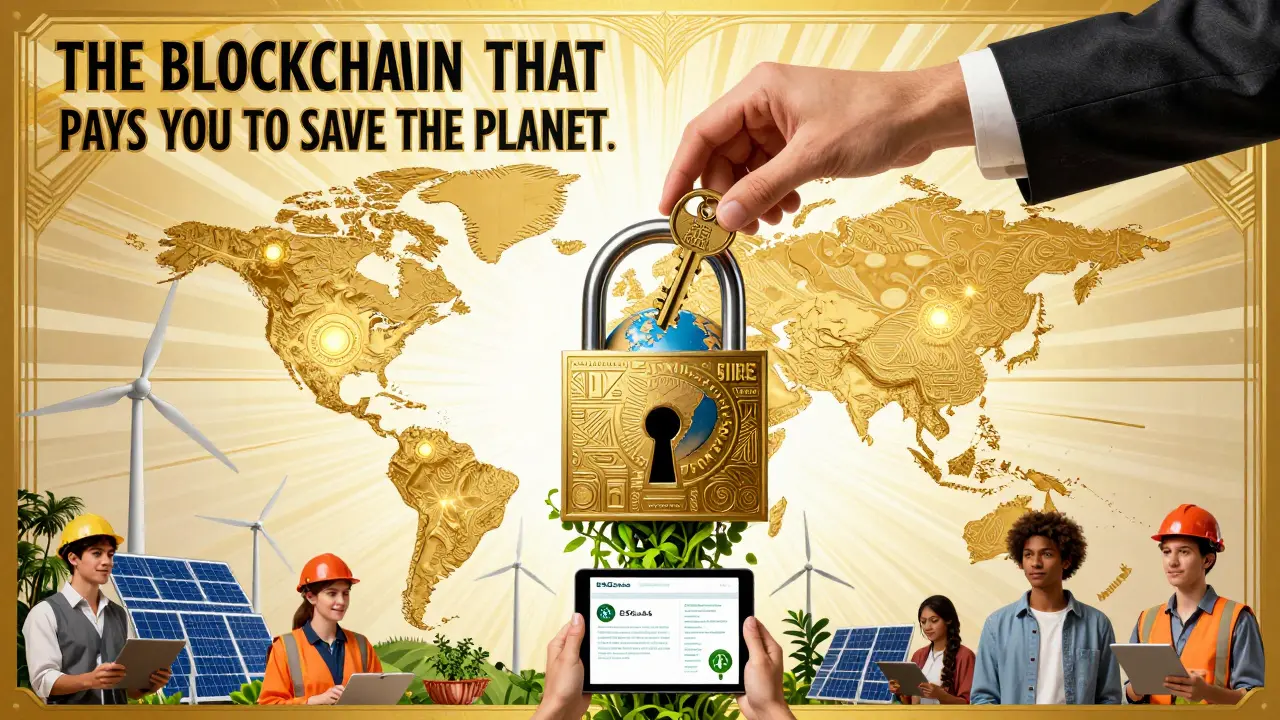
Most blockchains say they’re “green.” 5ire is the only one that pays you to be green.
Is 5ire a good investment?
Let’s cut through the noise. 5ire isn’t a pump-and-dump coin. Its value isn’t tied to speculation - it’s tied to adoption. If governments and corporations start using ESGaaS, the demand for 5IRE tokens will rise. Why? Because validators need 5IRE to stake. Enterprises need it to pay for reporting services. Developers need it to build on the chain.
As of late 2023, the circulating supply was valued around $1.5 billion, with a fixed max supply of 1.5 billion tokens. That means no inflation - the total number of coins is locked in. Price volatility is still high, with daily swings of 15-20% common. Short-term traders are frustrated. Long-term believers are waiting for the mainnet launch in 2024.
Projections from analysts suggest 5IRE could hit $0.25 by 2026 and $2.73 by 2040 - but those are speculative. The real metric isn’t price. It’s this: how many real-world sustainability projects go live on the chain?
What are the risks?
5ire is bold - and risky.
- Mainnet isn’t live yet. As of late 2023, the testnet is active, but the mainnet launch is still scheduled for 2024. Until then, everything is experimental.
- Measuring sustainability is hard. How do you prove a company’s carbon reduction is real? Can a sensor be hacked? Can data be faked? 5ire’s solution - third-party oracles and blockchain verification - is promising, but unproven at scale.
- Regulation is coming. The EU’s SFDR and global ISSB standards are tightening ESG rules. If 5ire’s system doesn’t meet those standards, it could be sidelined.
- Competition is quiet but growing. Other chains are starting to add ESG features. If 5ire doesn’t move fast, it could become a niche player instead of a leader.
But here’s the flip side: if 5ire succeeds, it doesn’t just make money - it changes how the world tracks sustainability. That’s rare in crypto.
Who should pay attention to 5ire?
- Developers who want to build apps that solve real environmental problems.
- Investors who believe sustainability is the next big crypto theme - not a trend, but a structural shift.
- Enterprises tired of writing ESG reports that no one trusts.
- Regulators looking for transparent, tamper-proof ways to verify corporate claims.
If you’re just looking to flip a coin, look elsewhere. But if you care about the future of climate accountability - 5ire is one of the few crypto projects actually building it.
Is 5ire (5IRE) a real cryptocurrency or just a scam?
5ire is a legitimate blockchain project with a live testnet, public documentation, and a team behind it. It’s not a scam - but it’s still early. The mainnet hasn’t launched yet, and its core innovation - tying validator rewards to sustainability - hasn’t been proven at scale. Treat it like a startup, not a sure thing.
How do I buy 5ire (5IRE) coins?
As of late 2023, 5IRE is available on a few mid-tier exchanges like MEXC, Gate.io, and Bitrue. You can’t buy it on Coinbase or Binance yet. To purchase, you’ll typically need to trade USDT, ETH, or BTC for 5IRE. Always use a non-custodial wallet like the official 5ire Wallet to store your tokens.
Can I stake 5ire coins?
Yes - staking is built into the 5ire ecosystem. You can stake directly through the 5ire Wallet or become a validator if you have the technical setup. The catch: your staking rewards depend on your sustainability score. If you’re just staking from a laptop, you’ll earn less than someone running a solar-powered node in a green data center.
What’s the difference between 5ire and other green blockchains?
Other blockchains say they’re green because they use less energy. 5ire says it’s green because it pays you to be good to the planet. It’s not just about efficiency - it’s about incentive. You get rewarded not just for running a node, but for doing things like planting trees, using recycled hardware, or supporting local communities.
When will the 5ire mainnet launch?
The official roadmap targets a 2024 launch. No exact date has been announced, but the team has been pushing testnet milestones aggressively. Watch their official blog and Discord for updates. Until mainnet goes live, don’t expect enterprise adoption or major price movement.
Is 5ire regulated?
5ire itself isn’t regulated - but its target users are. Governments and corporations using ESGaaS will need to comply with regulations like the EU’s SFDR and ISSB standards. 5ire is designing its system to help users meet those rules, not avoid them. That makes it more likely to be accepted by regulators than other crypto projects.
5ire isn’t trying to make you rich overnight. It’s trying to make the world a little better. If that sounds like a pipe dream - maybe it is. But in a world full of crypto projects that promise to change finance, 5ire is one of the few trying to change the planet.