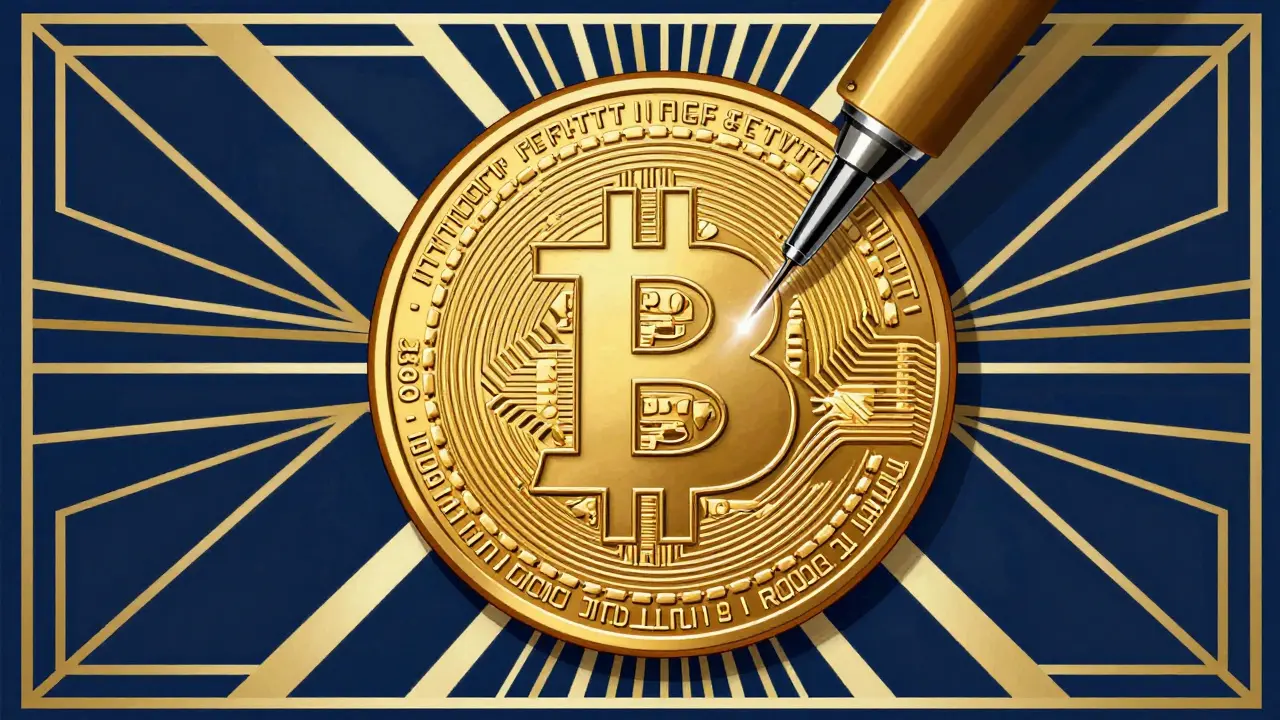
If you've come across Biis (Ordinals) is a cryptocurrency token that claims to be built on the Bitcoin Ordinals protocol. Also known as BIIS, it presents itself as a new asset in the Bitcoin ecosystem. However, before you put any money into it, you need to know that this token is surrounded by massive red flags and contradictory information.
The core problem with BIIS isn't just that it's obscure; it's that it doesn't seem to actually exist in any verifiable way on the blockchain. While the technology it claims to use is legitimate and revolutionary, the token itself lacks the basic evidence required to be considered a trustworthy project. If you're looking for a quick answer: proceed with extreme caution.
The Technology Behind the Claim: Bitcoin Ordinals
To understand why BIIS is claiming to be an "Ordinal," you first need to understand what Bitcoin Ordinals is. Bitcoin Ordinals is a protocol that allows users to "inscribe" data-like images, text, or code-directly onto individual satoshis (the smallest unit of Bitcoin). Launched by developer Casey Rodarmor in early 2023, this turned Bitcoin from a simple currency into a place where you can store unique digital artifacts.
Unlike Ethereum NFTs, which often store their data on external servers, Ordinals are permanently etched into the Bitcoin blockchain. This is made possible by the Taproot upgrade, which allowed for larger amounts of data to be stored in a single transaction. This breakthrough paved the way for the BRC-20 standard (often referred to as BRC-2), which lets people create fungible tokens on Bitcoin without needing complex smart contracts.
Comparing BIIS to Legitimate BRC-20 Tokens
When a token is actually deployed on the Bitcoin network, it leaves a digital paper trail. For example, a successful token like ORDI has thousands of documented inscriptions and clear trading volumes on major platforms. BIIS, on the other hand, is a ghost.
| Feature | BIIS (Ordinals) | Legitimate BRC-20 Tokens |
|---|---|---|
| On-Chain Proof | None found on major explorers | Verifiable via block height/TXID |
| Community Presence | Bot-driven / Non-existent | Active Discord/Telegram/Reddit |
| Exchange Status | Contradictory claims | Listed on Magic Eden, Coinbase, OKX |
| Dev Documentation | None | Available on GitHub |
The Red Flags: Why You Should Be Worried
If you look for BIIS on reputable tracking sites, you'll find a mess of contradictions. Some low-authority sites claim it's a "frequently traded" asset, while others say it's "awaiting listing." In the crypto world, when two sources can't agree on whether a coin is even tradable, it's usually a sign of a scam or a failed project.
Here are the specific warnings that should make you stop and think:
- Zero Community Engagement: While tokens like ORDI have thousands of organic discussions on Reddit, searches for BIIS return almost nothing except automated bot posts on X (formerly Twitter).
- No Blockchain Record: Legitimate Ordinals tokens are visible on explorers like Gamma.io. There is no verifiable record of BIIS token deployments or minting patterns.
- Vague Content: Most websites mentioning BIIS use generic descriptions of Bitcoin Ordinals and simply swap in the name "BIIS" without explaining what the token actually *does*.
Blockchain researcher Dr. David Waltz from the MIT Digital Currency Initiative has noted that the BRC-2 ecosystem is flooded with speculative tokens. In fact, nearly 78% of these tokens show no real on-chain activity after they are launched. BIIS fits perfectly into this pattern of "hype-driven" tokens that have no real utility.
How to Spot a Fake Ordinals Token
Since the Ordinals hype is real, scammers often create "copycat" tokens. They pick a name that sounds professional and hope you'll buy in before you realize there's nothing behind the curtain. To avoid this, you can use a simple checklist before investing in any BIIS crypto coin or similar project.
- Check the Explorer: Go to an Ordinals-specific explorer. If you can't find the "deploy" transaction and the total supply, stay away.
- Analyze the Socials: Look for real people asking hard questions. If the only people talking about the coin are bots saying "To the moon!", it's a trap.
- Verify the Listing: If a site says it's on a major exchange but you can't find the trading pair on that exchange's official site, the information is fake.
- Search for Utility: Ask yourself: "What does this token actually do?" If the answer is "it's an Ordinal," that's not a utility; that's just a technology.
The Future of Bitcoin Assets
While BIIS may be a dead end, the broader world of Bitcoin assets is evolving. Developers are moving toward the Taproot Assets protocol, which is designed to be much more efficient than the current BRC-20 method. This new approach will likely make many of the current "experimental" tokens obsolete because it handles token creation without straining the Bitcoin network.
The lesson here is that being "on Bitcoin" doesn't automatically make a project safe. The same risks that exist in the Ethereum or Solana ecosystems-like rug pulls and pump-and-dumps-are now present on the most secure blockchain in the world.
Is BIIS a safe investment?
Based on available data, BIIS shows multiple hallmarks of a high-risk or fraudulent project, including a lack of verifiable on-chain activity and contradictory exchange information. It is not considered a safe investment by industry standards.
Where can I buy BIIS (Ordinals)?
While some low-traffic blogs mention exchanges, there is no confirmed, reputable exchange listing for BIIS. Be extremely careful of any platform that asks you to deposit funds specifically to trade this token.
What is the difference between BRC-20 and Bitcoin itself?
Bitcoin is the native currency of the network. BRC-20 tokens are separate assets created by "inscribing" a specific set of rules onto the Bitcoin blockchain using the Ordinals protocol. They are not native to Bitcoin in the same way BTC is.
Can I track BIIS on a blockchain explorer?
Currently, there is no verifiable record of BIIS tokens on major Ordinals explorers like Gamma.io or the official Ordinals Wallet, which is a significant red flag for any legitimate project.
Is the Ordinals protocol a scam?
No, the Ordinals protocol itself is a legitimate technical innovation that allows data to be stored on Bitcoin. However, like any popular technology, it has attracted scammers who create fake tokens (like potentially BIIS) to trick investors.
Michael Repak
April 29, 2026 AT 03:03This is such a helpful breakdown!!! Everyone needs to see this before they lose their hard-earned money!!! Thanks for the warning!!!
Livvy Cooper
April 29, 2026 AT 20:52Just another coin that does nothing. Why do people even try these things. It is all a waste of time.
edie rosa
May 1, 2026 AT 02:56Imagine being so naive that you actually fell for this. It is honestly exhausting watching people throw their lives away on digital dust because they can't do five minutes of research. The lack of basic intelligence in the crypto space is a moral failure. You're all just chasing ghosts and pretending it's 'innovation' while the actual developers laugh at you. It's pathetic how this cycle repeats every single week. I'm tired of pretending that these 'investors' aren't just gambling addicts with a WiFi connection. The sheer arrogance of thinking you can get rich quick without any actual value is disgusting. We are witnessing the death of financial literacy in real-time. It's a tragedy that this is what we call progress. Honestly, the fact that this token even exists for a second is a testament to how broken the system is. You people deserve to lose your money for being this lazy. It's an absolute joke. Stop pretending you're 'early' to a project that isn't even on the chain. Just stop.
Rain Richardsson
May 2, 2026 AT 17:22Makes sense. Seems like a classic rug.
Jehan ZA
May 4, 2026 AT 16:17It is quite prudent to exercise such caution. The lack of verifiable on-chain data is indeed a significant deterrent for any serious investor.
Lex Harley
May 4, 2026 AT 18:56Tbh the BRC-20 standard is totaly chaotic. Its like the wild west of inscriptons. I tried luking up the deployer addrress and it's just blank. Major red flag for the liquidity pool too.
Kristi Swartz
May 5, 2026 AT 19:54The author is correct about the lack of utility. Most of these assets have no purpose and the people buying them are simply ignorant of how blockchain actually works
Alex Mazonowicz
May 6, 2026 AT 23:05Still believe there are gems out there!!! We just have to be smarter together!!! Keep researching!!!
Veronica Bago
May 7, 2026 AT 03:02Glad I saw this before looking into it, thanks for sharing!
Arti Jain
May 7, 2026 AT 18:25Pathetic. Only a fool would trust this junk.
Harvey Alford
May 9, 2026 AT 16:52Bet you already bought some. Tell me how much you lost.
VIVEK SINGH
May 10, 2026 AT 05:22Oh look, another 'revolutionary' token that is actually just a void of value. Truly an inspiration for the ages. I'm sure the 'community' of bots is just devastated by this news.
Lloyd I
May 11, 2026 AT 17:36Let's use this as a learning moment for everyone! We can help each other find the real projects by sharing our checklists!