Imagine buying a ticket to a carnival game that costs less than a grain of sand. That’s the current reality for Matching Game (MATCH). This isn’t just another meme coin riding a hype wave; it’s the native currency powering a specific slice of the GameFi and metaverse sector. If you’ve stumbled upon this token while scrolling through obscure exchange listings or wondering if there’s a hidden gem in the micro-cap jungle, you’re in the right place. But before you throw your life savings at a price tag with five zeros after the decimal point, let’s break down what MATCH actually does, where it came from, and why its market cap looks more like a rounding error than a fortune.
| Metric | Value | Context |
|---|---|---|
| Current Price | $0.000003 USD | Extremely low unit cost due to high supply |
| Market Cap | ~$21,760 USD | Micro-cap category; highly volatile |
| Circulating Supply | 10 Billion MATCH | Planned expansion to 30 Billion |
| All-Time High | $0.000757 (Jan 2023) | -98.99% decline from peak |
| Primary Chains | Ethereum, BSC, Aptos | Multi-chain compatibility |
The Rebrand: From PLATO to MATCH
You might remember seeing a token called PLATO in earlier crypto forums. Well, Matching Game started its journey under that name before undergoing a significant rebrand and migration. Think of it as a company changing its logo and strategy but keeping the same core team. The transition wasn’t subtle-PLATO holders swapped their tokens for MATCH at a strict 1:10 conversion ratio. This move was designed to reset the narrative and align the token more closely with the platform’s evolving identity as a casual gaming hub rather than just a speculative asset. For anyone holding legacy PLATO tokens, this shift meant adjusting their mental math on value per unit, though the total portfolio value remained theoretically unchanged at the moment of swap.
How the Game Actually Works
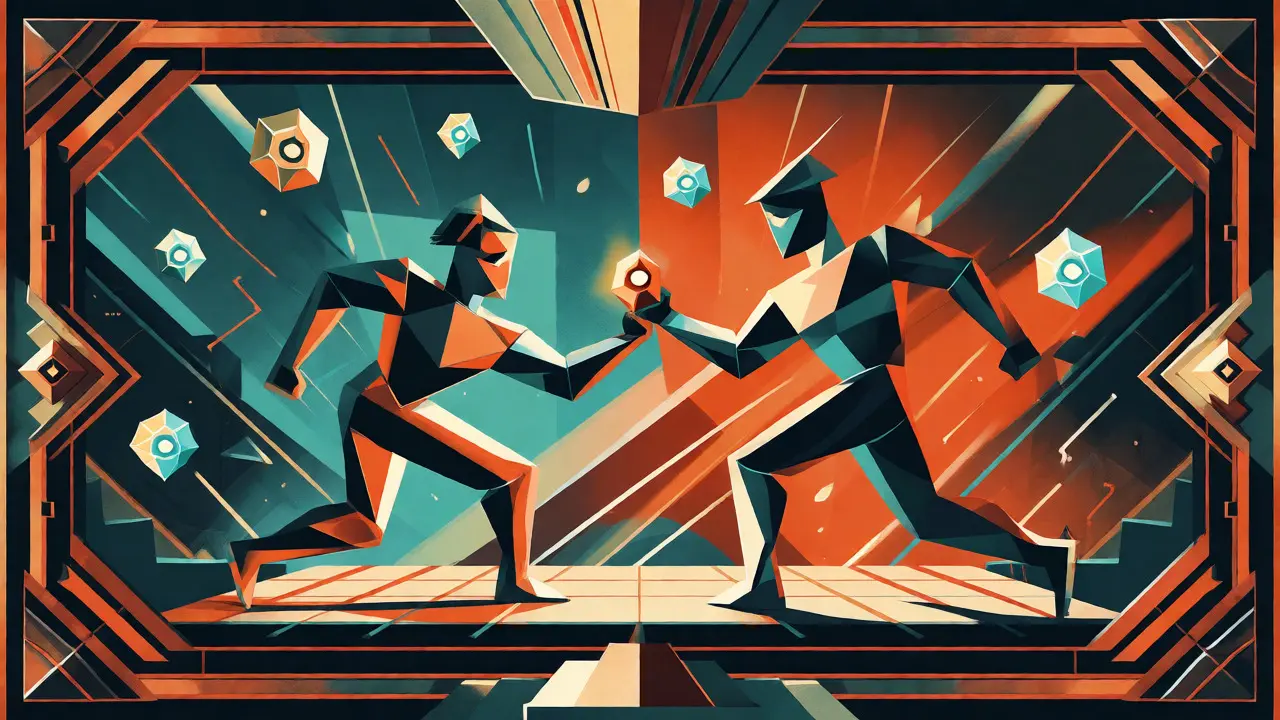
So, what do you get for your billions of MATCH tokens? The platform operates as a metaverse casual gaming ecosystem. Unlike heavy RPGs that require high-end graphics cards, Matching Game focuses on accessibility. It runs on both web browsers and mobile devices, lowering the barrier to entry. The gameplay combines two distinct mechanics: competitive battles and matching-for-elimination puzzles. You aren’t just grinding for loot; you’re engaging in head-to-head challenges where skill determines who walks away with the rewards. The integration of these systems aims to create a "revolutionary GameFi experience," blending traditional puzzle-solving fun with blockchain-based ownership of assets.
Tokenomics: Where Did All Those Tokens Go?
If you look at the chart, the sheer number of tokens can be dizzying. With a total supply of 10 billion currently circulating, dilution is a real concern. Here is how the pie was sliced during the initial distribution:
- Marketing & Operation (30%): The largest chunk, unlocked linearly over 35 months. This suggests the team prioritizes visibility and user acquisition early on.
- DAO Treasury (15%): Held for governance, unlocking slowly over 59 months to ensure long-term community control.
- Ecosystem Investment (10%): Funds partnerships and development, spread out over three years.
- Seed & Private Sales (4% combined): Early backers got in cheap, with only small portions available immediately, protecting the price from immediate dump pressure.
Crucially, the project plans to issue additional tokens on Binance Smart Chain (BSC) and Aptos, aiming to push the total supply up to 30 billion. If demand doesn’t grow proportionally, this inflation will naturally suppress the price per token.
Price History and Market Reality
Let’s talk numbers, because they tell a harsh story. In January 2023, MATCH hit an all-time high of roughly $0.000757. Today, in October 2026, it trades around $0.000003. That is a decline of nearly 99%. Is it dead? Not necessarily. Micro-cap coins often see massive swings. The token recently bounced off an all-time low of $0.0000017 recorded in December 2025, showing a modest recovery of about 40%. However, don’t let that percentage fool you into thinking it’s booming. The daily trading volume hovers between $8,000 and $15,500. To put that in perspective, major cryptocurrencies trade billions. A volume of $10k means you could potentially move the entire market cap of MATCH with a few large sell orders. Liquidity is thin, which makes exiting positions difficult without slippage eating your profits.
Where Can You Buy MATCH?
You won’t find MATCH listed on every major exchange. In fact, searching for it on platforms like Crypto.com yields no results-they explicitly state it’s not tradable there. Binance shows minimal activity. This limits you to smaller centralized exchanges or decentralized exchanges (DEXs). If you are new to DeFi, be careful. Interacting with smart contracts on chains like Ethereum or BSC requires gas fees, and on a token priced at fractions of a cent, transaction costs can sometimes exceed the value of the tokens you’re buying. Always verify the contract address before sending funds, as fake tokens often pop up around low-cap projects.

Risks You Should Know Before Investing
Investing in Matching Game is akin to buying a lottery ticket where you know the odds are stacked against you. Here are the red flags:
- Low Holder Count: On-chain data suggests only about 1,120 active token holders. This is a tiny community for a global blockchain project.
- Dilution Threat: The plan to triple the supply to 30 billion tokens puts constant downward pressure on the price unless user adoption skyrockets.
- Volatility: The price has swung wildly within single weeks. A 7-day range of $0.00000282 to $0.00000359 might seem small, but in percentage terms, it’s a massive fluctuation.
- Competition: It competes with giants like Axie Infinity (AXS) and The Sandbox (SAND), which have vastly superior liquidity and brand recognition.
Future Outlook and Predictions
Analysts are split, mostly because predicting a $20k market cap coin is less about analysis and more about guessing sentiment. Some models predict a rise to $0.0000032 by the end of 2026, driven by potential breakthroughs in the Aptos gaming ecosystem. Others foresee stagnation. By 2030, optimistic forecasts suggest a return to $0.0000048, but this assumes the project survives the next four years-a big ask for any GameFi token. Remember, cryptocurrency markets are influenced by US dollar policy, regulations, and tech trends, none of which match well with a fixed spreadsheet formula.
Is Matching Game (MATCH) a good investment?
It depends on your risk tolerance. MATCH is a high-risk, micro-cap asset with low liquidity and a declining trend from its all-time high. It may offer high percentage returns if the project gains traction, but the probability of losing capital is significant due to its small market size and competition.
Why did PLATO change to MATCH?
The rebrand from PLATO to MATCH involved a 1:10 token conversion. This strategic move aimed to refresh the project's identity, align it better with its GameFi focus, and reset market expectations following earlier performance issues.
Which blockchains support the MATCH token?
MATCH is primarily deployed on Ethereum and Binance Smart Chain (BSC), with planned expansions onto the Aptos network. Users must ensure they are interacting with the correct contract address for their chosen chain to avoid loss of funds.
Can I buy MATCH on Binance?
While Binance lists many tokens, MATCH sees minimal trading volume there. It is more commonly found on smaller centralized exchanges or decentralized exchanges (DEXs). Major platforms like Crypto.com currently do not list MATCH for trading.
What is the total supply of MATCH?
The current circulating supply is 10 billion MATCH tokens. The project roadmap includes issuing additional tokens until the total supply reaches 30 billion, which introduces potential dilution risks for existing holders.