Searching for "$SEND" in your wallet or on a price tracker can feel like walking into a crowded room where everyone has the same name. You might be looking for the privacy-focused payment token on the Base network, but you could accidentally buy a speculative meme coin on Solana or a governance token for a lending protocol. This confusion isn't just annoying; it's expensive. In crypto, clicking the wrong contract address means your money goes to a completely different project with different risks.
The ticker $SEND is not unique to one project. It is shared by at least three distinct assets operating on different blockchains: the Send Token on Ethereum’s Layer-2 Base network, a high-supply memecoin on Solana, and the governance token for the Suilend lending protocol. Understanding which one you actually want requires looking past the symbol and checking the blockchain, the total supply, and the specific use case.
The Main Contender: Send Token on Base Network
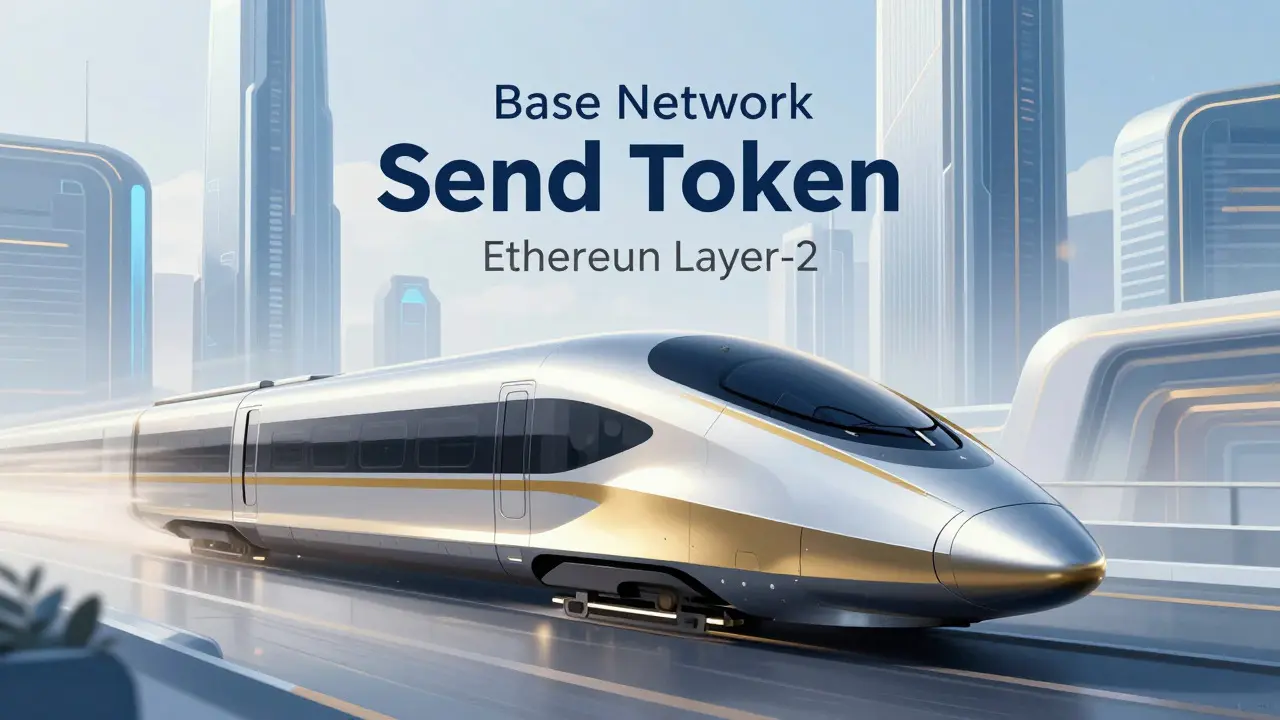
When most industry analysts talk about "Send" as a serious utility project, they are referring to the token built on the Base network, an Ethereum Layer-2 scaling solution developed by Coinbase. This version of $SEND migrated from its original Ethereum home in January 2024 to take advantage of Base’s lower transaction fees and faster speeds.
The core promise of this ecosystem is simplicity. The platform, often branded as "/send", aims to make digital payments as easy as sending a text message. Instead of dealing with complex private keys, users interact through smart-contract accounts. These accounts allow for features like social recovery (getting your wallet back if you lose your phone) and programmable permissions, making crypto accessible to people who aren't tech experts.
Here is how the tokenomics work for the Base-based Send Token:
- Total Supply: Fixed at 1,000,000,000 (1 billion) tokens.
- Circulating Supply: Estimates vary significantly between data providers. CoinGecko reports around 350 million SEND in circulation, while Bitget lists nearly 976 million. This discrepancy suggests that vesting schedules or liquidity lockups are still being resolved across different exchanges.
- Primary Use Case: It acts as the incentive layer for the ecosystem. You earn SEND for participating, referring friends, or engaging in privacy-preserving transactions.
- Payment Rail: Interestingly, the actual payments within the app are often denominated in USDC (USD Coin), a stablecoin pegged to the US dollar. SEND is used to govern the protocol and reward activity, rather than serving as the primary currency for buying coffee.
If you see marketing about "replying to tweets to turn them into coins" or "$SEND it to the moon," you are likely looking at the cultural side of this token. The project leans heavily into social monetization, allowing users to tip each other or monetize social interactions directly on-chain. For traders, the main liquidity hub for this token is Aerodrome, a decentralized exchange native to the Base network.
The Speculative Play: Solana $SEND Memecoin
If you scroll through Twitter or Telegram groups focused on "degen" trading, the $SEND you see there is probably not the Base payment token. On the Solana blockchain, known for its speed and popularity among meme coin traders, there is a separate asset also called $SEND.
This Solana-based token is classified strictly as a memecoin. It lacks the structured utility, governance rights, or payment infrastructure of its Base counterpart. Its value is driven entirely by community hype, social media trends, and speculative trading volume.
The numbers here tell a very different story:
- Supply: Massive. Reports indicate a supply of up to 10^17 tokens (100 quadrillion). This huge supply keeps the unit price extremely low, which appeals to retail investors who prefer seeing large numbers of tokens in their wallets.
- Market Cap vs. Volume: Data is notoriously inconsistent. Some trackers show a market cap near $388 million, while others show zero due to missing supply data. However, trading volume can spike dramatically, with some days seeing over $700,000 in trades across multiple exchanges.
- Risk Profile: High. Without a clear utility roadmap or a development team building a product, the price is volatile. It rises when the community pumps it and falls when interest wanes.
There is even another variant on Solana linked to the "Blinks" ecosystem, priced in fractions of a cent with minimal daily volume. This highlights the danger of ticker reuse: two different projects on the same chain using the same name. Always verify the contract address before buying.
The DeFi Governance Token: Suilend (SEND)
A third entity uses the SEND ticker in the world of Decentralized Finance (DeFi). Suilend is a lending protocol that allows users to deposit crypto assets and borrow against them. In this context, SEND is a governance token.
Holding Suilend’s SEND token gives you a vote on how the protocol operates. You might vote on interest rates, which assets are accepted as collateral, or how fees are distributed. This is similar to how tokens like AAVE or COMP function in other lending platforms. Unlike the Base Send Token, which focuses on payments and social interaction, Suilend’s SEND is purely about financial protocol management. If you are interested in yield farming or lending strategies, this is the relevant asset, though it currently has less public visibility than the Base or Solana versions.
Comparison Table: Which $SEND Are You Looking At?
| Feature | Send Token (Base) | $SEND Memecoin (Solana) | Suilend Token (DeFi) |
|---|---|---|---|
| Blockchain | Base (Ethereum L2) | Solana | Various (DeFi Protocol) |
| Primary Purpose | Payments, Social Rewards, Governance | Speculation, Meme Culture | Lending Protocol Governance |
| Total Supply | 1 Billion | ~10^17 (Quadrillions) | Variable (Protocol Dependent) |
| Utility | Incentives for USDC transfers, Account Abstraction | None (Community Driven) | Voting on Loan Parameters |
| Risk Level | Medium (Early Stage Utility) | Very High (Speculative) | Medium-High (DeFi Risk) |

How to Avoid Buying the Wrong Token
The biggest risk with $SEND is human error. Because the ticker is identical, exchanges and wallets sometimes list them ambiguously. Here is a checklist to ensure you are buying what you think you are buying.
- Check the Chain: Are you connected to the Base network or Solana? If you want the payment utility token, you need Base. If you are chasing meme trends, you are likely on Solana.
- Verify the Contract Address: Never trust the ticker alone. Go to the official website of the project (e.g., the official Send documentation for the Base token) and copy the exact contract address. Paste this address into your wallet or DEX (like Uniswap or Raydium) to add the correct token.
- Look at the Supply: If the token has a supply in the billions, it’s likely the Base version. If the supply is in the quadrillions, it’s the Solana memecoin. If it’s tied to a lending dashboard, it’s Suilend.
- Use Reputable Aggregators: Platforms like CoinGecko or CoinMarketCap usually separate these assets by adding the blockchain name in parentheses (e.g., "Send (BASE)"). Stick to these verified listings rather than random links found on social media.
Future Outlook and Adoption
The Base-network Send Token is betting on the future of consumer crypto. By integrating with smart-contract accounts and focusing on USDC stability, it tries to solve the biggest hurdle in crypto adoption: complexity. If more merchants accept USDC via the /send interface, the demand for SEND as a reward and governance token could grow organically.
The Solana memecoin, on the other hand, lives and dies by attention. Its future is tied to the broader health of the Solana meme sector. It offers no fundamental value beyond community sentiment, making it a pure play on market psychology.
For now, the Base token appears to have more structural support, with clear documentation and a migration strategy that signals long-term intent. The Solana token remains a volatile speculative asset. As you navigate the crypto market, remember that tickers are labels, not guarantees. Always do your own due diligence on the underlying technology and contract addresses.
Is $SEND a good investment?
It depends on which $SEND you mean. The Base network Send Token has utility in payments and governance, offering medium-term potential if the platform gains user adoption. The Solana $SEND memecoin is highly speculative and risky, suitable only for those willing to lose their entire investment in exchange for high-reward possibilities. Always assess your risk tolerance.
Which blockchain is the real Send Token on?
The primary utility-focused Send Token operates on the Base network, which is a Layer-2 solution built on Ethereum. It migrated there in January 2024. There is also a separate, unrelated memecoin on the Solana blockchain.
Can I mine $SEND?
No. Neither the Base Send Token nor the Solana memecoin can be mined. They are issued tokens. You acquire them by buying them on exchanges or earning them through participation and referral programs within the respective ecosystems.
Why are there different prices for $SEND?
Because they are different assets. The Base token and the Solana token have different supplies, utilities, and market demands. Additionally, price discrepancies can occur between different exchanges due to varying liquidity levels and trading volumes.
What is the difference between SEND and USDC in the Send ecosystem?
In the Base Send ecosystem, USDC is the stablecoin used for actual payments and transfers because its value doesn't fluctuate. SEND is the governance and reward token. You use USDC to pay for things, and you earn SEND for participating in the network.