Have you ever seen a cryptocurrency with a market cap smaller than your monthly rent and wondered if it’s a hidden gem or a total trap? What is YESorNO (YON) crypto coin is exactly that kind of question for many new investors. You see the ticker symbol YON pop up on social media or in a newsletter, maybe hear about its "deflationary" nature, and suddenly you’re curious. But before you swap your hard-earned Bitcoin for this micro-cap token, we need to look at what actually lies beneath the hype.
YESorNO (YON) is not just another meme coin chasing trends. It is tied to a specific utility: a sports betting platform that simplifies wagering into binary choices-Yes or No. The project claims to have secured a license to operate in France and aims to bridge traditional fiat betting with blockchain technology. However, as of mid-2026, YON remains a highly speculative asset with thin liquidity, conflicting data across exchanges, and significant historical price drops. This guide breaks down everything you need to know so you can decide if YON belongs in your portfolio or your ignore list.
Key Takeaways
- Utility: YON is the native token for the YESorNO sports betting app, which uses simple Yes/No bets targeting users aged 18-35.
- Status: It is a micro-cap token with a market cap under $10,000 USD and extremely low trading volume.
- Risk Level: Very High. The token has dropped over 99% from its all-time high and lacks listings on major centralized exchanges.
- Tokenomics: Deflationary design with a max supply of 9 billion tokens; details are hosted on their DEX site rather than public trackers.
- Access: Currently traded only on decentralized exchanges (DEXs), requiring Web3 wallet knowledge.
What Is YESorNO (YON)?
To understand YESorNO, you first have to understand the problem it tries to solve. Traditional sports betting can be confusing. Odds like "+145" or "-190" require math skills that not everyone enjoys. YESorNO strips this away. Their app allows users to bet on real-world events by simply choosing "YES" or "NO." Did Team A win? Yes or No. Will it rain in Paris tomorrow? Yes or No.
The YON token acts as the fuel for this ecosystem. According to project descriptions found on platforms like KuCoin and CoinMarketCap, the company generates revenue through commissions on bets and advertising partnerships with brands, rather than just relying on user losses. This dual-revenue model is designed to stabilize the platform even when users are winning.
But here is the catch: while the concept sounds sleek and modern, the execution has faced hurdles. The project announced a license to operate in fiat currency in France and planned a fiat platform launch in September 2024. As we move into 2026, the crypto side of the business remains in the shadows compared to the regulated fiat side. The YON token is described as "in the pipeline" for broader expansion, meaning its current utility might be limited compared to its future promises.
Tokenomics: Supply, Burns, and Deflation
If you are buying crypto, you care about supply. Inflation kills value. That’s why the team behind YESorNO markets YON as a deflationary token. But what does that actually mean for you?
Here are the hard numbers:
- Maximum Supply: 9,000,000,000 (9 Billion) YON
- Total Supply: 9,000,000,000 YON
- Circulating Supply: Conflicting reports. CoinMarketCap lists ~2 Billion, while KuCoin reported ~1.39 Billion in late 2025.
A deflationary mechanism usually means tokens are removed from circulation (burned) over time. This could happen via transaction fees, a percentage of betting profits, or buy-back events. However, neither CoinMarketCap nor CoinGecko provides the specific burn rates or tax percentages in their public summaries. You have to dig into the whitepaper on their DEX website (dex.yon.bet) to find the exact mechanics.
This lack of transparency is a red flag for many seasoned investors. If you don’t know how many tokens are being burned daily, you can’t accurately calculate the long-term scarcity value. Furthermore, the discrepancy in circulating supply figures between major trackers suggests that data aggregation for YON is inconsistent, making it harder to assess true market concentration.
Price History and Market Performance
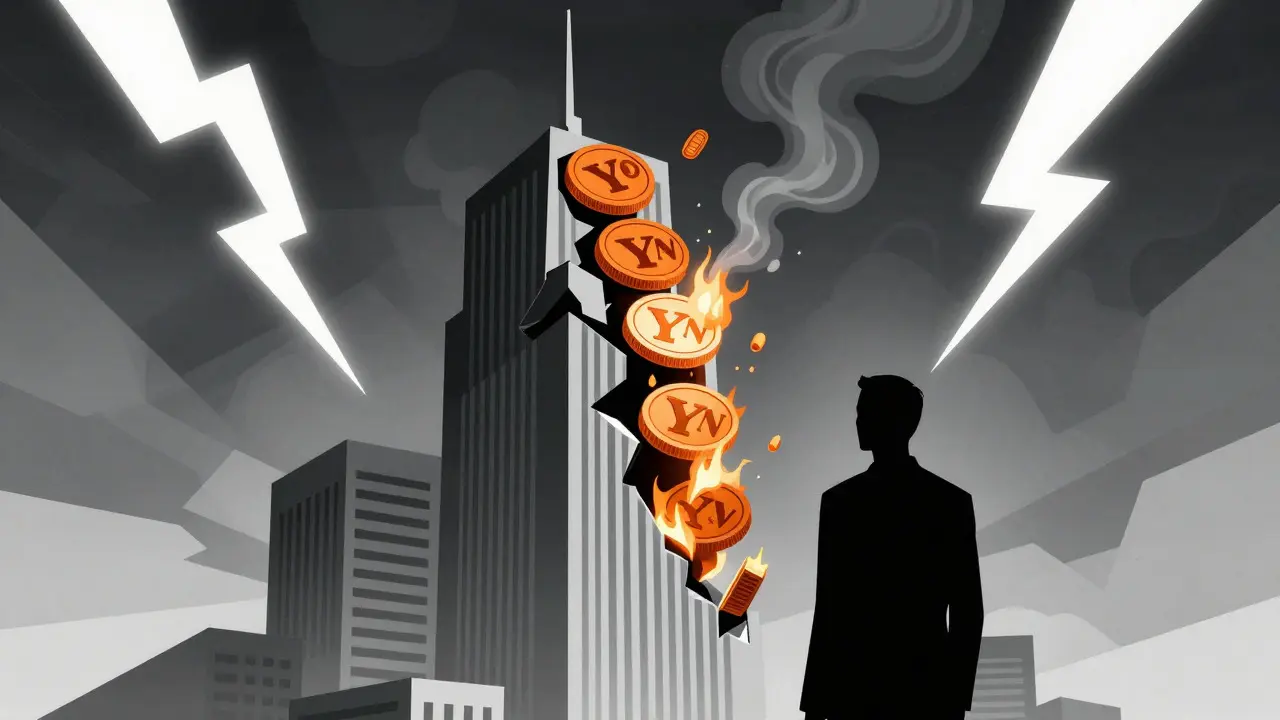
Let’s talk money. Or rather, the lack of it. As of July 2026, YON is classified as a micro-cap cryptocurrency. Its market capitalization hovers around $9,700 USD. To put that in perspective, some established altcoins have market caps in the billions. YON is trading in the dust.
| Metric | Value | Note |
|---|---|---|
| Current Price (Approx.) | $0.0000048 - $0.00030 | Varies significantly by exchange/tracker |
| Market Cap | ~$9,710 USD | Extremely low liquidity risk |
| All-Time High (ATH) | ~$0.00349 | KuCoin reported ATH |
| Drop from ATH | -99.95% | Massive historical decline |
| 24-Hour Volume | $0 - $112 USD | Thin liquidity; hard to exit large positions |
Notice the price range? Some trackers show YON at roughly $0.0000048, while others, like CoinGecko, show prices closer to $0.00030. Why the difference? This likely stems from a contract migration. CoinGecko notes that YESorNO migrated from an old smart contract to a new one (often referred to as YON v2). Different liquidity pools exist for different versions, leading to fragmented pricing.
The drop from its all-time high of nearly $0.0035 to current levels represents a loss of almost 99.95%. While past performance doesn’t guarantee future results, a near-total collapse in value indicates extreme volatility and potential structural issues in early adoption or marketing.
How to Buy YESorNO (YON)
You won’t find YON on the main spot markets of Binance, Coinbase, or Kraken. In fact, KuCoin explicitly states that YON is not officially listed on their exchange, despite tracking its price. Crypto.com also lists it as "not tradable yet" on their platform.
This means buying YON requires a bit more technical know-how. You need to use a Web3 Wallet and trade on a Decentralized Exchange (DEX). Here is the step-by-step process:
- Set Up a Web3 Wallet: Download a wallet like MetaMask, Trust Wallet, or use the Binance Web3 Wallet. Ensure it supports the network where YON lives (likely Ethereum or a Layer-2 solution, though the specific chain isn't always clearly stated in basic summaries).
- Fund Your Wallet: Buy ETH or the native gas token of that network on a centralized exchange (like Binance or Coinbase) and send it to your Web3 wallet address.
- Find the Correct Contract Address: This is crucial. Because of the v1/v2 migration, there are multiple contract addresses. Go to the official YESorNO website or their verified Twitter/X account to get the current active contract address. Do not trust random links from Telegram groups.
- Connect to a DEX: Use a decentralized exchange like Uniswap, PancakeSwap, or the project’s own DEX interface. Connect your wallet.
- Swap for YON: Paste the YON contract address into the token field. Select the amount of ETH/gas token you want to spend. Set your slippage tolerance higher (e.g., 5-10%) because low liquidity can cause transactions to fail.
- Confirm the Transaction: Approve the swap in your wallet. Pay attention to gas fees; they can sometimes exceed the value of the small amount of YON you are buying.
Risks and Red Flags
Investing in micro-cap tokens is essentially venture capitalism for retail investors. You might hit a jackpot, but you are more likely to lose everything. Here are the specific risks associated with YON:
- Liquidity Trap: With 24-hour volumes often below $150, selling a significant amount of YON can crash the price instantly. You might hold $100 worth of YON on paper, but only be able to sell $10 without slippage eating your profit.
- Transparency Gaps: Major trackers do not list the founders, development team, or corporate registration details. In the regulated world of sports betting, anonymity is unusual and risky.
- Regulatory Uncertainty: While they claim a French license for fiat operations, crypto regulations are shifting globally. If regulators crack down on unregistered crypto betting tokens, YON could face delisting or legal blocks.
- Contract Migration Complexity: The shift from v1 to v2 confused many holders. Future migrations could lead to further fragmentation or errors if users don’t follow instructions perfectly.
Is YESorNO a Good Investment?
That depends entirely on your risk tolerance. If you are looking for stable growth, YON is probably not for you. It is a speculative bet on whether the YESorNO brand will successfully capture the Gen Z/Millennial betting market and integrate its token deeply enough to drive demand.
The "Yes/No" simplicity is a strong marketing hook. If the fiat platform in France succeeds and expands to other countries, the YON token could gain utility through discounts, governance, or staking rewards. However, until we see consistent trading volume above $10,000 daily and clear communication from the team about token burns, it remains a high-risk experiment.
Always remember: never invest more than you can afford to lose. For a token with a sub-$10k market cap, a single large seller can wipe out 10% of the entire supply in minutes.
Is YESorNO (YON) available on Binance or Coinbase?
No, YON is not currently listed on major centralized exchanges like Binance or Coinbase. It is primarily traded on decentralized exchanges (DEXs). You must use a Web3 wallet to connect to these platforms and swap for YON directly.
Why is the YON price different on CoinGecko vs. CoinMarketCap?
The price discrepancy is likely due to a contract migration. YESorNO moved from an older contract (v1) to a new one (v2). Different trackers may be indexing different liquidity pools or contract versions, leading to varied price feeds. Always verify the contract address before trading.
What is the maximum supply of YON?
The maximum supply of YESorNO (YON) is fixed at 9,000,000,000 (9 billion) tokens. The token is described as deflationary, meaning tokens are intended to be burned over time, but specific burn rates are detailed on the project's DEX website rather than public aggregators.
Does YESorNO have a license?
According to project statements on CoinMarketCap and LiveCoinWatch, YESorNO has obtained a license to operate in fiat currency in France. They planned to launch their fiat betting platform in September 2024. However, the crypto token itself operates separately from this licensed fiat entity.
Who created YESorNO?
Publicly available data on major crypto trackers does not list the names of the founders or the specific development company behind YESorNO. This lack of transparency is common in micro-cap projects but adds to the investment risk.