You’ve probably seen the name floating around Reddit or Twitter: Yotsuba (SUBA). It’s one of those crypto projects that screams "meme" from every corner of its whitepaper. But what exactly is it? Is it just another joke token destined for obscurity, or does it have actual staying power in the chaotic world of decentralized finance? If you’re wondering whether this EVM-based meme coin is worth your attention-or your money-you need to look past the cute anime mascot and understand the mechanics, the history, and the extreme volatility that defines it.
The Origin Story: Why a Girl from 4chan?
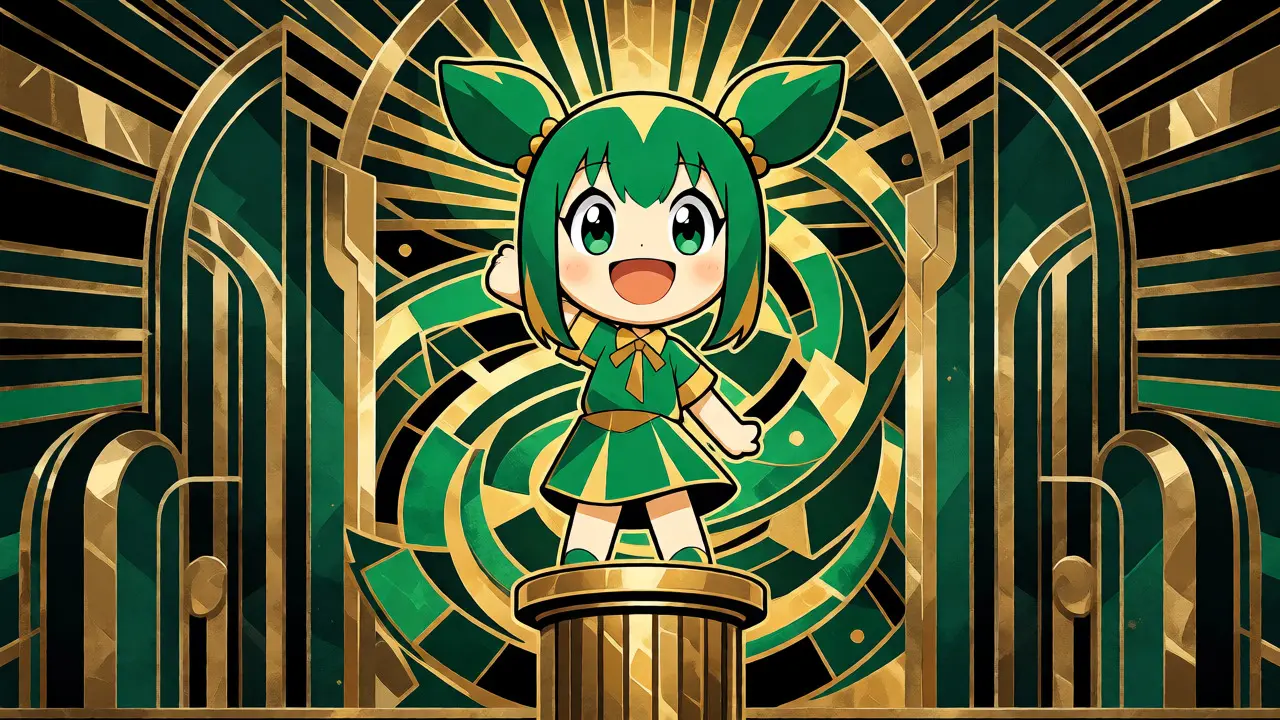
To understand SUBA, you have to understand where it came from. This isn’t a project born in a Silicon Valley boardroom. It was created as a tribute to Yotsuba Koiwai, the cheerful, curious protagonist of the manga *Yotsuba&!* who became the unofficial mascot of 4chan. For years, she represented innocence amidst internet chaos. The creators of SUBA positioned her as the "forgotten goddess" of meme culture.
The pitch here is pure community vibes. They describe the project as being built on "healthy chaos, endless fun, and unbreakable loyalty." It’s not trying to solve complex financial problems with smart contracts. Instead, it aims to channel the energy of digital lore. Think of it less like Bitcoin’s digital gold narrative and more like a digital campfire where anonymous users gather. The goal is to appeal to a new generation of "anons" navigating the wild west of crypto.
Technical Specs: What Makes SUBA Tick?
Under the hood, SUBA is an ERC-20 token running on an EVM-compatible blockchain. This means if you know how to use MetaMask, you can interact with it. No special wallets required. But let’s break down the numbers, because in meme coins, the math often matters more than the mission statement.
| Attribute | Value/Detail | Why It Matters |
|---|---|---|
| Total Supply | 420 Trillion | A massive supply keeps individual unit prices low, encouraging retail speculation. |
| Circulating Supply | ~420.69 Trillion | Almost all tokens are in circulation; no hidden team unlocks looming over the price. |
| Transaction Tax | 0% | No fees on buys or sells. Great for traders who want quick exits without losing margin. |
| Ownership | Renounced | The developers cannot change the contract rules anymore. It’s truly decentralized governance. |
The renouncement of ownership is a big deal here. In many scammy meme coins, devs hold the keys and can mint more tokens or freeze wallets at will. With SUBA, the contract is immutable. You can trust the code, even if you don’t trust the market sentiment. The zero-tax policy also removes friction. If you’re day-trading, you aren’t paying a 5% tax to exit a position. That simplicity attracts short-term speculators who hate hidden costs.

Price History: A Rollercoaster Ride
If you looked at SUBA’s chart recently, you might feel dizzy. This asset has experienced some of the most violent swings typical of micro-cap meme coins. Let’s look at the hard data to keep things grounded.
In July 2025, SUBA hit its all-time high of $0.0000105021. During that peak, daily trading volume spiked to $1.6 million, showing genuine interest. People were buying in, expecting the next 100x. But crypto markets don’t care about feelings. By September 2025, the token had crashed nearly 99% from that high.
As of late October 2026, the price sits in the sub-nano range-around $0.000000000025. The market cap hovers around $21,000. Yes, twenty-one thousand dollars. Not millions. This tiny market cap means two things: first, it’s incredibly cheap to buy a large position; second, a single whale selling off can wipe out 50% of the value in minutes. Liquidity is thin. Don’t expect to sell $10,000 worth of SUBA without moving the price against yourself.
Where Can You Buy SUBA?
You won’t find SUBA on Binance or Coinbase. Major centralized exchanges usually ignore tokens this small unless they go viral overnight. Currently, trading happens primarily on decentralized exchanges (DEXs) via platforms like Uniswap or PancakeSwap, depending on which EVM chain hosts the primary liquidity pool.
- MetaMask: The standard wallet for interacting with the token.
- DEX Aggregators: Use tools like 1inch or DEXTools to find the best swap rates.
- Liquidity Pools: Most volume comes from automated market makers, not order books.
Be careful when swapping. Because the liquidity is low, slippage can be high. Always set your slippage tolerance manually if you see significant price movement during the transaction. If you’re new to DeFi, start with a small amount to test the waters before committing real capital.
Risks: The Dark Side of Meme Coins
Let’s be honest: investing in Yotsuba is gambling. It’s not an investment in technology; it’s an investment in attention. And attention is fickle.
The biggest risk here is liquidity drying up. When hype dies, buyers vanish. With a market cap under $30k, there’s very little buffer. If the community loses interest, the price doesn’t just drop-it collapses toward zero. There’s no institutional backing, no revenue model, and no utility beyond trading itself. It relies entirely on the social momentum of the 4chan meme community.
Another concern is the lack of major exchange listings. Without Binance or Kraken listing it, mainstream investors can’t easily access it. This limits the potential for a broad retail pump. You’re playing in a niche sandbox. If the broader crypto market enters a bear phase, speculative assets like SUBA get hit hardest and recover last.
Is SUBA Worth Your Time?
So, should you buy? If you’re looking for stability, absolutely not. If you believe in the power of internet culture and want a lottery ticket with extremely low entry costs, maybe.
SUBA serves a specific job-to-be-done: it allows users to participate in a nostalgic, community-driven experiment. It’s a cultural artifact as much as a financial asset. The renounced contract and zero tax make it technically clean compared to other rug-pull-prone meme coins. But remember, technical cleanliness doesn’t guarantee price appreciation.
Treat any money you put into SUBA as money you’re willing to lose completely. It’s entertainment with a chance of upside, not a retirement plan. Keep an eye on social media chatter. If mentions of "Yotsuba" spike on Twitter or Reddit, that’s your signal that liquidity might return. If silence reigns, the price will likely bleed slowly downward.
Is Yotsuba (SUBA) a scam?
Not necessarily a scam, but highly risky. The contract ownership has been renounced, meaning developers cannot manipulate the token supply arbitrarily. However, the lack of liquidity and reliance on meme hype makes it vulnerable to rapid devaluation. It fits the profile of a legitimate community token rather than a fraudulent scheme, but it lacks fundamental utility.
Can I stake Yotsuba (SUBA)?
Currently, there are no widely adopted staking mechanisms for SUBA. Unlike proof-of-stake blockchains, SUBA is a token on an existing network. Any staking opportunities would come from third-party community initiatives or yield farms, which carry additional smart contract risks.
Which blockchain does SUBA run on?
SUBA operates on an EVM-compatible blockchain. This allows it to function as an ERC-20 token, making it compatible with Ethereum-based wallets like MetaMask and decentralized exchanges such as Uniswap.
Why is the supply so high (420 trillion)?
The high supply is a psychological tactic common in meme coins. It keeps the unit price extremely low (fractions of a cent), which encourages retail investors to buy large quantities (e.g., "I bought 1 million SUBA!"). It creates the illusion of accessibility and growth potential.
Does SUBA have a roadmap?
Meme coins rarely have traditional roadmaps focused on product development. SUBA’s "roadmap" is essentially community engagement and marketing efforts to maintain visibility. Success depends on sustaining social media presence and attracting new holders through viral trends.