Have you ever downloaded a crypto app that promised the simplicity of online banking with the security of decentralization? That is exactly the pitch behind WX Network, a decentralized cryptocurrency exchange and wallet platform built on the Waves blockchain. Originally launched in 2017 as Waves DEX, this platform has rebranded to stand alone. But here is the catch: while the technology sounds smooth, the reality for users is mixed. You might find it fast and easy to use, or you might find yourself chasing lost funds. This review cuts through the marketing hype to tell you what WX Network actually offers in 2026.
The Core Promise: Banking-Like Simplicity
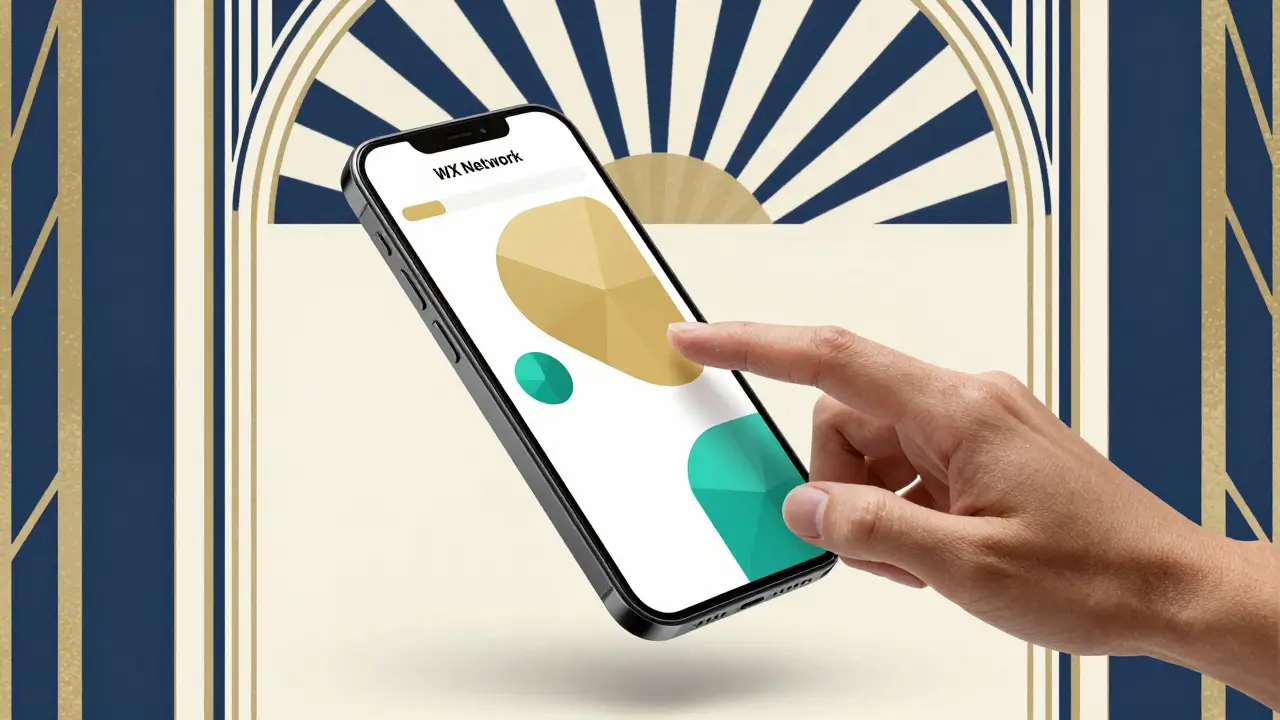
The main selling point of WX Network is its design philosophy. Most decentralized exchanges (DEXs) are clunky. They require you to connect complex wallets, understand gas fees, and navigate confusing interfaces. WX Network tries to fix this by mimicking traditional online banking. The interface is clean, familiar, and designed to lower the barrier for newcomers who are intimidated by crypto jargon.
Technically, it works by connecting directly to random nodes within the Waves network. Unlike full-node wallets that force you to download gigabytes of blockchain data, WX Network is lightweight. It installs in seconds and runs smoothly on most devices. For someone who just wants to swap tokens without managing a server, this accessibility is a genuine advantage. The platform uses smart contracts to automate everything from token swaps to voting mechanisms, ensuring that the code governing your trades is transparent and available for audit on GitHub.
Security: Decentralized Trust vs. Real-World Risks
On paper, WX Network looks secure. Because it is decentralized, there is no central company holding your keys. Your assets remain under your control, regulated by immutable smart contracts. This structure theoretically eliminates the risk of a single point of failure, like an exchange getting hacked and freezing withdrawals.
However, "theoretical" security does not always match user experience. While the code is open-source, the ecosystem around it has raised red flags. Organizations like Radly Group actively offer services to help users recover funds from fraudulent schemes associated with WX Network. This suggests that either bad actors are impersonating the platform, or there are vulnerabilities in how users interact with the service. If you see a recovery service advertising specifically for WX Network, treat that as a major warning sign. Legitimate decentralized platforms rarely need dedicated fraud recovery teams because users hold their own private keys.

How WX Network Compares to Other Platforms
To understand where WX Network fits, you need to compare it to alternatives. It sits in a unique niche between heavy-duty DeFi protocols and centralized exchanges. Below is a breakdown of how it stacks up against competitors.
| Feature | WX Network | Uniswap (Ethereum) | Binance (CEX) |
|---|---|---|---|
| Architecture | Decentralized (Waves) | Decentralized (EVM) | Centralized |
| User Interface | Banking-like, simple | Technical, complex | Professional, feature-rich |
| Setup Time | Seconds (lightweight) | Minutes (wallet setup) | Hours (KYC verification) |
| Liquidity | Moderate (Waves specific) | High (Industry leader) | Very High |
| Fraud Risk Profile | Mixed (Recovery services exist) | Low (Smart contract risk only) | Medium (Platform hack risk) |
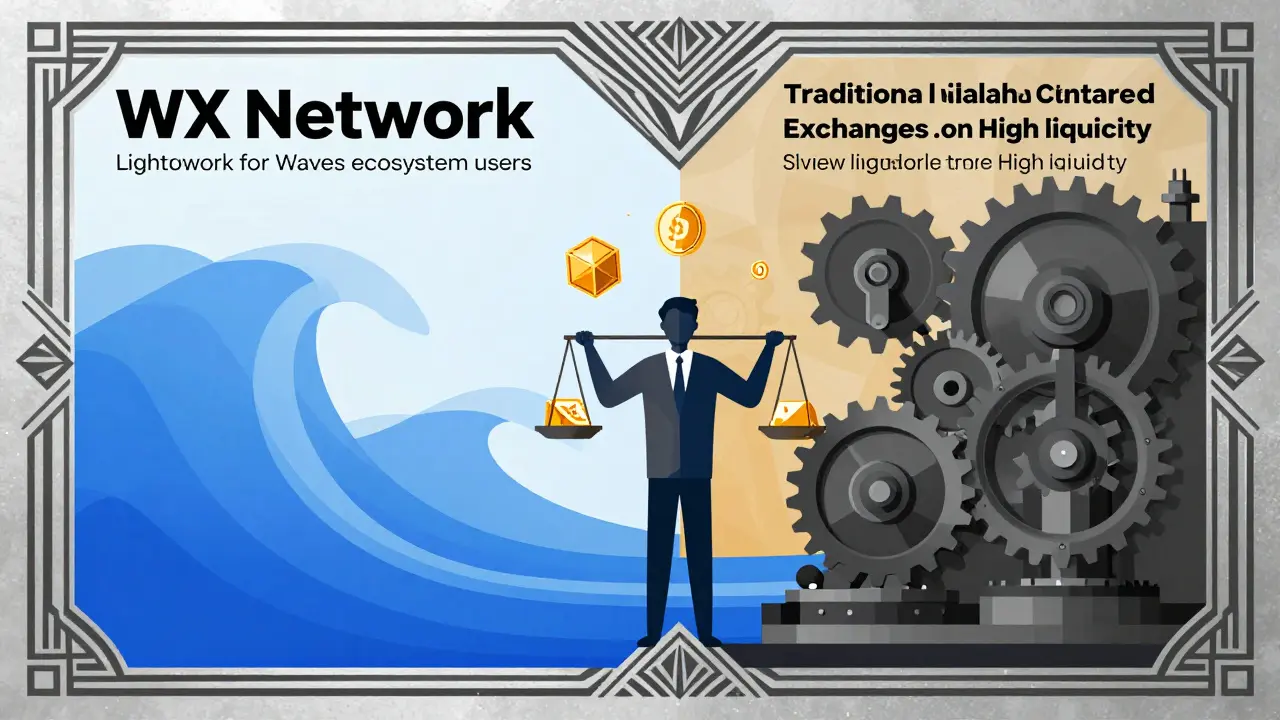
As you can see, WX Network wins on ease of entry but loses on liquidity compared to giants like Uniswap or Binance. If you are trading major pairs like BTC/USD, you will likely get better rates on a centralized exchange or a high-volume DEX. WX Network is best suited for those already invested in the Waves ecosystem who want a smoother UI than standard Web3 tools provide.
Who Should Use WX Network?
This platform is not for everyone. Here is who fits the profile:
- Waves Ecosystem Users: If you hold WAVES tokens or other assets native to the Waves blockchain, WX Network offers integrated access without leaving the network.
- Crypto Newcomers: The simplified interface helps those who find MetaMask or Ledger interactions too daunting.
- Privacy-Focused Traders: Since it is non-custodial, you do not need to undergo rigorous Know Your Customer (KYC) checks to trade, provided you have funds in a compatible wallet.
Conversely, professional traders looking for advanced charting, limit orders, or deep liquidity should look elsewhere. The lightweight design means fewer features, which can be a limitation for serious investors.
Red Flags and Safety Tips
Before you deposit any significant amount, keep these safety measures in mind. The existence of fraud recovery services targeting WX Network users indicates that scams are prevalent in this space.
- Verify the Source: Only download the application from official channels. Imposter apps are common.
- Audit the Contracts: Since the source code is on GitHub, take time to read community audits. Do not trust blind promises of security.
- Start Small: Test the withdrawal process with a small amount first. Ensure you can move funds out before committing larger sums.
- Beware of "Recovery" Scams: If you lose funds, legitimate decentralized platforms cannot reverse transactions. Anyone claiming they can recover your WX Network funds for a fee is likely running a secondary scam.
The Verdict: A Niche Tool with Caveats
WX Network delivers on its promise of being a lightweight, user-friendly gateway into decentralized finance. Its integration with the Waves blockchain provides a stable foundation, and its banking-style interface makes crypto trading feel less technical. However, the mixed user sentiment and presence of associated fraud concerns demand caution. It is a viable option for casual traders within the Waves ecosystem, but it lacks the robustness and liquidity of larger platforms. Use it if you value simplicity and privacy, but never compromise on due diligence.
Is WX Network a centralized or decentralized exchange?
WX Network is a decentralized exchange (DEX). It operates on the Waves blockchain using smart contracts, meaning you retain control of your private keys and funds are not held by a central authority.
Why do some websites offer fund recovery for WX Network?
The presence of third-party recovery services suggests that users have experienced losses due to fraud or scams associated with the platform. Be extremely cautious, as many such recovery services may themselves be scams.
Do I need to sync the entire Waves blockchain to use WX Network?
No. WX Network is designed as a lightweight client. It connects directly to distributed nodes in the Waves network, allowing for instant setup without downloading the full blockchain history.
Is WX Network safe for beginners?
It is easier to use than many DEXs due to its intuitive interface, but beginners should still exercise caution. Start with small amounts and verify all links to avoid phishing attacks.
What cryptocurrencies can I trade on WX Network?
WX Network primarily supports tokens issued on the Waves blockchain. This includes WAVES and various Waves-based ERC-20 style tokens. It does not support Bitcoin or Ethereum directly unless bridged.
When was WX Network originally launched?
The platform was originally established in 2017 as Waves DEX before rebranding to WX Network to operate as a standalone decentralized exchange and wallet solution.