You see the numbers on your screen. An annual percentage yield (APY) of 150%. Maybe even 500%. It looks like free money. In the world of decentralized finance (DeFi), this is yield farming, a strategy where you lend or stake your cryptocurrency to earn rewards. But here is the catch that nobody puts in bold letters at the top of the dashboard: high yields mean high risk. If you are not careful, you could lose more than just your profits. You could lose your entire principal investment.
I have spent years watching the crypto market shift from wild west speculation to a more structured, yet still dangerous, financial landscape. Living in Boulder, I talk to developers and investors daily who think they understand these protocols until something goes wrong. The goal of this guide is simple. We will break down exactly what can go wrong when you farm yields and give you concrete steps to protect your assets. No fluff, no jargon without explanation, just practical advice for keeping your money safe.
The Hidden Trap of Impermanent Loss
Let’s start with the most confusing but critical concept in yield farming: impermanent loss. This is not a bug; it is a mathematical reality of providing liquidity. When you deposit two tokens into a liquidity pool-say, ETH and USDC-you are not just holding them. You are acting as an automated market maker (AMM). The protocol sells one token for the other as prices change to keep the pool balanced.
Imagine you deposit $1,000 worth of ETH and $1,000 worth of USDC. If the price of ETH doubles, the arbitrage bots will buy ETH from your pool and sell USDC into it. Your pool now holds less ETH and more USDC. When you withdraw, you might find that simply holding the original ETH and USDC would have been worth more than your current position. That difference is impermanent loss. It is "impermanent" only if the price returns to its original ratio. If the price never recovers, the loss becomes permanent.
This risk spikes when there is high volatility between the two assets. Stablecoin pairs (like USDC/USDT) have near-zero impermanent loss because their prices stay pegged. Pairs involving volatile assets (like ETH/SOL) carry significant risk. Before you join a pool, ask yourself: how much do I expect these prices to diverge? If the answer is "a lot," calculate the potential IL using online calculators before you commit funds.
Smart Contract Vulnerabilities: The Code Can Fail
In traditional banking, your money is protected by insurance and legal frameworks. In DeFi, your money is protected by code. And code has bugs. Smart contracts are self-executing programs that manage your funds. If there is a flaw in the logic, hackers can exploit it. We have seen billions of dollars stolen through reentrancy attacks, flash loan exploits, and simple coding errors.
Even audited contracts are not immune to risk. Audits are snapshots in time. They check for known vulnerabilities at a specific moment. New attack vectors emerge constantly. Remember the Wormhole bridge hack or the various router exploits? These happened despite audits. The total value locked (TVL) in DeFi exceeds $70 billion, making these protocols lucrative targets for sophisticated criminal groups.
To mitigate this, look for protocols that have undergone multiple audits by reputable firms like CertiK, Trail of Bits, or OpenZeppelin. Check if the audit reports are public. More importantly, look for bug bounty programs. Protocols that pay out large bounties for finding bugs incentivize white-hat hackers to secure the code rather than exploit it. Never invest in a project that has never been audited, especially if it promises huge returns.
Rug Pulls and Team Trustworthiness
A rug pull is the ultimate betrayal in DeFi. Developers create a token or protocol, hype it up, attract liquidity, and then drain the funds and disappear. This happens frequently in newer, unproven projects. Unlike public companies, many DeFi teams are anonymous. There is no CEO to sue. There is no headquarters to raid.
How do you spot a potential rug pull? Look at the tokenomics. Do the developers hold a massive percentage of the supply? Is there a lock-up period for their tokens? If the team can dump millions of dollars worth of tokens onto the market instantly, they can crash the price and exit with their profits. Use tools like Etherscan or BscScan to check token holder distributions. If the top 10 wallets hold more than 20-30% of the supply and aren't exchanges or burn addresses, proceed with extreme caution.
Also, check the team's history. Are they doxxed (publicly identified)? Have they built successful projects before? Anonymous teams aren't automatically scams, but they require higher scrutiny. Community sentiment matters too. Join their Discord or Telegram. Are real people discussing the tech, or is it just bots posting "moon" emojis? Real communities engage in technical debate. Fake ones just hype the price.
Market Volatility and Liquidation Risks
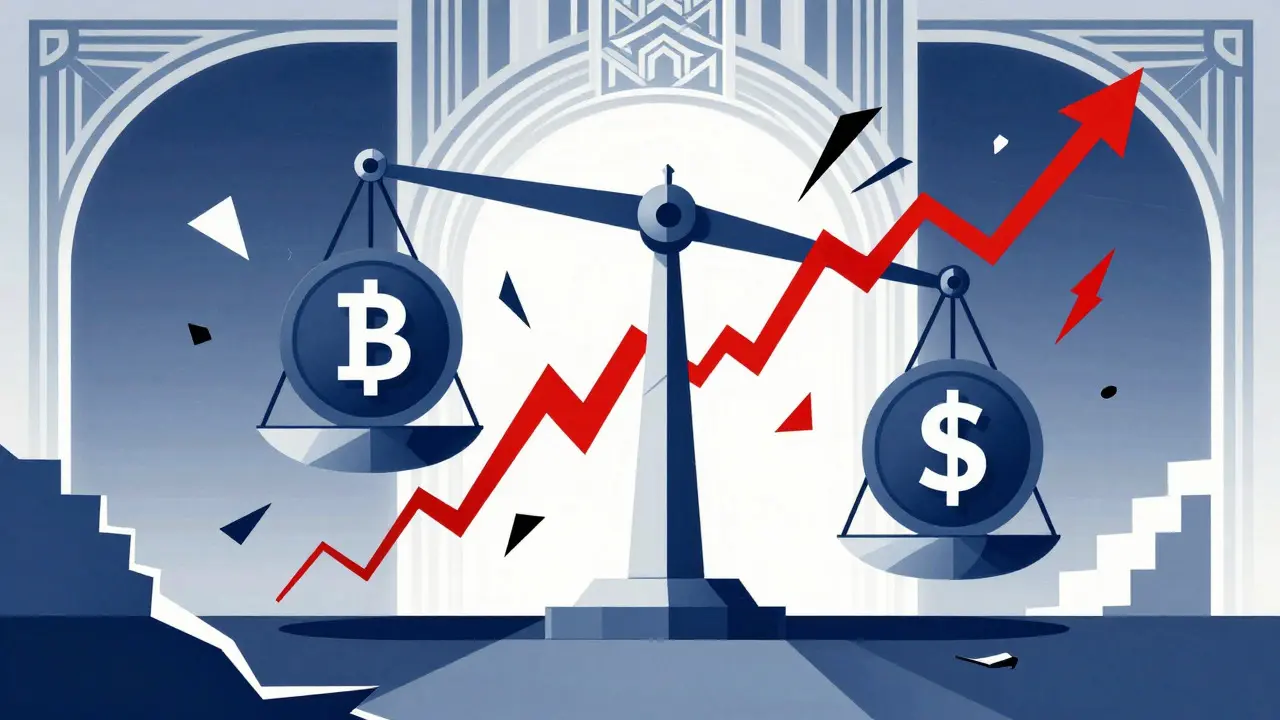
Crypto markets are notoriously volatile. Prices can swing 10-20% in a single day. Yield farming often involves leverage or complex strategies that amplify this volatility. If you borrow against your farmed assets to earn more yield, you risk liquidation. If the value of your collateral drops below a certain threshold, the protocol automatically sells your assets to repay the loan. You lose your position, and often a portion of your capital as a penalty fee.
Interconnectedness adds another layer of danger. DeFi protocols are linked. A failure in one major lending platform can trigger a cascade of liquidations across others. This was evident during the Terra/Luna collapse, which wiped out billions in TVL across multiple chains within hours. Diversification is key. Don't put all your eggs in one basket, and don't use excessive leverage. Stick to strategies you understand fully. If you can't explain how your yield is generated in plain English, you probably shouldn't be doing it.

Regulatory Uncertainty and Compliance
The regulatory landscape for DeFi is shifting rapidly. Governments worldwide are trying to figure out how to classify yield farming. Is it a security? A commodity? A new asset class? Regulatory changes can impact profitability overnight. For example, if a government declares certain tokens as securities, exchanges might delist them, causing price crashes. Or tax laws might change, turning profitable farms into tax liabilities.
Stay informed about regulations in your jurisdiction. Keep detailed records of every transaction. Use portfolio trackers that generate tax reports. Ignorance of the law is not a defense. As regulators like the SEC in the US or MiCA in Europe tighten rules, compliance will become a major factor in protocol viability. Projects that adapt quickly to regulations will survive; those that ignore them may face shutdowns or bans.
| Strategy Type | Risk Level | Primary Risk | Mitigation Tip |
|---|---|---|---|
| Stablecoin Pools | Low-Medium | Depegging events | Stick to major stablecoins (USDC, DAI) |
| Volatile Asset Pools | High | Impermanent Loss | Calculate IL beforehand; limit exposure |
| Leveraged Farming | Very High | Liquidation | Use low leverage; set stop-losses |
| New Token Farms | Extreme | Rug Pull / Scam | Verify team, audits, and token locks |
Practical Steps to Minimize Your Exposure
So, how do you actually farm safely? Start with due diligence. Research the protocol thoroughly. Read the documentation. Understand the incentive structure. Why are they paying you high yields? Often, it's to bootstrap liquidity for a new token. Once the initial hype fades, yields drop. Be prepared for this.
Diversify your positions. Don't put all your capital into one chain or one protocol. Spread it across Ethereum, Solana, Arbitrum, etc., but only after assessing each chain's security track record. Use hardware wallets like Ledger or Trezor for signing transactions. Avoid connecting your main wallet to unknown dApps. Use a separate "burner" wallet with limited funds for interacting with new or risky protocols.
Finally, accept that you might lose money. Only invest what you can afford to lose completely. Treat yield farming as a high-risk venture, not a savings account. Set realistic expectations. Sustainable yields usually range from 5% to 20%. Anything significantly higher is likely unsustainable or carries hidden risks. By staying educated, cautious, and disciplined, you can navigate the DeFi space and potentially grow your wealth without getting wrecked by avoidable mistakes.
What is the biggest risk in yield farming?
The biggest risks are smart contract hacks and impermanent loss. Hacks can lead to total loss of funds, while impermanent loss erodes profits due to price volatility between paired assets.
Is yield farming safer than staking?
Generally, yes. Staking typically involves locking a single asset to secure a network, carrying lower risk. Yield farming often involves providing liquidity to trading pairs, exposing you to impermanent loss and higher smart contract complexity.
How do I avoid rug pulls?
Check for verified audits, transparent team identities, locked liquidity, and fair token distribution. Avoid projects with anonymous teams and unaudited code promising unrealistic returns.
Can I lose my principal investment in yield farming?
Yes. Through impermanent loss, smart contract exploits, or rug pulls, you can lose some or all of your initial deposit. Always assume any capital deployed in DeFi is at risk.
What is impermanent loss?
Impermanent loss occurs when the price of deposited tokens changes relative to each other, resulting in less value upon withdrawal compared to simply holding the assets. It becomes permanent if prices do not revert.