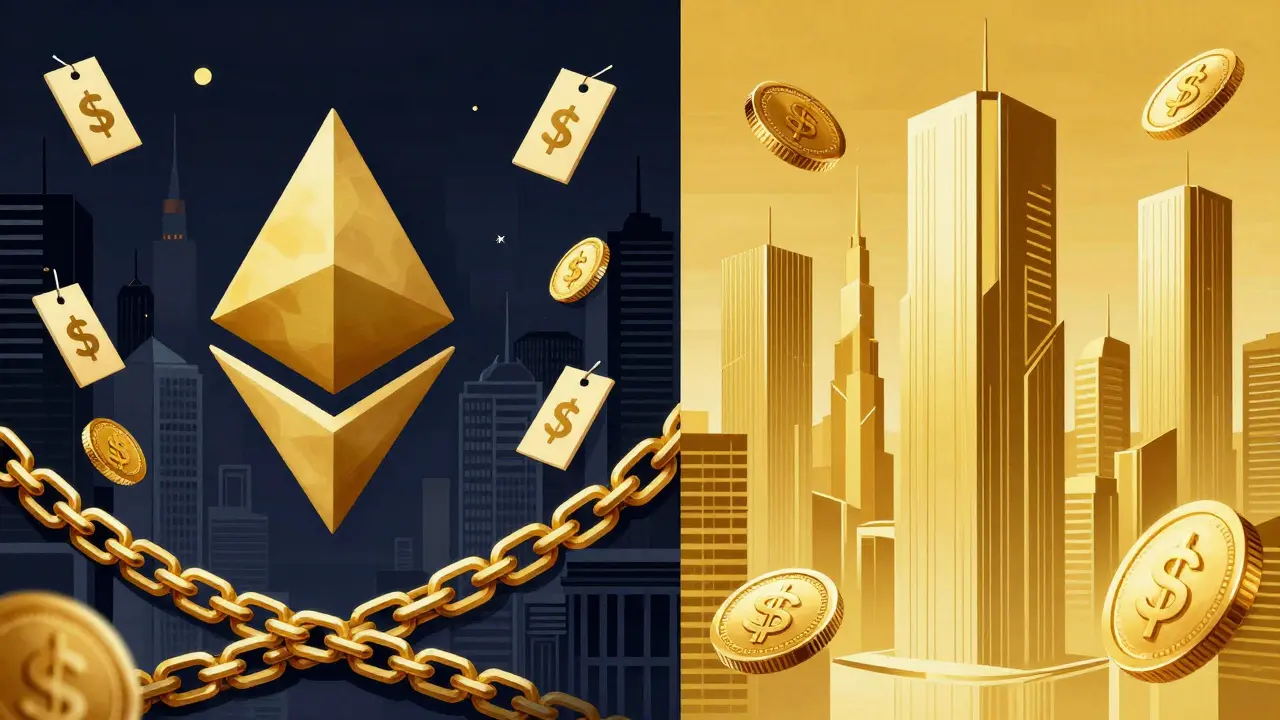
Most people enter the world of decentralized finance (DeFi) wanting two things: lower fees and higher returns. While many search for ApeSwap on the Ethereum network, there is a critical detail you need to know right away: ApeSwap is primarily built on the Binance Smart Chain (BSC). If you are trying to use it on Ethereum, you will find that the real action, the liquidity, and the low gas fees are all happening on BSC. This distinction is the difference between paying a $0.05 transaction fee and paying $50 in gas for a single swap.
If you are looking for a place to put your idle assets to work through yield farming or simply want a fast way to swap tokens without a central authority watching your every move, ApeSwap is a heavy hitter. But does it actually hold up against the giants of the DEX world? Let's break down how it works, where the money is made, and the risks you can't ignore.
Quick Takeaways
- Best For: Yield farmers and liquidity providers who want high APY and low fees.
- Primary Network: Binance Smart Chain (BSC), not Ethereum.
- Native Token: BANANA (used for governance and rewards).
- Pros: Extremely cheap swaps, high liquidity pool returns, no KYC.
- Cons: Steeper learning curve for newbies, lower volume than PancakeSwap.
How ApeSwap Actually Works
At its core, ApeSwap is an Automated Market Maker (AMM). Unlike a traditional exchange where a buyer and seller must agree on a price, an AMM uses mathematical formulas to price assets. You aren't trading with another person; you are trading against a pool of tokens.
To make this possible, the platform relies on Liquidity Providers (LPs). These are users who deposit pairs of tokens (like BNB and BUSD) into a pool. In exchange for providing this liquidity, LPs earn a slice of the trading fees. This is where the "farming" part comes in. By staking your LP tokens, you earn additional rewards in the form of BANANA tokens, which is the native utility token of the ecosystem.
Because it operates on BSC, the speed is impressive. You can expect a swap to finalize in about 3 to 5 seconds. Compare that to the congestion often found on the Ethereum mainnet, and it is easy to see why the platform shifted its focus toward the Binance ecosystem.
The BANANA Token: Utility and Value
You can't talk about this exchange without talking about BANANA. It isn't just a meme coin; it drives the entire economy of the platform. If you hold BANANA, you get a say in how the platform is governed. You can vote on new pool additions or changes to the fee structure.
However, the price of BANANA is a rollercoaster. Some analysts from TradingBeast have projected optimistic targets reaching near $38, while others, like WalletInvestor, predict a dip toward $12. For a regular user, the token's value matters less than its utility. It is the primary reward for yield farmers, meaning your "earnings" are often paid out in BANANA, which you then have to decide whether to hold or sell for a stablecoin.
Comparing ApeSwap to Other DEXs
If you have used PancakeSwap, the interface will feel like home. They share a very similar logic and layout. However, ApeSwap often targets a more aggressive yield-seeking crowd with different reward structures.
| Feature | ApeSwap | PancakeSwap | Uniswap (Ethereum) |
|---|---|---|---|
| Avg. Transaction Fee | < $0.10 | < $0.10 | $5.00 - $50.00+ |
| Transaction Speed | 3-5 Seconds | 3-5 Seconds | 15 Seconds - Minutes |
| Typical APYs | 100% - 400% | Moderate to High | Low to Moderate |
| KYC Required | No | No | No |
Step-by-Step: How to Start Trading and Farming
Since there is no central company to sign up with, you don't create an account. You connect a wallet. Here is the fastest way to get moving:
- Set up a Web3 Wallet: Download MetaMask or Trust Wallet. Since ApeSwap is on BSC, make sure you add the Binance Smart Chain network to your wallet settings.
- Fund Your Wallet: Send some BNB (Binance Coin) to your wallet. You need BNB to pay for the gas fees of every transaction you make.
- Connect to ApeSwap: Go to the official site and click "Connect Wallet." This links your funds to the interface.
- Swap Tokens: Select the token you have (e.g., BNB) and the token you want (e.g., BUSD). Confirm the swap in your wallet.
- Start Yield Farming: Navigate to the "Pools" section. Deposit a pair of tokens to become a Liquidity Provider. Once deposited, stake those LP tokens in the "Farms" section to begin earning BANANA.
The Risks: What They Don't Tell You in the Hype
High APYs (like 400%) look great on a screen, but they come with a catch called Impermanent Loss. This happens when the price of the tokens you deposited changes significantly compared to when you put them in. If one token moons while the other stays flat, the AMM rebalances your pool, and you might find that you would have been better off just holding the tokens in your wallet.
Additionally, while the lack of KYC (Know Your Customer) is great for privacy, it means there is no one to call if you lose your seed phrase or send funds to the wrong address. You are your own bank. If you make a mistake, those funds are gone forever.
Lastly, remember that ApeSwap's trading volume is lower than the top-tier DEXs. For small trades, this is irrelevant. But if you are moving millions of dollars, you might run into "price slippage," where the actual execution price is worse than the quoted price because there isn't enough liquidity to absorb your trade.
Final Verdict: Is it Worth Your Time?
ApeSwap is a powerful tool for anyone who understands the basics of DeFi and wants to maximize their earnings. It is fast, incredibly cheap, and offers some of the most competitive yields in the BSC ecosystem. However, it is not a place for a complete beginner to "test the waters" without doing their homework on impermanent loss.
If you are tired of the high costs associated with Ethereum and want a streamlined, community-driven way to grow your portfolio, ApeSwap is a strong choice. Just keep a close eye on the volatility of the BANANA token and never deposit more than you can afford to lose.
Does ApeSwap work on the Ethereum network?
While users often search for it in relation to Ethereum, ApeSwap is primarily developed and operated on the Binance Smart Chain (BSC). To use its features, you need a BSC-compatible wallet and BNB for gas fees.
What is the BANANA token used for?
BANANA is the native utility token. It is used for governance (voting on platform changes), paying certain fees, and is the primary reward given to users who provide liquidity to the platform's pools.
Is ApeSwap safe for beginners?
It is safe in terms of technology, but the concepts of yield farming and impermanent loss can be complex. Beginners should start with small amounts of capital and learn how liquidity pools work before committing significant funds.
How do I connect my wallet to ApeSwap?
You can use a Web3 wallet like MetaMask or Trust Wallet. Ensure your wallet is set to the Binance Smart Chain network, then click the "Connect Wallet" button on the ApeSwap homepage and approve the connection request.
What are the typical fees on ApeSwap?
Because it runs on BSC, transaction fees are very low, typically averaging under $0.10 per swap. This makes it significantly more affordable than trading on Ethereum-based DEXs.


Jason Davis
April 10, 2026 AT 13:15Impermanent loss is the real killer here and most peple just ignore it untill their portolio drops
Always hedge your positions if you're doin high APY pools or you'll just be holdin a bag of BANANA tokens when the market crashes
Amanda Faust
April 12, 2026 AT 08:28everyone knows bsc is basically just a centralized mirror of binance and calling it a dex is a stretch
Samson Selleck
April 13, 2026 AT 02:56The systemic risk inherent in these AMM protocols is perpetually underestimated by the retail masses. We are witnessing a precarious equilibrium where the inflationary pressure of the native token-in this case, the BANANA asset-eventually collapses under the weight of its own emission schedule. To suggest that a 400% APY is a viable long-term strategy without discussing the decaying utility of the reward token is intellectually dishonest. The liquidity depth is insufficient for institutional-grade slippage tolerances, rendering this a playground for degens rather than a sophisticated financial instrument.
Will Dixon
April 14, 2026 AT 08:28dont forget to double check the url befor connecting ur wallet there are too many fake sites out there tryna steal ur bnb
Alan Seiden
April 15, 2026 AT 16:48Typical American obsession with digital tokens that possess absolutely no intrinsic value. This entire ecosystem is a fraudulent house of cards designed to fleece the gullible while the architects flee to the Caribbean. The sheer lack of regulation in these so-called decentralized exchanges is an affront to any civilized financial system. It is frankly pathetic that people consider this an investment rather than a blatant gamble in a rigged casino.
Artavius Edmond
April 17, 2026 AT 06:58I totally get where the skepticism is coming from, but for a lot of us, the low fees on BSC are just a game changer compared to Ethereum. It's a great way to experiment with DeFi without losing your whole budget to gas fees. Love seeing more options for the community!
jennelle williams
April 18, 2026 AT 02:00just be gentle with your funds
aletheia wittman
April 18, 2026 AT 04:22OMG i tried this and literalyl almost lost everything cuz i couldnt find my seed phrase!! i was screamin im tellin u it is too much stress 😭
Rima Dinar
April 19, 2026 AT 00:58It is truly wonderful that there are so many guides like this for people who are just starting their journey into the world of finance because it can be so overwhelming to look at all these numbers and not know where to begin, so I really encourage everyone to take it slow, read every single word of the documentation, and maybe start with a very small amount of money just to see how the rewards accumulate over a week or two before you decide to put in more of your hard-earned savings into a liquidity pool.
Jessie Tayaban
April 19, 2026 AT 14:22Yesss exactly!! I tried the farming thing and the rewards felt like free money at first but then the price of BANANA went crazy and i was like wtf happened?? 😱 i think i messed up the timing on my exit stratgy lol
Hope Johnson
April 21, 2026 AT 12:42When we consider the nature of value in a decentralized world, we must ask ourselves if the pursuit of high yield is simply a modern iteration of the ancient desire for alchemy, turning lead into gold through a mathematical formula. The beauty of ApeSwap lies not just in the profit potential but in the democratization of the financial layer, allowing an individual in a small village to provide liquidity to a global market, though we must remain mindful that this freedom carries the heavy burden of total personal responsibility for one's own security and digital assets.
Agnessa Dale
April 23, 2026 AT 06:10This looks like a great opportunity for anyone wanting to grow their portfolio steadily!
Lauren Abrams
April 23, 2026 AT 21:32Interesting breakdown of the BSC vs Ethereum trade-offs.