Have you heard the buzz around AstroSwap's Big Bang IDO? If you are scanning your crypto wallet for missed opportunities or trying to figure out if there is still time to grab free tokens, you are not alone. The launch of AstroSwap has created a ripple effect across the Cardano ecosystem, promising high yields and lightning-fast transactions. But here is the hard truth: most of the "free money" in an Initial DEX Offering (IDO) goes to early participants before the public even knows the name.
This guide cuts through the hype. We will break down exactly how the AstroSwap IDO worked, whether an airdrop is still available, what the ASTRO token actually does, and why this project matters for the future of decentralized finance on Cardano. Whether you are a seasoned DeFi degenerate or just curious about blockchain tech, understanding these mechanics helps you make smarter moves in 2026.
What Is AstroSwap? The Interstellar DEX on Cardano
At its core, AstroSwap is a decentralized exchange (DEX). Think of it like a stock market, but without a middleman like a bank or broker. Instead of trusting a company with your money, you trade directly with other users using smart contracts. However, AstroSwap isn't just another copy-paste project. It bills itself as the first "interstellar" DEX built specifically for the Cardano blockchain.
Why does this distinction matter? For years, Ethereum dominated DeFi, but it came with two major headaches: slow speeds and high gas fees. Cardano offers lower fees, but historically struggled with scalability and developer adoption. AstroSwap aims to solve both problems by combining the best of different worlds. It uses a technical foundation forked from Solana architecture. This allows it to process up to 75,000 transactions per second. To put that in perspective, Visa handles roughly 24,000 transactions per second at peak times. This speed means you can swap tokens instantly without waiting minutes for confirmation or paying exorbitant fees.
The Big Bang IDO Launch: How It Worked
The term "Big Bang" in the title refers to the initial explosion of activity during the project's launch phase. AstroSwap did not go live randomly; it launched its Initial DEX Offering (IDO) exclusively on ADAPad. ADAPad is a prominent launchpad platform within the Cardano ecosystem, known for vetting projects before they reach the public. This partnership was crucial because it provided immediate credibility and access to a community of serious investors.
The launch was powered by WagyuSwap technology and incubated by BlueZilla. BlueZilla is not just a random VC firm; it is a venture capital and incubation network spanning over a dozen launchpads and DEXes. This backing meant AstroSwap didn't have to build its marketing machine from scratch. They leveraged BlueZilla's existing network to drive traffic and liquidity from day one.
For those who participated in the IDO on ADAPad, the process involved locking ADA (Cardano's native token) to receive ASTRO tokens at a discounted price compared to the open market. This is standard practice in IDOs: early supporters get a better entry price, while later buyers pay more. The strong demand reported during the IDO suggests that investors saw value in this hybrid Solana-Cardano approach.
Is There Still an AstroSwap Airdrop?
This is the question everyone wants answered. Based on current data, the primary distribution of free tokens happened during the IDO phase on ADAPad. In many crypto projects, the "airdrop" is essentially the reward for participating in the IDO or holding specific partner tokens at a snapshot date. If you were not part of that initial group, the window for the *main* airdrop has likely closed.
However, don't give up hope entirely. Projects like AstroSwap often run secondary campaigns to maintain engagement. Here is what you should watch for:
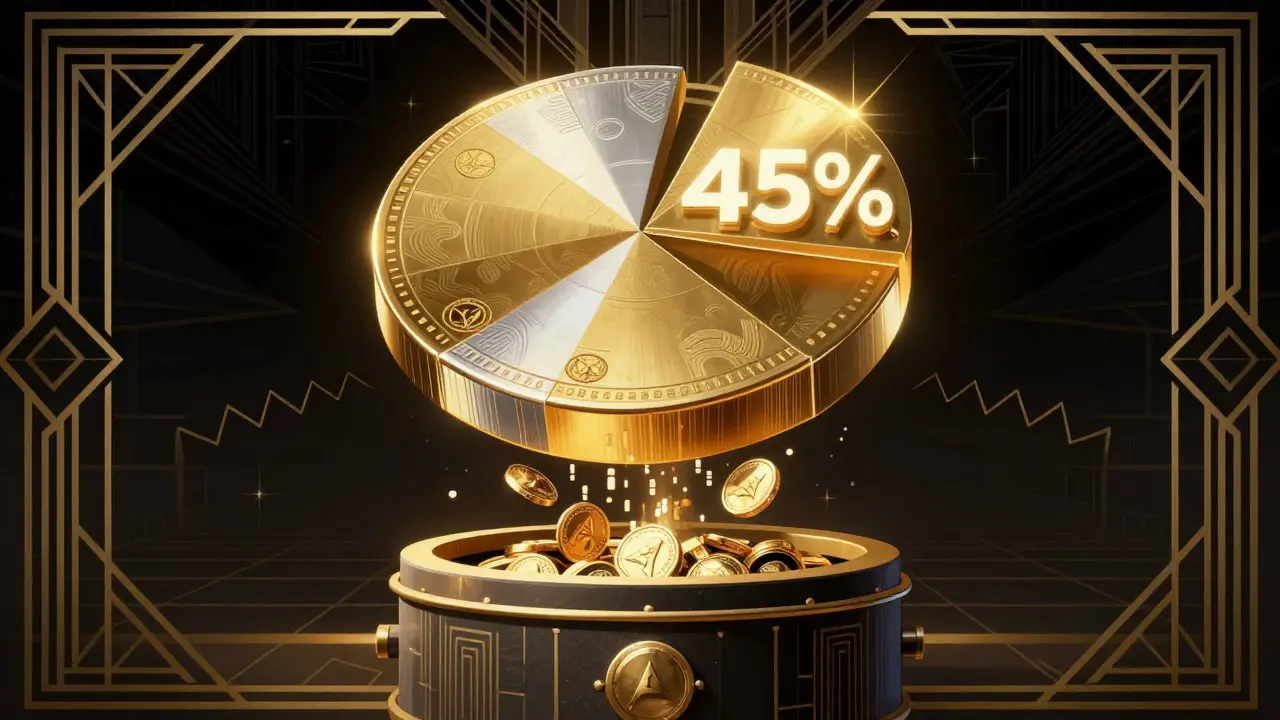
- Staking Rewards: While not technically an airdrop, staking ASTRO tokens generates new ASTRO tokens as rewards. With 45% of the total supply allocated to staking incentives, the Annual Percentage Yield (APY) is reportedly ultra-high. This acts as a continuous drip-feed of free tokens for holders.
- Community Competitions: AstroSwap has announced plans for community competitions offering ASTRO prizes. These are often tied to social media tasks, referral programs, or trivia about the project.
- Partnership Drops: Keep an eye on platforms like WagyuSwap or ADAPad. Sometimes, partners release small token drops to their user bases to promote the ecosystem.
If you see a website claiming you can claim a massive AstroSwap airdrop right now by connecting your wallet, be extremely cautious. Scammers often create fake sites mimicking legitimate launches after the real event ends. Always verify links through official channels like the project's verified Twitter or Discord.
Tokenomics: Understanding the ASTRO Supply
To understand if ASTRO is a good investment, you need to look at its tokenomics-the economic structure of the token. AstroSwap has a total supply of 10 billion ASTRO tokens. How this pie is sliced determines the long-term value and inflation rate.
| Allocation Category | Percentage | Tokens (Billions) | Purpose |
|---|---|---|---|
| Staking Incentives | 45% | 4.5 | Rewards for long-term holders |
| Liquidity Pool | 20% | 2.0 | Ensures smooth trading on DEX |
| Team & Development | 15% | 1.5 | Funding ongoing tech improvements |
| Marketing & Partnerships | 10% | 1.0 | Growing user base and alliances |
| Reserve & Ecosystem | 10% | 1.0 | Future grants and emergency fund |
The standout feature here is the 45% allocation to staking. This is aggressive. Most projects allocate 10-20% to staking. By dedicating nearly half the supply to rewards, AstroSwap is signaling that it wants to lock up supply and reduce selling pressure. High APYs attract yield farmers, who then hold the token, creating stability. However, remember that high rewards also mean high inflation. If new tokens are minted faster than demand grows, the price per token could drop even if your total holdings increase. It is a delicate balance.
Where to Buy ASTRO Tokens
If you missed the IDO, you can still buy ASTRO on the open market. Currently, the token is listed on several major exchanges:
- PancakeSwap: As a decentralized exchange, PancakeSwap allows you to swap BNB or other tokens for ASTRO directly from your wallet. This is often where the earliest post-IDO trading happens.
- Gate.io: A centralized exchange that offers easier fiat on-ramps. If you prefer buying with a credit card or bank transfer, Gate.io is a solid option.
- Upcoming Listings: The team has indicated plans for additional exchange listings. Keep an eye on announcements for tier-1 exchanges like Binance or Coinbase, which would significantly boost liquidity and visibility.
When buying on DEXs like PancakeSwap, always check the slippage tolerance. Because ASTRO might have lower liquidity than established coins like Bitcoin, large trades can move the price. Setting a reasonable slippage (e.g., 1-3%) ensures your transaction goes through without overpaying.
Why Cardano? The Strategic Advantage
You might wonder why AstroSwap chose Cardano instead of Ethereum or Solana. The answer lies in cost and philosophy. Cardano, founded by Charles Hoskinson, prioritizes peer-reviewed research and sustainability. Its proof-of-stake consensus mechanism consumes far less energy than Ethereum's former proof-of-work model.
More importantly for users, transaction fees on Cardano are fractions of a cent. On Ethereum, a simple swap can cost $5-$20 during busy periods. On Cardano, it costs less than $0.01. For a DEX targeting everyday users and micro-trades, this fee structure is essential. AstroSwap leverages this low-cost environment while adding Solana-level speed. It is a hybrid approach that tries to offer the best of both worlds: cheap fees and fast execution.
Risks and Considerations Before Investing
No crypto investment is without risk. Here is what you need to keep in mind:
- Volatility: ASTRO is a new token. New tokens are highly volatile. Prices can swing 20-30% in a single day based on news or whale movements.
- Smart Contract Risk: Although AstroSwap uses audited code from WagyuSwap, no code is immune to bugs. Always use a hardware wallet for significant amounts.
- Competition: The DeFi space is crowded. Minswap, SundaeSwap, and Minswap are already established players on Cardano. AstroSwap needs to prove it offers something unique enough to steal their users.
- Regulatory Uncertainty: Crypto regulations are evolving globally in 2026. Changes in tax laws or security classifications could impact how you trade or hold ASTRO.
How to Stay Updated on AstroSwap
In the fast-moving world of crypto, information is power. Do not rely on random tweets or unverified Telegram groups. Here is how to stay informed:
- Official Website: Check for roadmap updates and partnership announcements.
- Discord Community: Join the official server to participate in AMAs (Ask Me Anything) sessions. Developers often share technical insights here first.
- ADAPad Dashboard: Monitor the launchpad for any future token sales or bonus events related to AstroSwap.
By focusing on these official channels, you avoid scams and ensure you are acting on accurate information. Remember, if it sounds too good to be true-like a guaranteed 10,000% return-it probably is.
Can I still get free AstroSwap tokens?
The main airdrop occurred during the IDO on ADAPad. However, you can earn ASTRO through staking rewards, which offer high APYs, or by participating in community competitions and referral programs announced by the team.
What is the minimum amount to stake ASTRO?
Staking requirements vary depending on the platform you use (e.g., the AstroSwap dashboard or third-party aggregators). Generally, there is no strict minimum, but you need enough tokens to cover potential transaction fees and make the rewards worthwhile. Check the specific staking pool details for exact numbers.
Is AstroSwap safe to use?
AstroSwap is built on audited code from WagyuSwap and backed by BlueZilla. However, all DeFi platforms carry smart contract risks. Always use a hardware wallet, enable two-factor authentication on your accounts, and never share your private keys.
How does AstroSwap differ from other Cardano DEXs?
AstroSwap distinguishes itself by using a Solana-forked architecture to achieve higher throughput (75,000 TPS) compared to traditional Cardano DEXs. This results in faster transaction confirmations and potentially lower slippage during high-volume trading periods.
When will ASTRO be listed on major exchanges?
Currently, ASTRO is available on PancakeSwap and Gate.io. The team has stated plans for further listings, but specific dates for tier-1 exchanges like Binance or Coinbase have not been officially confirmed. Follow their official social channels for announcements.