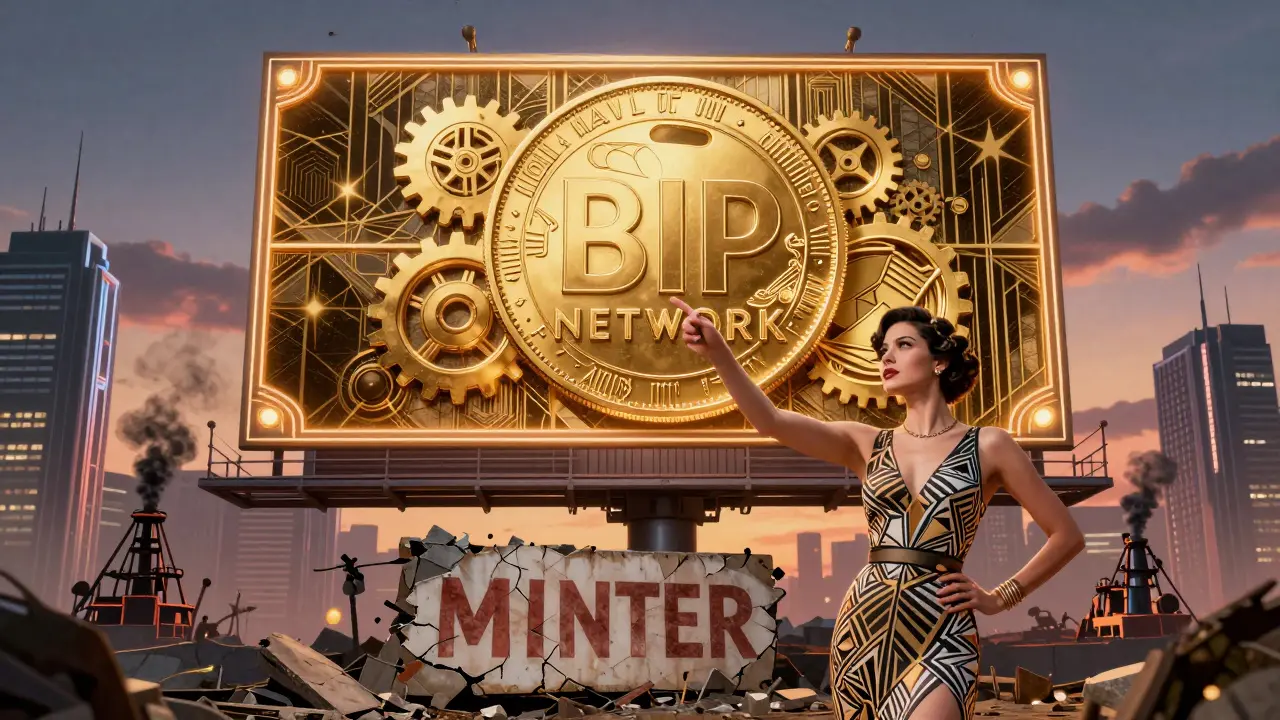
There is no such thing as a "Minter" crypto exchange for Ethereum. If you're searching for one, you're likely mixing up two completely different things: a blockchain project that got rebranded, and an outdated mining concept that no longer exists. Let’s clear this up once and for all.
There’s no Minter exchange for Ethereum
The name "Minter" used to belong to a blockchain called Minter Network is a standalone blockchain launched in 2018 that let users create custom tokens with ease. In 2023, it rebranded to Bip Network. It was never a crypto exchange. It didn’t let you trade ETH for USD or swap Bitcoin for Solana. It was a tool for making your own tokens - like a digital minting platform, not a trading floor.
And if you’re thinking "Minter" means "Ethereum miner," that’s even more off track. Ethereum stopped mining entirely in September 2022. That’s when the Merge happened. No more GPUs, no more ASICs, no more electricity-hungry rigs humming in basements. Ethereum switched to Proof-of-Stake. Miners? Gone. Replaced by validators who lock up 32 ETH to secure the network.
Ethereum mining is dead - here’s why
Before the Merge, Ethereum processed around 15-20 transactions per second using Proof-of-Work. It used more electricity than entire countries. Today, it uses 99.95% less energy. That’s not a marketing claim - it’s verified by Cambridge University’s Centre for Alternative Finance in their September 2024 audit.
Any website or YouTube video telling you how to mine Ethereum in 2026 is either outdated, misleading, or outright scammy. Google searches for "how to mine Ethereum" still show 83% false results as of October 2025, according to the Crypto Integrity Project. Most of those links point to Ethereum Classic (ETC) - a different blockchain that still uses mining - or to staking services that pretend to be mining.
Staking isn’t mining. Mining is about solving math puzzles with brute force. Staking is about locking up your ETH and getting rewarded for helping the network stay secure. If someone’s selling you "Ethereum mining rigs" or "Minter mining software," they’re not selling you tech - they’re selling you a fantasy.
Where to actually trade Ethereum in 2026
So if you want to buy, sell, or trade ETH, you need a real exchange. Here’s what’s actually working in 2026:
- Coinbase: Best for beginners. Charges 0.5%-4% per trade but has simple UI, $250 million insurance, and SOC 2 Type II compliance. Supports instant ACH buys with $0.15 ETH network fees. 4.5/5 rating across 87,000 Trustpilot reviews.
- Binance: Lowest fees (0.1%-0.2%), 600+ cryptocurrencies, and a slick mobile app. But it’s banned in 23 countries including the U.S. Users report 92% satisfaction with the app, but 78% worry about future U.S. regulations.
- Kraken: Top security. Mandatory 2FA, withdrawal whitelisting, and $42.7 billion monthly volume. Fees start at 0.16% for high-volume traders. But KYC can take 58 hours on average - a common complaint on Trustpilot.
- Gemini: Fully compliant in all 50 U.S. states. Flat 0.35% fee. Only exchange with 100% proof-of-reserves and regular third-party audits alongside Coinbase and Kraken.
- Uphold: Unique for trading crypto and precious metals (gold, silver) side by side. Real-time reserve transparency updated every 30 seconds. Used by 140+ countries.
According to ZachXBT’s October 2025 audit, only Coinbase, Kraken, and Gemini have 100% proof-of-reserves. Binance covers 89.3% of assets - still decent, but not full transparency. For most users, that gap matters. If an exchange says "we’re fully backed," ask for the audit report. If they can’t show it, walk away.
What about decentralized exchanges?
Centralized exchanges aren’t the only option. In Q3 2025, decentralized exchanges (DEXs) handled 28.4% of all ETH trading volume. The top three:
- Uniswap: 18.2% market share
- Curve: 6.7%
- Balancer: 3.5%
DEXs let you trade directly from your wallet without handing over your crypto. No KYC. No account. But they’re not beginner-friendly. Slippage, gas fees, and smart contract risks make them risky for new users. For most people, a trusted centralized exchange still makes more sense.
What’s changing in 2026?
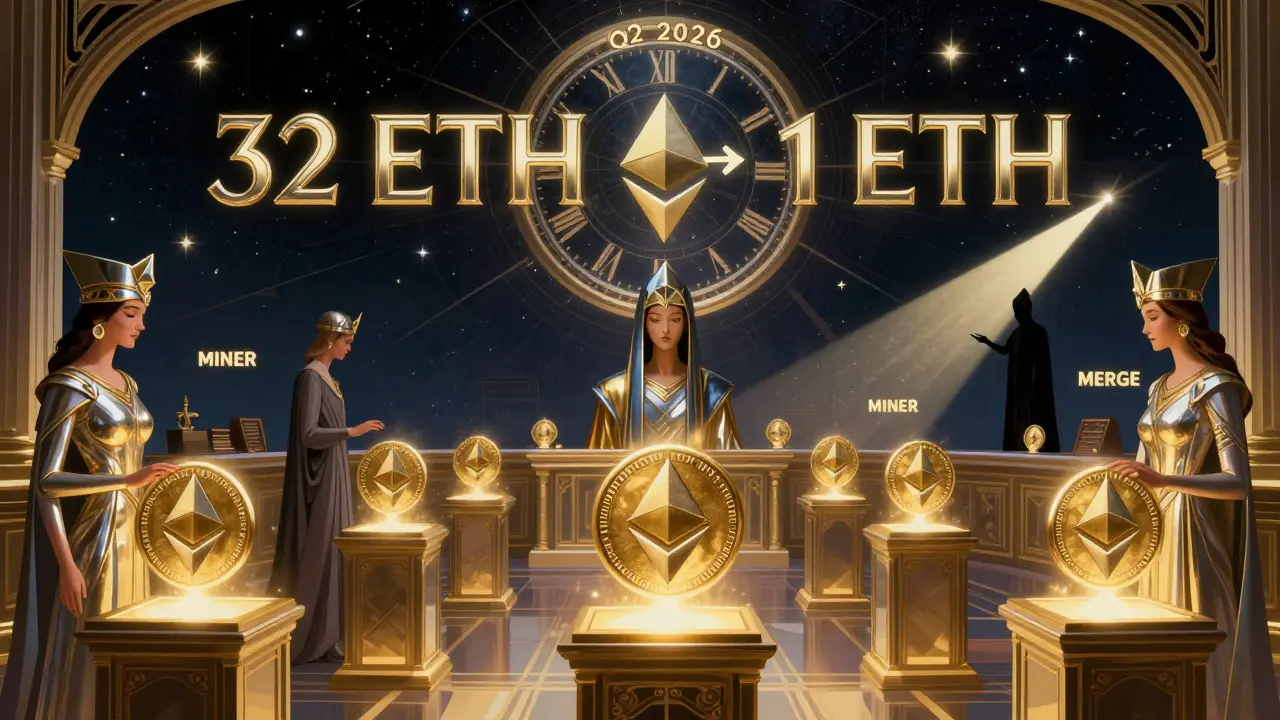
Ethereum’s next upgrade - Prague - is scheduled for Q2 2026. One key change: the minimum staking requirement drops from 32 ETH to just 1 ETH. That’s huge. Right now, staking 32 ETH costs around $86,400. With 1 ETH, anyone can join. Expect a surge in solo validators.
Coinbase also announced in November 2025 that it integrated MetaMask Swaps across 100+ tokens. That means you can now swap ETH for other tokens inside Coinbase without leaving the app - a big step toward making exchanges feel more like wallets.
Meanwhile, regulators are watching. The EU’s MiCA law requires all exchanges to enforce the "travel rule" for transactions over €1,000. In the U.S., the SEC still calls ETH a security. The CFTC says it’s a commodity. That conflict isn’t resolved - and it’s why some exchanges are pulling out of the U.S. market entirely.
Who’s really winning in crypto trading?
Monthly Ethereum trading volume hit $2.78 trillion in Q3 2025 - up 217% from a year earlier. That’s not hype. That’s real demand. But the winners aren’t the ones selling "mining" tools. They’re the exchanges that:
- Offer clear, transparent fees
- Prove they hold your assets
- Keep up with regulation
- Don’t pretend mining still exists
Companies like Coinbase and Kraken are investing in compliance, not mining rigs. They’re building tools for real users - not chasing ghosts.
Don’t fall for the "Minter" myth
There is no Minter exchange for Ethereum. There is no Ethereum mining in 2026. If you’re seeing ads, videos, or forums pushing either idea - they’re either misinformed or trying to sell you something useless.
Want to trade ETH? Use Coinbase, Kraken, or Gemini. Want to earn yield? Stake your ETH on a trusted platform. Want to build something new? Look into Bip Network (formerly Minter) for token creation.
But don’t waste your time chasing a dead concept. The crypto world moved on. You should too.
Is Minter still a thing in crypto?
Yes, but not as an exchange. Minter Network rebranded to Bip Network in 2023. It’s a blockchain for creating custom tokens, not for trading ETH or other cryptocurrencies. It has no connection to Ethereum trading.
Can I still mine Ethereum in 2026?
No. Ethereum fully switched to Proof-of-Stake in September 2022. Mining hardware can no longer connect to the Ethereum network. Any service claiming to let you mine Ethereum is either promoting Ethereum Classic (a different chain) or running a scam.
What’s the best exchange to buy Ethereum in 2026?
For beginners: Coinbase. For low fees: Binance (if available in your country). For security: Kraken or Gemini. All three offer 100% proof-of-reserves and are regulated in major markets. Avoid platforms that don’t publish audit reports.
Why do some sites still say "Ethereum mining"?
Because outdated content spreads faster than facts. Many blogs, YouTube videos, and affiliate sites haven’t updated since 2022. Google still ranks them highly. Always check the date. If it’s older than September 2022, it’s likely wrong.
Is staking Ethereum safe?
Staking through reputable exchanges like Coinbase or Kraken is one of the safest ways to earn yield on ETH. Your coins stay under your control, and you earn 3.5%-5.2% annually. Never stake through unknown apps or platforms promising 10%+ returns - those are almost always scams.
What’s the difference between a crypto exchange and a blockchain?
A blockchain (like Ethereum or Bip Network) is the underlying network that records transactions. A crypto exchange (like Coinbase or Binance) is a website where you buy, sell, or trade digital assets using that network. They’re not the same thing - confusing them leads to bad decisions.

Anastasia Danavath
March 15, 2026 AT 19:52Graham Smith
March 15, 2026 AT 20:31Bruce Doucette
March 16, 2026 AT 15:09Elizabeth Kurtz
March 18, 2026 AT 08:42Sarah Zakareckis
March 19, 2026 AT 13:54Shreya Baid
March 20, 2026 AT 20:39Henrique Lyma
March 21, 2026 AT 06:05Marc Morgan
March 21, 2026 AT 11:08Billy Karna
March 22, 2026 AT 21:00anshika garg
March 23, 2026 AT 08:04Heather James
March 24, 2026 AT 08:17Christopher Hoar
March 25, 2026 AT 16:21Derek Lynch
March 27, 2026 AT 12:43Arlene Miles
March 28, 2026 AT 04:14Jerry Panson
March 28, 2026 AT 04:24john peter
March 29, 2026 AT 06:06rajan gupta
March 30, 2026 AT 08:39Katrina Smith
March 30, 2026 AT 11:41Robert Kunze
April 1, 2026 AT 02:10Anastasia Thyroff
April 3, 2026 AT 00:03