Imagine spending months perfecting a design, writing code, or composing music, only to have someone else claim it as their own. For decades, protecting that work meant navigating a maze of government agencies, hiring expensive lawyers, and hoping the system works in your favor. But in 2026, the rules are changing. Blockchain IP Marketplaces are decentralized platforms that allow creators to register, protect, and monetize intellectual property using distributed ledger technology and smart contracts. These platforms are stripping away the middlemen who used to control the flow of creative value.
You don't need a law degree to understand why this matters. Traditional intellectual property (IP) systems are slow, opaque, and often broken. Blockchain fixes this by creating an unchangeable record of who owns what, when they created it, and how it changes hands. It’s not just about selling art anymore; it’s about securing patents, trademarks, and software rights in a way that is transparent and instant.
How Blockchain IP Marketplaces Actually Work
To get your head around this, you have to look past the hype and see the mechanics. At its core, a blockchain IP marketplace is a peer-to-peer network. Instead of a central server owned by a corporation or a government database that can be hacked or altered, the data lives on a distributed ledger. This means thousands of computers (nodes) across the world hold copies of the same record.
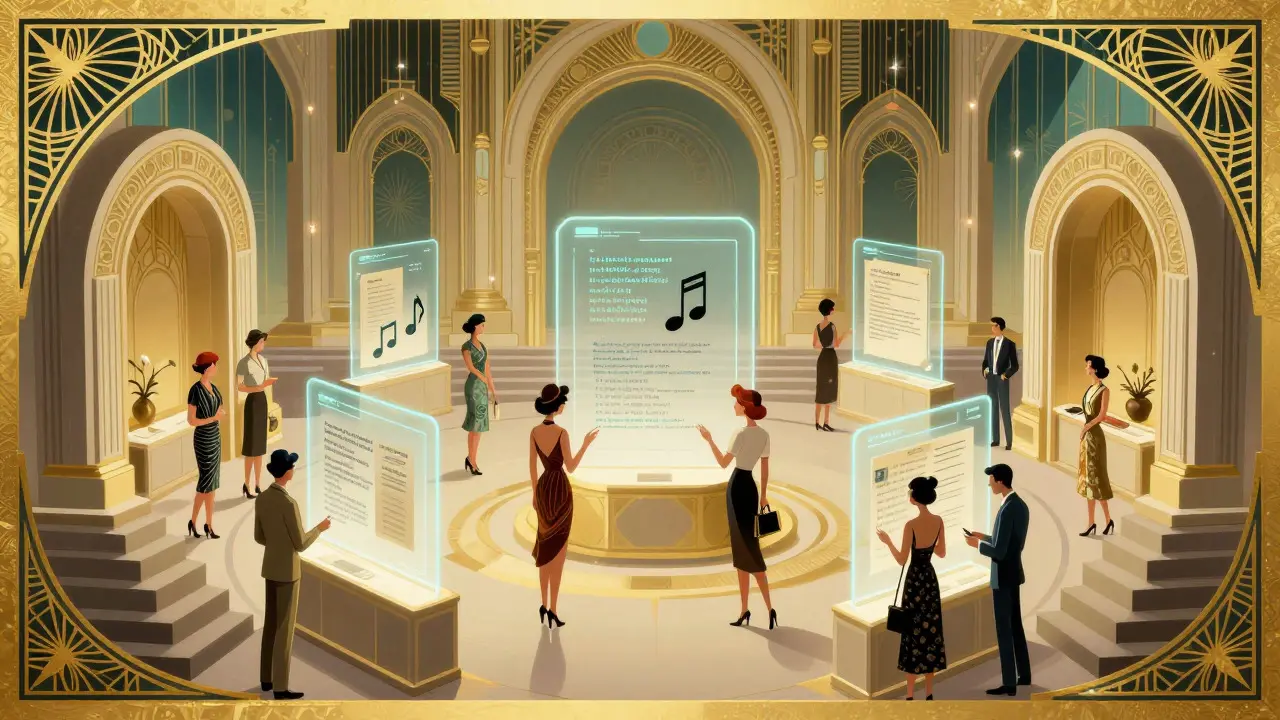
When you upload your work-let’s say a new logo design-to a platform like DEIP Ledger or IPwe, the system doesn’t just store the file. It generates a unique digital fingerprint, often called a hash. This hash is paired with an incorruptible timestamp. Think of it as a notary public that never sleeps and can’t be bribed. If someone tries to claim they made that logo six months before you did, the blockchain shows the exact moment your version was registered. That proof of creation is powerful because it’s mathematically verified, not just legally argued.
The magic happens with Smart Contracts. These are self-executing codes stored on the blockchain. You set the terms once: "If Company A buys the license, they pay $500, and I get 10% of all future sales." The contract enforces itself. No invoices to chase, no lawyers needed for every small transaction. The money moves automatically when the conditions are met. This automation cuts out the bureaucracy that usually slows down licensing deals from weeks to seconds.
Open vs. Closed: Choosing the Right Marketplace Type
Not all blockchain IP marketplaces are built the same. Understanding the structure helps you pick the right place to sell or buy. Generally, these platforms fall into two main buckets based on access and scope.
Open Marketplaces are like the wild west of digital assets. They offer a wide variety of intellectual property goods, from digital art and music to software snippets and domain names. Anyone can join, list, and browse. Platforms in this category prioritize accessibility and volume. However, because entry barriers are low, due diligence falls more heavily on the buyer. You need to verify the reputation of the seller since the platform itself might not vet every listing rigorously.
Closed Marketplaces, on the other hand, specialize. They might focus exclusively on pharmaceutical patents, high-end fashion trademarks, or enterprise software licenses. Access is often restricted to verified professionals or companies. This creates a higher level of trust and quality control. If you are a biotech firm looking to license a specific chemical compound patent, a closed marketplace ensures you are dealing with serious players who have passed identity and ownership checks.
There is also the distinction between primary and secondary markets. Primary marketplaces are where IP is sold for the first time directly from the creator. Secondary marketplaces allow previously traded digital IP products to be resold. In 2026, the secondary market is growing rapidly as early adopters look to cash out their digital assets, similar to how stock markets operate.
| Feature | Open Marketplaces | Closed Marketplaces |
|---|---|---|
| Access Level | Public, anyone can join | Restricted, verification required |
| Asset Variety | High (Art, Code, Music, etc.) | Low (Specialized, e.g., Patents only) |
| Vetting Process | Minimal, user-driven | Rigorous, platform-managed |
| Best For | Independent creators, artists | Enterprises, legal firms, R&D departments |
| Transaction Speed | Fast, automated | Moderate, includes compliance checks |

Why Traditional IP Management Is Failing Creators
Let’s be honest: the old way of handling intellectual property is frustrating. Whether you are an inventor in Boulder or a musician in Berlin, you face the same hurdles. Traditional IP management relies on centralized databases that are fragmented across different countries. Want to check if a trademark is taken? You have to search multiple national registries. Each has its own format, its own fees, and its own timeline.
Disputes are another nightmare. In the traditional system, proving ownership can take years of litigation. Evidence can be lost, altered, or questioned. Blockchain solves this with immutable records. Once your IP is registered on the chain, that record cannot be changed. It provides a clear audit trail that simplifies due diligence during mergers, acquisitions, or franchising deals. Legal experts at firms like Emerson Thomson Bennett note that this transparency reduces the likelihood of disputes because the history of ownership is visible to everyone involved.
Licensing is equally painful in the old model. Negotiating terms, drafting contracts, tracking usage, and collecting royalties involves endless emails and manual checks. Smart contracts automate this entire lifecycle. When a licensee uses your asset, the smart contract detects it and distributes the royalty payment instantly. This efficiency is a game-changer for small creators who can’t afford a legal team to manage their back catalog.
Key Players and Platforms in 2026
The landscape of blockchain IP marketplaces is crowded but evolving. Several platforms have emerged as leaders, each with a slightly different approach to solving the IP puzzle.
DEIP Ledger focuses on democratizing IP ownership. It allows creators to tokenize their intellectual property, meaning they can sell fractional shares of their rights. This opens up funding opportunities for inventors who might not have enough capital to bring a product to market alone. Investors can buy into the potential success of an invention, sharing both the risk and the reward.
IPwe takes a more corporate-friendly route. It integrates with existing enterprise resource planning (ERP) systems, making it easier for large companies to manage their internal IP portfolios on the blockchain. This is crucial for tech giants that hold thousands of patents and need to track them efficiently without overhauling their entire IT infrastructure.
Then there are platforms like GoChain and IPChain, which emphasize supply chain integration. They link physical products to their digital IP records. This is particularly useful for fighting counterfeiting. If you buy a luxury watch, you can scan a QR code to see its entire history on the blockchain, verifying that it’s authentic and that the brand’s IP rights were respected throughout production.
It’s important to note that these platforms vary in their technical requirements. Some require you to hold specific cryptocurrencies to pay for gas fees (transaction costs), while others accept fiat currency through wrapped tokens. Always check the documentation and support resources before committing significant assets to any single platform.
Getting Started: A Practical Guide for Creators
If you’re ready to dive in, here is how you actually use a blockchain IP marketplace. The process is simpler than you might think, but it does require a bit of technical preparation.
- Set Up a Digital Wallet: You’ll need a secure wallet to store your cryptocurrency and interact with the blockchain. Popular options include MetaMask or Trust Wallet. Make sure you write down your seed phrase and keep it offline. Losing this phrase means losing access to your assets forever.
- Choose Your Platform: Decide whether you need an open or closed marketplace based on your asset type. If you’re selling digital art, an open NFT-focused platform might be best. If you’re licensing software code, look for specialized developer-centric chains.
- Prepare Your Documentation: While the blockchain proves *when* something was created, it doesn’t replace the need for clear descriptions. Prepare high-quality files, detailed metadata, and any supporting documents that clarify the scope of your IP rights.
- Register and Mint: Upload your work to the platform. The system will generate the hash and timestamp. You may need to pay a small fee in the platform’s native token to "mint" the asset onto the blockchain. This creates the non-fungible token (NFT) or digital certificate representing your IP.
- Define Terms via Smart Contract: Set your licensing terms. Will it be exclusive or non-exclusive? What are the royalty rates? Use the platform’s templates to create a smart contract that reflects these agreements.
- List and Monitor: Put your asset up for sale or license. Once a deal is struck, the smart contract handles the rest. Keep an eye on your dashboard to track usage and earnings.
The learning curve exists, especially if you’re new to crypto wallets. However, most major platforms now offer user-friendly interfaces that abstract away much of the complexity. Community forums and official documentation are invaluable resources for troubleshooting issues like failed transactions or gas fee spikes.
Risks and Considerations
Blockchain isn’t a magic wand. There are risks you need to manage. First, remember that registering IP on a blockchain does not automatically grant you legal copyright or patent protection in every jurisdiction. It serves as strong evidence of prior art and ownership, but you may still need to file with local government agencies for full legal enforcement.
Second, smart contracts are only as good as the code written into them. Bugs in the contract logic can lead to lost funds or unintended licensing terms. Always review the code or use audited templates provided by reputable platforms. Third, consider the environmental impact. While many modern blockchains have moved to energy-efficient Proof-of-Stake consensus mechanisms, some older networks still consume significant power. Choose eco-friendly platforms if sustainability is a priority for you.
Finally, regulatory uncertainty remains. Laws around digital assets and IP are still evolving in 2026. Stay informed about changes in tax laws and IP regulations in your country. What is legal today might shift tomorrow, so diversify your strategies and don’t put all your eggs in one blockchain basket.
Is blockchain IP registration legally binding?
Blockchain registration provides strong, tamper-proof evidence of ownership and creation date, which is highly valuable in court. However, it does not replace official government registration for patents or copyrights in most jurisdictions. It acts as a supplementary layer of proof rather than a complete substitute for legal filing.
What are smart contracts in the context of IP?
Smart contracts are automated programs on the blockchain that execute agreements when specific conditions are met. For IP, they handle tasks like releasing license keys upon payment, distributing royalty percentages automatically, and enforcing usage limits without human intervention.
Can I sell my IP partially on a blockchain marketplace?
Yes, many platforms allow fractionalization of IP assets. This means you can split ownership into smaller tokens, allowing multiple investors to buy shares. This is useful for raising capital for expensive projects like film productions or pharmaceutical research.
How do blockchain marketplaces prevent counterfeiting?
They create a permanent, verifiable history of an item’s origin and ownership. By linking physical products to digital tokens (often via QR codes or NFC chips), buyers can instantly verify authenticity against the blockchain record, making it difficult for counterfeiters to pass off fake goods as genuine.
Do I need to know coding to use these platforms?
No, most user-facing blockchain IP marketplaces provide intuitive interfaces. You don’t need to write code to list or buy assets. However, understanding basic concepts like wallet security and transaction fees is essential for a smooth experience.