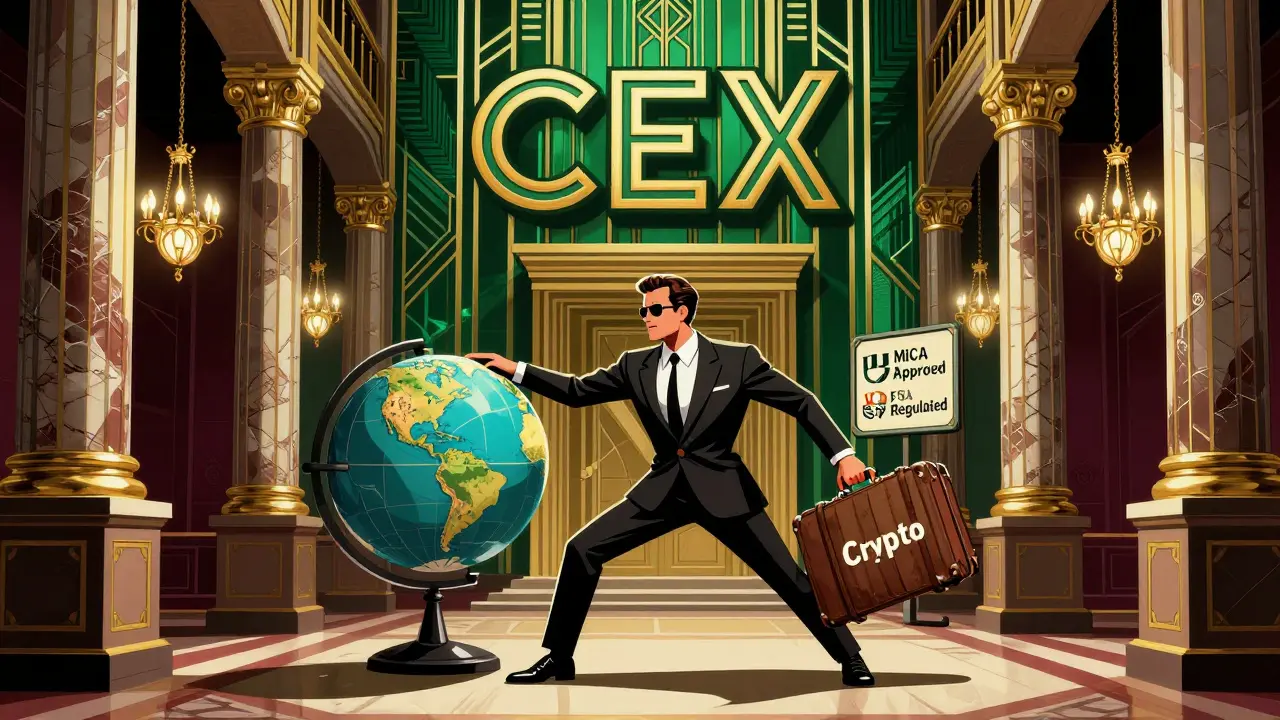
If you’ve ever tried to trade crypto from another country and got blocked, you know how messy this gets. One minute you’re ready to swap ETH for SOL, the next you’re staring at a message saying, "This service isn’t available in your region." It’s not a glitch. It’s policy. And the reason you hit that wall depends entirely on whether you’re using a centralized exchange or a decentralized exchange.
CEXs: Bound by Borders
Centralized exchanges - like Coinbase, Binance, or Kraken - act like banks. They hold your crypto, manage your trades, and answer to governments. That means they have to follow local laws. If you’re in the U.S., they need a money transmitter license. In the EU, they follow MiCA rules. In Japan, they’re regulated by the Financial Services Agency. In Nigeria? Some CEXs shut down fiat deposits entirely. In Russia? Certain coins are banned. In India? Withdrawals face heavy reporting rules. These platforms use IP blocking, KYC checks, and device fingerprinting to enforce restrictions. Even if you use a VPN, many CEXs now cross-check your ID documents with your location. If your passport says you live in Brazil but your wallet history shows activity from Turkey, your account might get frozen. It’s not paranoia - it’s compliance. And it’s not just about access. Features vary by country too. You can’t trade futures on Coinbase if you’re in Canada. Derivatives? Locked out in Australia. Stablecoin trading? Restricted in South Korea. The same exchange offers different tools depending on where you’re sitting. Your location literally shapes your trading experience.DEXs: The Borderless Myth
Decentralized exchanges - like Uniswap, PancakeSwap, or SushiSwap - don’t have offices, CEOs, or compliance teams. They run on code. Smart contracts. Liquidity pools. You connect your wallet - MetaMask, Phantom, or Trust Wallet - and trade directly with others. No ID. No forms. No approval. That’s why DEXs feel free. You can trade from Venezuela, Iran, or Ukraine without anyone asking where you are. No IP block. No KYC. No account suspension. If you have ETH or BNB in your wallet, you can swap it. No questions asked. But here’s the catch: just because a DEX doesn’t block you doesn’t mean your government won’t. Countries like China, Russia, and Nigeria have outright banned crypto trading. That includes DEXs. Even if the platform doesn’t know you’re there, your local laws still apply. You’re not breaking the DEX’s rules - you’re breaking your own country’s. Some regulators are starting to notice. The EU is pushing for DEXs to implement geo-blocking. The U.S. SEC has signaled it may treat DEX operators as unlicensed brokers. In 2025, a few DEX aggregators started testing IP-based restrictions on their frontends - not because they have to, but because they want to avoid legal risk. The borderless dream is cracking.Fiat: The Real Gatekeeper
Here’s where the difference gets real. Most CEXs let you buy crypto with a bank transfer, debit card, or Apple Pay. That’s convenient - but only if your country has banking partnerships with that exchange. A U.S. user can deposit USD instantly. A Nigerian user? Often stuck with peer-to-peer trades or third-party payment processors that charge 10% fees. A Venezuelan? Many CEXs stopped supporting local bank transfers years ago. DEXs don’t handle fiat at all. You need crypto already. So if you live in a country where buying crypto is hard, DEXs won’t help you get started. But if you already have BTC or USDT - maybe from a friend, a mining rig, or a P2P market - you can trade on any DEX, anywhere. That’s why DEXs are the lifeline for people in hyperinflation economies. Venezuelans use DEXs to convert bolivars to USDT. Argentinians trade pesos for DAI. It’s not legal, but it’s functional.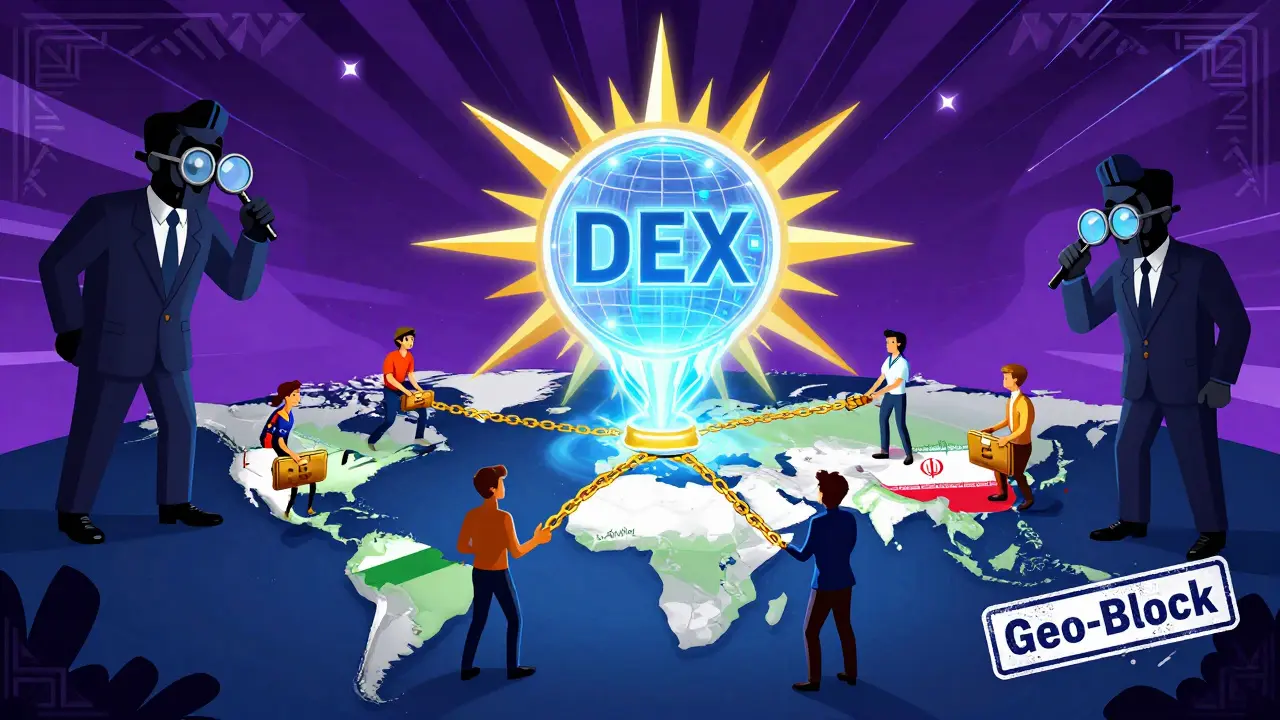
Security: Who’s Really in Control?
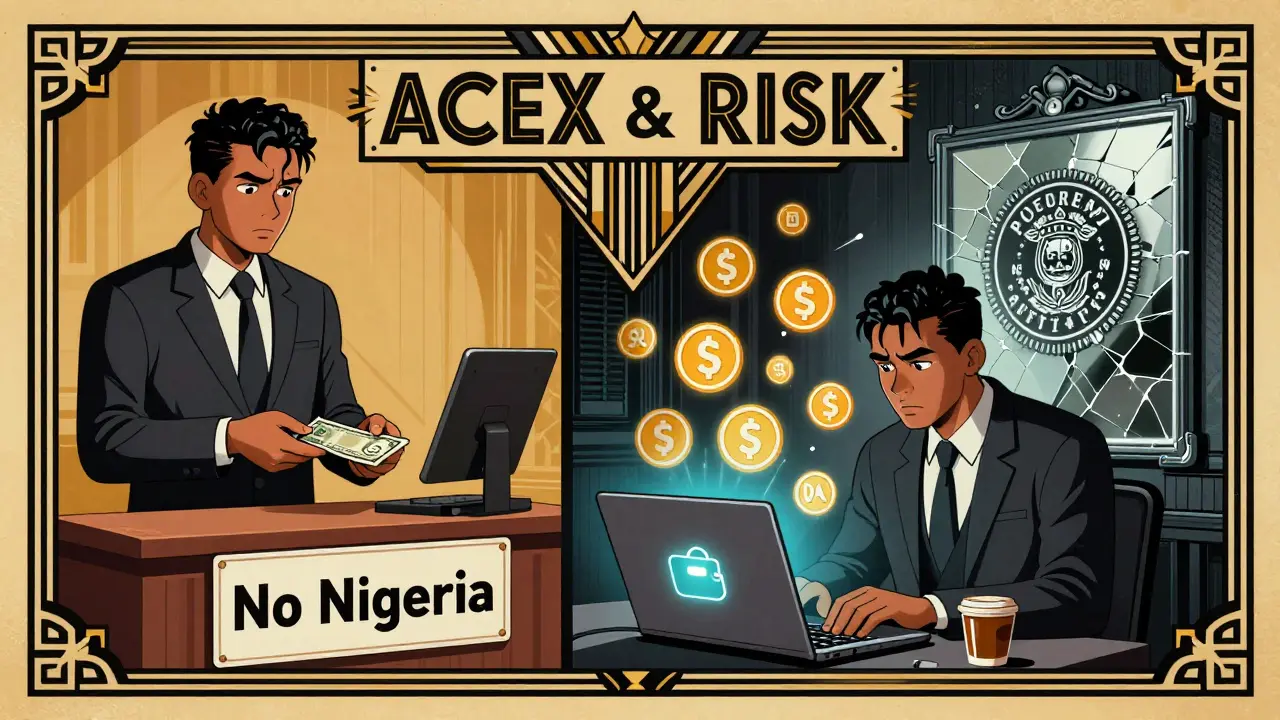
CEXs promise safety. They store 95% of funds in cold wallets. They have insurance. They freeze accounts if they spot fraud. But if a CEX gets hacked - like Mt. Gox or FTX - you lose everything. And if your country bans the exchange, your funds get locked in limbo. DEXs put control in your hands. No one can freeze your wallet. No one can take your keys. But that also means no one can help you if you send funds to the wrong address. No customer support. No chargebacks. If you’re in a country with weak consumer protections, that’s a huge risk. And here’s something most people miss: DEXs can be used to launder money. That’s why regulators are watching. Some DEXs now integrate with chain analysis tools like Chainalysis or Elliptic. They don’t block users, but they flag high-risk wallets. If you’re trading large amounts from a sanctioned region, your wallet might get blacklisted by other DeFi apps down the line.The New Reality: Hybrid Restrictions
The old idea - CEXs are restricted, DEXs are free - is fading. We’re entering a hybrid world. Some DEXs now show pop-ups: "Trading may be illegal in your country. Proceed at your own risk." Others integrate geolocation APIs to hide liquidity pools from restricted regions. A few even require wallet verification through third-party services like Worldcoin or Civic. Meanwhile, CEXs are getting smarter. Binance now lets users in restricted countries trade via its non-KYC subsidiary, Binance DEX. Coinbase has started offering limited DEX-like features through its Wallet app. The lines are blurring. The real question isn’t whether CEXs or DEXs are better. It’s: What are you trying to do?- If you need to buy crypto with your bank account - use a CEX, but accept that your options are limited by geography.
- If you already have crypto and want to swap without revealing your identity - use a DEX, but know your government might still come after you.
- If you’re in a country under sanctions - DEXs are your only real option, but you’ll need to learn wallet security inside out.
What’s Next?
Regulators aren’t going away. They’re just changing tactics. Instead of shutting down exchanges, they’re pushing for software-level compliance. Expect more DEXs to add geo-filters. More CEXs to split into regional versions. More wallets to auto-block transactions from sanctioned zones. The future of crypto isn’t about being unregulated. It’s about being smart about where and how you trade. Your location isn’t just a detail - it’s a constraint. And the smarter you are about it, the longer your crypto journey will last.Can I use a VPN to bypass CEX geographic restrictions?
Technically, yes - but it’s risky. Most major CEXs now link your KYC documents to your account. If your ID says you’re in Germany but your IP is in Turkey, your account can be frozen or permanently banned. Some users get flagged for suspicious activity, even if they’re just traveling. VPNs might work short-term, but they’re not a long-term solution - and they violate most CEX terms of service.
Are DEXs completely unregulated?
No. While DEXs don’t require licenses or KYC, regulators are increasingly targeting their developers, liquidity providers, and front-end interfaces. The U.S. SEC has already sued several DEX platforms for operating as unregistered securities exchanges. In the EU, MiCA rules will soon require DEX aggregators to implement KYC for large trades. The "no regulation" era is ending.
Which is safer: CEX or DEX?
It depends. CEXs protect you from mistakes - if your account is hacked, they may refund you. But if the exchange collapses, you lose everything. DEXs give you full control: no one can freeze your funds. But if you send crypto to the wrong address or lose your seed phrase, there’s no recovery. For most people, a mix of both works best: keep small amounts on a CEX for easy trading, and hold long-term assets in a DEX-connected wallet.
Can I use a DEX if my country bans crypto?
You can technically use a DEX - the blockchain doesn’t care where you are. But if your country bans crypto, using a DEX could put you at legal risk. Authorities in China, Russia, and Nigeria have prosecuted individuals for trading crypto on DEXs. Even if the platform doesn’t block you, your local government might. Always check your country’s current crypto laws before trading.
Why do some DEXs show location warnings now?
Because they’re trying to avoid legal trouble. Even though DEXs are decentralized, the websites and apps people use to access them aren’t. If a DEX frontend knowingly lets users from banned countries trade, it could be sued as a facilitator of illegal activity. Many now show warnings or hide certain tokens based on IP to reduce liability - not because they have to, but because they want to stay in business.



Kelsey Stephens
December 15, 2025 AT 17:28I’ve been using DEXs since 2021, and honestly, they saved me when my bank froze my crypto purchases. No one asked me where I lived, no forms, no drama. Just me, my wallet, and the blockchain. It’s not perfect, but it’s freedom in its purest form.
People act like DEXs are this wild west, but honestly? Most of us just want to move money without begging for permission.
Tom Joyner
December 17, 2025 AT 17:04CEXs are for amateurs who need hand-holding. DEXs are for those who understand that sovereignty isn’t a feature-it’s the baseline. If you can’t manage your own keys, you don’t deserve to hold crypto. End of story.
Terrance Alan
December 19, 2025 AT 03:43Let’s be real nobody gives a shit about your geography when the blockchain doesn’t care where you live. You think Binance gives a damn if you’re in Nigeria or Nebraska? They just want your fees. Same with DEXs. The only ones screaming about borders are the regulators and the CEXs trying to justify their corporate rent-seeking. You’re not breaking rules by using a DEX you’re just avoiding the middleman who’s been charging you 5% to do what your wallet can do for free.
And yeah the SEC wants to regulate DEXs like they’re banks but guess what they’re not. They’re code. You can’t sue a smart contract. You can only sue the guy who built the frontend and even then good luck finding him. This whole geo-blocking thing is just capitalism trying to put a leash on something that was never meant to be leashed.
Also anyone using a VPN to bypass CEXs is asking for trouble but also honestly what else are you supposed to do when your own government treats you like a criminal for owning digital money? I’m not a hacker I’m just trying to preserve my savings from inflation. That’s not illegal that’s survival.
Sally Valdez
December 19, 2025 AT 07:30U.S. citizens think they’re so special because they have Coinbase. Meanwhile people in Venezuela are trading USDT on PancakeSwap to feed their families and you’re over here crying because you can’t trade futures. Grow up. This isn’t a privilege it’s a right. And if your government bans crypto then your government is the problem not the DEX.
Also stop acting like DEXs are dangerous. The only danger is trusting a corporation with your life savings. FTX didn’t get hacked. It got stolen by a guy in a suit. DEXs don’t have suits.
Sammy Tam
December 20, 2025 AT 13:36Man I love how this post breaks it down. It’s like crypto’s version of a passport system. CEXs are the airport security line with the weird questions and the TSA PreCheck nonsense. DEXs? That’s the backdoor through the desert where no one asks for ID but you better know how to navigate the sandstorm.
Used to be you could just hop on Uniswap and swap like a boss. Now you got pop-ups saying ‘Hey buddy this might be illegal where you are’ like it’s a warning label on a lighter. Feels weird. Like the internet’s losing its soul.
But hey if you’re in a country where your currency’s collapsing and you’ve got a little ETH in your wallet? DEXs aren’t just convenient-they’re a lifeline. And no amount of regulation is gonna take that away from people who need it.
George Cheetham
December 22, 2025 AT 03:36There’s a beautiful irony here. The very technology designed to dismantle borders is now being reshaped by them. We built decentralized systems to escape centralized control-and now the control is coming back through legal pressure on interfaces, wallet providers, and even analytics firms.
The real challenge isn’t technical-it’s cultural. Do we want crypto to be a tool for the oppressed, or a luxury product for the compliant? If we let regulators turn DEXs into gated communities, we’ve lost the point entirely.
Maybe the answer isn’t fighting the borders but building better tools that work inside them. Privacy layers. Trustless bridges. Non-KYC on-ramps. Innovation doesn’t die because of laws-it just moves underground. And that’s where the real crypto spirit lives.
Sue Bumgarner
December 24, 2025 AT 03:15Everyone’s acting like DEXs are this magical utopia but let’s not pretend they’re not used by scammers and sanctioned entities. The U.S. government isn’t trying to ruin crypto-it’s trying to stop criminals from using it. If you’re mad about geo-blocking, maybe stop being a tax evader and get a real job.
Also why do you think every single crypto platform in the U.S. has to follow rules? Because people like you keep trying to use it to launder money. You’re not a freedom fighter you’re a liability.
Emma Sherwood
December 25, 2025 AT 04:00As someone who grew up in a country where the currency lost 90% of its value in 18 months, I can tell you this: DEXs didn’t just give me financial options-they gave me dignity. I didn’t ask for this. I didn’t want to be a crypto pioneer. I just wanted to buy groceries without my savings evaporating by lunchtime.
Yes my government bans it. Yes I use a VPN. Yes I know the risks. But I’d rather risk arrest than risk starvation. And if that makes me a criminal in the eyes of some bureaucrat? Fine. But I’m not the one who broke the system. I’m just trying to survive inside it.
Abby Daguindal
December 25, 2025 AT 05:23Anyone who thinks DEXs are safe is delusional. You think losing your seed phrase is the worst that can happen? Try getting your wallet flagged by Chainalysis and then being denied access to every DeFi protocol for the next five years. No one tells you that part.
And don’t even get me started on the fact that most DEX frontends are run by anonymous devs who could vanish tomorrow. You’re trusting code written by someone who might be a 16-year-old in Belarus. That’s not freedom. That’s gambling with your life savings.
Patricia Amarante
December 26, 2025 AT 13:53I just use a CEX for buying and a DEX for swapping. Simple. No drama.
SeTSUnA Kevin
December 28, 2025 AT 11:34The notion that DEXs are inherently more free is a semantic fallacy. Regulatory pressure is not confined to centralized entities; it extends to all nodes in the ecosystem. The frontend is the vector. The protocol is immutable. The user is responsible. Ergo, the illusion of decentralization is maintained only by ignorance of architecture.