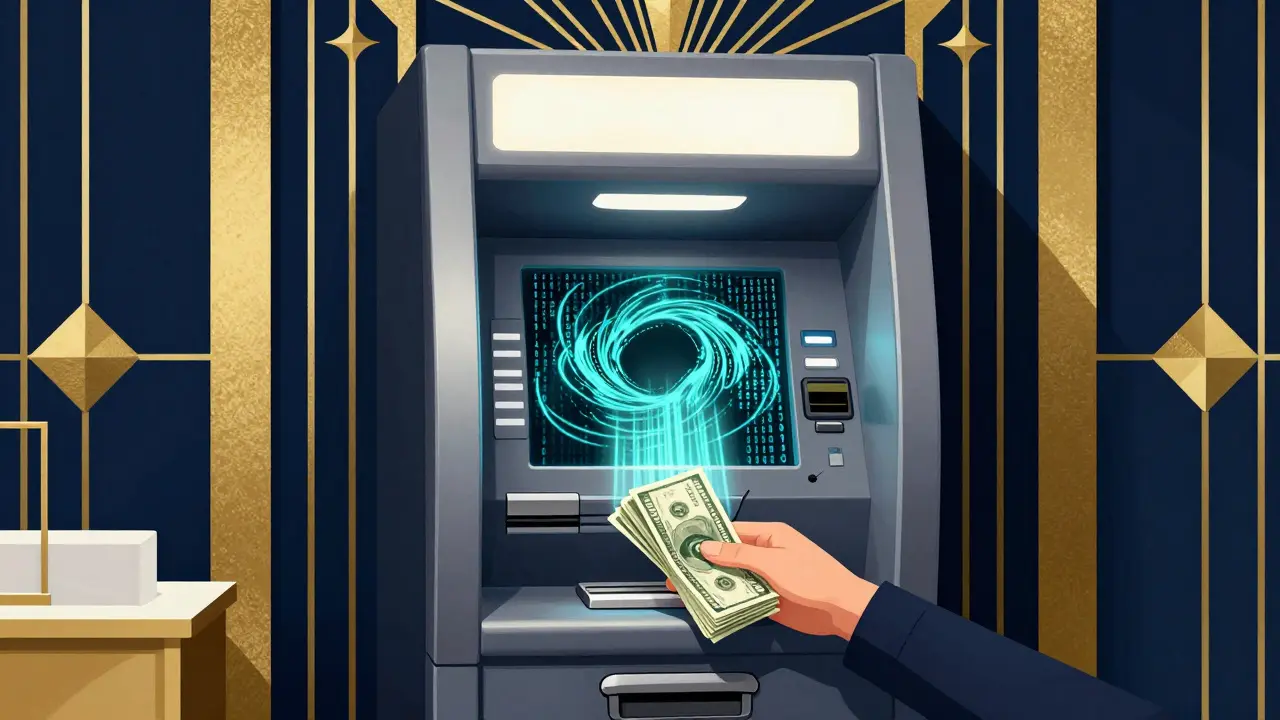
Imagine walking into a convenience store, depositing a few thousand dollars in cash into a sleek machine, and watching that money vanish into a digital void in seconds. No one to call, no one to reverse the transaction, and absolutely no way to get your money back. This isn't a movie plot; it's the reality for thousands of people who have fallen victim to crypto ATM fraud is a systemic issue where automated kiosks are used to facilitate the irreversible transfer of fiat currency into digital assets for scammers . In 2024 alone, the FBI reported that victims lost a staggering $246.7 million through these machines.
The Hidden Danger of Convertible Virtual Currency Kiosks
Most people know them as Bitcoin ATMs, but the industry calls them Convertible Virtual Currency (CVC) kiosks specialized automated teller machines that exchange cash or debit for virtual assets like Bitcoin . On the surface, they look like any other ATM. You put in cash, you get crypto. However, unlike the ATM at your local bank, these machines often operate in a regulatory grey zone. They prioritize speed and accessibility over security, which is exactly why criminals love them.
The core problem is the irreversibility of the blockchain. In a traditional bank transfer, a fraud investigator can often freeze funds or reverse a charge. With a Blockchain a distributed ledger technology that records transactions across many computers so that the record cannot be altered retroactively , once you hit "confirm," the money is gone. Scammers exploit this by tricking victims into sending money to a "safe" address or paying a "fee" to unlock a fake investment prize.
Why Scammers Love These Machines
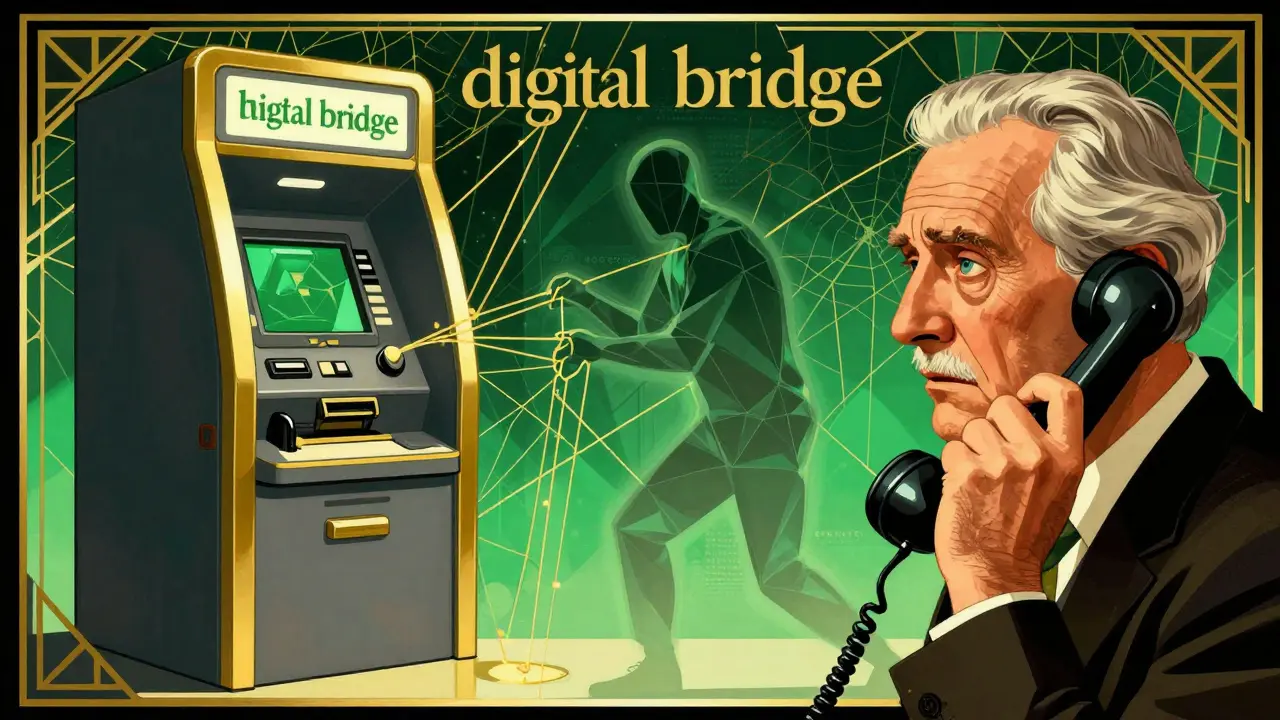
Why not just use a phone app? Because crypto ATMs provide a physical bridge for people who might not be tech-savvy. Fraudsters often target seniors, who are unfortunately the primary victims of this epidemic. FBI data shows that over two-thirds of these fraud victims in 2024 were over 60 years old. This represents a nearly 100% increase in complaints compared to previous years.
Beyond social engineering, there are actual technical holes in the hardware. For example, security researchers at IOActive a professional security research firm specializing in hardware and software vulnerability analysis identified critical flaws in the Lamassu Douro Bitcoin ATM. A specific vulnerability, known as CVE-2024-0674, actually allows a hacker to gain root access to the machine's system just by creating a malicious file. This means a compromised machine could potentially steal user data or redirect funds without the user even knowing.
| Feature | Traditional ATM | Crypto ATM (CVC Kiosk) |
|---|---|---|
| Regulatory Oversight | Strict federal and banking laws | Largely unregulated/Fragmented |
| Transaction Reversibility | Possible via bank intervention | Virtually impossible |
| Identity Verification | Rigorous KYC/AML standards | Often minimal or bypassed |
| Fraud Protection | Multi-layer monitoring systems | Dependent on operator's ethics |
Federal Warnings and the Regulatory Gap
The government has finally started sounding the alarm. On August 4, 2025, the Financial Crimes Enforcement Network FinCEN is a bureau of the U.S. Department of the Treasury that safeguards the financial system from illicit use (FinCEN) issued Notice FIN-2025-NTC1. This was a formal warning to financial institutions that these kiosks are being heavily exploited by transnational criminal organizations to launder money and steal from unsuspecting citizens.
The issue is that many operators fail to follow the Bank Secrecy Act A U.S. law requiring financial institutions to assist government agencies in detecting and preventing money laundering (BSA). If an operator doesn't register as a Money Services Business (MSB), they might skip the necessary customer identification and suspicious activity reporting. This creates a "dark lane" for money to move from a physical pocket into a digital wallet without any one person knowing who actually owns the funds.
Arizona: A Blueprint for Fighting Fraud
Since federal movement is often slow, some states are taking matters into their own hands. Arizona has become a focal point for this fight, especially after residents there lost $177 million to crypto fraud in 2024. The state introduced the Cryptocurrency Kiosk License Fraud Prevention law, which is probably the most aggressive attempt to protect consumers we've seen so far.
Under these new rules, the state has clamped down on the "easy access" that scammers rely on. They've introduced strict daily transaction limits: new customers are capped at $2,000 per day, while existing customers are limited to $10,500. More importantly, the law requires operators to put clear, unavoidable warnings on the screen. You can't just glide through the process; you have to acknowledge the risk of fraud before you can send a single cent.
Arizona has even tried to solve the "gone forever" problem by requiring operators to issue full refunds, including fees, to new customers who report fraud within 30 days. While this doesn't fix the blockchain's irreversibility, it puts the financial burden on the operator, which encourages them to vet their machines and users more carefully.
How to Spot a Crypto ATM Scam
Whether you are using a kiosk or helping a family member, you need to recognize the red flags. Scammers don't just wait at the machine; they call you and tell you to go there. If you experience any of the following, stop immediately:
- The "Urgent Problem" Call: Someone claiming to be from the Social Security Administration or the IRS tells you your account is compromised and the only way to "secure" your money is via a Bitcoin ATM.
- The Investment "Secret": An online "friend" or romantic interest tells you about a guaranteed investment and asks you to deposit cash into a kiosk to get started.
- Payment for a Prize: You've won a lottery or a grant, but you need to pay a "processing fee" via a crypto ATM to release the funds.
- Remote Access Requests: Someone asks you to download software (like AnyDesk or TeamViewer) to "guide" you through the ATM process.
The Future of Kiosk Security
As we move through 2026, the industry is facing a crossroads. On one side is the goal of decentralization and financial freedom. On the other is the need for basic consumer safety. We are seeing the implementation of TR-31 regulations, which aim to tighten encryption and key block management across all ATM networks. This is a step in the right direction, but it's a technical fix for a human problem.
The reality is that as long as these machines offer anonymity and speed, they will be a magnet for crime. The $246 million lost is a symptom of a larger gap in how we transition from traditional cash to digital assets. Until every operator is held to the same standard as a licensed bank, the safest advice is simple: if you aren't an expert in blockchain, avoid using these kiosks entirely. Use a regulated exchange with a verified account where there are actual humans you can contact if something goes wrong.
Can I get my money back if I was scammed by a crypto ATM?
Generally, no. Because blockchain transactions are irreversible, once the funds are sent, they cannot be pulled back. However, if you are in Arizona and used a licensed kiosk, you may be eligible for a refund from the operator if you report the fraud within 30 days. Your first step should always be filing a report with the FBI's Internet Crime Complaint Center (IC3).
Why do scammers specifically ask for Bitcoin ATM deposits?
Scammers prefer crypto ATMs because they allow them to receive large sums of money quickly and anonymously. Unlike bank transfers, there is no central authority that can freeze the funds during an investigation, making it the perfect tool for moving stolen money across borders instantly.
Are all crypto ATMs unsafe?
Not necessarily "unsafe" in terms of the machine breaking, but they are high-risk. The danger usually comes from the person instructing you to use the machine rather than the machine itself. However, some models, like certain Lamassu versions, have had documented software vulnerabilities that could allow hackers to compromise the system.
Who is most at risk for these scams?
While anyone can be targeted, seniors (those over 60) are currently the most frequent victims. Scammers use high-pressure tactics, often pretending to be government officials or tech support, to convince them that using a crypto ATM is the only way to solve an urgent financial crisis.
What are the "red flags" of a crypto ATM scam?
The biggest red flag is anyone telling you that a crypto ATM is a "safe' way to move money, a way to pay a government agency, or a requirement for receiving a prize. Government agencies will never ask you to pay them via Bitcoin or any other cryptocurrency.


James Bone
April 15, 2026 AT 08:36Typical. People just hand over their cash and then act shocked when it disappears. It is a total lack of basic cognitive awareness. If you cannot figure out that a random machine in a gas station isn't a secure bank, you basically deserve to lose the money. We live in a world where people value convenience over survival and then cry for a regulatory safety net to catch their stupidity.
Tracie and Matthew Hartley
April 15, 2026 AT 16:06idk why everyone is panicking... just dont use the machines lol
Aaliyah BROTHERS
April 15, 2026 AT 19:41WAKE UP PEOPLE!!! These machines are just front for the deep state to track our every move and bleed us dry!!! Absolute SHAMBLES that our government lets this garbage operate on OUR soil!!! It is a total invasion of our sovereignty by globalist scum!!! DISGUSTING!!!!
Adam Auksel
April 16, 2026 AT 05:01It is really heartbreaking to see seniors getting targeted like this 😔 We need to do more to educate our parents and grandparents about digital safety! Let's all try to have these conversations at home to protect our loved ones 🛡️✨
Heather Warren
April 17, 2026 AT 07:39The Arizona approach is a great start. By making the operators financially responsible, it forces them to implement better security measures and verify their users. This is a simple and effective way to reduce the number of victims in the short term.
Kieran Smith
April 18, 2026 AT 19:39Tnx for sharin this. i hope more states folow arizonas lead soon so ppl dont lose thier life savins to these scammers
Omotola Balogun
April 20, 2026 AT 01:08Actually, the vulnerability mentioned, CVE-2024-0674, is far more laudanum than a simple bug. It is a fundamental failure in the OS architecture of those specific kiosks. If the root access is compromised, the entire transaction pipeline is open to manipulation, which is why the funds are redirected before they even hit the network.
Scott Fenton
April 20, 2026 AT 19:40It is imperative that individuals exercise extreme caution when dealing with any financial instrument that operates outside of traditional banking regulations. The irreversibility of the blockchain necessitates a level of diligence that many are unfortunately not prepared for. I strongly advise against using these kiosks for any significant sums of money.
7stargee Emmanuel Obani
April 22, 2026 AT 19:22Lmao imagine being this dumb and losing millions to a machine 🤡
Akshay Gorad
April 24, 2026 AT 00:25I agree with the point about the regulatory grey zone. It is a difficult balance between financial innovation and user protection.
Carroll Foster
April 25, 2026 AT 18:32Oh sure, because adding a few warning labels is totally going to stop the sophisticated social engineering playbooks these guys use. Just a little more friction in the UX and suddenly everyone is a blockchain expert, right? Pure comedy.
Surender Kumar
April 27, 2026 AT 15:40it is a bit scary but im sure things will get bettr with more laws lol
Lauren Abrams
April 29, 2026 AT 11:30I wonder if the operators actually believe they are helping people get into crypto or if they just ignore the fraud reports because it is easier for their bottom line.
Rob Mitchell
April 29, 2026 AT 21:13Stick to regulated exchanges. Much safer. Lower fees usually too.
Kelly Cantrell
May 1, 2026 AT 03:51The government is just using this as an excuse to monitor all crypto transactions. First they warn you about scams, then they demand your ID for everything, and then they shut down the whole system to control us. Typical power grab under the guise of safety.