
Imagine checking your phone to see a notification from your favorite exchange, only to realize that holding the asset on your screen could land you in prison. That is the reality for anyone living in Algeria since July 24, 2025. The government didn't just tighten the screws; it slammed the door shut with one of the most comprehensive cryptocurrency prohibition laws in history. If you are wondering if you can still trade Bitcoin or mine Ethereum in Algiers, the short answer is no. Not legally, and not safely.
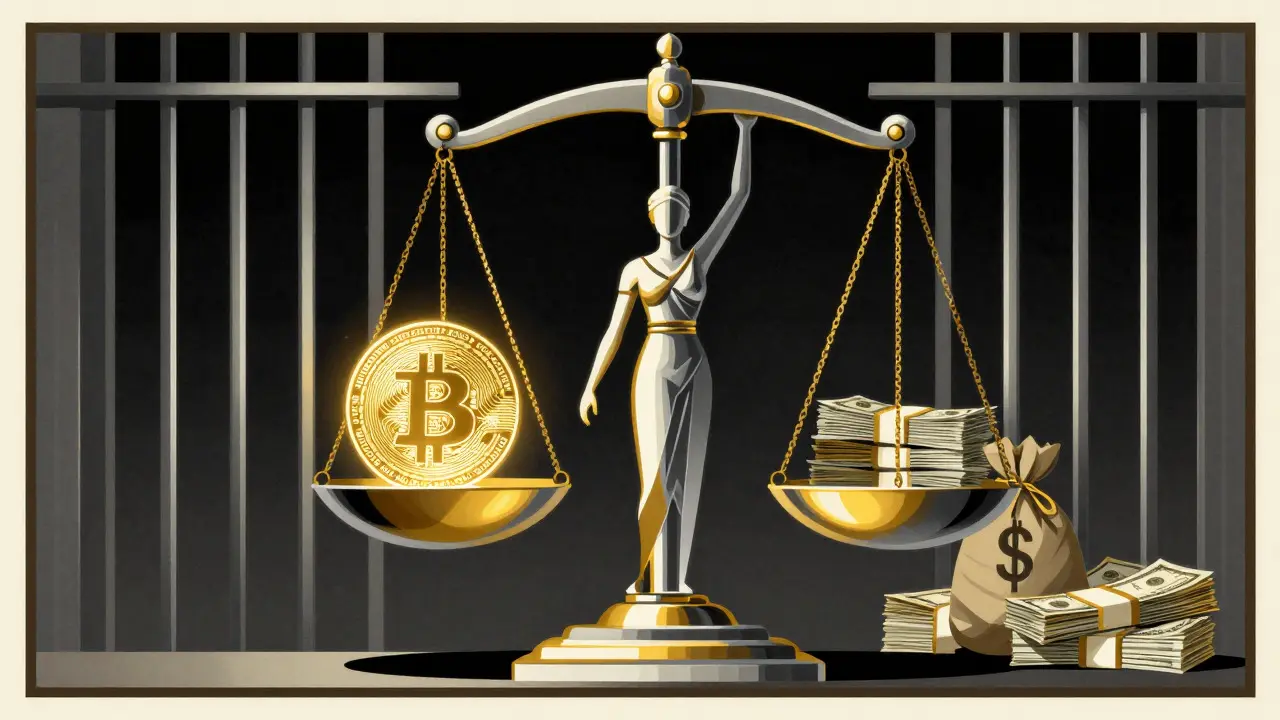
This isn't a vague warning or a gray area where regulators might turn a blind eye. It is a criminal offense. With the enactment of Law No. 25-10, legislation that officially criminalizes all digital asset activities including possession, trading, mining, and promotion, Algeria has transformed from a market with quiet restrictions into a jurisdiction with active, aggressive enforcement. For the average citizen, the blockchain developer, or the investor looking at North Africa, understanding exactly what this law covers-and how it is enforced-is the difference between staying out of trouble and facing serious legal consequences.
What Exactly Does Law No. 25-10 Prohibit?
To understand the severity of the situation, we have to look at the text of the law itself. Previous regulations, like the 2018 Financial Law, banned the use of crypto but lacked specific teeth. There were no clear penalties, which created a loophole where people operated in a shadow economy, assuming they wouldn't get caught. Law No. 25-10 changed that completely by defining every single interaction with digital assets as a crime.
The scope is staggering. Article 6 bis of the new legislation explicitly outlaws:
- Possession: Simply having cryptocurrency in a wallet is illegal. You don't need to be trading it; owning it is enough for prosecution.
- Transaction Activities: Buying, selling, exchanging, or using crypto for payments.
- Mining: Using computational power to validate transactions or earn coins is banned.
- Promotion: This is the kicker for many. Advertising, creating content, or even advocating for cryptocurrencies is criminalized.
- Infrastructure: Running exchanges, wallets, or any service that facilitates crypto activity.
Think about that last point. If you are an influencer who posts about DeFi (Decentralized Finance) or a tech blogger writing a tutorial on how to set up a hardware wallet, you are technically breaking the law. The government views information dissemination as a threat, effectively silencing education alongside the markets. This goes far beyond stopping financial flows; it aims to stop the cultural adoption of blockchain technology entirely.
The Price of Breaking the Rules: Fines and Prison
Why should you care about the specifics? Because the penalties are real and they are immediate. Under Law No. 25-10, violators face prison sentences ranging from two months to one year. On top of that, there are fines between 200,000 and 1,000,000 Algerian dinars. To put that in perspective, that is roughly $1,540 to $7,700 USD.
For many citizens in Algeria, losing nearly $8,000 plus serving jail time is a life-altering event. These aren't slap-on-the-wrist warnings. They are designed to deter participation through fear and financial ruin. The judicial authorities have been given broad powers to prosecute these cases, meaning the court system is now actively processing crypto-related offenses rather than letting them slide as civil infractions.
| Violation Type | Prison Sentence | Fine Range (USD) |
|---|---|---|
| Possession of Crypto | 2 months - 1 year | $1,540 - $7,700 |
| Trading/Exchanging | 2 months - 1 year | $1,540 - $7,700 |
| Mining Operations | 2 months - 1 year | $1,540 - $7,700 |
| Promotion/Content Creation | 2 months - 1 year | $1,540 - $7,700 |
Who Is Enforcing the Ban?
A law on paper is one thing; enforcement is another. In Algeria, the state has mobilized multiple agencies to ensure compliance. It is not just the police watching your front door. It is a coordinated effort across financial, judicial, and security sectors.
The Bank of Algeria, the central bank responsible for overseeing monetary policy and financial stability plays a central role. They monitor the traditional banking system to ensure no money flows in or out related to crypto. Since banks are strictly forbidden from facilitating any crypto-related activities, any suspicious transaction triggers an alert. The Banking Commission backs this up by regulating institutions, ensuring that tellers and loan officers know exactly what to look for.
But the net is wider than just banks. Security authorities are tasked with digital monitoring. This means internet traffic, social media posts, and online forums are likely being scanned for keywords related to Bitcoin, Ethereum, or local peer-to-peer trading groups. If you are running a mining rig in your basement, the energy consumption patterns might also raise flags, especially since mining was previously growing due to subsidized electricity rates.
Judicial authorities handle the prosecutions. Once a violation is detected-whether through a bank flag, a digital tip-off, or a physical raid-the courts step in. The shift here is from passive regulation to active hunting. The government wants to send a message that there is nowhere to hide.
Why Did Algeria Choose Total Prohibition?
You might wonder why Algeria went so hard when other countries are embracing crypto. The European Union launched MiCA (Markets in Crypto-Assets) to regulate and integrate digital assets. The UAE and Bahrain are building entire regulatory frameworks to attract blockchain businesses. Algeria chose the opposite path: total isolation.
The official justification centers on three pillars: Anti-Money Laundering (AML), Counter-Terrorist Financing (CTF), and Monetary Sovereignty. The government argues that unregulated digital assets threaten the stability of the Algerian Dinar, the official currency of Algeria. They fear that if people start trusting Bitcoin more than the Dinar, the national currency will lose value and purchasing power.
There is also a strong alignment with guidance from the Financial Action Task Force (FATF), an intergovernmental organization that sets standards for combating money laundering. By banning crypto outright, Algeria simplifies its AML/CTF reporting. Instead of trying to track complex blockchain transactions, they just ban the underlying asset. It is a blunt instrument, but from a bureaucratic standpoint, it is easy to enforce.
Critics argue this approach ignores the benefits of blockchain technology, such as transparent supply chains or efficient cross-border remittances. But for the Algerian state, control outweighs innovation. They view crypto as a vehicle for "uncontrolled speculation" and fraud, risks they believe are too high for their current financial infrastructure.
The Human Cost: Talent Exodus and Market Collapse
Before July 2025, Algeria wasn't a crypto desert. In fact, just a year prior, a Chainalysis report ranked it among the top five fastest-growing crypto markets in the MENA (Middle East and North Africa) region. Peer-to-peer trading volumes were surging. Local developers were building tools. There was a vibrant community exploring decentralized finance.
That ecosystem vanished overnight. When the law passed, it didn't just stop transactions; it scared away the people. Blockchain talent-developers, analysts, marketers-faced a choice: leave the industry or leave the country. Many chose the latter. This brain drain has had a ripple effect. Companies that were hiring for Web3 roles suddenly found themselves with empty desks and no pipeline of candidates.
For those who stayed, the risk remains high. Content creators have self-censored. Tech meetups avoid mentioning blockchain. The fear of being labeled a "promoter" has silenced public discourse. This creates a black market dynamic where knowledge is shared in whispers rather than open forums, stifling any potential future growth even if the laws ever change.

How Does This Compare to Neighbors?
If you look at the map, the contrast is stark. While Algeria bans crypto, its neighbors are competing for it. The United Arab Emirates has established Dubai as a global hub for digital assets. Bahrain has issued licenses for crypto exchanges. Even Morocco, while cautious, has not enacted a criminal ban on possession.
This divergence isolates Algeria economically. Investors looking for emerging markets in Africa often skip Algeria because the regulatory risk is too high. Fintech startups hesitate to enter because they cannot offer crypto-related services, which are increasingly seen as standard features in modern financial apps. Meanwhile, talent migrates to Dubai or Istanbul, taking their skills and investment capital with them.
China took a similar route with a hard ban, but China has a massive domestic economy that can absorb the shock. Algeria's economy is smaller and more reliant on hydrocarbons. By cutting off access to global digital finance, Algeria may find itself lagging behind in financial inclusion and technological modernization compared to its peers.
What Should You Do Now?
If you are currently in Algeria and hold cryptocurrency, your best bet is discretion. Move funds to cold storage if possible, keep records minimal, and avoid discussing holdings publicly. If you are a business owner, audit your services to ensure no crypto payments are accepted, even indirectly. Check your marketing materials to remove any references to blockchain or digital assets.
For investors or recruiters looking at the region, pause your plans for Algeria. Focus your efforts on jurisdictions with clear regulatory frameworks like the UAE, Saudi Arabia, or Tunisia (which is exploring more nuanced approaches). The cost of navigating Algeria's legal landscape right now simply outweighs the potential rewards.
Remember, the law is active. The Bank of Algeria is watching. The courts are ready. In this environment, ignorance of the law is not a defense-it is a liability.
Is it illegal to own Bitcoin in Algeria?
Yes. Under Law No. 25-10, simple possession of cryptocurrency is a criminal offense. You do not need to be trading or mining; just holding the asset in a wallet can lead to fines and imprisonment.
Can I use crypto to pay for goods in Algeria?
No. The use of digital assets for payments is explicitly banned. Merchants accepting crypto and customers paying with it both face legal penalties. Traditional banks are also prohibited from facilitating any such transactions.
Are crypto influencers safe in Algeria?
Not necessarily. The law criminalizes the promotion and dissemination of information about cryptocurrencies. Content creators, advertisers, and educators who discuss crypto online risk prosecution under the promotion clauses of Law No. 25-10.
Why did Algeria ban crypto instead of regulating it?
The government cites anti-money laundering (AML), counter-terrorist financing (CTF), and the protection of the Algerian Dinar's monetary sovereignty as primary reasons. They view unregulated digital assets as a threat to financial stability and prefer a total ban over complex regulation.
What are the penalties for crypto mining in Algeria?
Mining is explicitly banned. Violators face prison sentences of two months to one year and fines ranging from 200,000 to 1,000,000 Algerian dinars (approx. $1,540 to $7,700 USD). Energy usage patterns may also trigger scrutiny from authorities.
Has Algeria always banned cryptocurrency?
Previously, the 2018 Financial Law banned crypto usage but lacked specific penalties, creating a gray area. Law No. 25-10, enacted in July 2025, escalated this to a comprehensive criminal ban with defined fines and prison terms, closing previous loopholes.