
It sounds impossible: 3 million crypto holders in a country where owning or trading Bitcoin is illegal. But if you’ve heard this number floating around, you’re not alone. The claim pops up in forums, social media posts, and even some news headlines. The truth? There’s no verified data backing it up. Not from the Central Bank of Egypt. Not from any independent audit. Not even from blockchain analytics firms. So where did this number come from? And why does it keep spreading?
What Egypt’s Crypto Ban Actually Means
Egypt banned cryptocurrency in 2020 under Central Bank and Banking System Law No. 194. Article 206 makes it crystal clear: no individual, bank, or business can issue, trade, promote, or operate any platform involving crypto assets without explicit approval from the Central Bank of Egypt (CBE). That’s not a gray area. It’s a full stop. Egypt is one of only nine countries in the world with a total ban-alongside China, Algeria, and North Korea.The penalties aren’t light. Violate this law, and you could face jail time. Fines range from 1 million to 10 million Egyptian pounds-roughly $32,000 to $320,000 USD. That’s not a slap on the wrist. That’s a life-altering financial blow. The CBE isn’t just trying to discourage crypto. They’re trying to erase it from the financial system.
Why? The reasons are straightforward. Crypto is volatile. A person could lose their life savings overnight. Crypto is anonymous. That makes it perfect for money laundering, scams, and funding illegal activity. And crypto has no central authority. That means the CBE can’t control it, monitor it, or protect the Egyptian pound from its influence.
Why the 3 Million Figure Doesn’t Add Up
There’s no official count of crypto users in Egypt because there’s no legal way to be one. No exchange operates openly. No bank reports crypto holdings. No government agency tracks wallet addresses. Any number claiming to show how many Egyptians hold crypto is pure guesswork.Some people cite peer-to-peer trading volume on platforms like Paxful or LocalBitcoins as proof. But those platforms don’t reveal user locations. A person in Cairo might use P2P to buy Bitcoin, but so could someone in Sudan or Kenya. You can’t assume every transaction comes from Egypt.
Others point to Telegram groups or WhatsApp communities where people trade crypto. But those are informal, unregulated, and often short-lived. One group might have 10,000 members, but half of them are just lurkers. Many are scammers. A few are real users. You can’t count them.
The idea that 3 million Egyptians hold crypto is tempting because it sounds like rebellion. Like people are outsmarting the system. But that’s not proof. It’s wishful thinking. There’s no data to support it. And if there were, the CBE would have shut it down already.
How People Still Use Crypto in Egypt
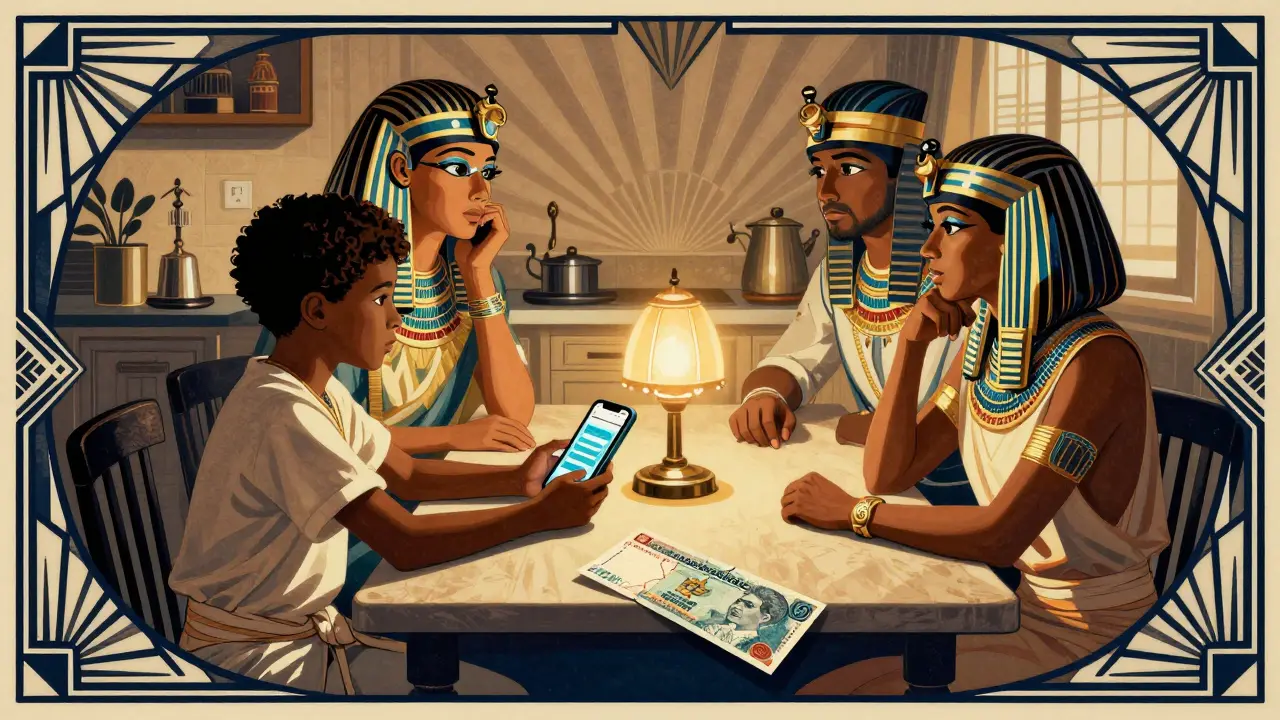
Even with a ban, people find ways. It’s not about legality. It’s about necessity.Many Egyptians use crypto to send money home. Workers abroad-especially in Saudi Arabia, the UAE, and Jordan-send remittances to families in Egypt. Traditional wire services like Western Union charge high fees and take days. Crypto transfers? Faster, cheaper. A Bitcoin transaction can cost less than $1 and arrive in minutes.
Others use crypto to protect savings. The Egyptian pound has lost over 50% of its value against the dollar since 2022. Inflation hit 35% in 2024. People aren’t buying Bitcoin because they believe in decentralization. They’re buying it because their savings are evaporating.
Small businesses, especially online sellers, use crypto to accept payments from international customers. If you run a Shopify store selling handmade crafts, and your buyer is in Germany, you don’t want to wait weeks for a bank transfer or pay 5% in fees. Crypto is the only practical option.
But here’s the catch: every time someone uses crypto in Egypt, they’re breaking the law. They’re not just taking a risk. They’re risking prison.
The Real Number: Nobody Knows
So how many Egyptians hold crypto? Nobody knows. Not even the government.Here’s what we do know: the CBE has cracked down on crypto ATMs, shut down local exchange offices, and pressured banks to freeze accounts linked to crypto activity. In 2023, they blocked access to 17 major crypto-related websites. In 2024, they fined two fintech startups for facilitating crypto payments.
But enforcement is hard. You can’t track every wallet. You can’t monitor every P2P trade. You can’t stop someone from downloading a non-custodial wallet like Trust Wallet or Phantom and buying Bitcoin with cash.
So while the ban is absolute, the reality on the ground is messy. Some people use crypto. Some get caught. Some pay fines. Some go to jail. But the activity doesn’t stop.
The 3 million figure? It’s likely inflated. Maybe it started as a rough estimate from a crypto forum in 2021 and got repeated until it became “fact.” But without data, it’s just noise.

Is Egypt’s Ban Working?
The ban has stopped institutional adoption. No bank offers crypto services. No fintech app lets you buy Bitcoin. No major retailer accepts it. That part worked.But it hasn’t stopped individual use. People still trade. Still hold. Still send money. The ban pushed crypto underground, not out of existence.
And now, something new is happening. In late 2025, Egyptian officials quietly signaled they might be reconsidering. Reports suggest the government is drafting new legislation that would allow licensed crypto companies to operate under strict oversight. No one knows the details yet. But the fact that they’re even talking about licensing means they’ve realized: banning crypto doesn’t make it disappear. It just makes it riskier.
What This Means for the Future
Egypt’s crypto ban was built on fear: fear of instability, fear of losing control, fear of fraud. But fear doesn’t solve economic problems. People still need ways to save, send, and earn money.If Egypt moves toward regulation-like Nigeria did in 2023, or Brazil in 2024-it won’t be because the ban failed. It’ll be because the government realized that controlling crypto is better than pretending it doesn’t exist.
For now, crypto in Egypt is a quiet rebellion. A handful of people, maybe thousands, maybe tens of thousands, are using it. Not because they’re tech-savvy. Not because they’re crypto believers. But because they have no other choice.
The 3 million number? It’s fiction. But the real number-whatever it is-is growing. And the government knows it.
Is it legal to own Bitcoin in Egypt?
No. Under Egyptian law, specifically Article 206 of the Central Bank and Banking System Law No. 194 of 2020, owning, trading, or promoting cryptocurrency is illegal. The Central Bank of Egypt prohibits all crypto-related activities for individuals and institutions. Violations can lead to imprisonment and fines between EGP 1 million and EGP 10 million.
Why does Egypt ban cryptocurrency?
Egypt bans cryptocurrency because the Central Bank fears loss of control over the financial system. Crypto’s volatility threatens savings, its anonymity enables fraud and money laundering, and its decentralized nature means no authority can regulate or monitor it. The government also wants to protect the Egyptian pound from external shocks.
How do Egyptians still use crypto if it’s banned?
Many use peer-to-peer platforms like Paxful or LocalBitcoins to buy Bitcoin with cash or bank transfers. Others use non-custodial wallets like Trust Wallet to store crypto and send remittances abroad. Some small businesses accept crypto for goods and services. All of this happens outside the formal banking system and carries legal risk.
Is there any data on how many people hold crypto in Egypt?
No reliable data exists. The Central Bank of Egypt does not track crypto holdings, and no independent organization has verified user numbers. Claims like "3 million holders" are speculative. Any estimate is based on guesswork, not evidence.
Could Egypt legalize crypto in the future?
Yes. In late 2025, reports indicated Egyptian officials were drafting new legislation to allow licensed crypto companies to operate under strict regulation. This would mark a major shift from total ban to controlled access. While no timeline is confirmed, the move suggests the government recognizes that prohibition alone isn’t stopping crypto use.
What happens if you get caught trading crypto in Egypt?
If caught, you could face criminal charges, fines between EGP 1 million and EGP 10 million (about $32,000-$320,000), and possible imprisonment. Banks may freeze your accounts, and crypto exchanges may be blocked. Enforcement is rare but severe when it happens.



Colin Lethem
March 3, 2026 AT 15:02lori sims
March 3, 2026 AT 22:37Reggie Fifty
March 5, 2026 AT 05:17Kristi Emens
March 7, 2026 AT 04:37Deborah Robinson
March 9, 2026 AT 02:40Kaitlyn Clark
March 9, 2026 AT 16:56Amanda Markwick
March 10, 2026 AT 21:00Nicki Casey
March 12, 2026 AT 05:57Jessica Carvajal montiel
March 13, 2026 AT 04:39maya keta
March 14, 2026 AT 02:05Curtis Dunnett-Jones
March 14, 2026 AT 12:42Sean Logue
March 16, 2026 AT 09:30Jeff French
March 17, 2026 AT 14:26Michelle Mitchell
March 18, 2026 AT 23:12christopher luke
March 20, 2026 AT 01:27