
If you're running or using a crypto exchange in the Philippines, you need to know one thing: crypto licensing requirements in Philippines by SEC are no longer optional. As of July 5, 2025, any platform serving Filipino users must be officially registered with the Securities and Exchange Commission. No more hiding behind offshore servers. No more ignoring local laws. The rules changed, and the crackdown is real.
Who Needs a License?
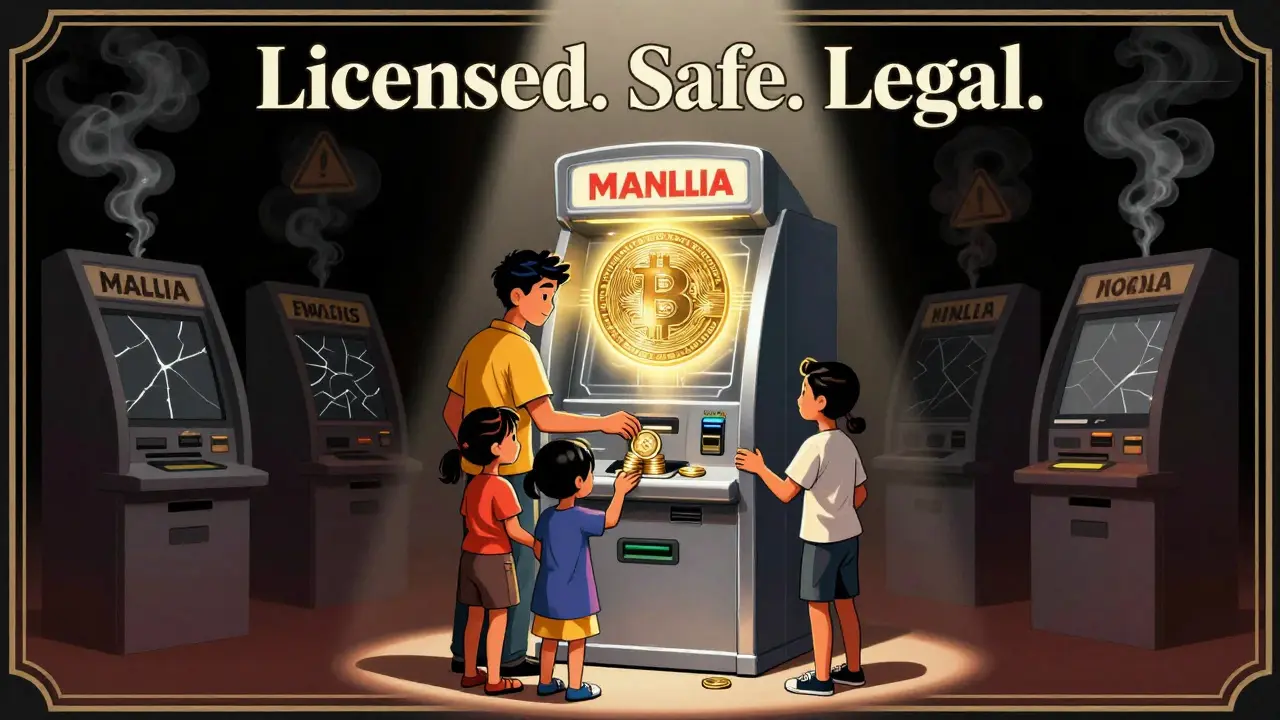
The SEC calls them Crypto Asset Service Providers, or CASPs. That’s any business that handles crypto in any way for Filipinos. This includes exchanges, wallet providers, trading platforms, staking services, and even crypto ATMs if they’re targeting users in the country. It doesn’t matter if your company is based in Singapore, the U.S., or Estonia. If Filipino users can sign up, deposit, trade, or withdraw crypto through your platform, you’re required to get licensed.The SEC made this crystal clear in May 2025 with Memorandum Circular No. 04 and No. 05. These aren’t suggestions. They’re legal mandates. And they’re backed by enforcement actions that have already removed giants like Binance from the local market in 2024. By August 2025, the SEC publicly named ten unlicensed exchanges - including OKX, Bybit, KuCoin, and Kraken - warning users they were operating illegally. These platforms still had millions of Filipino users. The SEC didn’t care. They shut them down anyway.
The Four Must-Have Requirements
Getting licensed isn’t a formality. It’s a major investment. Here’s what the SEC demands:- Physical Office in the Philippines - You can’t operate remotely. You need a registered business address with staff on the ground. This isn’t a PO box. It’s a real office with employees who can be contacted by regulators.
- PHP 100 Million Paid-Up Capital - That’s about $1.8 million USD, and it must be in cash or fiat, not crypto. This money isn’t just for show. It’s meant to cover losses if something goes wrong. It’s a buffer to protect users if your platform collapses or gets hacked.
- Full AML and KYC Systems - Every user must be verified. You must collect government-issued IDs, proof of address, and monitor transactions for suspicious activity. Reports go directly to both the SEC and the Anti-Money Laundering Council. No exceptions. No shortcuts.
- 30-Day Disclosure Period - Before you can market any crypto asset, you must file detailed documents with the SEC. These include risk disclosures, how the asset works, who’s behind it, and why it’s not a security (unless it is). You must publish these on your website, social media, and ads - at least 30 days before you start promoting anything.
And yes, you have to pay fees. The SEC calculates them based on your gross revenue from Philippine users. Monthly financial reports are mandatory. Customer funds must be kept completely separate from your company’s money. No commingling. No using user deposits to fund operations. If you do, you’re breaking the law.
What Happens If You Don’t Comply?
The penalties are steep. For each violation, you could be fined between ₱50,000 and ₱10 million. If you keep operating without a license? You’ll pay an extra ₱10,000 per day until you stop. That’s not a typo. That’s daily. And it adds up fast.But fines aren’t the only risk. The SEC has already blocked websites. Binance was taken offline in 2024 after users were given 90 days to withdraw. Other unlicensed platforms could face the same fate. Internet service providers in the Philippines are now required to block access to non-compliant sites. If you’re using one of those exchanges right now, you might wake up one day and find your app won’t load. Your funds could be frozen. And you’ll have no legal recourse.
Who’s Already Licensed?
Some exchanges moved fast. Youholder, Cex.io, BitGet, and Bigone all applied for licenses before the July 5 deadline. They’ve updated their apps, added local support teams, and published their disclosure documents as required. These platforms now have a clear advantage: they’re legal. They’re trusted. And they’re the only ones allowed to market to Filipinos going forward.Even Bybit - one of the platforms named in the August 2025 advisory - has since applied for registration. They’re not out of the game. They’re just playing by the new rules. The message is clear: adapt or disappear.
Why This Matters for Regular Users
You might think, “I’m just trading crypto. Why should I care about licenses?” Here’s why: your money is at risk.Before these rules, dozens of offshore exchanges promised high returns, low fees, and no questions asked. Many of them disappeared overnight. Users lost everything. No refunds. No legal protection. No way to recover funds.
Now, licensed platforms have to prove they can handle user funds safely. They have to show they’re not using your money to gamble on other investments. They have to keep records. They have to report suspicious activity. They have to be accountable.
If you’re using a licensed CASP, you’re not just trading crypto. You’re trading with a company that’s legally responsible for your safety. That’s a big difference.

The Bigger Picture
The Philippines isn’t trying to kill crypto. It’s trying to protect people from it. With over 12 million Filipinos using crypto in 2025 - and that number growing - the government needed rules. The SEC didn’t want to ban innovation. They wanted to make sure innovation didn’t come at the cost of people’s savings.Other countries in Southeast Asia are watching closely. Thailand, Indonesia, and Vietnam are all debating similar rules. The Philippines is setting the standard. The capital requirement is high. The bureaucracy is real. But the result? A market where users can actually trust the platforms they use.
It’s not perfect. Some small exchanges can’t afford the PHP 100 million. Some international players may just walk away. But for those who stay? The Philippines is now one of the most transparent crypto markets in the region.
What’s Next?
The SEC says this is just the beginning. They’re already gathering feedback from licensed CASPs. They’re monitoring how the rules play out in practice. There could be adjustments next year - maybe lower capital requirements for smaller players, or clearer rules around NFTs and DeFi.But one thing won’t change: if you want to serve Filipino users, you need to be registered. No exceptions. No loopholes. No more pretending the rules don’t apply to you.
If you’re a user: check if your exchange is licensed. Look for the SEC registration number on their website. If you can’t find it, assume it’s not legal. Move your funds.
If you’re a business: start the application now. The PhiliFintech Innovation Office at the SEC is the only place to apply. The process takes months. Don’t wait until the last minute. And don’t think you can skip the physical office or the capital requirement. The SEC isn’t bluffing.
The crypto world moves fast. But in the Philippines, the rules are now the fastest-moving thing of all.
Is it illegal to trade crypto in the Philippines?
No, trading crypto is not illegal. The SEC does not ban individuals from buying, selling, or holding cryptocurrencies. The rules only require that platforms offering crypto services to Filipinos must be licensed. You can still trade on licensed exchanges like Youholder, Cex.io, or BitGet without any legal risk.
What happens if I use an unlicensed crypto exchange?
You’re not breaking the law by using an unlicensed platform, but your funds are at risk. If the exchange gets shut down or hacked, you have no legal protection or recourse. The SEC won’t help you recover your money. Plus, the platform could be blocked by internet providers at any time, locking you out of your account.
Can foreign crypto exchanges operate in the Philippines without a license?
No. Any exchange that targets Filipino users - even if it’s based overseas - must register with the SEC. The law applies based on who the service is aimed at, not where the company is located. The SEC has already taken action against multiple foreign exchanges, including Kraken and KuCoin, for serving Philippine users without a license.
How long does it take to get a CASP license?
The process can take 4 to 8 months, depending on how complete your application is. You need to set up a local corporation, open a physical office, raise PHP 100 million in capital, build AML/KYC systems, and submit all documentation to the SEC’s PhiliFintech Innovation Office. Many companies are still in the process - the deadline was July 5, 2025, but compliance takes time.
Do I need a license if I only accept crypto payments for my business?
If you’re just accepting crypto as payment for goods or services - and not offering trading, staking, or custody services - you don’t need a CASP license. But if you’re converting crypto to fiat, holding it for customers, or offering investment products tied to crypto, then yes, you’re a CASP and must register.
What’s the difference between SEC and Bangko Sentral ng Pilipinas (BSP) roles in crypto regulation?
The SEC regulates crypto as an asset - meaning they oversee exchanges, trading platforms, and offerings that could be considered securities. The BSP regulates crypto as a payment method - they handle anti-money laundering rules for transactions and oversee payment processors. For most users and exchanges, the SEC is the main regulator you need to worry about.



Rajappa Manohar
December 30, 2025 AT 05:28So if I just buy BTC and hold it, I’m fine right? No license needed for me. Good to know.
Daniel Verreault
December 30, 2025 AT 09:50Bro the SEC just turned the phil crypto scene into a corporate cage match. 100 mil php? That’s not a capitol req it’s a middle finger to small players. Binance got kicked out and now even bybit’s crawling back with paperwork. This ain’t regulation it’s a pay-to-play racket.
Alexandra Wright
December 31, 2025 AT 13:24Oh please. You think the SEC gives a damn about ‘user protection’? They’re just trying to kill competition so their buddy exchanges like Youholder can monopolize the market. Meanwhile, normal people still get ripped off because the ‘licensed’ ones charge 5x fees and lock your funds for 30 days to ‘audit’. Classic regulatory capture.
Jacky Baltes
December 31, 2025 AT 18:40The underlying tension here is between decentralization and institutional control. The SEC’s approach assumes that trust must be mediated by legal architecture rather than cryptographic verification. But if the goal is user safety, why not incentivize on-chain insurance protocols or decentralized custody solutions instead of forcing physical offices and fiat capital? The law is solving the wrong problem.
Monty Burn
January 1, 2026 AT 22:33They say no offshore servers but what if you use a vpn and trade on binance anyway nobody’s gonna track you right also why do I need a philippine office if my users are all in cebu and davao and I’m based in san francisco
nayan keshari
January 2, 2026 AT 18:23This whole thing is a scam. The SEC wants to control crypto so they can tax it later. They kicked out big exchanges so they can hand the market to their friends. And now they want you to pay 100 million just to play? Meanwhile, the average filipino just wants to send money home without paying 10% in fees. This isn’t protection it’s extortion.
Alex Strachan
January 3, 2026 AT 10:34Look I get it the rules are strict but hey at least now I know my funds aren’t sitting on some shady server in the Caymans 🤝. I switched to BitGet last week and their support actually answers me in tagalog now. That’s a win. Also the 30-day disclosure thing? Honestly it’s kinda cool to see the risks spelled out before I invest. No more ‘this coin will moon 1000x’ bs. 📊
Jack and Christine Smith
January 3, 2026 AT 12:18my cousin works at a fintech in manila and she said the license app process is a nightmare like they ask for 17 different forms and each one needs a notarized copy from 3 different agencies and then they lose your file and make you start over. also the office? they need a real lease? like you cant just rent a desk for 3 months? jesus. also typo on their site said ‘CASP’ as ‘CASP’ not ‘CASP’ lol
Johnny Delirious
January 4, 2026 AT 20:08It is imperative that all stakeholders recognize the profound significance of the Securities and Exchange Commission’s regulatory framework as a cornerstone of financial integrity in the digital asset ecosystem. The imposition of stringent capital requirements and mandatory physical presence underscores a commendable commitment to systemic resilience, investor protection, and institutional accountability. This paradigm represents not merely compliance, but the ethical evolution of fintech governance in emerging markets. We must applaud the SEC for its visionary leadership in establishing a regulatory benchmark that prioritizes sustainability over speculation.
Kenneth Mclaren
January 6, 2026 AT 18:39They’re using this to track everyone. The AML/KYC isn’t to protect you - it’s to build a national crypto surveillance database. Every transaction, every wallet, every ID scan - it’s all going into a government server. And guess what? Next year they’ll freeze accounts for ‘suspicious activity’ like buying more than 5k in ETH. This is how they start banning crypto. They’re not regulating - they’re preparing to confiscate. Don’t be fooled. The ‘licensed’ exchanges are just their puppets.