
The days of buying Bitcoin on a dark web forum or launching a token with zero oversight are officially over. If you thought 2024 was the year of regulatory chaos, 2026 is the year of regulatory reality. The global financial system has stopped treating cryptocurrency as a fringe experiment and started treating it like what it actually is: money. And that means rules, audits, and consequences.
We are seeing a massive shift from "principles-based" guidelines to hard enforcement. Regulators in the EU, US, and UK aren't just talking about safety anymore; they are building the infrastructure to enforce it. For businesses, this means higher compliance costs. For users, it means more security but less anonymity. Here is how the landscape looks right now in mid-2026, and what you need to know to stay compliant.
Europe’s MiCA Is Now Fully Live
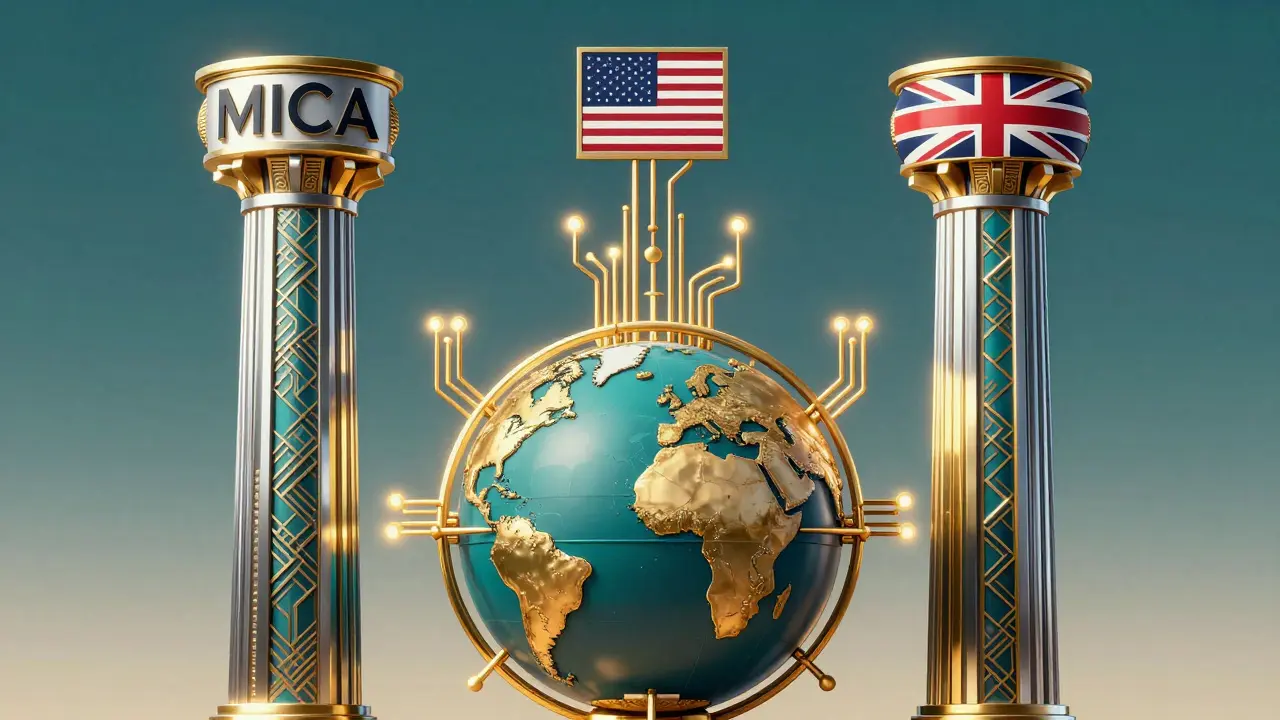
If you operate in or serve customers in the European Union, MiCA is your bible. The Markets in Crypto-Assets Regulation moved from a phase of preparation to full operational mode in 2026. This isn't just paperwork. National competent authorities across the EU have shifted into active supervision.
What does this mean for you? It means that Crypto-Asset Service Providers (CASPs) can no longer just write down policies and hope for the best. Supervisors are demanding demonstrable controls. They want to see operational evidence that you are actually following the rules. This covers everything from white paper disclosures to market abuse controls and prudential requirements.
Alongside MiCA, the EU’s Anti-Money Laundering (AML) package has tightened the screws. The Travel Rule-the requirement to share sender and receiver information for transfers-is now fully embedded across all EU crypto transfers. With the new EU AML Authority (AMLA) shaping supervisory convergence, anonymous transactions are being severely constrained. If you are running a platform that allows high volumes of unverified transfers, you are likely already under scrutiny.
The US Finally Has a Federal Framework
For years, the United States had a fragmented approach where state regulators and federal agencies pulled in different directions. That changed dramatically in 2025 and early 2026 with the passage of the GENIUS Act. This legislation established the first comprehensive federal framework specifically for payment stablecoins.
Here is the key takeaway from the GENIUS Act: permitted payment stablecoins are not classified as securities, commodities, or deposits. Instead, they exist in their own regulatory lane, administered principally by the Office of the Comptroller of the Currency (OCC), alongside the FDIC, Federal Reserve, and Treasury Department. This clarity was desperately needed to legitimize stablecoins for everyday U.S. financial transactions.
In September 2025, the SEC and CFTC issued a joint statement launching a cross-agency initiative to promote regulatory clarity for blockchain innovation. This signaled a broader policy direction toward openness, provided you play by the rules. By mid-2026, Congress was poised to adopt a market infrastructure bill setting forth a regime for digital asset brokers, dealers, and exchanges. The SEC continued to issue no-action relief and guidance, potentially opening pathways for tokenization arrangements through innovation exemptions and sandbox environments.
UK Integration Over Isolation
The United Kingdom took a different path than Europe. Instead of creating a standalone regime like MiCA, the UK integrated cryptoassets into its existing Financial Services and Markets Act (FSMA). By 2026, the Financial Conduct Authority (FCA) had established a regulated regime for issuance, custody, trading, and intermediation.
The focus here is heavily on consumer protection and conduct. All crypto promotions must be approved by the FCA. This includes strict rules on risk warnings, cooling-off periods, and marketing channels. If you are advertising crypto products in the UK, you cannot just post a flashy ad on social media. You need approval. The UK also launched a Digital Securities Sandbox, allowing firms to test tokenized securities under real regulatory supervision. This approach aims to bring crypto into the mainstream financial system rather than keeping it on the sidelines.
DeFi and Tokenization: No More Hiding Places
Decentralized Finance (DeFi) and the tokenization of real-world assets (RWA) were once seen as regulatory blind spots. In 2026, those blind spots are gone. Regulators are increasingly focusing on identifiable control points. Even if a protocol is technically decentralized, if there are identifiable developers, front ends, or governance structures, regulators will target them.
Tokenization projects involving securities, funds, or real estate face intense scrutiny. Organizations can no longer assume that because something is "on-chain," it falls outside regulatory scope. If there is consumer exposure or identifiable control, you are subject to the same rules as traditional financial institutions. Hybrid models that combine decentralization with intermediaries are particularly under the microscope.
| Jurisdiction | Key Legislation/Body | Primary Focus |
|---|---|---|
| European Union | MiCA, AMLA | Comprehensive licensing, Travel Rule enforcement, consumer protection |
| United States | GENIUS Act, SEC/CFTC Joint Initiative | Stablecoin classification, broker/dealer frameworks, innovation sandboxes |
| United Kingdom | FSMA, FCA | Integration into existing finance laws, marketing approval, conduct rules |
| Global | FATF, CARF | Anti-money laundering standards, cross-border tax reporting |
Tax Reporting Goes Global with CARF
Gone are the days when you could hide crypto gains in offshore wallets. Tax reporting has become coordinated globally. The U.S. Treasury and IRS implemented new reporting rules for digital-asset brokers, including exchanges and custodial wallets. These rules expand transaction-level reporting obligations significantly.
This feeds into wider global tax-information-exchange initiatives, specifically the Common Reporting Standard for Crypto-Assets (CARF). If you operate internationally, you need to be aware that your data is being shared between jurisdictions. Virtual Asset Service Providers (VASPs) face expanded tax-reporting requirements. The goal is clear: eliminate tax evasion opportunities created by the borderless nature of blockchain technology.

Illicit Activity Drives Enforcement
Why is regulation moving so fast? Because illicit activity accelerated dramatically. Illicit crypto volume reached an all-time high of USD 158 billion in 2025, a nearly 145% increase from 2024. This surge provided the political justification for intensified focus on stability, fraud, and money laundering risks.
Authorities worldwide are accelerating their virtual asset agendas. They are establishing frameworks for stablecoins, harmonizing taxation agreements, and escalating enforcement actions. Crypto failures are no longer treated as experimental mishaps; they are treated like traditional financial service failures. This means stricter custody arrangements, better insolvency protections, and closer examination of internal controls.
What This Means for Your Business
If you are building or operating in the crypto space, the era of "move fast and break things" is over. The era of "move carefully and comply" is here. Compliance costs are rising significantly. Jurisdictions may remain uneven in their enforcement capabilities, but the regulatory and operational risk for firms operating across multiple markets is increasing.
However, there are opportunities. Signs of convergence present opportunities for global expansion. Businesses that maintain robust AML programs, transparent reserves, and secure operations are positioned to benefit. Regulators prefer licensed, well-controlled platforms. Designated growth areas include tokenized assets, regulated DeFi infrastructure, on-chain identity attestations, and cross-border payment solutions that meet emerging reporting requirements.
VASPs should expect closer supervisory scrutiny, more intrusive audit obligations, and tighter overall supervision. The message from global regulators is consistent: cryptoassets are integral components of the traditional financial system. Treat them accordingly.
Is MiCA fully enforced in 2026?
Yes. MiCA became fully operational in 2026. National competent authorities in the EU have transitioned from implementation phases to active supervision, demanding demonstrable controls and operational evidence of compliance from CASPs.
How does the GENIUS Act affect stablecoins?
The GENIUS Act establishes a specific federal regulatory framework for payment stablecoins in the US. It clarifies that permitted stablecoins are not securities, commodities, or deposits, but are instead regulated by the OCC, FDIC, Federal Reserve, and Treasury Department.
Can I still use anonymous crypto transactions in the EU?
It is becoming extremely difficult. The EU's AML package and the new AMLA have embedded the Travel Rule across all crypto transfers. Anonymous transactions are severely constrained, and compliance expectations for intermediaries are significantly raised.
How is DeFi being regulated in 2026?
Regulators are targeting identifiable control points in DeFi, such as developers, front ends, and governance structures. Fully decentralized systems remain hard to regulate, but hybrid models and projects with consumer exposure face strict scrutiny similar to traditional financial services.
What is CARF and why does it matter?
CARF stands for the Common Reporting Standard for Crypto-Assets. It is a global tax-information-exchange initiative. It matters because it allows governments to share data on crypto transactions, making it much harder to evade taxes on digital assets across borders.
Do I need FCA approval for crypto ads in the UK?
Yes. Under the UK's FSMA framework, all crypto promotions must be approved by the FCA. This includes requirements for risk warnings, cooling-off periods, and oversight of marketing channels.
How has illicit crypto activity changed regulations?
Illicit crypto volume hit $158 billion in 2025, a 145% increase from 2024. This surge justified faster regulatory action, leading to stricter AML/KYC protocols, enhanced stablecoin frameworks, and tougher enforcement against money laundering risks.



Guy Davis
July 4, 2026 AT 21:34its just the gov trying to control ur money again lol
KEITH WONG
July 6, 2026 AT 21:24look i know what you are thinking but this is actually good for us long term 🤔 if we dont comply now they will just ban it entirely and then where will we be? we need to adapt or die out folks. its simple economics really.
Tracy Marshall
July 7, 2026 AT 17:03they want to track every single penny u spend (╥﹏╥) this is a slippery slope to total surveillance state control over our lives and finances which is deeply immoral and wrong for free people
Curtis Johnson
July 9, 2026 AT 03:33whoa hold on lets not jump to conclusions here everyone 😲 while i get the paranoia about tracking i think there is a middle ground where we can have security without losing all freedom maybe? we should try to understand both sides before getting worked up
Anuj Kashyap
July 9, 2026 AT 09:17the irony of regulating 'freedom' currency with iron-fisted bureaucracy is palpable 🤷♂️
we traded the wild west for a gated community where the gatekeepers demand your dna sample at the entrance. philosophically speaking, does a regulated coin still possess the essence of liberty, or has it merely become a digital token of submission? i suppose comfort often outweighs principle in the grand scheme of human nature 📜✨
Kristy Morrow
July 10, 2026 AT 06:59you guys are missing the point entirely regulation is just a word for compliance theater that benefits the elite while pretending to protect the little guy its a classic contrarian trap where everyone thinks safety is good until they realize safety means stagnation and control
John Harman
July 12, 2026 AT 05:02actually if you read the genius act closely it creates a specific lane for stablecoins so they arent securities anymore which is huge because previously the sec was treating everything like a security and killing innovation so this is technically a win for clarity even if you hate the process
Antony Lopez
July 13, 2026 AT 05:10america leads the way with the genius act while europe tries to copy paste regulations from other countries and fails miserably we need to keep our financial sovereignty intact and not let foreign entities dictate how our dollars work online
Hamza k
July 13, 2026 AT 09:40it feels like the party is officially over and the bouncers are checking ids at the door 🚪💥
i remember when we could just launch a token on a napkin idea and watch it moon. now? you need lawyers accountants and a prayer. the color has drained from the rainbow of crypto leaving behind a grey concrete structure of compliance and audits. beautiful in its own sterile way perhaps but lacking soul.
Natalie Lucas
July 15, 2026 AT 07:19hey guys lets look at the bright side! this means more security for our funds right? no more rug pulls hopefully! yay for safety! 🌟
Kat Barr
July 15, 2026 AT 22:25oh my gosh natalie is totally right!!! 🙌🙌 safety is super important especially after all those scams!! i feel so much better knowing there are rules now!! lets embrace the change together!! 💖💰
Steven Briggs
July 17, 2026 AT 03:35i guess thats true i just miss the old days though when things were simpler
Logan Edmison
July 18, 2026 AT 06:15the concept of decentralized finance being regulated by centralized authorities is a paradox that defies logic yet here we are dancing to the tune of bureaucrats who dont understand code but think they can govern it its like trying to regulate the wind with a net
Kim Kay
July 20, 2026 AT 00:00i think we should all just try to learn the new rules instead of fighting them its not going away anytime soon so might as well adapt and help each other navigate the paperwork