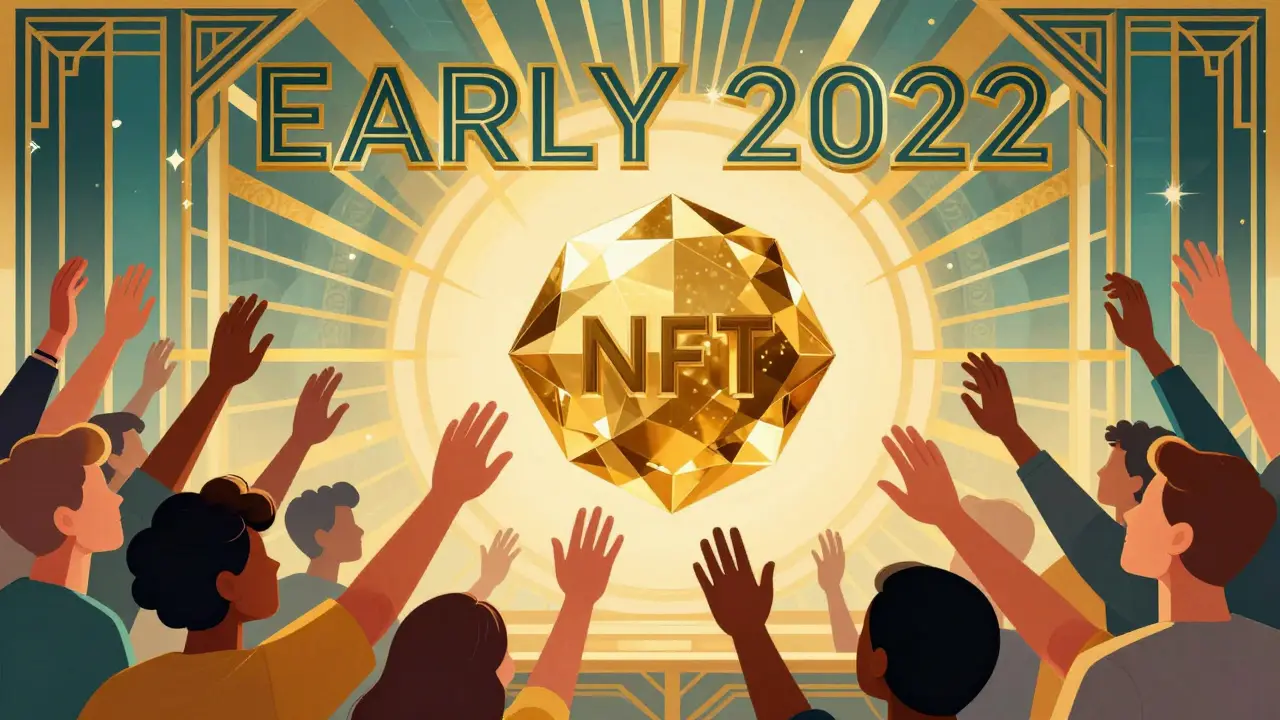
Remember the hype of early 2022? It was a time when Binance Smart Chain (BSC) felt like the wild west of crypto, and every new protocol promised to "revolutionize" how we interact with digital assets. One name that popped up frequently during that bull run was Lunar, operating under the ticker LNR. They launched a campaign called the Lunar Crystal NFT Airdrop, promising free non-fungible tokens to anyone who engaged with their platform. If you are digging through old wallet records or wondering if you missed out on a valuable asset, this article breaks down exactly what happened, why it disappeared, and what it means for your portfolio today.
The Promise: Lunar Crystal NFT Airdrop Basics
To understand the Lunar Crystal NFT situation, we have to look back at March 1, 2022. This is when the project officially announced its distribution strategy. The core promise was simple: complete specific engagement tasks, and you would receive at least one NFT. In the chaotic landscape of 2022, "guaranteed" drops were rare. Most projects relied on random selection or complex tiered systems. Lunar positioned itself as a user-friendly DeFi ecosystem built on Binance Smart Chain, aiming to bring "the next billion humans into crypto" through simple experiences.
The mechanism relied heavily on a partnership with CoinMarketCap. Users were directed to participate through CoinMarketCap’s platform, likely utilizing their MISO integration or similar social verification tools. This was a strategic move. By leveraging CoinMarketCap’s massive user base, Lunar hoped to bypass the need for building their own complex referral networks from scratch. However, the technical specifics remained vague. There was no public whitepaper detailing the smart contract architecture, nor were there GitHub repositories for community audit. You had to trust the announcement alone.
- Blockchain: Binance Smart Chain (BSC)
- Token: LNR (Lunar Token)
- NFT Type: Utility/Community Access (implied)
- Launch Date: March 1, 2022
- Distribution Channel: CoinMarketCap Integration
How Participation Supposedly Worked
If you were active in March 2022, the process looked familiar. You needed a BSC-compatible wallet, such as MetaMask or Trust Wallet. The instructions generally involved connecting your wallet to the Lunar interface via CoinMarketCap. From there, you likely had to perform social tasks-following Twitter accounts, joining Telegram groups, and perhaps liking Facebook pages. These "social proof" mechanisms were standard for airdrops at the time, designed to boost organic reach before burning gas fees on paid ads.
Unlike some competitors that required holding specific amounts of stablecoins or other tokens, Lunar’s barrier to entry seemed low. This broad accessibility was both a strength and a weakness. It attracted thousands of users quickly, but it also meant the project lacked a dedicated, high-stakes community. When things got tough later in 2022, these casual participants vanished instantly. There were no documented VIP tiers or exclusive minting phases for whales, which differentiated it from projects like Baby Ape Beast (BAB), which reserved spots for early investors.
| Feature | Lunar Crystal (LNR) | Baby Ape Beast (BAB) | Luna Dating (LSTR) |
|---|---|---|---|
| Blockchain | BSC | BSC | Ethereum/BSC Hybrid |
| VIP Tiers | None Documented | Yes (First 50 for VIPs) | No |
| Distribution Partner | CoinMarketCap | Direct Project Portal | Telegram Bot |
| Technical Transparency | Low (No Whitepaper Found) | Medium (Roadmap Published) | High (Bot Mechanics Clear) |
| Current Status (2026) | Inactive/Abandoned | Inactive | Inactive |
The Missing Pieces: Technical Red Flags
Here is where the story gets tricky. For a project claiming to build "products & services" on Azure and .NET foundations, the crypto-specific documentation was sparse. There were no verified smart contract addresses published by reputable security firms like CertiK or OpenZeppelin. In the world of DeFi, this is a major red flag. Without an audit, users couldn't verify if the NFTs were actually being minted fairly or if the backend code held hidden vulnerabilities.
The NFT collection itself lacked detailed metadata. We don't know the total supply, the trait rarity distributions, or the art generation algorithms. Was it a generative art piece? A static image? The absence of this data suggests the focus was purely on marketing buzz rather than long-term utility. Compare this to successful projects from that era, like those launching on Layer 2 solutions such as Scroll or Linea, which provided extensive technical scores and transparent roadmaps. Lunar operated in the shadows, relying on the general FOMO (Fear Of Missing Out) of the market rather than substantive product development.

Why Did Lunar Disappear?
By late 2022, the crypto winter hit hard. Many projects that relied on "passive earnings" models and cheap BSC transactions collapsed. Lunar was not immune. If you visit the current Lunar.io website, you won't find any mention of the LNR token, the Crystal NFTs, or the 2022 airdrop. The site now focuses on generic Web3 experiences, describing itself as sparking "joy in everyday Web3." This pivot indicates a complete rebranding or abandonment of the original DeFi/NFT venture.
There are three likely scenarios for what happened:
1. Project Abandonment: The team ran out of funding or interest after the initial hype died down.
2. Rebranding: The technology was repurposed for a different product line, leaving the LNR token and NFTs behind as dead assets.
3. Failure to Deliver: The promised NFTs were never properly distributed, leading to a loss of trust and subsequent shutdown.
The lack of user feedback is telling. There are no Reddit threads complaining about missing funds, no Twitter sentiment analysis showing mass outrage, and no community forums discussing the project's future. This silence suggests either extremely limited participation or a quiet fade-to-black. Unlike high-profile rug pulls that make headlines, Lunar simply evaporated from the radar.
Is the LNR Token Still Valuable?
If you still hold LNR tokens in an old wallet, here is the hard truth: they likely have zero value. As of May 2026, LNR does not appear on major tracking platforms like CoinGecko or CoinMarketCap. It is not listed on decentralized exchanges (DEXs) with significant liquidity. Without a functioning exchange pair, a token cannot be traded. Even if the smart contract still exists on the BSC blockchain, it is effectively a digital paperweight.
Do not attempt to buy "LNR" from private sellers claiming to have access to the original team. This is a common scam tactic targeting holders of defunct projects. Always verify token contracts on official block explorers. If the contract shows no recent activity and no liquidity pools, it is dead.
Lessons for Future Airdrop Hunters
The Lunar Crystal case serves as a cautionary tale for anyone participating in future airdrops. Here is what you should check before connecting your wallet:
- Audit Reports: Never participate in a project without a third-party security audit. Look for CertiK, Hacken, or OpenZeppelin badges.
- Transparent Roadmaps: Vague promises of "revolutionizing crypto" are not enough. Look for specific milestones, dates, and deliverables.
- Community Activity: Check Discord and Telegram. Are real people asking questions, or is it just bots posting memes? A healthy project has active, skeptical communities.
- Tokenomics: Understand how the token is distributed. If the team holds 50%+ of the supply, you are at risk of a dump.
- Platform Reputation: While partnering with CoinMarketCap is good, it doesn't guarantee safety. Independent verification is always required.
Final Thoughts on Lunar (Old)
The Lunar Crystal NFT Airdrop was a snapshot of the early 2022 crypto boom-a period defined by rapid growth, loose regulations, and ambitious promises. While it offered a glimpse into how DeFi projects attempted to onboard mainstream users through gamified NFT distributions, it ultimately failed to sustain momentum. For those looking for closure, the project is inactive. For those learning the ropes, it highlights the importance of due diligence. In crypto, if something seems too simple and lacks technical depth, it probably is.
Can I still claim the Lunar Crystal NFT?
No. The Lunar Crystal NFT Airdrop campaign ended in early 2022. The project appears to be abandoned or rebranded, and there are no active channels or smart contracts currently distributing these NFTs.
What happened to the LNR token?
The LNR token has been delisted from major cryptocurrency exchanges and tracking platforms. It currently has no known liquidity or market value. It is considered a defunct asset.
Was Lunar a scam?
While not explicitly labeled a "rug pull" in legal terms, the project exhibited many characteristics of a failed venture, including lack of transparency, missing technical documentation, and eventual abandonment. Users who invested time or money likely lost everything.
Did Lunar partner with CoinMarketCap officially?
Yes, the original 2022 announcements indicated a partnership or integration with CoinMarketCap for the distribution of the NFT airdrop. However, this did not imply an endorsement of the project's long-term viability by CoinMarketCap.
Where can I find information about Lunar's current projects?
You can visit lunar.io, but note that the current website does not reference the LNR token or the 2022 NFT campaign. The company appears to have pivoted away from its original DeFi/NFT model.