
Imagine trying to buy a coffee with Bitcoin in Dhaka. You pull out your phone, open the wallet app, and scan the QR code. The merchant smiles, but then looks confused. Not because they don't know what Bitcoin is, but because using it could technically get you in trouble. This is the confusing reality for many people in Bangladesh today. On one hand, everyone seems to be trading crypto on their phones. On the other hand, the government says it’s all illegal. So, what is actually going on? Is it a total ban, or is there a loophole?
The short answer is that while cryptocurrency is effectively banned from the formal banking system, the legal foundation for this ban is shaky at best. The rules come from an old law called the Foreign Exchange Regulations Act of 1947 (FERA), which was written long before digital coins existed. This creates a messy situation where the central bank says "no," but the courts might say "wait, does this even apply?" Let's break down how these restrictions work, why they exist, and what they mean for you if you live in or do business with Bangladesh.
The Old Law Behind the New Ban
To understand why crypto is restricted, we have to look at the Foreign Exchange Regulations Act of 1947, also known as FERA. This law was created decades ago to control foreign currency flows in a post-independence economy. It gives the Bangladesh Bank, the country's central bank, broad powers to regulate money moving in and out of the country.
Here is the catch. FERA defines "currency" in Section 2(b) in two specific ways:
- Category 1: Physical things like currency notes, checks, drafts, and travelers' cheques.
- Category 2: Any other instrument that the Bangladesh Bank officially declares as currency via a notification in the official Gazette.
Bitcoin and Ethereum are not paper notes. They are digital tokens. More importantly, the Bangladesh Bank has never issued that official Gazette notification declaring crypto as "currency" under Category 2. Without that specific legal step, many lawyers argue that crypto doesn't legally fit the definition of "foreign exchange" under FERA. If it's not defined as currency, can you really prosecute someone for holding it under this specific act? That is the core legal debate happening right now.
What the Bangladesh Bank Actually Says
Even though the law is vague, the Bangladesh Bank hasn't left much room for doubt about its stance. Since 2017, the central bank has issued multiple circulars telling banks and financial institutions to stay away from crypto. They treat cryptocurrencies as risky assets that could lead to money laundering and terrorism financing.
In practical terms, this means:
- No Banking Support: Banks will freeze accounts if they see transactions linked to crypto exchanges. You cannot use a Bangladeshi debit card to buy Bitcoin on Coinbase.
- No Legal Tender: Crypto is not recognized as money. You cannot pay taxes or debts with it officially.
- Strict Monitoring: The bank monitors large dollar transactions closely. If your account shows sudden inflows that look like crypto cash-outs, expect questions.
This isn't just a suggestion; it's a directive to the entire banking sector. For a regular person, this makes buying crypto through official channels nearly impossible. But does that stop people? Hardly.
The Underground Market Reality
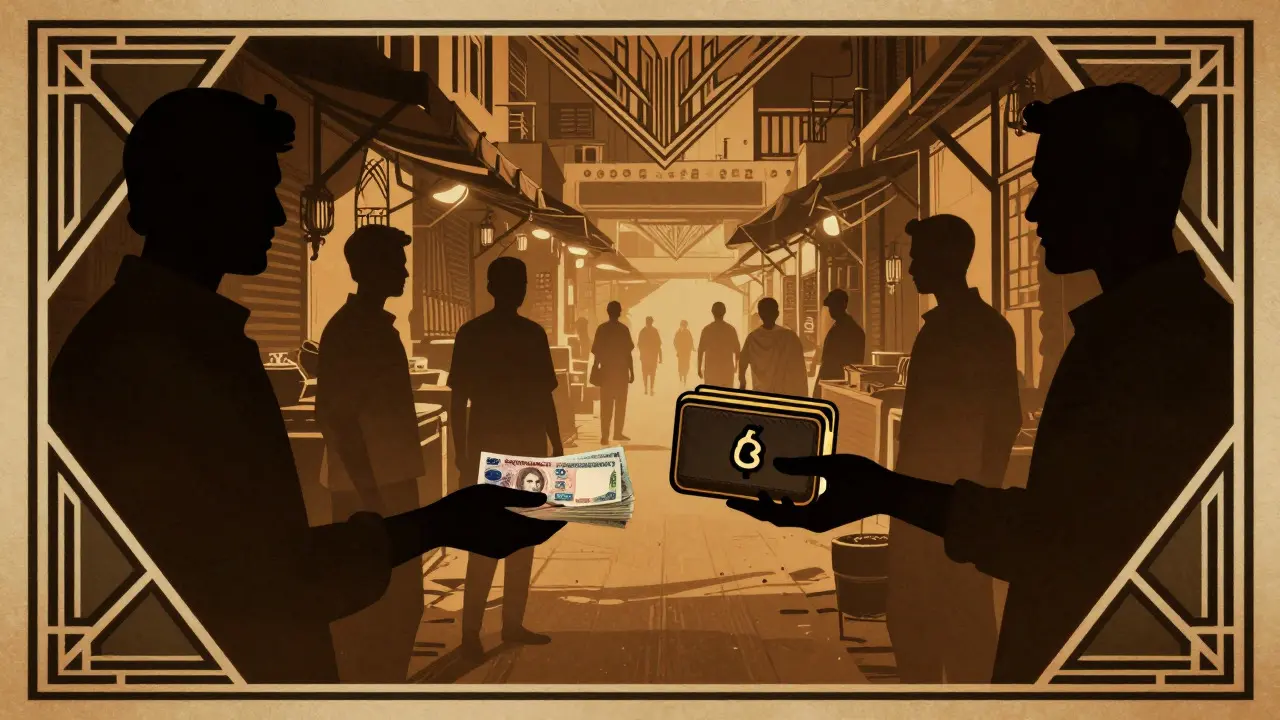
While the banks say no, the streets say yes. There is a thriving underground market for crypto in Bangladesh. How does it work? People use peer-to-peer (P2P) platforms like Binance and KuCoin. These apps are still available on the Google Play Store and Apple App Store in Bangladesh, which is a huge loophole in itself.
Instead of using bank cards, buyers and sellers connect directly. A buyer transfers Bangladeshi Taka (BDT) to a seller's local bank account via mobile banking services like bKash or Nagad. Once the seller confirms receipt, they release the crypto to the buyer's wallet. This method bypasses the traditional banking scrutiny because the transaction looks like a normal transfer between individuals, often labeled as "gift" or "family support."
Local agents facilitate this. They act as middlemen, taking small commissions to help newcomers navigate the P2P process. This informal network allows thousands of users to trade daily without ever touching a regulated exchange. However, it comes with risks. If the government decides to crack down hard, these agents could face legal trouble, and users risk losing funds if an agent scams them.
Taxing the Illegal: The NBR Paradox
Here is where things get really weird. The National Board of Revenue (NBR), which handles taxes in Bangladesh, treats crypto as property. Under the Income Tax Ordinance of 1984, any profit you make from selling crypto is considered capital gains and is taxable.
Think about that. The government prohibits you from trading crypto, but if you do it anyway and make money, they want a cut. Currently, there is no specific crypto tax rate. Instead, it falls under general income tax slabs. This creates a paradoxical situation:
- If you report your crypto income, you admit to doing something the central bank bans.
- If you don't report it, you are evading taxes.
Most traders choose silence. The NBR is reportedly considering clearer guidelines, but as of mid-2026, no specific crypto tax law has been passed. This ambiguity leaves taxpayers in a gray zone, unsure of whether they should declare their digital assets or keep them hidden.
How Bangladesh Compares to Its Neighbors
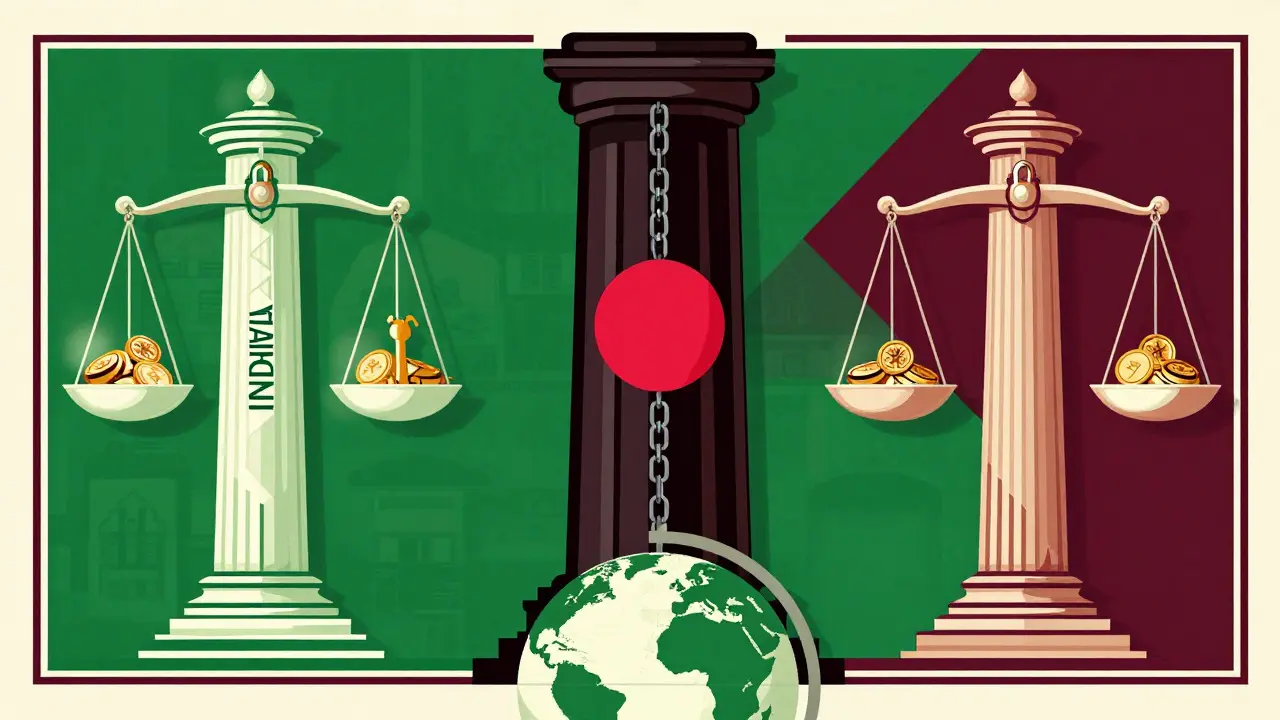
Bangladesh is an outlier in South Asia. While it maintains a strict prohibition, its neighbors are embracing regulation. Look at India. They implemented a 30% tax on crypto profits and a 1% tax deducted at source (TDS). In the fiscal year 2024-2025, this generated $1.8 billion in revenue. India didn't ban crypto; they taxed it into legitimacy.
Pakistan went even further. In May 2025, Pakistan established the Pakistan Digital Assets Authority (PDAA) to regulate exchanges and wallets. They even allocated electricity for Bitcoin mining. Meanwhile, Bangladesh remains isolated. This difference matters. As regional economies integrate, businesses in Bangladesh might find themselves at a disadvantage if they cannot easily transact with partners in India or Pakistan who use stablecoins for faster payments.
| Country | Regulatory Status | Taxation Approach | Key Enforcement Action |
|---|---|---|---|
| Bangladesh | De facto ban via banking restrictions | General income tax (unclear guidelines) | Bank account freezes, P2P monitoring |
| India | Regulated & Taxed | 30% flat tax + 1% TDS | Mandatory KYC for exchanges |
| Pakistan | Regulated by PDAA | Standard capital gains rules | Licensed exchanges allowed |
Why the Ban Exists: Fear of Financial Instability
You might wonder, why is the government so scared of Bitcoin? It's not just about missing out on tax revenue. It's about control. Bangladesh has a developing economy with significant remittance inflows. Families rely on money sent from abroad. The government wants this money to flow through official banking channels so they can track it and use it to stabilize the national currency, the Taka.
Crypto threatens this model. If workers in Dubai send Bitcoin instead of dollars, the central bank loses visibility. If people convert Taka to USDT (a stablecoin pegged to the dollar) during times of inflation, the demand for physical Taka drops, potentially weakening the currency further. The ban is essentially a defensive move to protect monetary policy and prevent capital flight.
However, experts like Dr. B M Mainul Hossain from Dhaka University argue that banning doesn't work. He points out that technology moves faster than legislation. By prohibiting crypto, the government pushes activity underground, making it harder to monitor rather than easier. Regulation, he suggests, would allow the state to supervise the market rather than fight it.
What Comes Next? The Path Forward
The current situation is unsustainable. The gap between the 1947 law and modern digital reality is widening. We are likely heading toward one of two scenarios:
- Clarification: The government amends FERA to explicitly include digital assets, giving them clear legal power to ban or regulate them. This would remove the legal ambiguity and likely strengthen enforcement.
- Adoption: Following the trend of India and Pakistan, Bangladesh introduces a regulatory framework. This would involve licensing exchanges, setting tax rates, and allowing limited crypto usage for cross-border trade.
For now, the status quo remains. The Bangladesh Bank keeps the pressure on banks, the NBR waits for clarity, and citizens continue to trade in the shadows. If you are involved in crypto in Bangladesh, you are navigating a high-risk environment. The tools are accessible, but the legal safety net is missing.
Is cryptocurrency completely illegal in Bangladesh?
Technically, yes, regarding banking and official transactions. The Bangladesh Bank prohibits banks from processing crypto-related payments. However, owning crypto is not explicitly criminalized in a way that leads to mass arrests. Most enforcement happens through freezing bank accounts linked to exchanges. Trading via peer-to-peer methods is common but exists in a legal gray area.
Can I use my Bangladeshi bank card to buy Bitcoin?
Generally, no. Most international exchanges block Bangladeshi cards, and local banks often flag and block transactions to known crypto merchants. If you try, your account might be frozen pending investigation. Most locals use P2P platforms where they transfer Taka directly to another person's bank account in exchange for crypto.
Do I have to pay tax on my crypto profits in Bangladesh?
Yes, theoretically. The National Board of Revenue (NBR) treats crypto as property. Profits from sales are subject to capital gains tax under the general Income Tax Ordinance. However, since trading is discouraged, few people voluntarily report these gains due to fear of admitting to unofficial activities.
Why does the Foreign Exchange Act of 1947 matter for crypto?
It is the primary legal tool used by the Bangladesh Bank to justify restrictions. However, critics argue it is outdated. The act defines "currency" narrowly, and since crypto hasn't been officially declared as such via Gazette notification, some lawyers believe the ban lacks solid statutory footing.
Are crypto apps like Binance blocked in Bangladesh?
No, the apps themselves are not blocked by internet service providers. You can download them from app stores and access their websites. The restriction is financial, not technical. The government prevents money from entering or leaving the system through banks, but it hasn't shut down the internet access to the platforms.


Prudence Flemming
August 14, 2026 AT 15:00the ontological status of fiat is collapsing under the weight of its own inefficiency. we are witnessing a paradigm shift where value decouples from state sanction. it is not merely about speculation but about the fundamental redefinition of trust mechanisms in a digital epistemology.
Don Fizy
August 16, 2026 AT 09:34Great breakdown of the legal gray areas! It's really helpful to see how P2P works around these banking restrictions. Just remember to always use escrow services on those platforms to keep your funds safe. Stay smart out there! :)
Dominic Greco
August 17, 2026 AT 18:05They want you poor and controlled 🤡 The central banks are terrified because they can't track what they can't control. This isn't about money laundering, it's about power. Wake up sheeple! 👁️👄👁️
Sean Rowland
August 18, 2026 AT 21:06One must consider the socio-economic ramifications of such draconian measures upon the populace. The bureaucratic inertia is palpable. To suggest that a 1947 statute holds any water in the blockchain era is frankly preposterous. Yet here we are, dancing to their tune while our capital evaporates into the ether of unregulated markets.
Sus Sawyer
August 20, 2026 AT 15:03Yo, this is wild! I mean, seriously, using bKash for crypto? That’s some next-level hustle right there. You gotta respect the ingenuity of the people dodging the system. Keep pushing boundaries fam! 🔥
Aryan MISHRA
August 21, 2026 AT 09:31The regulatory arbitrage is evident. FERA is obsolete. Taxation without representation is tyranny; taxation without regulation is chaos. India did it right. Bangladesh is lagging behind significantly. Period.
Ryan Robinson
August 22, 2026 AT 15:17i think its kinda funny how they ban it but then try to tax it anyway lol. just let people trade freely and everyone wins. why make it so complicated??
Earl Kott65
August 23, 2026 AT 13:53Ah yes, the classic 'ban it and hope it goes away' strategy 🙄 We've seen this movie before. Spoiler alert: it doesn't work. But hey, at least the NBR gets to play detective with frozen accounts! 😂
Ethan Yuwono
August 24, 2026 AT 18:10it is interesting to observe the tension between monetary sovereignty and technological inevitability. the state seeks to preserve the sanctity of the taka while citizens seek financial autonomy through decentralized ledgers. perhaps a middle ground exists where regulation facilitates rather than hinders innovation.
Jack Delasquez
August 25, 2026 AT 20:35thats crazy man. i cant believe they still use laws from 1947. my grandma uses an iphone better than their legal framework. get with the times!
Harman Singh
August 25, 2026 AT 23:39my account got frozen last week cus of a small p2p trade. worst feeling ever. they didnt even talk to me just blocked everything. why do they hate us so much?
Erica Johnson
August 26, 2026 AT 05:44It's not that complicated, really. If it smells like a scam, it probably is. The government isn't stupid, they just don't want to lose control over the currency flow. People who complain are usually just greedy speculators looking for a quick buck. (y)
Ken G
August 28, 2026 AT 02:33its all part of the grand plan to enslave us. once they take away our gold and silver they replace it with digital tokens they can turn off with a switch. stay woke. dont buy the lie.
Lorraine Surringer
August 29, 2026 AT 15:57Oh honey, you really think the banks care about your little bitcoin dreams? They care about their bottom line. And if your transaction looks suspicious, guess who takes the hit? You do. So maybe stop acting like a victim and start acting responsible. :)
Alex Di Mango
August 29, 2026 AT 17:55I think both sides have valid points. The government needs stability, but people need freedom. Maybe instead of fighting each other, we can find a way to bridge the gap. Communication is key here. Let's keep the dialogue open and respectful.
Amor Jordan
August 31, 2026 AT 04:26This situation is truly heartbreaking for those trying to build a future. Imagine the stress of having your life savings frozen because of a technicality. We need empathy and understanding, not just cold hard rules. Let's support each other through this uncertainty.
Eden Tadesse
September 2, 2026 AT 04:20i heard that some lawyers are actually suing the bank over this. might be worth checking out if u wanna fight back. good luck tho.
Eric Zehr
September 2, 2026 AT 18:29It is crucial to understand the risks involved. While the opportunity for gain is present, the potential for loss is equally significant. Ensure you conduct thorough due diligence before engaging in any transactions. Protect your assets wisely.
Namrata Mapgaonkar
September 4, 2026 AT 04:44back home in india we pay 30% tax but at least we know the rules. here in bd its like playing russian roulette with your money. scary stuff but ppl adapt. thats the spirit of entrepreneurship isnt it? :)