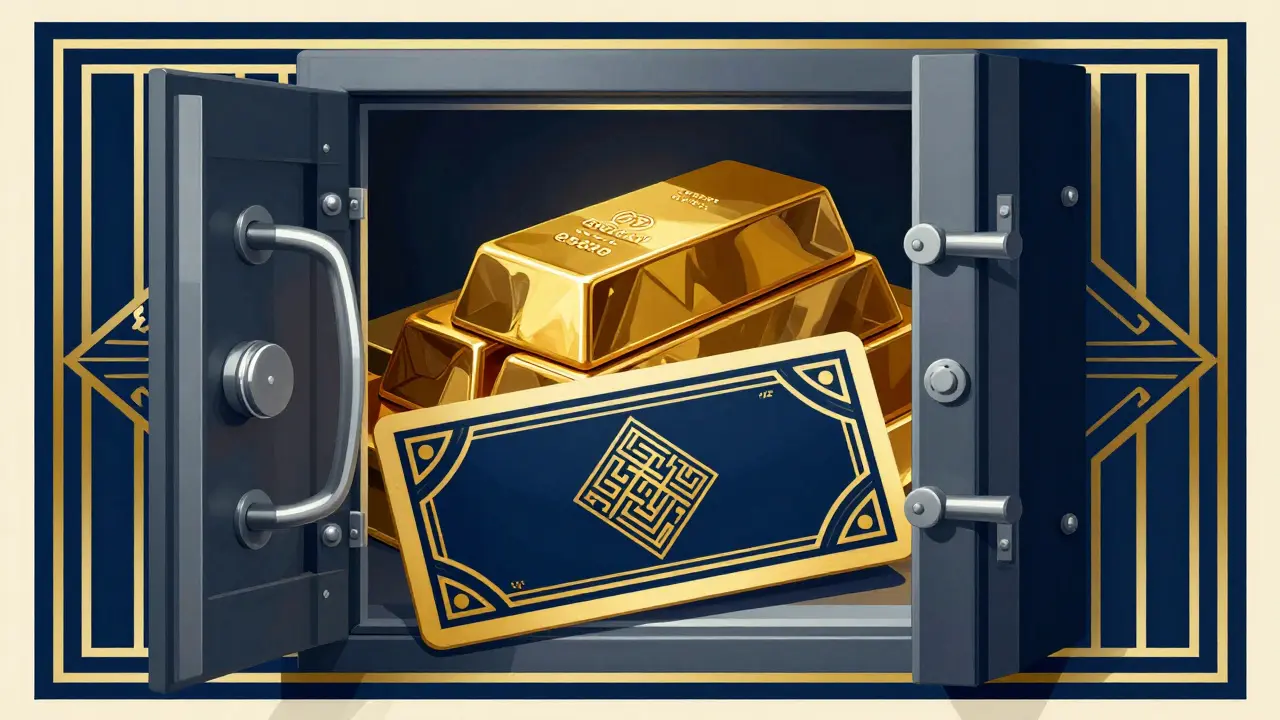
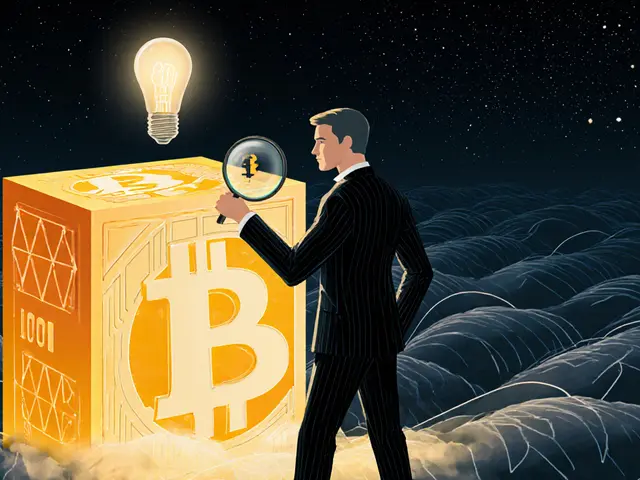
Imagine owning a gold bar that you can't spend at a store because the store only accepts digital gift cards. To buy something, you'd have to lock your gold in a vault and get a digital voucher that represents that gold. You still "own" the gold, but the voucher is what actually lets you shop. That's essentially how wrapping works in the crypto world. If you've ever wondered why you need Wrapped Tokens is a digital asset that represents a cryptocurrency on a non-native blockchain, allowing it to be used outside its original network when you already have the original coin, you're not alone. It's a common point of confusion for anyone moving from simple holding to the world of Decentralized Finance (DeFi).
The Basics: What are Native Tokens?
Native Tokens are the original coins born on their own dedicated blockchain. Think of Bitcoin (BTC) on the Bitcoin network or Ether (ETH) on the Ethereum network. These assets are the bedrock of their ecosystems. They aren't just for trading; they power the whole system. For instance, you use native tokens to pay for transaction fees (gas), secure the network through mining or staking, and participate in governance votes.
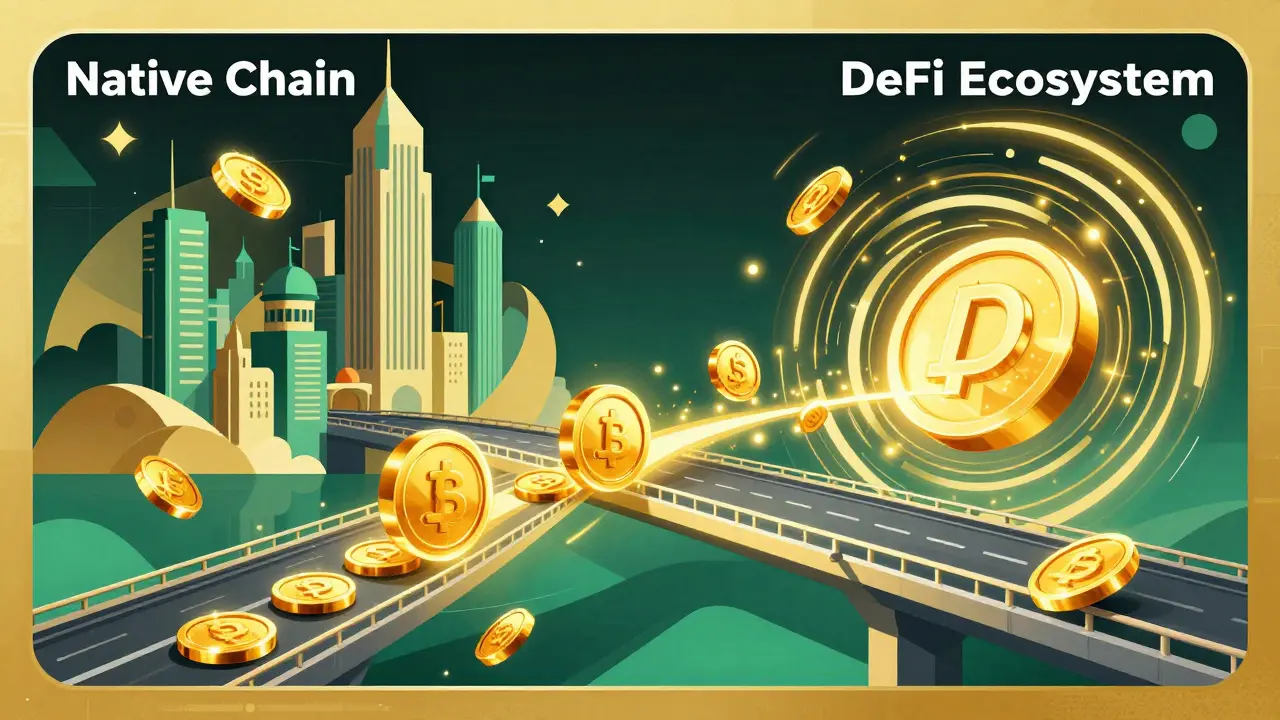
The catch? Native tokens are "stuck" on their home chain. Because different blockchains speak different languages, a native Bitcoin cannot simply jump over to Ethereum to be used in a smart contract. They are fundamentally incompatible. This creates a massive problem for investors who want the security of Bitcoin but the high-yield opportunities of Ethereum-based lending apps.
How Wrapping Actually Works
To solve this incompatibility, the industry created "wrapped" assets. A wrapped token is essentially a proxy. It follows the token standards of the target blockchain-most commonly the ERC-20 standard on Ethereum-while maintaining a strict 1:1 value ratio with the original asset.
The process isn't magic; it's a custodial arrangement. To get Wrapped Bitcoin (WBTC), for example, the process usually looks like this:
- You send your native BTC to a designated custodian.
- The custodian locks your BTC in a secure vault.
- An equivalent amount of WBTC is minted on the Ethereum network.
- These wrapped tokens are sent to your wallet, ready for use in DeFi.
When you want your original Bitcoin back, you simply "unwrap" it. The custodian burns the wrapped tokens and releases the original BTC from the vault back to you. While this sounds simple, it introduces a middleman. Unlike native tokens, which are secured by the decentralized consensus of the entire network, wrapped tokens rely on the honesty and security of the custodian.
Comparing Native vs Wrapped: The Trade-offs
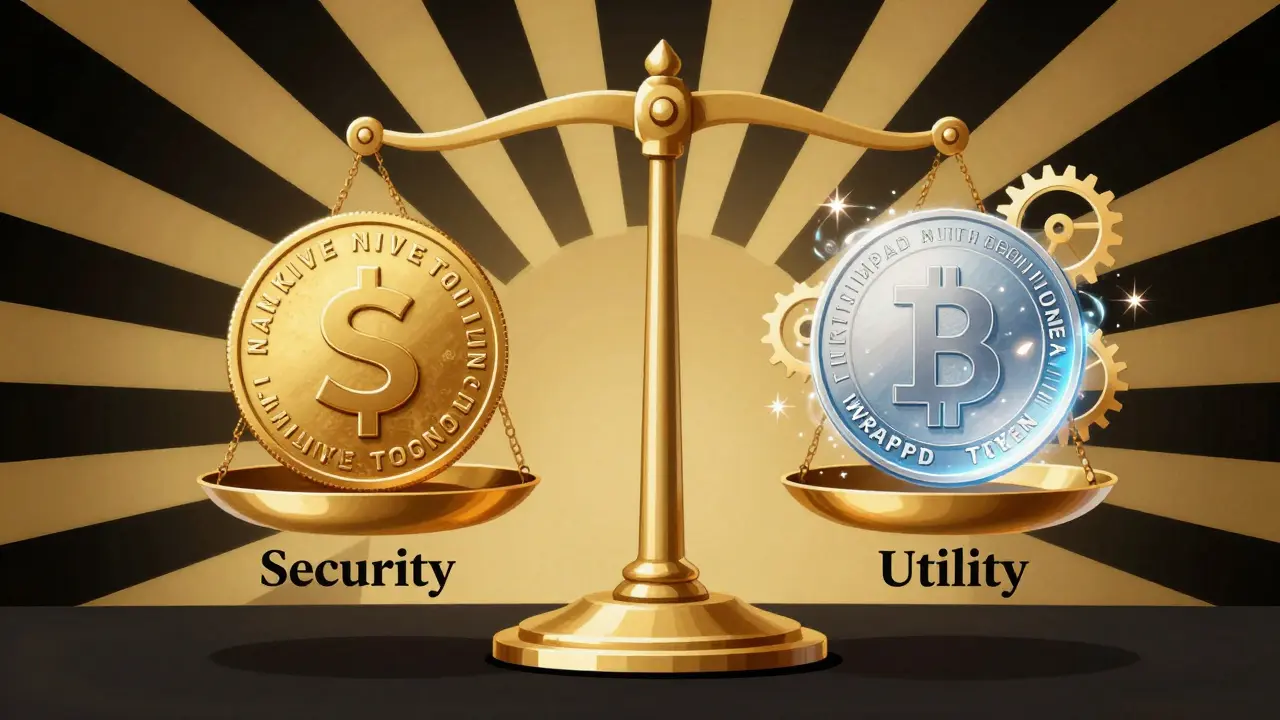
Choosing between the two usually comes down to a battle between security and utility. If you're a "HODLer" who just wants to store value for ten years, native is the only way to go. But if you want to earn interest or trade on a decentralized exchange, wrapping becomes necessary.
| Feature | Native Tokens | Wrapped Tokens |
|---|---|---|
| Blockchain Location | Origin chain only | Cross-chain (Target chain) |
| Security Model | Network consensus (Decentralized) | Custodial/Smart Contract (Centralized/Hybrid) |
| Utility | Network fees & security | DeFi, Lending, Liquidity Pools |
| Risk Level | Low (Protocol risk only) | Medium (Custodian/Bridge risk) |
| Interoperability | Limited | High |
Why Use Wrapped Tokens? Real-World Scenarios
Why bother with the risk of a custodian? Because the utility gain is massive. Let's look at a few relatable examples:
- Earning Yield on Bitcoin: Bitcoin doesn't have native smart contracts that allow for complex lending. By wrapping BTC into WBTC, a holder can deposit their assets into a protocol like Aave and earn interest, all without selling their original Bitcoin.
- Trading on DEXs: Many Decentralized Exchanges (DEXs) require tokens to be in a specific format to be traded. For example, native Ether (ETH) cannot be "pulled" by smart contracts using the
transferFrom()function. This is why Wrapped Ether (WETH) exists-it turns ETH into an ERC-20 token so it can be swapped seamlessly on platforms like Uniswap. - Portfolio Diversification: Wrapping allows you to move value across different ecosystems (like moving from Bitcoin to Polygon or BNB Chain) without having to go through a centralized exchange that might require KYC or charge high fees.
The Risks You Need to Know
It's not all sunshine and rainbows. The biggest risk with wrapped tokens is custodial failure. If the entity holding your native coins is hacked, goes bankrupt, or decides to steal the funds, your wrapped tokens become worthless. They are essentially "IOUs"; if the person who wrote the IOU disappears, the paper is useless.
We've seen this happen in the real world. The Nomad Bridge hack in 2022 resulted in roughly $190 million in losses because the bridge's security was compromised. When the "lock" on the native side is broken, the wrapped tokens on the other side lose their backing.
Industry experts like Vitalik Buterin have pointed out that wrapping introduces trust assumptions that go against the very spirit of decentralization. You are moving from a system where you "trust the math" to a system where you "trust a company or a small group of people." This is why many experienced traders still prefer native assets whenever a native cross-chain option is available.
Looking Ahead: Is Wrapping Temporary?
The future of the multi-chain world is moving toward "native interoperability." The goal is to let tokens move between chains without needing to be wrapped or locked in vaults. Technologies like Chainlink CCIP (Cross-Chain Interoperability Protocol) are working to create standardized, more decentralized ways to move value.
Ethereum is also exploring improvements (like EIP-3668) that could eventually make WETH less necessary by allowing native ETH to interact more easily with smart contracts. In a perfect world, the "wrapped" phase is just a bridge to a future where all blockchains are natively connected.
Is WBTC as safe as BTC?
No. While WBTC tracks the price of BTC 1:1, it carries additional risk. Native BTC is secured by the Bitcoin network's proof-of-work. WBTC relies on the custodians who hold the actual BTC. If the custodian loses the keys or is fraudulent, WBTC could lose its value.
Do I need to pay gas fees to wrap my tokens?
Yes. Because wrapping and unwrapping involve transactions on the blockchain, you will have to pay gas fees on the target network. For example, if you are wrapping an asset onto Ethereum, you'll need ETH in your wallet to cover the transaction cost.
What happens if the wrapping service goes offline?
If a centralized wrapping service goes offline, you may be unable to "unwrap" your tokens back into the native asset. While your wrapped tokens might still be tradable on an exchange, the process of reclaiming your original coins would be frozen until the service is restored.
Why is WETH used if it's just Ether?
WETH is used because native ETH does not follow the ERC-20 token standard. Most DeFi protocols are built to handle ERC-20 tokens. By wrapping ETH into WETH, you make your funds compatible with these smart contracts, allowing you to provide liquidity or trade on a DEX.
Can I wrap any token?
Technically, yes, provided there is a service or bridge that supports that specific asset and the target blockchain. However, the most common wrapped tokens are high-market-cap assets like BTC and ETH due to their high demand in DeFi.
Next Steps for Users
If you're deciding whether to wrap your assets today, consider your goals. If you are simply saving for the long term, keep your assets native in a hardware wallet. If you want to dive into DeFi, start small. Use well-known wrapping services and never wrap more than you can afford to lose, given the custodial risks involved. For those who want the best of both worlds, keep an eye on emerging decentralized bridge protocols that reduce the reliance on single-entity custodians.

Kieran Smith
April 11, 2026 AT 08:40Tbh I used to be terrified of bridges but seeing how it opens up DeFi is just amazing. it's like unlocking a whole new level of the game lol
Emily H
April 11, 2026 AT 14:04The distinction between custodial and non-custodial bridging is indeed paramount. It is advisable for participants to thoroughly audit the smart contracts of any wrapping service before committing significant capital, as the systemic risk remains non-trivial despite the convenience provided by these proxies.
Heather Warren
April 12, 2026 AT 15:26Totally agree with the points about yield. I always tell my friends that leaving BTC just sitting there is a waste of potential when you can actually make it work for you through these wrapped versions!
william manes
April 13, 2026 AT 00:23Too much risk 🚩 Just hold native or stay away 🇺🇸 🚀
Artavius Edmond
April 13, 2026 AT 18:53I think there's a middle ground here. While the risks are real, the innovation happening in cross-chain tech is pretty exciting for everyone involved.
Prasanna Shembekar
April 13, 2026 AT 22:27literally shook by that Nomad bridge hack mention... just imagine losing millions in a blink my heart actually hurts for them 😭
Swati Sharma
April 14, 2026 AT 11:46The current paradigm heavily relies on the liquidity provider's solvency and the integrity of the mint-and-burn mechanism. We need more robust atomic swaps to mitigate the counterparty risk inherent in these wrapping protocols to ensure true trustless interoperability.
Jason Davis
April 14, 2026 AT 21:49Great breakdown. a lot of people miss that WETH isnt actually a different coin, just a wrapper so the smart contrcts can actulaly read the balance. its a weird quirk of how Eth was built
Surender Kumar
April 16, 2026 AT 21:22nice guide man. i'm just chillin with my native coins for now but might try some small wraping soon to see how it feels
Lauren Abrams
April 17, 2026 AT 07:56It's interesting to see the trade-off between the security of a hardware wallet and the flexibility of DeFi. The concept of a digital voucher is a helpful way to visualize the whole process. It makes the custodial aspect much clearer for those who aren't deep into the technical side of things.