
Many people assume that if a country has restrictions on cryptocurrency, its citizens must use shady workarounds to get access. But in Colombia, that’s not the case. There’s no underground network of VPNs, peer-to-peer hustles, or black-market exchanges needed to buy Bitcoin or Ethereum. Colombians access crypto exchanges freely-and they’ve been doing it for years, legally and safely.
Colombia Doesn’t Block Crypto-It Regulates It
The idea that Colombians face heavy restrictions on crypto is a myth. In reality, Colombia has been quietly building one of the most mature crypto ecosystems in Latin America. The government doesn’t want to stop people from using crypto. It wants to make sure transactions are transparent, taxes are paid, and money laundering is prevented.
Since 2021, the Financial Superintendency of Colombia (SFC) has been testing how to regulate crypto businesses through a sandbox program. Even though that program ended in late 2023, it wasn’t shut down because of opposition-it was paused because lawmakers were drafting real rules. And those rules are now coming.
Bill 510 of 2025, introduced by Senator Gustavo Moreno and Representative Julián López, is moving through Congress. This isn’t a ban. It’s a license. The bill would formally recognize Virtual Asset Service Providers (VASPs)-exchanges, wallets, and custodians-as legal entities. That means companies like LuloX and Wenia can operate openly, with clear rules, instead of operating in the shadows.
Over 5 Million Colombians Are Already Using Crypto
You can’t regulate something that doesn’t exist. And in Colombia, crypto exists-in a big way. Chainalysis data from 2024 shows over 5 million Colombians actively use cryptocurrency. That’s more than 9% of the population. In 2024 alone, $6.7 billion in crypto was traded through Colombian platforms.
Why? Because crypto solves real problems. Many Colombians send money to family abroad. Traditional remittance services charge 8-12% in fees. With crypto, you can send $100 to a relative in Spain or the U.S. for under $1. That’s not a fringe activity-it’s everyday finance for millions.
And it’s not just individuals. Major banks are getting involved. Bancolombia, Colombia’s largest bank, launched its own crypto exchange called Wenia and created COPW, a peso-backed stablecoin. That’s not a loophole. That’s institutional adoption. When a bank with over 12 million customers builds a crypto product, you know this isn’t underground-it’s mainstream.
How Do Colombians Actually Buy Crypto?
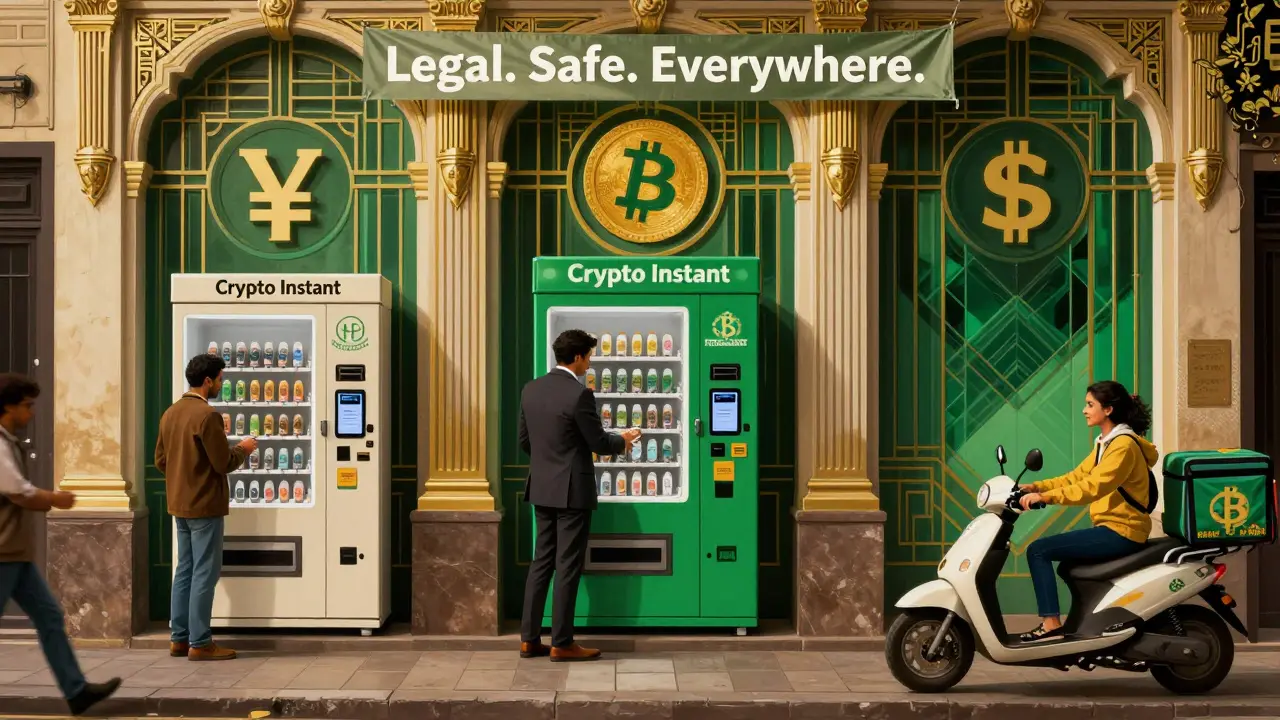
There’s no need to bypass anything. Colombians access crypto exchanges the same way people in other countries do: through apps, bank transfers, and local payment methods.
- Local exchanges like LuloX, Buda, and Wenia let users buy crypto with Colombian pesos (COP) using bank transfers, PSE (the national online payment system), or even mobile wallets.
- Peer-to-peer trading is popular too, but not because it’s illegal-it’s because it’s convenient. Platforms like Paxful and LocalBitcoins let Colombians trade directly with others, often using cash deposits or mobile top-ups.
- International platforms like Binance and Kraken are fully accessible. No VPNs needed. No blocked websites. These platforms comply with Colombian AML rules and require ID verification, just like any bank.
And here’s the kicker: if you try to deposit $200 in crypto into a Colombian exchange, the system will ask for your ID. If you send $1,000, the system flags it for review. That’s not a restriction-it’s standard compliance. The Financial Intelligence Unit (UIAF) requires all crypto transactions over $150 to be reported. That’s stricter than some U.S. states, but it’s not a barrier. It’s accountability.
Miners, Not Hackers: Crypto’s Real Economic Impact
Some countries ban crypto mining. Colombia encourages it.
With low electricity costs and a growing tech workforce, Colombia has become a hotspot for legitimate mining operations. A startup in Bogotá now runs a 2-megawatt mining facility powered by renewable energy. It employs 40 people, upgrades local internet infrastructure, and pays taxes on its profits.
The government doesn’t see miners as criminals. It sees them as entrepreneurs. Mining companies must register with the SFC, follow environmental standards, and pay income tax on their earnings. There’s no black market. Just a growing industry with clear rules.
Taxes? Yes. But It’s Not a Trap
People worry crypto is tax-free. In Colombia, it’s the opposite. All crypto gains are taxable. If you trade Bitcoin and make a profit, you report it under personal income tax. If you run a crypto business, you pay corporate tax. The government treats crypto like any other financial asset-because it is.
The SFC doesn’t care if you own Ethereum. It cares if you made $5,000 in profits last year and didn’t declare it. Fines for non-compliance hit $1.5 million in 2023. That’s not punishment-it’s enforcement. And it’s working. More people are filing crypto taxes now than ever before.

Why the Myth of Restrictions Persists
So why do people still think Colombians need to circumvent restrictions?
Because international media often paints emerging markets as chaotic. They show stories of Venezuelans trading Bitcoin to survive. They assume Colombia is the same. But Colombia isn’t Venezuela. It’s not Argentina. It’s not Zimbabwe.
Colombia has a strong banking system, a growing middle class, and a government that sees crypto as part of the future-not a threat. The real story isn’t about evasion. It’s about evolution.
What’s Next for Crypto in Colombia?
Bill 510 is expected to pass in late 2026. Once it does, crypto businesses will need official licenses to operate. That means more security, more accountability, and more trust. International investors will start seeing Colombia as a stable market-not a risky one.
Stablecoins like COPW are already being used in small businesses. Farmers are getting paid in crypto. Delivery drivers are receiving tips in Bitcoin. These aren’t experimental projects. They’re real, daily transactions.
Colombians aren’t breaking rules to use crypto. They’re following them. And in doing so, they’re building one of the most functional, regulated, and user-friendly crypto markets in Latin America.
Do Colombians need a VPN to access crypto exchanges?
No. Colombian citizens can access international exchanges like Binance, Kraken, and Coinbase without a VPN. These platforms are not blocked in Colombia. Local exchanges like LuloX and Wenia are even easier to use, since they accept Colombian pesos and local payment methods. The idea that you need a VPN to access crypto in Colombia is outdated and incorrect.
Is crypto trading legal in Colombia?
Yes. Buying, selling, and holding cryptocurrency is fully legal in Colombia. The government doesn’t prohibit it-it regulates it. You can legally trade crypto on licensed platforms, and you’re required to report profits for tax purposes. There are no laws banning personal crypto ownership.
Can I use my bank account to buy crypto in Colombia?
Yes, but not directly through traditional banks like Bancolombia or Davivienda. Those banks can’t hold crypto themselves, but they allow transfers to licensed crypto exchanges. You can send COP from your bank account to LuloX or Wenia using PSE, which is the national instant payment system. It’s fast, secure, and widely used.
Are crypto transactions taxed in Colombia?
Yes. All capital gains from crypto trading are subject to income tax. If you sell Bitcoin for a profit, you must report it on your annual tax return. The tax rate depends on your income bracket, just like any other investment. The Financial Superintendency tracks large transactions, and failure to report can lead to fines.
Why is Colombia’s crypto market growing so fast?
Because it solves real problems. High remittance fees, inflation, and limited access to traditional banking push people toward crypto. At the same time, the government’s approach-regulation over restriction-gives users confidence. With over 5 million users and major institutions like Bancolombia entering the space, Colombia’s crypto market is expanding because it works, not because people are circumventing rules.