OKX Banned Countries: Where You Can't Use OKX and Why
When you try to sign up for OKX, a major global cryptocurrency exchange that offers trading, staking, and derivatives. Also known as OKX Global, it operates under strict licensing rules and blocks users in certain regions to follow local laws. You might get a message saying your country isn’t allowed. That’s not a glitch—it’s compliance. OKX avoids countries where crypto is banned, heavily restricted, or where regulators demand KYC rules they won’t follow. This isn’t about excluding users; it’s about staying legal in a patchwork of global rules.
Some of the most common banned countries, places where OKX explicitly blocks access due to government crypto restrictions include the United States (for certain services), the United Kingdom (due to FCA rules), and Canada (where derivatives trading is restricted). But it goes deeper. Countries like Nigeria, Iran, and North Korea face bans not because OKX dislikes them, but because U.S. sanctions or local banking laws make transactions impossible. Even if you’re not in one of these places, you might still be blocked if you’re using a VPN or if your IP address looks like you’re from a restricted zone. The system doesn’t ask why—it just blocks.
It’s not just about where you live. Crypto regulations, the legal frameworks governments use to control digital asset trading and ownership change fast. In 2024, Japan tightened rules on leverage trading, and OKX pulled those features for Japanese users. In 2025, India’s new tax reporting rules pushed OKX to limit fiat on-ramps. These aren’t random decisions—they’re reactions to legal pressure. If a country’s financial authority says, "No derivatives," or "No unlicensed exchanges," OKX has to comply or risk losing access to global banking partners. That’s why you see the same list of banned countries across Binance, Kraken, and Coinbase too.
What does this mean for you? If you’re in a banned country, you won’t find a "workaround" that’s safe. Using a VPN to access OKX can get your account frozen permanently. Some users try peer-to-peer trades or local exchanges, but those come with their own risks—like scams or lack of insurance. The safest path is to use a regulated local platform, even if it has fewer coins. It’s not about missing out on the latest meme coin. It’s about keeping your money where regulators can’t seize it.
Below you’ll find real reviews and deep dives into exchanges that faced similar bans—like Garantex in Russia, OMGFIN’s absence in the U.S., and how Nigerian traders bypass restrictions. These aren’t just stories. They’re lessons in how crypto moves when governments draw lines. You’ll see what happens when exchanges get caught in the middle, how users adapt, and what to look for when your own access gets cut off.
OKX Crypto Access Limitations by Country: What’s Blocked and Why
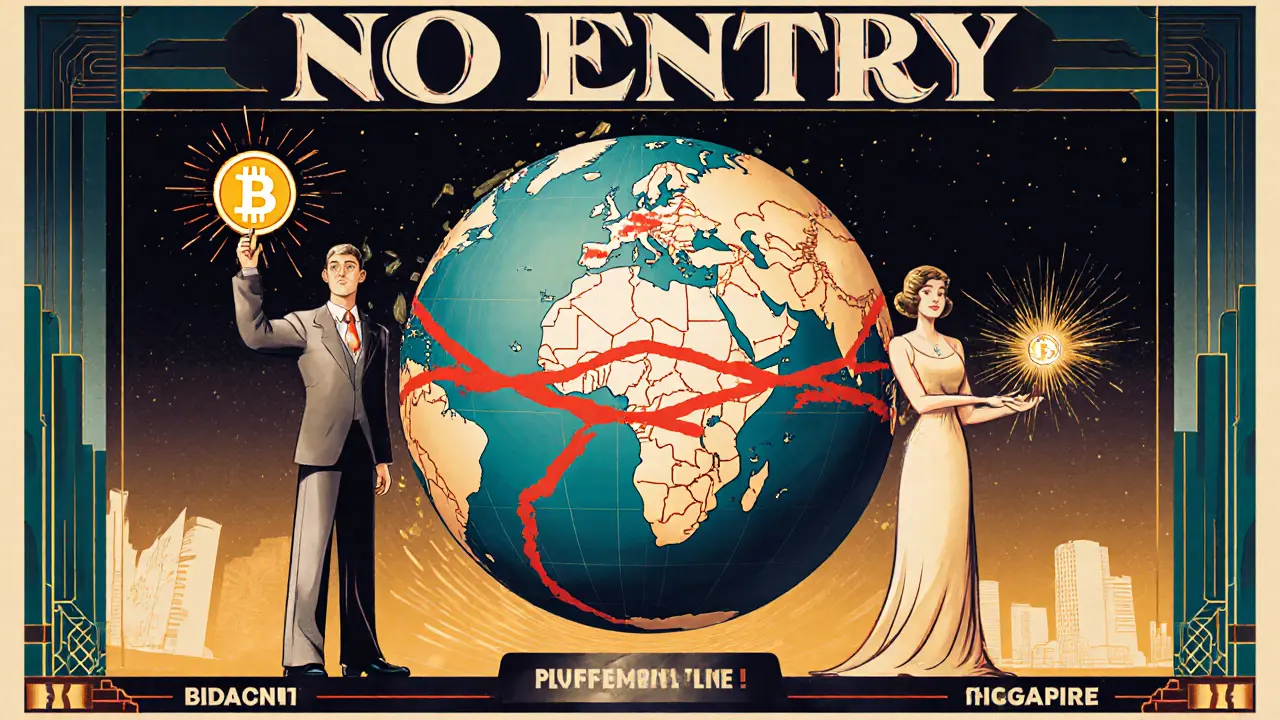
OKX blocks crypto access in the U.S., Canada, UK, and other countries due to strict regulations. Learn which countries are fully banned, which have partial access, and why using a VPN will get your account shut down.