Russian bank restrictions: How crypto bypasses financial controls
When Russian bank restrictions, government-imposed limits on foreign currency access and international transactions that block citizens from using traditional banking systems. Also known as financial isolation, it forced ordinary Russians to find ways to save, send money abroad, and buy essentials. After sanctions hit in 2022, major banks cut off access to foreign cards, blocked wire transfers, and froze accounts linked to crypto activity. People didn’t stop transacting—they just moved offline, into crypto.
That’s where Garantex exchange, a Russia-based crypto platform that kept operating through shadow networks after U.S. sanctions. Also known as the Russian crypto lifeline, it became a critical bridge for moving value out of the country. Traders used USDT, a stablecoin pegged to the U.S. dollar that acts as digital cash when banks won’t let you move real money. Also known as Tether, it’s the most trusted way to preserve value under financial siege. Instead of bank wires, they sent USDT through platforms like Grinex and Exved, often using shell companies to hide the trail. This isn’t about speculation—it’s about survival. People pay for medicine, send money to family overseas, and buy food using crypto because there’s no other option.
These restrictions didn’t kill crypto use in Russia—they made it essential. You’ll find stories here of how everyday users turned to meme coins and decentralized exchanges not for profit, but to keep their lives running. You’ll see how platforms like Nominex and OMGFIN became accidental lifelines, even when they weren’t built for this purpose. You’ll learn what happens when a country bans banks but can’t ban digital money. The posts below aren’t about hype or get-rich schemes. They’re about real people, real systems, and the quiet revolution happening under the radar.
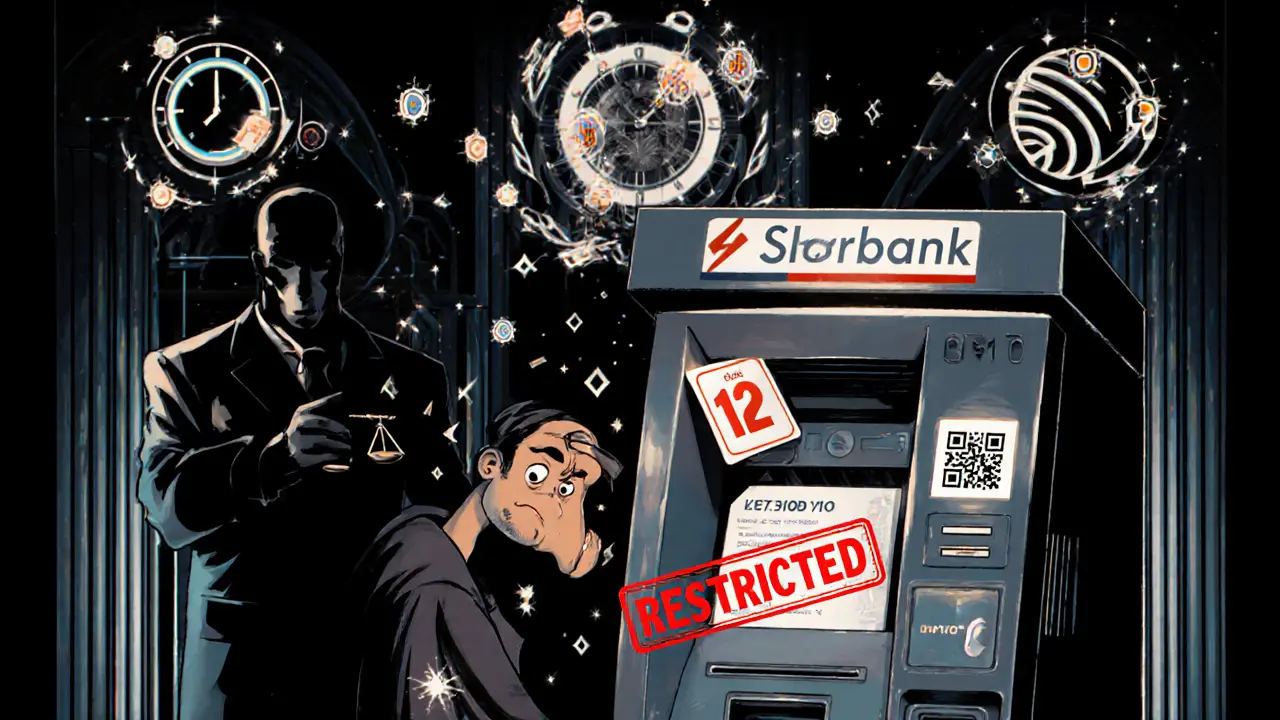
How Do Banks in Russia React When You Withdraw Crypto to Fiat?
Russian banks now restrict crypto-to-fiat withdrawals with a 50,000 ruble daily limit and mandatory verification. Learn how the system works, what triggers blocks, and what users are really experiencing under new 2025 regulations.