Airdrop Security Check
Is This Airdrop Legitimate?
Use this checklist to verify if a potential airdrop is safe before connecting your wallet. Based on best practices from the article.
Verification Results
This airdrop likely contains security risks. Do not connect your wallet.
If you’ve heard about the Recharge Incentive Drop airdrop and are wondering whether it’s real, worth your time, or even safe - you’re not alone. There’s no official website, no verified whitepaper, no Twitter account with a blue check, and no mention of it on CoinMarketCap, CoinGecko, or any major crypto news outlet. That’s not normal. Legitimate airdrops don’t vanish into thin air. They’re announced clearly, documented publicly, and backed by teams with track records. This one? It’s silent. And silence in crypto often means danger.
Why You Can’t Find Details About This Airdrop
You search for "Recharge Incentive Drop airdrop" and get nothing but forum threads with vague screenshots and copy-pasted Telegram links. No project roadmap. No tokenomics. No team members. No GitHub repo. No audit reports. That’s a red flag wrapped in a mystery. Legitimate projects don’t hide. They broadcast. They build. They explain. This could be one of three things:- A brand-new project still in stealth mode - unlikely, since even early-stage teams post on Discord and Twitter.
- A private distribution for insiders - but then why is it being advertised publicly?
- A scam trying to trick people into connecting wallets or sharing private keys.
How Legitimate Airdrops Work (So You Can Spot the Fakes)
Real airdrops follow a pattern. They don’t ask for your seed phrase. They don’t ask you to send crypto to "claim" your tokens. They don’t pressure you with countdown timers or fake scarcity. Here’s what real ones do:- They announce the airdrop on their official website and verified social channels.
- They list exact requirements: "Hold 100 ETH in your wallet before block 20,000,000" or "Complete 5 tasks on their testnet."
- They use a snapshot - a moment in time when they check wallet balances or activity.
- They distribute tokens directly to your wallet - no deposit needed.
- They link to blockchain explorers so you can verify the token contract yourself.
The Danger of Connecting Your Wallet
If someone tells you to "connect your wallet to claim your Recharge Incentive Drop tokens," stop. Right now. Walk away. Connecting your wallet doesn’t just give access to your tokens - it gives access to your entire crypto identity. Scammers use fake interfaces that look like official dashboards. Once you click "Approve," they can drain your entire wallet - ETH, stablecoins, NFTs - in seconds. No password. No two-factor. Just one click. In 2024, over $280 million was stolen through fake airdrop scams, according to blockchain security firm Chainalysis. Most victims thought they were signing up for free tokens. They weren’t. They were handing over their keys.
What to Do Instead
If you want to participate in real airdrops, here’s how to do it safely:- Stick to well-known projects: Arbitrum, Optimism, zkSync, LayerZero, Sui, Aptos. These have public airdrop histories.
- Use a separate wallet. Never use your main wallet for airdrops. Create a new one just for testing and claiming.
- Never connect your wallet unless you’re 100% sure the site is real. Check the URL. Look for HTTPS. Compare it to the official project’s link.
- Check if the project has been audited by CertiK, PeckShield, or OpenZeppelin.
- Join their official Discord or Telegram. If the admins aren’t responding to questions, or if there are 10,000 members and zero verified team members - run.
Real Airdrops in 2025 to Watch
While the "Recharge Incentive Drop" remains a ghost, here are actual airdrop opportunities that are active or upcoming in 2025:- Scroll Testnet - Users who interacted with the zkEVM testnet before mainnet launch are eligible for a retroactive airdrop.
- Aptos - Ongoing rewards for users who stake, swap, or use dApps on the network.
- Sui - Users who participated in the 2024 testnet and moved assets on-chain are still being tracked for future rewards.
- Linea - A zkEVM chain by Consensys that recently distributed tokens to early users.
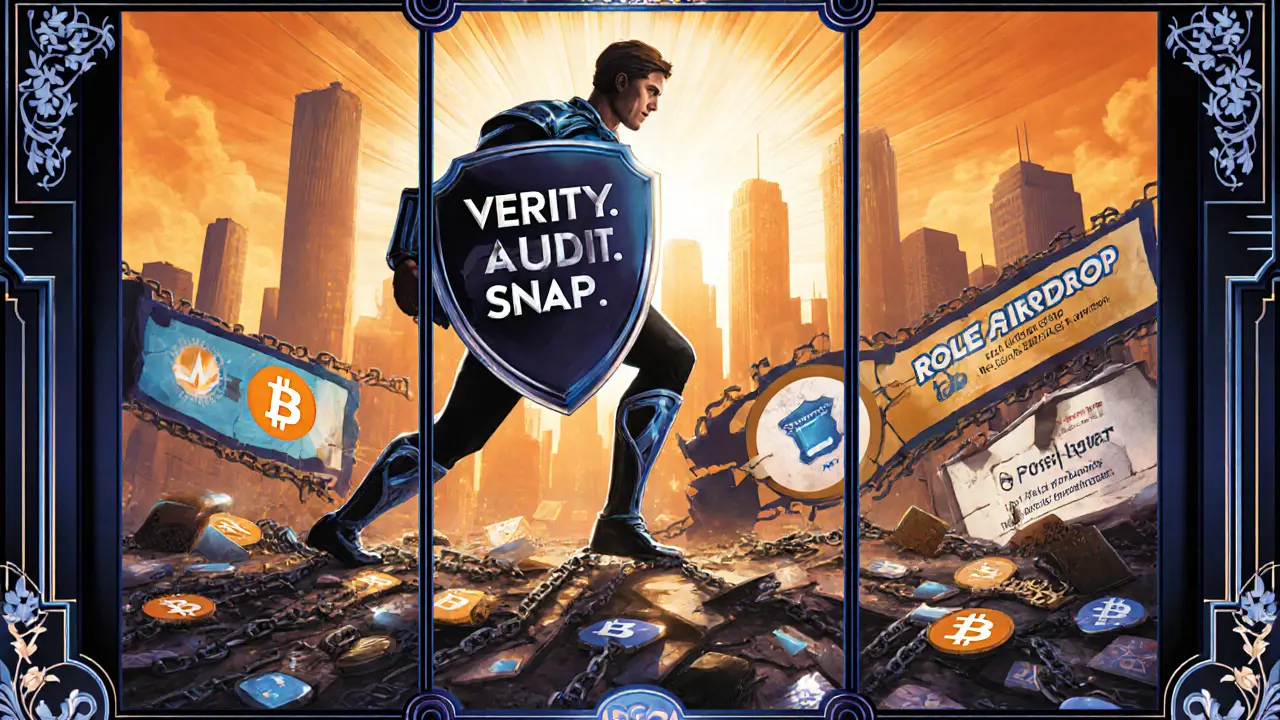
Don’t Chase Ghosts
The crypto space is full of noise. Thousands of projects launch every year. Most die within months. The ones that survive? They don’t hide. They don’t beg. They build. The "Recharge Incentive Drop" is a ghost. It has no face, no voice, no trail. That’s not a hidden gem. That’s a trap. If you’re looking for free crypto, focus on real projects with real activity. Learn how to use testnets. Participate in open-source development. Join communities that talk about code, not promises. That’s how you earn real value - not by clicking on a link that says "claim now."Frequently Asked Questions
Is the Recharge Incentive Drop airdrop real?
There is no verifiable evidence that the Recharge Incentive Drop airdrop exists. No official website, no team, no blockchain records, and no mention on trusted crypto platforms. It is highly likely a scam designed to trick users into connecting wallets or sharing private information.
Can I get free tokens from this airdrop?
No. If you’ve been asked to send crypto, connect your wallet, or enter your seed phrase to receive tokens, you’re being scammed. Real airdrops never ask for money or private keys. Any claim that you can claim tokens from this airdrop is false.
What should I do if I already connected my wallet?
Immediately disconnect the wallet from the suspicious site using a tool like Etherscan’s wallet revocation feature. Move all assets to a new wallet. Monitor your transaction history for any unauthorized transfers. If tokens were drained, they are likely gone permanently. Report the site to blockchain security platforms like Chainalysis or the Ethereum Phishing Detector.
How do I find legitimate airdrops in 2025?
Look for airdrops from established Layer 2 chains like Arbitrum, zkSync, and Optimism, or testnets from Sui, Aptos, and Scroll. Check their official websites, not third-party blogs or Telegram groups. Use tools like AirdropAlert or CoinGecko’s airdrop tracker - but always verify the source. Never trust a link sent via DM or unverified social media.
Are airdrops taxable?
Yes. In most countries, including the U.S., receiving airdrop tokens is considered taxable income at the fair market value when you receive them. Even if you don’t sell them, you owe taxes on the value at the time of receipt. Keep records of all airdrops, including dates and values, and consult a crypto-savvy tax professional.
Next Steps
If you’re serious about earning free crypto without getting scammed:- Set up a new wallet just for airdrops - use MetaMask or Phantom.
- Follow only verified accounts on Twitter and join official Discord servers for top Layer 2 projects.
- Start using testnets. Interact with zkSync, Scroll, or Linea testnet apps. It’s free. It’s safe. And it could earn you real tokens later.
- Ignore anything that says "claim now" or "limited spots." Real opportunities don’t need hype. They need activity.


Cierra Ivery
November 5, 2025 AT 16:56Wait, so you’re saying if it’s not on CoinGecko, it’s a scam? What about all the projects that launched quietly and blew up later? You’re acting like crypto is a government-regulated bank, not a wild west.
Megan Peeples
November 6, 2025 AT 05:32Oh my god, another one of these ‘crypto is dangerous’ lectures-like we don’t already know. You’re not educating people; you’re just reinforcing FUD. If you’re too scared to connect a wallet, maybe don’t touch crypto at all. But don’t act like you’re the crypto police.
Sarah Scheerlinck
November 7, 2025 AT 14:19I just want to say thank you for writing this so clearly. I’m new to crypto and was about to click on a link that said ‘claim your Recharge tokens’-I almost did it. Your breakdown of real vs fake airdrops saved me. I’m going to set up a separate wallet today and start with zkSync testnet. You’re right-real projects don’t beg. They build.
gerald buddiman
November 9, 2025 AT 07:18Bro. Bro. BRO. I just got a DM on Discord with a link to ‘Recharge Incentive Drop’ and I was about to connect my wallet-then I remembered your post. I literally screamed ‘NOOOOO’ at my screen. I’m not even mad-I’m just… relieved. You saved me from losing my entire ETH stash. Thank you. From the bottom of my heart. 🙏
Arjun Ullas
November 11, 2025 AT 03:45Respectfully, the analysis presented herein is both accurate and timely. The absence of verifiable documentation, coupled with the solicitation of wallet connectivity, constitutes a textbook example of a phishing vector. The referenced $280 million loss statistic is corroborated by Chainalysis’ 2024 report. It is imperative that novice participants in decentralized finance adhere strictly to due diligence protocols, including verification of smart contract addresses and avoidance of third-party intermediaries.
Steven Lam
November 12, 2025 AT 22:23Noah Roelofsn
November 13, 2025 AT 07:04The Recharge Incentive Drop is a linguistic chimera-a syntactic mirage constructed from the lexicon of legitimacy. ‘Recharge’ implies energy restoration; ‘incentive’ suggests reward architecture; ‘drop’ evokes distribution mechanics. Together, they form a semantic placebo designed to trigger heuristic compliance in the uninitiated. The absence of on-chain traceability isn’t merely suspicious-it’s ontologically damning. Real airdrops are immutable records, not whispered rumors in Telegram channels.
Sierra Rustami
November 14, 2025 AT 07:15Glen Meyer
November 15, 2025 AT 23:18I lost $12k last year to something just like this. I thought I was getting free tokens. I was getting a zero balance. I still have nightmares. Don’t be me. Don’t click. Don’t connect. Don’t even breathe near it.
Christopher Evans
November 16, 2025 AT 10:28Thank you for the comprehensive and methodical breakdown. The distinction between legitimate airdrop mechanics and malicious social engineering is crucial for the integrity of the ecosystem. I encourage all participants to consult blockchain explorers prior to any interaction, and to verify project legitimacy through multiple independent sources. Caution is not paranoia-it is due diligence.
Ryan McCarthy
November 18, 2025 AT 07:02I love how this post doesn’t just say ‘don’t do it’-it shows you how to do it right. I’ve been lurking on the Scroll testnet for weeks, swapping tokens just to see how it works. No airdrop yet, but I’m learning. That’s the real win. Thanks for the roadmap. Keep sharing this stuff.
Abelard Rocker
November 18, 2025 AT 23:44Let me tell you something. I’ve seen this movie before. I was in 2017 when everyone was buying ICOs that had a whitepaper written in MS Paint. I watched friends lose life savings because they thought ‘free tokens’ meant ‘free money.’ And now? Same script. Different actors. The same words-‘recharge,’ ‘incentive,’ ‘drop’-they’re not crypto jargon, they’re psychological triggers. Scammers don’t need to be clever. They just need to be loud. And you? You’re the quiet one who actually reads the fine print. That’s why your post matters. Because the world doesn’t need more hype. It needs more people like you who pause before they click. So thank you. Not just for the facts. But for the silence you created in a room full of noise.
Hope Aubrey
November 20, 2025 AT 00:54Okay but like… if it’s not on CoinMarketCap, why is it even trending? Something smells. Also I just got a DM from someone saying ‘you’re pre-approved for Recharge’ and I thought it was legit until I saw your post. I’m deleting that chat. Also, can someone explain why the tax thing is so scary? I thought crypto was tax-free? 😅
andrew seeby
November 20, 2025 AT 07:11Pranjali Dattatraya Upadhye
November 20, 2025 AT 20:56This is such a thoughtful and needed piece. I’m from India, and so many people here are rushing into these fake airdrops because they think it’s ‘easy money.’ I’ve already shared this with my crypto study group. The part about using a separate wallet? That’s gold. I’m going to create one today and start with Aptos. Thank you for not just warning us-but showing us the way forward.
Kyung-Ran Koh
November 22, 2025 AT 12:56Thank you for this. I’ve been teaching crypto safety to my elderly parents, and this post is perfect for them. I printed it out. I highlighted the ‘never connect your wallet’ part in yellow. I even made a little checklist for them: 1) Check URL. 2) Look for audit. 3) No private keys. 4) If it feels off, walk away. 💛
Matthew Gonzalez
November 23, 2025 AT 02:18There’s a deeper truth here: we’ve been conditioned to believe that value is something you claim, not something you build. The Recharge Incentive Drop isn’t a scam because it’s fake-it’s a scam because it exploits our hunger for effortless value. Real wealth, whether in crypto or life, comes from participation, not participation trophies. The real airdrop isn’t in your wallet. It’s in your understanding.
Michelle Stockman
November 24, 2025 AT 19:21Alexis Rivera
November 26, 2025 AT 14:25One of the most balanced, human takes on crypto safety I’ve read in years. You didn’t just warn-you guided. You didn’t shame-you equipped. That’s rare. Keep doing this. The crypto world needs more teachers and fewer preachers.
Eric von Stackelberg
November 27, 2025 AT 12:17Let’s be honest-this ‘Recharge Incentive Drop’ is almost certainly a coordinated disinformation campaign. The timing aligns with the recent SEC crackdown on unregistered token distributions. The name is too vague, too generic. It’s designed to mimic the language of legitimate DeFi protocols while avoiding any traceable digital footprint. I suspect state actors or organized syndicates are using this as a soft reconnaissance tool-mapping wallet connections to identify high-value targets for future exploitation. This isn’t just a scam. It’s a reconnaissance probe.
Steven Lam
November 28, 2025 AT 20:21