Have you ever stumbled upon a crypto ticker that looks promising but feels off? That’s exactly what happens when you look up DeFine, also known as DFA Coin. It’s a digital asset that promises the allure of Web3 innovation, but the reality on the ground tells a much starker story. If you’re wondering what this coin actually is, whether it has any real value, or if you should put your hard-earned money into it, you need to look past the marketing hype and examine the raw data.
The short answer? DeFine is a legacy token from the early days of speculative crypto launches, specifically tied to Huobi Primepool. Today, it trades at fractions of a cent with almost zero liquidity. For most investors in 2026, DFA isn’t an investment opportunity-it’s a cautionary tale about how quickly value can evaporate in the crypto market.
The Origin Story: What Is DeFine (DFA)?
To understand where we are, we have to look at where we started. DeFine was launched as the inaugural project on Huobi Primepool, a launchpad associated with the major exchange Huobi Global (now HTX). The official trading began at 12:00 UTC on August 5, 2021. Back then, the crypto market was in a bull run frenzy. New tokens were launching daily, and the promise of "Web3 utility" was enough to drive massive interest.
DFA positioned itself as a Web3 token. However, unlike established projects like Ethereum or Solana, which have clear technical roadmaps and active developer communities, DeFine lacked substantial public documentation. There is no widely accessible whitepaper detailing its consensus mechanism, team structure, or long-term utility. This opacity is a red flag for any serious investor. When a project doesn’t clearly explain what problem it solves, you have to ask yourself: who is buying this, and why?
Technical Confusion: Which Blockchain Does DFA Use?
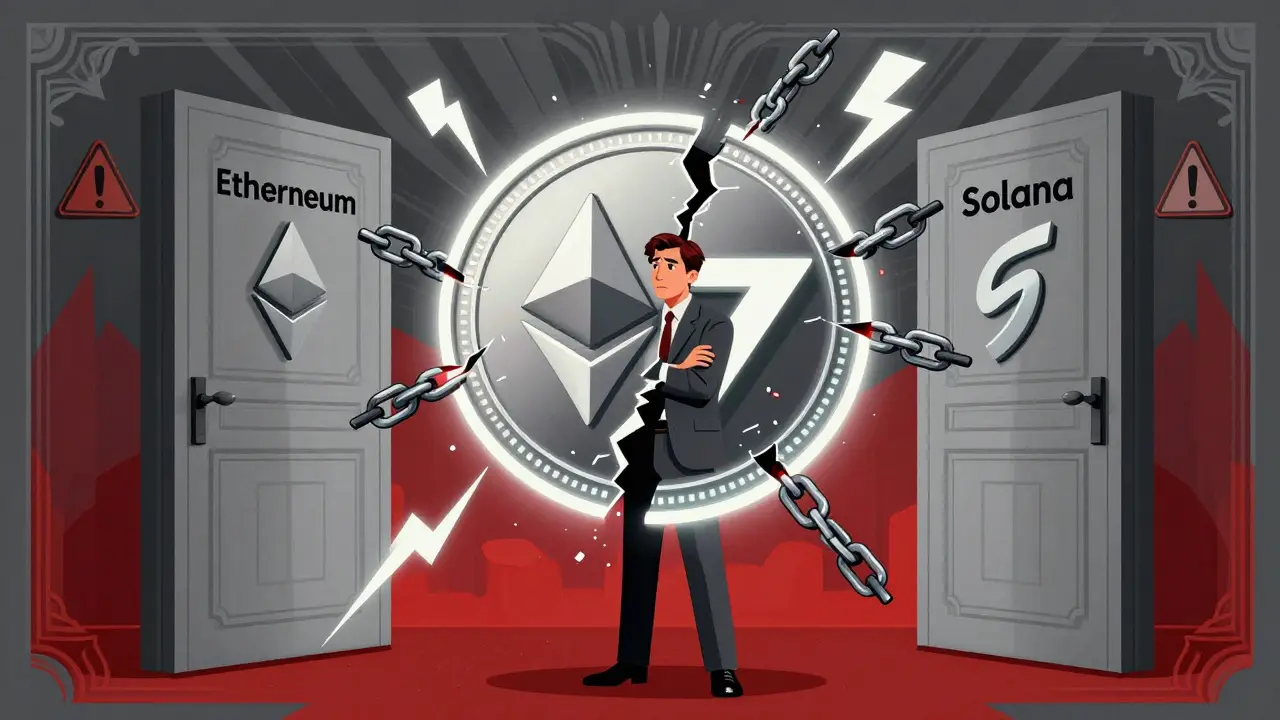
One of the first things you’ll notice when researching DeFine is the confusion surrounding its underlying technology. In the crypto world, clarity is king. You need to know if a token lives on Ethereum, Solana, Binance Smart Chain, or elsewhere. With DFA, the sources conflict.
Some reports claim DFA is built on the Solana blockchain, citing its high-speed transactions and low costs. Others insist it operates on Ethereum. This discrepancy usually points to one of two things:
- Multiple Token Versions: Sometimes projects mint tokens on different chains to reach different users. This creates fragmentation, meaning your balance on Ethereum won’t show up on Solana unless you bridge it.
- Outdated Information: The project may have migrated, or worse, the original smart contracts were abandoned, leaving ghost tokens behind.
For a beginner, this ambiguity is dangerous. If you try to send DFA to a wallet address, you need to be absolutely sure you’re using the correct network. Sending funds on the wrong chain often means those funds are lost forever. Given the lack of clear, updated documentation from the DeFine team, this risk is significantly higher than with mainstream cryptocurrencies.
Market Performance: From 3,476% Spike to Near Zero
Let’s talk numbers, because they don’t lie. When DeFirst launched on Huobi Primepool, it experienced a classic "pump and dump" pattern common in early-stage altcoins. Reports indicate that DFA spiked by 3,476% in just five minutes during its initial trading window. Imagine buying something for $1 and seeing it hit $35 before your eyes. That kind of volatility attracts speculators, not investors.
But here’s the catch: gravity always wins. After that initial spike, the price collapsed. As of May 2026, the market status of DeFine is bleak. Here is the current reality:
- Price in USD: Approximately $0.00. The value is so low that standard exchanges round it down to nothing.
- Price in BTC: 1 DFA equals roughly 0.0000000001276 BTC. You would need billions of DFA tokens to equal a single Bitcoin.
- Recent Trends: The token has seen losses of over 15% in just the last 24 hours and nearly 16% over the past week.
- Liquidity: The 24-hour trading volume is recorded at a mere $303.22. Yes, three hundred dollars. This means there is almost no one buying or selling this token.
This extreme illiquidity is a major warning sign. If you somehow acquired a large amount of DFA, you wouldn’t be able to sell it without crashing the price further-or worse, you couldn’t sell it at all because there are no buyers waiting in the order book.
Where Can You Trade DFA? (And Should You?)
If you are determined to check the charts or buy some DFA out of curiosity, your options are limited. The primary exchange still listing the pair is Gate.io. Major platforms like Coinbase, Kraken, or Binance do not list DeFine. This absence from top-tier exchanges suggests that regulatory compliance teams have likely deemed the token too risky or lacking in fundamental value.
Trading on smaller exchanges comes with its own set of risks. Gate.io is a legitimate platform, but trading a token with $300 in daily volume means you might face wide spreads (the difference between the buy and sell price). You could click "buy" and pay significantly more than the listed price, only to find that you can't sell it later without taking a massive loss.
| Feature | DeFine (DFA) | Ethereum (ETH) | Solana (SOL) |
|---|---|---|---|
| Launch Year | 2021 | 2015 | 2020 |
| Blockchain Clarity | Conflicting/Unverified | Ethereum (Clear) | Solana (Clear) |
| 24h Volume | ~$303 | Billions | Millions |
| Developer Activity | None Visible | High | High |
| Risk Level | Extreme | Moderate | Moderate-High |
Why Is DeFine Worth So Little?
You might wonder why a token from a reputable exchange launchpad like Huobi Primepool ended up worth virtually nothing. Several factors contribute to this decline:
- Lack of Utility: Most successful crypto projects solve a specific problem. Ethereum enables smart contracts. Solana offers fast payments. DeFine’s utility remains vague. Without a use case, there is no reason for people to hold the token long-term.
- No Community Engagement: Successful projects have active Discord servers, Twitter followings, and GitHub repositories showing code updates. DeFine lacks these visible signs of life. A dead community means no marketing, no development, and no price support.
- Speculative Nature: The initial 3,476% spike was driven by pure speculation. Once the early buyers cashed out, the price had nowhere to go but down. This is typical for "meme" coins or projects with no fundamentals.
- Market Maturation: In 2021, investors were willing to bet on anything. By 2026, the market has matured. Investors demand transparency, audits, and clear roadmaps. Tokens that failed to deliver in the early days have been left behind.
Is DeFine a Scam?
Labeling a project a "scam" requires proof of intent to deceive. Since DeFine was launched through Huobi Primepool, it likely passed initial internal checks. However, that doesn’t mean it’s safe. Many legitimate-sounding projects fail due to poor execution, lack of vision, or abandonment by their creators. Whether it’s a malicious scam or just a failed startup, the result for the holder is the same: total loss of capital.
Be wary of anyone claiming to have "inside information" about a DFA comeback. These are often recovery scams designed to target people who lost money on dead coins. Never send funds to someone promising to help you recover lost crypto assets.
Final Verdict: Stay Away or Just Watch?
If you’re looking for investment opportunities in 2026, DeFine (DFA) should not be on your radar. The combination of near-zero price, negligible liquidity, unclear technology, and lack of development activity makes it a high-risk, zero-reward proposition. Your money is better spent on established assets with clear utility and strong communities.
However, if you’re studying market dynamics, DFA serves as an excellent case study. It shows how quickly hype can build and how rapidly it can disappear. It reminds us that in crypto, past performance-especially short-term spikes-is not indicative of future results. Always do your own research, check the liquidity, and verify the blockchain before putting even a dollar into a new token.
Can I still buy DeFine (DFA) coin?
Technically, yes. You can find DFA trading pairs on exchanges like Gate.io. However, due to extremely low liquidity (around $300 in daily volume), buying large amounts may be difficult, and selling them later could be impossible without significant loss.
What blockchain is DeFine built on?
There is conflicting information. Some sources claim it is on Solana, while others say Ethereum. This lack of clarity is a major red flag. Always verify the contract address on a block explorer before interacting with the token to avoid sending funds to the wrong chain.
Why did DeFine’s price drop so much?
DeFine experienced a massive speculative spike of 3,476% at launch in 2021. After early investors sold their profits, the price collapsed. The lack of ongoing utility, development, or community support has kept the price near zero since then.
Is DeFine a scam?
While it launched via Huobi Primepool, suggesting some level of initial vetting, it exhibits many characteristics of failed projects: no clear utility, no active development, and no community. Whether intentional deception or simple failure, the risk to investors is extremely high.
Where can I trade DFA?
The primary exchange currently listing DeFine is Gate.io. It is not available on major platforms like Coinbase, Binance, or Kraken, which indicates low institutional confidence in the token.
What is the current price of DFA?
As of May 2026, the price of DeFine is approximately $0.00 USD. In Bitcoin terms, it is valued at roughly 0.0000000001276 BTC. The token has experienced consistent declines, with losses of over 15% in the last week alone.

Tony Phan
May 5, 2026 AT 06:17man this is exactly why i hate these launchpad coins. they pump for like five minutes and then dead forever. classic rug pull energy even if it wasnt technically a scam. just pure speculation gone wrong.
Bevon Findley
May 5, 2026 AT 23:10One must appreciate the sheer audacity of listing such a hollow token on a reputable platform initially. It serves as a rather elegant reminder that liquidity is not value, nor does it confer legitimacy upon a project lacking fundamental utility. :)
Kristi Swartz
May 7, 2026 AT 09:54i think people need to understand that buying into hype without reading the whitepaper is basically gambling with other peoples money. it is morally wrong to participate in these speculative bubbles when you know nothing about the tech. we should all stick to established assets that have proven their worth over time
Alex Mazonowicz
May 8, 2026 AT 02:17Hey everyone!! I totally agree with the analysis here! It's really important to stay informed and do your own research before investing! Let's keep supporting each other in making smart financial decisions! The crypto space can be tricky but we've got this! :)
Veronica Bago
May 9, 2026 AT 14:26I just find it fascinating how quickly these things fade away. It’s almost like watching a soap bubble pop. No big deal, just part of the ecosystem cleaning itself out.
Arti Jain
May 11, 2026 AT 03:26This is typical western failure. Lack of discipline. In India we build real infrastructure. These useless tokens are a waste of global resources.
Harvey Alford
May 12, 2026 AT 09:53so did you buy any? dont lie to me. i bet you held onto it hoping for a comeback. tell me how much you lost so i can laugh at you properly.
VIVEK SINGH
May 13, 2026 AT 21:40The irony is palpable; a token promising 'Web3 innovation' dies because it failed to innovate anything tangible. It is a philosophical lesson in the emptiness of marketing versus the solidity of code. Or perhaps just a lesson in greed. Who knows? Probably both.
Lloyd I
May 14, 2026 AT 23:28Let's use this as a learning moment for the community. We can all help each other avoid these traps by sharing knowledge and staying vigilant. Together we are stronger and smarter investors!
Robert Smith
May 16, 2026 AT 08:11lol true story 📉💀
Felix Eduardo Velasquez
May 16, 2026 AT 16:46From a technical standpoint, the confusion regarding the blockchain network is the most critical flaw here. When a token lacks clear contract addresses or migrates without transparent communication, it creates fragmentation that destroys liquidity. This is not merely a market failure but a design failure. The lack of developer activity on GitHub confirms that the project has been abandoned, rendering the token mathematically worthless regardless of sentiment. Investors should look for projects with open-source repositories and active commit histories as primary indicators of viability.
Mitali Rajvanshi
May 17, 2026 AT 05:38I really appreciate how detailed this breakdown is. It helps to see the facts laid out clearly instead of just hearing rumors. Thanks for sharing this perspective, it gives me more confidence in checking the fundamentals before looking at charts.