Imagine a cryptocurrency that doesn't just chase price pumps but chases something far more elusive: immortality. That’s the core idea behind Fable Of The Dragon, known in trading circles as TYRANT. It’s not your typical meme coin born from a dog or a frog. This token is a philosophical experiment wrapped in blockchain code, inspired by Nick Bostrom’s essay about a dragon that demands human sacrifices to keep us from dying.
You might have seen Vitalik Buterin, the co-founder of Ethereum, mention this fable on his social media. Does that mean he built it? No. Does that mean it’s going to moon tomorrow? Probably not. But if you’re curious about why a tiny token with less than $400,000 in market value still exists, or if you want to understand how philosophy intersects with DeFi, you’re in the right place. Let’s break down what TYRANT actually is, where it came from, and whether it has any real legs beyond its conceptual novelty.
The Origin Story: Philosophy Meets Blockchain
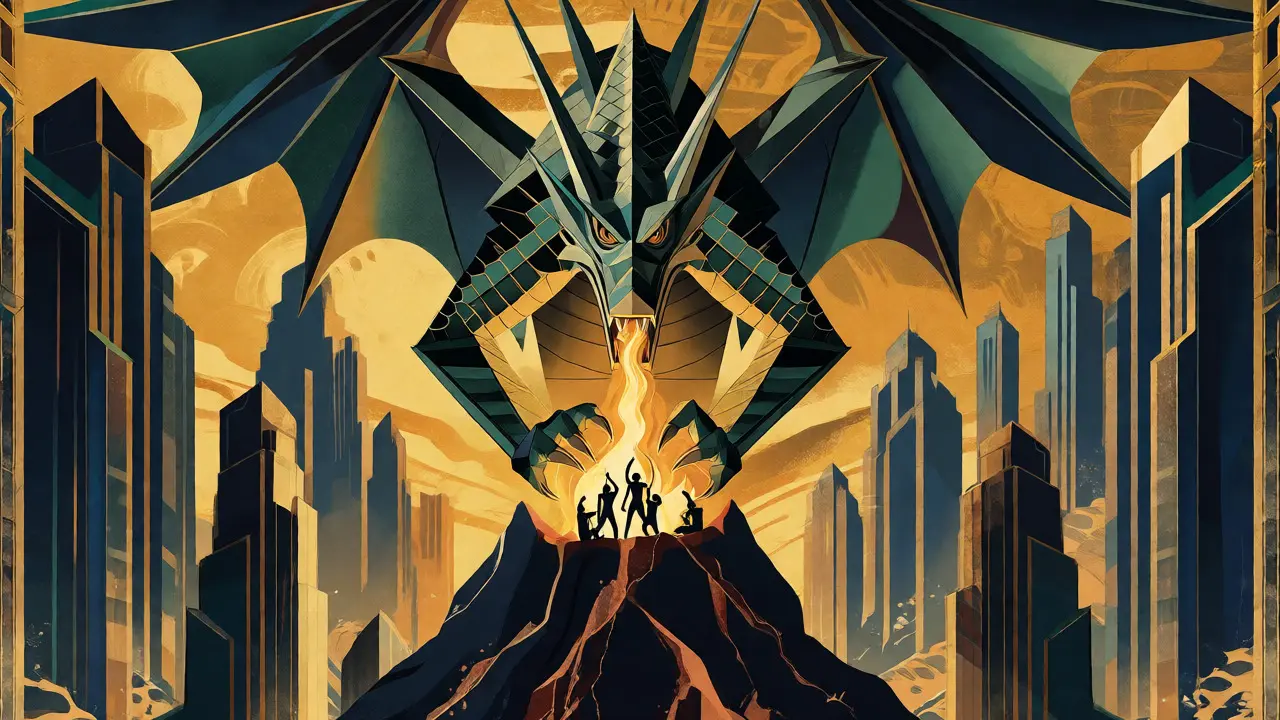
To get TYRANT, you first need to get the story. In 2005, philosopher Nick Bostrom wrote "The Fable of the Dragon-Tyrant." In it, humanity lives under a tyrannical dragon that demands young people be thrown into a volcano every year. Why? Because the dragon claims it keeps death away. People accept this fate because they believe the dragon’s power is absolute. Bostrom’s point was simple: we treat aging and death as inevitable natural laws, but maybe they are just problems we haven’t solved yet. If we stopped sacrificing our youth to the "dragon" of biology, we could potentially conquer mortality.
Vitalik Buterin adopted this metaphor around 2017, adding "Fable of the Dragon Tyrant" to his Twitter bio. He’s long been interested in life extension technology and has donated significant amounts of ETH to organizations like the Sens Research Foundation. TYRANT emerged as a community-driven project to tokenize this specific philosophical stance. It’s an ERC-20 token built on the Ethereum blockchain that serves as a badge for people who agree with Bostrom’s view: aging is a disease, and we should fight it.
Technical Specs: Small Supply, Zero Tax
Let’s look at the numbers, because they tell a very different story than Bitcoin or Ethereum. TYRANT is designed to be extremely scarce and frictionless.
- Total Supply: Exactly 10,000,000 tokens. There are no hidden unlocks or inflationary mechanics. All tokens are currently circulating.
- Tax Structure: 0% buy/sell tax. Unlike many newer coins that take a cut from every trade to fund marketing or liquidity, TYRANT leaves the transaction clean. You pay only gas fees.
- Blockchain: Ethereum only. There are no cross-chain bridges to Solana or Binance Smart Chain. If you want to hold it, you need an Ethereum wallet like MetaMask.
- NFT Component: The project launched a collection of exactly 750 unique "Dragon" NFTs. These aren’t just pictures; they were part of the initial distribution model.
This fixed supply creates a sense of exclusivity, but it also limits growth potential compared to tokens with dynamic supply mechanisms. The zero-tax model is attractive for traders who hate slippage caused by taxes, but it means the project relies entirely on organic interest rather than funded marketing campaigns.
The Vitalik Connection: Real or Imaginary?
This is the big question. Is TYRANT Vitalik’s coin? The short answer is no. The Ethereum Foundation has confirmed there is no direct involvement from Buterin in the development, promotion, or management of the token. The connection is purely thematic.
However, the association matters. When Vitalik updated his profile to remove the "Dragon Tyrant" reference in late 2024, TYRANT’s price dropped nearly 78%. This shows that the market treats the token as a proxy for Vitalik’s attention span. It’s a "cult of personality" asset, even if the personality didn’t explicitly endorse the product. Investors aren’t buying into a roadmap written by a dev team; they’re betting on the cultural relevance of the concept within the Ethereum community.
Liquidity and Market Reality: The Elephant in the Room
If you plan to buy TYRANT, you need to understand the risks, primarily liquidity. As of October 2025, the 24-hour trading volume hovers around $57. Yes, fifty-seven dollars. Not millions. This extreme illiquidity means you cannot move large amounts of money without crashing the price.
| Metric | TYRANT | Bitcoin (BTC) | Dogecoin (DOGE) |
|---|---|---|---|
| Market Cap | $303,775 | $1.2 Trillion | $125 Billion |
| 24h Volume | $57.11 | $28 Billion | $2.1 Billion |
| Holders | ~1,842 wallets | ~43 Million addresses | ~5 Million addresses |
| Primary Use Case | Philosophical/NFT Speculation | Store of Value | Meme/Payment |
The data paints a clear picture. TYRANT is a micro-cap asset. While Bitcoin moves billions daily, TYRANT struggles to move hundreds. This makes it unsuitable for anyone needing quick exits. If you buy $1,000 worth, you might find yourself stuck because there are simply no buyers on the other side of the order book.
Charitable Impact: Where Does the Money Go?
One redeeming quality of the project is its alignment with real-world science. During the initial NFT minting phase, 50% of the proceeds went directly to the Sens Research Foundation. This organization focuses on biomedical gerontology-essentially, curing aging.
Reports confirm that the foundation received approximately $14,250 in ETH from these early sales. For a project of this size, that’s a tangible contribution. It gives holders a moral justification for holding the bag. You’re not just gambling on a ticker symbol; you’re theoretically supporting research that could one day make the "dragon" obsolete. However, since the initial mint, there hasn’t been significant new funding generated for the cause due to low activity.
Community and Development: Is It Alive?
A cryptocurrency is only as strong as its community. Here, TYRANT faces headwinds. The official Discord server has fewer than 100 active members. Reddit mentions are sparse, mostly occurring in speculative subreddits like r/SatoshiStreetBets rather than serious analysis forums.
Development activity is virtually non-existent. The smart contract hasn’t been updated since its deployment in Q4 2023. There is no public GitHub repository with active commits, and no detailed technical whitepaper exists beyond a single-page description on exchanges. Critics argue that without a development team pushing updates or expanding utility, TYRANT functions more as a digital art piece than a sustainable financial instrument.
Should You Buy TYRANT?
Buying TYRANT isn’t an investment in the traditional sense. It’s a purchase of a narrative. If you believe that aging is a solvable problem and want to own a small slice of that philosophical movement, it fits. If you are looking for yield, staking rewards, or high-volume trading opportunities, look elsewhere.
The risk is high. With a survival probability estimated at just 12% for the next two years by some analysts, the token could easily fade into obscurity. But for the niche collector who appreciates the intersection of transhumanism and crypto, it remains a quirky, low-cost entry point.
Is Fable of the Dragon (TYRANT) connected to Vitalik Buterin?
No, there is no direct connection. Vitalik Buterin popularized the philosophical concept via his social media profiles, but he did not create, fund, or manage the TYRANT token. The project is community-driven, though its price often reacts to changes in Vitalik's online presence.
Where can I buy TYRANT crypto?
TYRANT is listed on centralized exchanges like MEXC and Coinbase, as well as decentralized exchanges such as Uniswap v2. Note that liquidity is extremely low, so using limit orders is recommended to avoid significant price impact.
Does TYRANT have any utility besides speculation?
Its primary utility is symbolic and charitable. It represents support for the anti-aging movement. Additionally, holders of the associated NFTs gained access to specific community events during the launch phase, but ongoing functional utility is minimal.
Why is the trading volume so low?
Low volume stems from a lack of active development, limited marketing budget, and a small holder base (under 2,000 wallets). Without new catalysts or exchange listings, trading activity remains sporadic and largely driven by retail speculation.
Is TYRANT a good long-term investment?
It is highly risky. Analysts suggest a low probability of maintaining relevance beyond 2026 due to stagnation. It is best viewed as a speculative asset for those specifically interested in the "longevity" narrative in crypto, rather than a core portfolio holding.