You’ve probably seen the name Hatchyverse pop up in your feed or a niche crypto forum. Maybe you’re wondering if it’s the next big thing or just another ghost town with a fancy logo. Here’s the reality: Hatchyverse isn’t trying to be the next Bitcoin. It’s not even trying to be Ethereum. It’s a micro-cap experiment in "decentralized intellectual property." If you’re looking for a quick flip, you might find the liquidity terrifyingly thin. But if you’re curious about how token holders can actually own and license cartoon monsters, this is one of the more interesting experiments out there.
The core idea is simple but ambitious. Instead of a corporation owning the rights to a character like Pikachu or Mario, the community owns them. The token, HATCHY, acts as the key to this club. You use it to stake, govern, and potentially profit from the licensing of these digital assets. But before you rush to buy, you need to understand that this project sits on a knife-edge between innovative DAO structure and the typical risks of low-cap altcoins. Let’s break down what it actually does, where it lives, and why the numbers look so strange right now.
The Core Concept: Decentralized Intellectual Property
Most crypto projects give you a utility token for paying gas fees or voting on code changes. Hatchyverse takes a different angle. It treats its collection of elemental monsters-often referred to as "Hatchies"-as shared brand assets. The project claims to have over 400 unique characters, though some older documents mention 150. This discrepancy matters because it hints at how the roadmap has evolved, or perhaps how loosely defined the asset library really is.
The selling point here is accessibility for creators. Traditionally, if you wanted to make a t-shirt featuring a popular cartoon character, you’d pay hefty upfront licensing fees. Hatchyverse flips this model. Creators can use the Hatchy assets without paying anything initially. They only owe a 10% licensing fee once their annual earnings from those products exceed $300,000. This lowers the barrier to entry significantly. It allows indie artists and small businesses to experiment with the brand without risking bankruptcy on legal fees.
But who enforces this? That’s where the HATCHY DAO comes in. Token holders are supposed to steer the ship. They decide which collaborations happen, how the brand grows, and where the treasury funds go. It sounds democratic, but remember: in most DAOs, power often correlates with wealth. If a few whales hold most of the tokens, they effectively control the brand’s direction. As of late 2026, transparency on exactly who holds what remains a critical area for due diligence.
Tokenomics and Market Reality
Let’s talk numbers, because this is where things get tricky. The total supply of HATCHY is capped at 1 billion tokens. On paper, that’s a standard cap. In practice, the market capitalization hovers around $210,000 to $215,000. Yes, you read that right. Two hundred thousand dollars. For context, that’s less than the price of a decent house in many major cities. This tiny valuation places HATCHY deep in the micro-cap territory, ranking it somewhere between #4,900 and #6,000 depending on which tracker you check.
| Metric | Value | Note |
|---|---|---|
| Price | ~$0.000216 | Highly volatile; varies by exchange |
| Market Cap | ~$212,000 | Micro-cap status |
| 24h Volume | ~$121 | Extremely low liquidity |
| Max Supply | 1,000,000,000 | Fixed cap |
| Rank | #4,922 - #6,050 | Varies by provider (CoinGecko vs CMC) |
The daily trading volume is the real red flag here. Some snapshots show volumes as low as $121 per day. Imagine trying to sell $1,000 worth of HATCHY. You’d likely crash the price yourself because there aren’t enough buyers on the other side. This is called slippage, and in a market this thin, it’s severe. If you buy in, exiting without losing a chunk of your principal requires patience and careful order placement.
Another quirk involves supply discrepancies. Security scanners sometimes report different circulating supplies compared to market trackers. For instance, one scan showed top holders controlling nearly 100% of a smaller displayed supply on BNB Chain, while market data assumes a larger circulating number based on the 1 billion cap. Until these on-chain figures align publicly, assume that holder concentration is high. High concentration means low decentralization, which contradicts the project’s core ethos.
Where Does HATCHY Live? Chains and Contracts
HATCHY isn’t native to its own blockchain. It doesn’t produce blocks or validate transactions itself. Instead, it’s an ERC-20 style token deployed on existing networks. Specifically, it lives on the Avalanche C-Chain and the BNB Chain. This multi-chain approach gives users flexibility but also adds complexity. You must ensure you’re sending tokens on the correct network. Sending Avalanche HATCHY to a BNB Chain address (or vice versa) without a proper bridge usually results in lost funds.
The contract addresses are public, but scams love similar names. Always verify the contract address before interacting. On Avalanche, the contract ends in ...c28a9. On BNB Chain, it ends in ...c04777. Never rely solely on the ticker symbol "HATCHY" when searching in your wallet. Scammers often create fake tokens with identical tickers. Use tools like DappRadar or CoinGecko to pull the official contract address directly into MetaMask or your preferred EVM wallet.
Because it’s not a payment coin, you won’t find HATCHY listed on major centralized exchanges like Binance or Coinbase for spot trading. It’s primarily traded on decentralized exchanges (DEXs). On Avalanche, you’ll find pairs like HATCHY/WAVAX. On BNB Chain, it might pair with BUSD or WBNB. These pools are small. Remember our earlier point about liquidity? It applies double here. Large swaps will move the market against you instantly.
The NFT Ecosystem: Hatchy Pocket
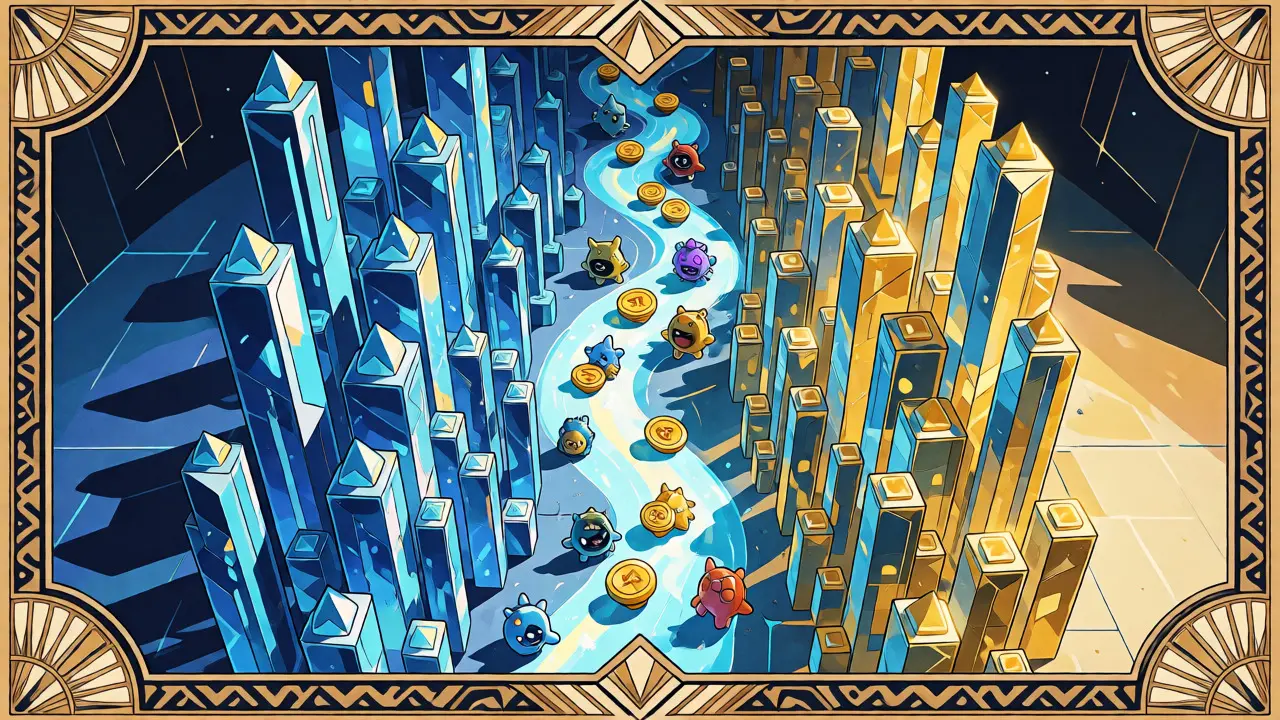
The heart of the Hatchyverse is the Hatchy Pocket NFT collection. As of November 2026, roughly 28,364 NFTs have been minted. However, only about 1,663 unique wallets own them. Do the math: that’s an average of 17 NFTs per owner. This suggests either a strong community of collectors or significant concentration among a few wealthy individuals.
Owning a Hatchy NFT isn’t just about having a pretty picture for your profile. It’s tied to the ecosystem’s utility. Holders can stake their NFTs to earn rewards. The specific reward rates depend on rarity and staking duration, though the exact emission formula isn’t always transparent in public documentation. There’s also talk of gaming integrations. The goal is to let these monsters fight or interact in future games, adding another layer of demand for the assets.
The NFT floor price and overall collection value sit around $160,000. This is separate from the token’s market cap but closely linked. If interest in the NFTs drops, the token’s perceived value likely follows suit. Conversely, if a new game launches and drives hype, both the NFTs and the HATCHY token could see increased activity. Right now, however, trading activity in the NFT marketplace appears sporadic rather than constant.
Risks and Red Flags
No crypto investment is safe, but HATCHY carries specific risks that you shouldn’t ignore. First, the team is relatively opaque. While the website copyright says "HATCHYVERSE 2023," finding detailed bios of founders or developers is difficult. In crypto, anonymity isn’t always bad, but it makes accountability harder. If development stalls, who do you call?
Second, smart contract security. Independent audits are gold standards. While some automated scanners flag potential issues, a comprehensive, human-led audit report isn’t prominently featured in all sources. Automated scans found multiple alerts on the BNB Chain contract. These might be false positives, or they might indicate upgradeable contracts where admins can change rules. Without clear governance on who controls those admin keys, you’re trusting the team implicitly.
Third, the "vaporware" risk. Many features listed on the site-like advanced gaming mechanics, bridges, and complex DAO voting-are described as part of the ecosystem. But are they fully live and battle-tested? Some appear to be in beta or planned stages. If the promised games never launch, the primary utility for holding HATCHY beyond speculation vanishes. Always distinguish between what exists today and what is promised for tomorrow.
How to Buy and Store HATCHY
If you’re still interested after weighing the risks, here’s how you actually get some. Since it’s not on big exchanges, you’ll need an EVM-compatible wallet like MetaMask or Trust Wallet. Decide whether you want to buy on Avalanche or BNB Chain. Avalanche generally offers lower fees and faster speeds, but BNB Chain has a slightly more established DeFi user base in some regions.
- Fund your wallet: Get AVAX (for Avalanche) or BNB (for BNB Chain) to cover gas fees.
- Connect to a DEX: Go to a decentralized exchange like Trader Joe (Avalanche) or PancakeSwap (BNB).
- Import the token: Paste the official contract address into the swap interface to ensure you’re swapping for the real HATCHY.
- Execute the swap: Swap your AVAX or BNB for HATCHY. Be mindful of slippage settings; set them higher than default (e.g., 1-2%) to avoid failed transactions in low-volume markets.
- Store securely: Keep your tokens in your personal wallet. If you plan to stake, connect your wallet to the official Hatchyverse dApp.
Start with a small amount. Test the withdrawal process immediately. Send a tiny bit back to your wallet or to a friend to confirm everything works. In illiquid markets, getting stuck with tokens you can’t move is a real fear.
Final Verdict: Who Is This For?
Hatchyverse is not for the faint of heart. It’s not a blue-chip investment. It’s a speculative bet on a specific narrative: that communities can successfully manage global brands better than corporations. If you believe in the power of DAOs and love the aesthetic of the Hatchy monsters, it might fit your portfolio as a tiny, high-risk allocation.
However, if you’re looking for stability, deep liquidity, or proven technology, look elsewhere. The current market data shows extreme fragility. One large seller could wipe out weeks of price gains. The project needs sustained developer activity, real creator adoption, and clearer communication about its financial health to survive long-term. Until then, treat HATCHY as a lottery ticket with a cool art style, not a savings account.
Is HATCHY a good investment?
It depends on your risk tolerance. With a market cap under $250k and very low daily volume, it is extremely high-risk. It offers high potential upside if the ecosystem grows, but severe downside risk due to illiquidity and lack of major exchange listings.
Can I buy HATCHY on Binance?
No, HATCHY is not listed on Binance for spot trading. You typically need to purchase it through decentralized exchanges (DEXs) on the Avalanche or BNB Chain networks using AVAX or BNB.
What is the main use case for HATCHY?
The primary uses are staking for rewards, participating in DAO governance, and accessing the Hatchyverse NFT ecosystem. It also serves as a governance token for the decentralized intellectual property licensing model.
Why is the trading volume so low?
Low volume is common for micro-cap tokens. It indicates limited active traders and market makers. This leads to high slippage, meaning large buy or sell orders can significantly impact the price unfavorably.
Is the HATCHY contract audited?
Automated scans exist, but a prominent, independent, human-conducted audit report is not widely publicized. Users should exercise caution and review any available security reports before committing large amounts.