You see USD Coin (Wormhole) in your wallet. It says "USDC." You think it's the same dollar coin everyone uses. But when you try to send it back to Ethereum, it vanishes or gets stuck. Why? Because this isn't native USDC. This is a wrapped version, created by the Wormhole bridge. It’s a claim on dollars locked elsewhere, not the dollars themselves. Confusing? Absolutely. And if you mix them up, you could lose funds.
This guide breaks down exactly what USDC(WormHole) is, how it differs from standard USDC, and why it exists at all. We’ll look at real data from September 2026, explain the risks, and show you how to spot the difference before you click "send."
The Core Difference: Native vs. Bridged USDC
Standard USD Coin (USDC) is issued directly by Circle Internet Financial. When Circle mints USDC on Ethereum, they hold actual reserves in bank accounts. If you hold native USDC on Solana, Circle manages that issuance directly too.
USD Coin (Wormhole), also known as USDC(WormHole), is different. It is a bridged token created by the Wormhole cross-chain bridge. Here’s the mechanic: You lock native USDC on one chain (like Ethereum). The Wormhole guardians verify this lock. Then, Wormhole mints a new token on another chain (like Solana). This new token represents your locked dollars. It’s not issued by Circle. It’s issued by the bridge contract.
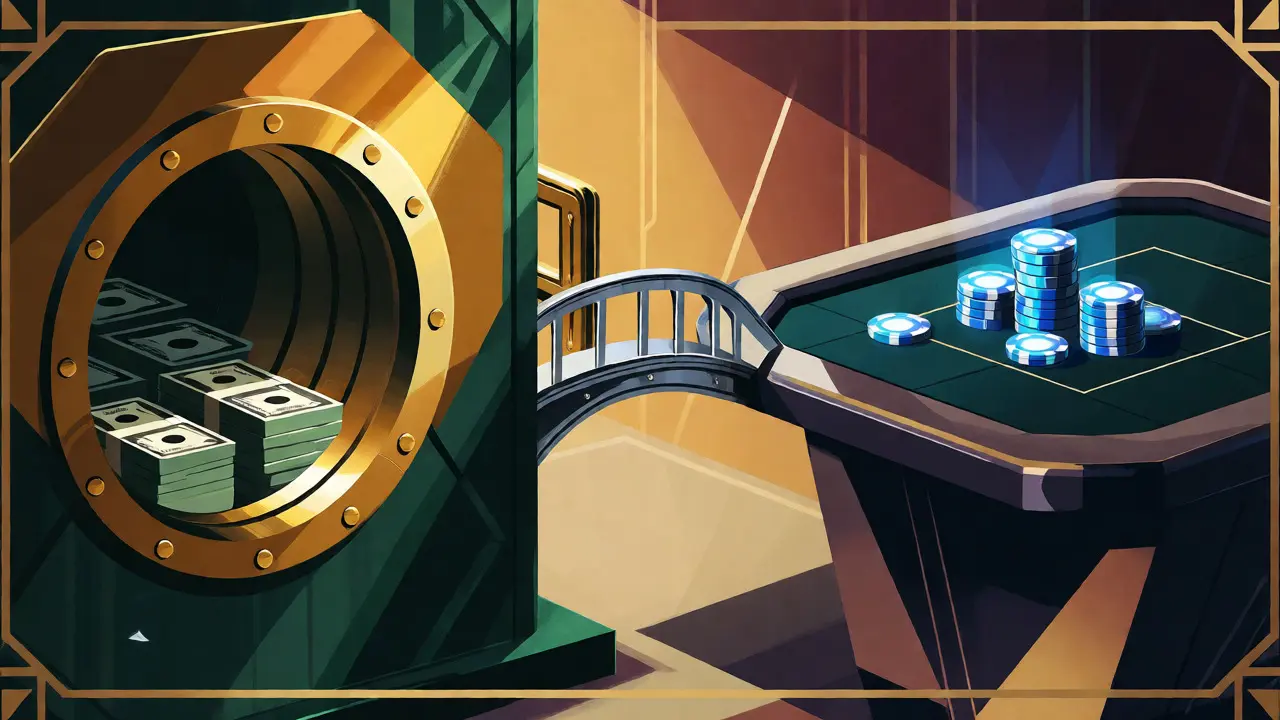
Think of it like a casino chip. Your cash stays in the vault (native chain). The chip (Wormhole USDC) works at the table (destination chain). You can play with the chip, but to get your cash back, you must return the chip to the vault.
How the Wormhole Bridge Works
Wormhole isn’t just a pipe for money. It’s a generic message-passing protocol. It connects over ten blockchains, including Ethereum, Solana, Avalanche, and Polygon.
When you bridge USDC via Wormhole:
- You approve a transaction on the source chain (e.g., Ethereum).
- Your native USDC is locked in a smart contract.
- Wormhole guardians observe this event and sign a message.
- This signed message is sent to the destination chain (e.g., Solana).
- A contract on Solana verifies the signature and mints USDC(WormHole).
This process takes minutes, not seconds. Unlike native transfers, which are instant once confirmed, bridging requires multiple confirmations across chains. In January 2026 tutorials, users reported waiting 5-10 minutes for USDC to appear on Solana after locking it on Ethereum.
Market Data and Supply Realities (September 2026)
Many people assume USDC(WormHole) is huge. It’s not. On Solana, native USDC dominates. As of mid-September 2026, total circulating USDC on Solana was approximately $7.19 billion. Of that, only about $301,890 was bridged in via Wormhole. That’s roughly 0.0042% of the total supply.
On Avalanche, the numbers are even smaller. One Wormhole USDC contract has a total supply of just 8,626 tokens. Another PoS variant has 2,552 tokens. These aren’t major liquidity pools. They’re niche pockets of value.
| Feature | Native USDC | USDC(WormHole) |
|---|---|---|
| Issuer | Circle | Wormhole Bridge Contract |
| Solana Supply (Sept 2026) | ~$7.19 Billion | ~$301,890 (Inbound) |
| Liquidity Depth | Very High | Low / Fragmented |
| Redemption Path | Direct Burn/Mint | Burn Wrapped → Unlock Native |
| Risk Source | Circle Reserves | Bridge Security + Guardian Network |
Why does this matter? Low supply means low liquidity. If you hold $1 million in USDC(WormHole) on Solana, you might struggle to swap it for SOL without moving the price significantly. Native USDC has deep order books. Wormhole versions often rely on smaller automated market maker (AMM) pools.
Risks You Need to Know
Holding USDC(WormHole) introduces risks that native USDC doesn’t have. First, there’s smart contract risk. If the Wormhole bridge contract has a bug, your wrapped tokens could become worthless. Second, there’s guardian risk. Wormhole relies on a network of validators (guardians) to verify messages. If these guardians collude or fail, the bridge halts.
In 2022, Wormhole suffered a massive hack where $320 million was stolen due to a verification flaw. While patched, the incident highlighted that bridged assets carry extra attack surface. Native USDC on Ethereum has been battle-tested for years. Wormhole bridges are newer and more complex.
Also, consider depegging. While USDC(WormHole) aims to track $1.00, it trades between $0.997 and $1.001. Small deviations happen due to liquidity imbalances. If demand for bridged USDC spikes on a specific chain, its price might dip below $1.00 because buyers prefer native USDC.
When Should You Use USDC(WormHole)?
So, why use it? Mostly for legacy workflows or specific DeFi opportunities. Some older yield farming strategies on Solana were built around Wormhole-wrapped assets before Circle launched native USDC on Solana. Users who entered those positions early might still hold USDC(WormHole).
It’s also useful for cross-chain arbitrage. If USDC(WormHole) trades at $0.998 on Solana while native USDC trades at $1.00 on Ethereum, traders might buy the wrapped version, bridge it back, and sell for a profit. But gas fees and bridge times eat into margins.
For most beginners, stick to native USDC. If you’re on Solana, use Circle’s native USDC contract. If you’re on Ethereum, use the main USDC contract. Only touch USDC(WormHole) if a specific protocol requires it or if you understand the redemption mechanics.

How to Identify and Redeem USDC(WormHole)
Mistaking tokens is the biggest danger. Wallets sometimes display both under the name "USDC." To tell them apart, check the contract address.
- Native USDC on Solana: Look for the contract published by Circle. It usually ends in specific characters distinct from bridge tokens.
- USDC(WormHole): The contract is deployed by the Wormhole program. It will differ from Circle’s address.
To redeem USDC(WormHole) back to native USDC:
- Connect your wallet to the Wormhole portal or a supported bridge interface.
- Select "Withdraw" or "Bridge Back."
- Choose USDC(WormHole) as the asset and select the destination chain (e.g., Ethereum).
- Confirm the burn transaction on the current chain.
- Wait for guardians to verify and release native USDC on the destination chain.
Note: You cannot simply "swap" USDC(WormHole) to native USDC on most DEXs without slippage or fees. The proper way is through the bridge contract itself.
The Future: CCTP and Declining Relevance
Circle now offers Cross-Chain Transfer Protocol (CCTP). This allows native USDC to move between chains without wrapping. Instead of minting a fake token, CCTP burns USDC on the source and mints it natively on the destination. This eliminates the need for bridges like Wormhole for USDC specifically.
As CCTP adoption grows, USDC(WormHole) becomes less necessary. Industry guides from September 2026 suggest that native USDC will continue to dominate. Wormhole remains vital for other assets (like ETH or SOL), but its role for USDC is shrinking. Expect USDC(WormHole) supplies to remain small or decline as users migrate to native versions.
Is USDC(WormHole) safe?
It is generally safe but carries higher risk than native USDC. Risks include smart contract bugs in the bridge and reliance on the Wormhole guardian network. Always check the contract address to ensure you are interacting with the legitimate Wormhole token.
Can I convert USDC(WormHole) to native USDC?
Yes, but not directly via a simple swap. You must use the Wormhole bridge interface to "bridge back" or withdraw. This burns the wrapped token and unlocks the native USDC on the original chain.
Why is the supply of USDC(WormHole) so low?
Because Circle launched native USDC on many chains, including Solana. Users prefer native tokens for better liquidity and lower complexity. Wormhole-wrapped USDC is mostly used for legacy positions or specific cross-chain routes.
Does USDC(WormHole) maintain a 1:1 peg with the dollar?
Mostly, yes. Market data shows prices fluctuating between $0.997 and $1.001. However, during periods of high volatility or bridge congestion, slight depegs can occur due to liquidity constraints.
What happens if the Wormhole bridge goes down?
Your USDC(WormHole) tokens would be stuck on the destination chain. You couldn't bridge them back until the service resumes. The underlying native USDC remains safe on the source chain, but access is temporarily blocked.