
Qlindo (QLINDO) isn’t another meme coin. It’s not even a typical DeFi project. It claims to be a bridge between blockchain and green real estate-letting regular people buy into sustainable properties using a simple crypto token. Sounds promising, right? But here’s the catch: Qlindo has no public proof that any of those properties actually exist.
What Qlindo actually does
QLINDO is an ERC-20 token built on Ethereum. Its contract address is 0xc18c07a18198a6340cf4d94855fe5eb6dd33b46e, and it’s been verified on Etherscan. That part is real. The token was launched in 2023 by an anonymous team focused on sustainable finance. It’s meant to be a utility token-something you use to access the Qlindo platform, which supposedly connects investors to tokenized green real estate projects.
Here’s how it’s supposed to work: You buy QLINDO tokens. Then, you’re supposed to be able to trade them later for QX tokens, which represent actual shares in real buildings-solar-powered apartments, energy-efficient offices, or eco-housing developments. The idea is simple: you don’t need $500,000 to own part of a green building. Just $10 in QLINDO might get you a slice.
But as of December 2025, the QX tokens are still labeled “Coming Soon” on the official site. Not delayed. Not postponed. Just… missing.
The numbers don’t add up
QLINDO has a fixed supply of 10 billion tokens. Only 1.57 billion are in circulation, according to BitMart’s public records. That’s a good sign-no inflation, no surprise dumps. But the price? That’s where things get messy.
On qlindo.io, the token is listed at $0.000816. On Binance, it’s trading at $0.000296. That’s a 64% difference. On MEXC, it’s listed at $0.00015. No exchange agrees. That’s not market volatility-that’s inconsistency. Either the website is misleading, or the exchanges are manipulating prices. Or worse, someone is running a pump-and-dump scheme with fake volume.
Trading volume is even worse. MEXC reported $21,970 in 24-hour volume in November 2025. Binance showed $404.70. That’s a 54x difference. Why would one exchange have 50 times more activity than another for the same token? It doesn’t make sense unless the data is being faked.
Who’s behind it-and why it matters
The team is anonymous. No names. No LinkedIn profiles. No public interviews. That’s not uncommon in crypto, but when you’re claiming to back tokens with real property, anonymity becomes a red flag. RealT, a competitor that tokenizes actual U.S. rental properties, has a full team with names, bios, and public contact info. They even publish third-party property audits.
Qlindo says its real estate assets are “vetted.” But where’s the proof? No addresses. No property deeds. No photos. No independent appraisals. Not even a list of locations. You can’t verify what you can’t see.
Even the security audit is sketchy. Qlindo claims it was audited by CertiK. That’s a reputable firm. But the full report isn’t public. No one can check what they found. Just a line on the website saying “audited.” That’s not transparency-that’s marketing.

How does it compare to the competition?
There are other tokenized real estate projects out there. RealT, for example, lets you buy shares in actual rental homes in the U.S. Each property has a legal title, a tenant, and a rent roll. You can see the address. You can even request a copy of the lease. That’s real ownership.
TokenLand does the same in Europe. PropertyCoin focuses on commercial buildings. All of them publish asset-level data. Qlindo? Nothing.
Qlindo’s only real differentiator is the word “green.” But saying something is sustainable doesn’t make it so. Without third-party verification of energy efficiency, solar panels, or carbon offsets, “green” is just a buzzword. And in crypto, buzzwords sell-until they don’t.
User experiences: Mostly complaints
On Trustpilot, Qlindo has a 2.1 out of 5 rating from 87 reviews. The top complaints? “I bought QLINDO to get property shares. I never got them.” “No one answers my questions about where the buildings are.” “I can’t even find out if my tokens are worth anything.”
Reddit users in r/CryptoRealEstate are even harsher. One user said, “I’ve asked for proof of ownership three times. Silence.” Another wrote, “I thought this was real estate. Turns out it’s just a crypto lottery.”
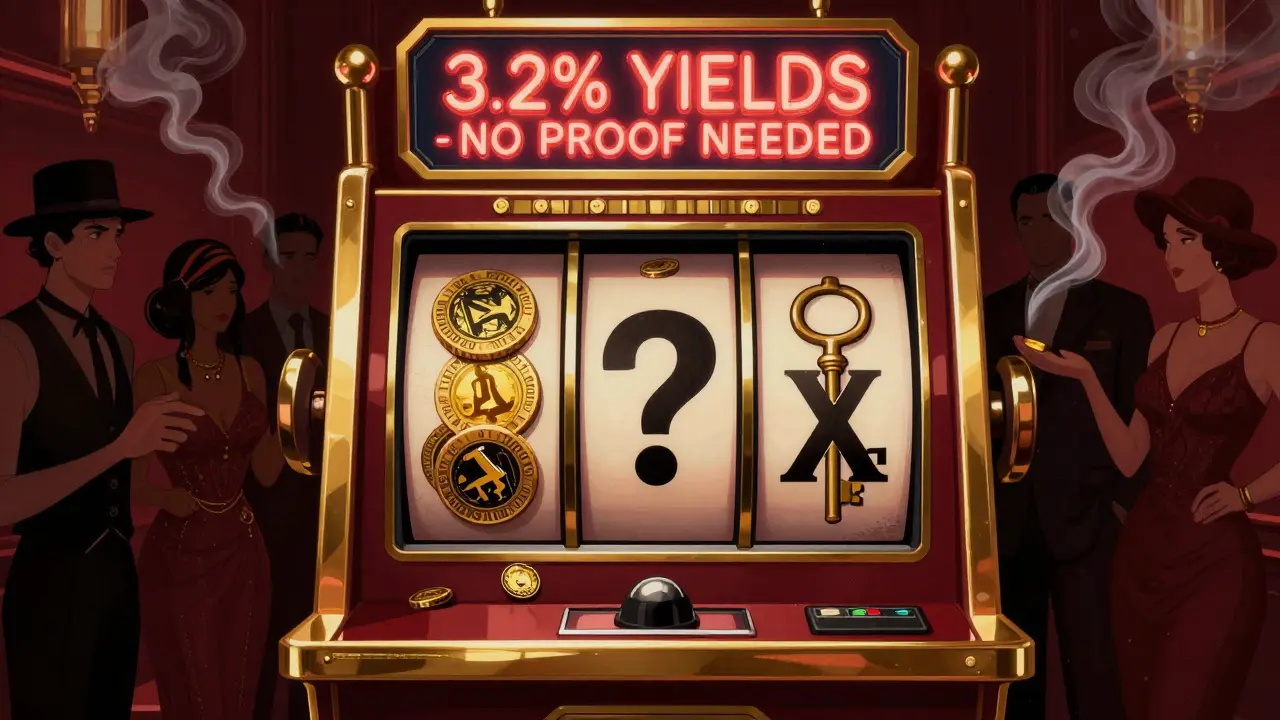
On the other side, the Qlindo Telegram group (claimed to have 30,000 members) is full of praise. People talk about “3.2% quarterly yields” and “life-changing returns.” But here’s the thing: none of those claims can be verified. No transaction IDs. No bank statements. No property records. Just screenshots and stories.
The tech is fine. The business isn’t
The token itself works. You can buy it on Uniswap, BitMart, or MEXC. You can store it in MetaMask. Gas fees are normal. The smart contract is immutable-no one can change it. That’s good.
But here’s the problem: a blockchain can’t make a lie true. If there are no real buildings behind the tokens, then QLINDO isn’t a real estate investment. It’s a speculative bet on a promise.
And promises in crypto have a habit of disappearing. Look at GreenToken and EcoBrick-both launched with the same “green real estate” pitch in 2024. Both vanished in 2025 after SEC investigations. Qlindo is walking the same path.
Who’s buying this?
Chainalysis data shows 58% of QLINDO transactions come from Southeast Asia. The average holding? Under $500. That’s not institutional money. That’s retail investors hoping to get rich quick. It’s the same pattern as every pump-and-dump coin before it: low entry, high emotion, zero transparency.
And here’s the kicker: DappRadar says only 1,842 unique wallets have interacted with Qlindo’s contract in December 2025. But the team claims 30,000 Telegram members. That’s a 16x gap. Either most people are lying about being active, or the Telegram group is full of bots.
What’s next for Qlindo?
The QX security token launch was supposed to happen in Q2 2025. It didn’t. No new date was given. No explanation. Just silence.
The price has dropped 82% since its January 2025 high. The broader tokenized real estate market? Up 47% in the same period. Qlindo isn’t just falling behind-it’s collapsing.
Analysts at Delphi Digital give it a 65% chance of failing to gain any real market presence. Why? Because you can’t build a real estate company on hype alone. You need deeds, not Discord messages.
Should you buy QLINDO?
If you’re looking for a real way to invest in green real estate, Qlindo isn’t it. There’s no proof of assets. No regulatory clarity. No track record. Even if the token price goes up tomorrow, you still own nothing but a digital file with no legal backing.
If you’re just speculating-wanting to gamble on a low-priced token with a flashy story-then sure, go ahead. But treat it like a lottery ticket. Not an investment.
And if you’re thinking about putting in more than $100? Don’t. You’re not buying property. You’re buying hope. And hope doesn’t pay dividends. It just disappears.
Is Qlindo (QLINDO) a real crypto project or a scam?
Qlindo is a real token with a verified Ethereum contract, so it’s not a “scam” in the technical sense. But it’s built on unverified claims-specifically, that it’s backed by real green real estate. There’s zero public proof of any properties, audits, or legal ownership. Without that, it’s a speculative token with no real-world value. Many analysts compare it to failed projects like GreenToken, which collapsed after SEC intervention.
Can I use QLINDO to buy actual property?
No. QLINDO is a utility token meant to eventually access QX tokens, which are supposed to represent property shares. But the QX tokens have never launched. As of early 2026, there’s no way to convert QLINDO into real estate. Even if you hold 1 million QLINDO tokens, you still own nothing tangible. No deed. No lease. No address. Just a balance in your wallet.
Why is the price so different on different exchanges?
The price discrepancies-like $0.000816 on qlindo.io versus $0.000296 on Binance-suggest either market manipulation, fake volume, or outdated data on the official site. QLINDO has extremely low liquidity on most exchanges, making prices easy to distort. This is a classic sign of a low-cap token with little real trading activity. Don’t trust the price on the project’s website-it’s often inflated to look more appealing.
Is QLINDO audited and secure?
The smart contract has been audited by CertiK, according to Qlindo’s website. But the full report isn’t public, so you can’t verify what was found. The contract itself is immutable and non-pausable, which is good for security. But audits only check code, not claims. Even if the code is flawless, if the underlying real estate doesn’t exist, the whole project is still risky.
What’s the difference between QLINDO and QX tokens?
QLINDO is the utility token you buy to access the platform. QX tokens are supposed to be security tokens backed by actual green real estate assets. Think of QLINDO as a ticket to a concert that hasn’t been scheduled yet. QX would be the actual seat. But as of early 2026, QX tokens haven’t been launched. No dates. No details. Just promises.
Is Qlindo regulated by the SEC?
Qlindo claims “full regulatory alignment,” but there’s no public documentation to prove it. The U.S. SEC has already taken action against similar platforms like RealToken for offering unregistered securities. Since QX tokens are meant to represent property ownership, they likely qualify as securities under U.S. law. If the SEC investigates Qlindo, the project could be shut down or forced to register-something it’s not prepared for.
Where can I buy QLINDO tokens?
You can buy QLINDO on decentralized exchanges like Uniswap, or centralized exchanges including MEXC, BitMart, and BitGo. You’ll need an Ethereum wallet (like MetaMask), some ETH for gas fees, and then you can swap ETH for QLINDO. Be aware: trading volume is low, so prices can shift quickly. Never invest more than you’re willing to lose.
Can I earn passive income with QLINDO?
Qlindo claims users earn “quarterly yields” from QX tokens, but since QX tokens don’t exist yet, there’s no way to earn income from QLINDO. Any claims of passive income are speculative or based on fake testimonials. Don’t trust Telegram group posts promising returns-there’s no proof they’re real.


MOHAN KUMAR
January 24, 2026 AT 13:46QLINDO is just a digital ghost. No properties, no audits, no transparency. The contract works, sure, but that’s like saying a fake ID is well-printed. Doesn’t make it legal. This isn’t investing, it’s hoping someone else will buy it before the rug gets pulled.
Catherine Hays
January 25, 2026 AT 10:36People in India are falling for this because they think crypto is a shortcut to wealth. Meanwhile, real estate in the US is still actual land with deeds and taxes. This isn’t innovation. It’s exploitation dressed up as sustainability.
tim ang
January 26, 2026 AT 02:15lol i just checked the qlindo site again and their 'green buildings' page still just has a stock photo of a tree and the words 'coming soon' in bold. like bro if you're gonna scam people at least make the website look halfway legit
katie gibson
January 26, 2026 AT 23:38Oh please the whole green real estate crypto thing is just a new way for rich guys to launder money while pretending to care about the planet. CertiK audit? Yeah right. They probably paid them $5k to say 'code looks fine' while ignoring the fact that the buildings don't exist
Harshal Parmar
January 28, 2026 AT 02:49I know it sounds crazy but maybe there’s something here? I mean, think about it-what if they’re just slow because building real green properties takes time? Maybe they’re waiting for permits, or maybe they’re partnering with actual eco-developers overseas. I’ve seen projects take years to launch, and the ones that do end up being worth it. Don’t give up on innovation just because it’s not perfect yet
Margaret Roberts
January 29, 2026 AT 23:39Notice how every single positive comment comes from Telegram and no one on Reddit or Trustpilot has proof? That’s not community, that’s bot farm. And the price differences? That’s not market inefficiency-that’s a controlled pump. Someone’s making millions off dumb people like us
HARSHA NAVALKAR
January 31, 2026 AT 09:07Why does everyone keep acting like this is different from every other crypto scam? It’s the same script: fake utility, anonymous team, inflated website, no real assets. We’ve seen this movie. The ending is always the same.
MICHELLE REICHARD
February 2, 2026 AT 06:56Actually I think QLINDO is brilliant. Why should only billionaires own real estate? If people want to believe in a token that represents a building that doesn’t exist yet, that’s their freedom. The market will decide. And if they lose money? Good. They’ll learn
Ashok Sharma
February 4, 2026 AT 04:34Be careful. If you put money into this, you’re not buying property. You’re buying a dream written in code. And dreams don’t pay bills.
Linda Prehn
February 4, 2026 AT 07:00Wow so the entire project is built on vapor and wishful thinking and people are still throwing money at it? How is this even legal? I mean, if I told you I was selling shares in a castle in the clouds, you’d laugh. But crypto? Suddenly it’s genius