Imagine finding a new cryptocurrency that promises to fix every problem with Bitcoin. It claims to be faster, more private, and created by the mysterious inventor of Bitcoin himself. Sounds like a dream, right? That is exactly the pitch for Vertisan, a digital asset trading under the ticker VTSN. But before you rush to buy in, we need to look past the marketing hype. The reality behind Vertisan is messy, contradictory, and filled with major red flags that any serious investor should know about.
In this guide, I will break down what Vertisan actually is, where it came from, and why so many experts are raising their eyebrows. We will look at the technical claims, the confusing market data, and the biggest warning signs that suggest this might not be the legitimate project it claims to be. By the end, you will have a clear picture of whether VTSN belongs in your portfolio or on your ignore list.
The Origin Story: Who Created Vertisan?
Every cryptocurrency has a backstory, but Vertisan’s origin tale is one of the most controversial in the industry. Different sources tell completely different stories, which is usually the first sign of trouble.
According to CoinMarketCap, Vertisan was conceptualized by a person named James Vertisan. This source goes further to claim he is widely believed to be the mind behind Bitcoin. On the other hand, promotional videos on YouTube explicitly state that Vertisan was created by Satoshi Nakamoto, the pseudonymous creator of Bitcoin who disappeared in 2010.
Here is the hard truth: Satoshi Nakamoto has not been publicly identified since launching Bitcoin in 2009. Any project claiming direct involvement from Satoshi without verifiable proof is highly suspect. In fact, Chainalysis’ 2026 Cryptocurrency Scam Report identifies "projects claiming Satoshi Nakamoto involvement" as a top-tier scam pattern. When a project relies on such a bold, unprovable claim to gain trust, it often means there is nothing else substantial to back it up.
The launch timeline is equally confusing. Some sources say it was released in 2024, while others point to 2025. This lack of clarity makes it difficult to track the project's history or verify its development milestones.
Technical Claims vs. Reality
Vertisan markets itself as "Crypto 2.0," promising to solve the speed and privacy issues of older blockchains. Let’s look at the specific technical features they advertise and compare them to what we can actually verify.
| Feature | Marketing Claim | Verified Reality / Contradiction |
|---|---|---|
| Underlying Tech | Standalone "Fractal Technology" or "VeNNeM Protocol" | Coinbase lists it as an Ethereum ERC-20 token (Contract: 0x628b...) |
| Transaction Speed | Sub-second settlement (~0.5 seconds) | No independent audits confirm this; Ethereum base layer takes ~13s |
| Supply Cap | 1 Billion VTSN | Crypto.com lists a "v2" with 100 Million max supply |
| Wallet Type | "Cryptocases" instead of traditional wallets | No official wallet app found in major app stores |
| Privacy | Built-in privacy via "Ring Contracts" | Zero transactions visible on Etherscan for the contract address |
The contradictions here are significant. If Vertisan operates on its own proprietary technology as claimed by some sources, why does Coinbase list it as a standard token on the Ethereum network? More importantly, if you check the Ethereum contract address provided by Coinbase (0x628b0F7f3C2Bd7C91694c900be7A5f6E46063205) on Etherscan, you will see zero transaction activity. This suggests that despite claims of high trading volume, no actual tokens are moving on the blockchain.
The claim of sub-second transaction speeds is also problematic. While Layer-2 solutions on Ethereum can achieve fast speeds, a standalone blockchain claiming this without open-source code or security audits is a major red flag. Legitimate projects publish their code on GitHub for community review. There are no active repositories for "Vertisan," "Fractal protocol," or "VeNNeM Protocol" with credible contributor bases.
The Market Data Mystery
If the technology is confusing, the market data is outright impossible. This is where things get dangerous for investors.
Let’s look at the numbers reported by major exchanges:
- Binance: Lists a price around $38.68 with a 24-hour volume of nearly $60,000.
- Coinbase: Reports a price near $21.70 but states "0 circulating supply."
- Crypto.com: Shows two different versions, one with a negligible price and another "v2" at $43.35.
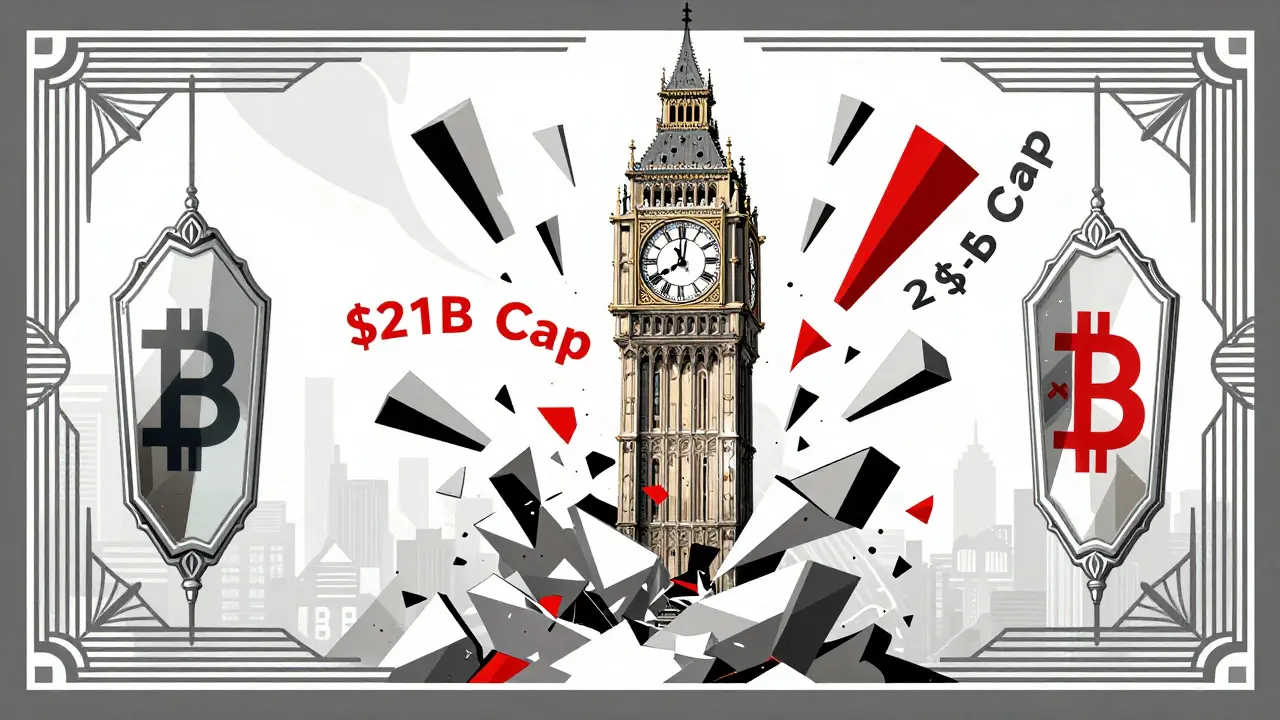
Here is the critical issue: You cannot have a market capitalization or a realistic trading volume with zero circulating supply. Market cap is calculated by multiplying the current price by the number of coins in circulation. If the supply is zero, the market cap must be zero. Yet, some sites claim Vertisan has a market cap exceeding $21 billion, which would place it among the top cryptocurrencies globally.
This mathematical impossibility suggests severe data manipulation or listing errors. It is common for scam projects to create fake listings on smaller exchanges or manipulate data feeds to appear legitimate. The discrepancy between Binance showing volume and Coinbase showing zero supply indicates that the token may not be tradable in a fair, liquid market.
Red Flags Every Investor Should Know
Based on the evidence, several warning signs stand out. These are not just minor issues; they are structural problems that indicate high risk.
- No Circulating Supply: Major exchanges report zero coins in circulation. If you cannot buy or sell the token freely, it is not a functional currency.
- Lack of Transparency: There is no whitepaper, no GitHub repository, and no public team information. Legitimate blockchain projects maintain open documentation for security audits.
- Satoshi Nakamoto Claims: As mentioned, this is a known tactic used by fraudulent projects to lend false credibility.
- Contradictory Technical Specs: Is it an Ethereum token or a standalone blockchain? The answer changes depending on which website you read.
- No Community Presence: Reddit has virtually no discussion about Vertisan. Twitter mentions are mostly automated bots. Real projects have active communities discussing updates and bugs.
Dr. David Gilbertson, a cybersecurity expert, notes that legitimate blockchain projects prioritize transparent technical documentation. The absence of these basics for Vertisan is a strong indicator that the project is either unfinished or deceptive.
Is Vertisan a Scam?
I am not a lawyer, and I cannot give legal advice. However, based on the criteria used by fraud detection firms like Chainalysis, Vertisan fits the profile of a high-risk or fraudulent scheme. The combination of zero circulating supply, unverifiable technical claims, and reliance on the Satoshi Nakamoto myth matches patterns seen in numerous crypto scams in 2025 and 2026.
Even if the project is not intentionally malicious, it is currently non-functional. You cannot use it for payments, you cannot store it in a verified wallet, and you cannot trade it on a transparent market. Investing in something that does not exist yet, especially without a roadmap or working product, is extremely risky.
What Should You Do Instead?
If you are looking for cryptocurrencies with improved speed and privacy, there are established options with proven track records. Projects like Monero (XMR) offer privacy, while Solana (SOL) and Polygon (MATIC) provide fast transaction speeds. These projects have open-source code, active development teams, and real market liquidity.
Before investing in any new coin, always perform due diligence:
- Check the contract address on a blockchain explorer (like Etherscan).
- Look for the project’s GitHub repository and recent commit activity.
- Verify the team members on LinkedIn or professional networks.
- Read independent reviews, not just the project’s own website.
- Be skeptical of any project claiming connections to anonymous legends like Satoshi Nakamoto.
Vertisan (VTSN) fails almost all of these checks. While the marketing materials are flashy, the substance is missing. In the world of crypto, transparency is everything. If a project hides its code, its team, and its supply mechanics, it is best to stay away.
Who created Vertisan (VTSN)?
Sources contradict each other. Some claim it was created by James Vertisan, while others falsely attribute it to Satoshi Nakamoto. No verifiable identity or team has been publicly confirmed.
Is Vertisan listed on major exchanges?
It appears on platforms like Binance and Coinbase, but with conflicting data. Coinbase reports 0 circulating supply, making trading impossible despite listed prices.
What is the total supply of VTSN?
Claims vary. Some sources say 1 billion, while others cite 100 million for a "v2" version. The lack of consistency raises questions about the tokenomics.
Can I buy Vertisan safely?
It is highly risky. With 0 circulating supply reported by major exchanges and no verifiable utility, purchasing VTSN carries extreme financial risk.
Does Vertisan have a working wallet?
No official Vertisan wallet is available in major app stores. The project claims to use "Cryptocases," but no functional software has been released or verified.
Why is the market cap inconsistent?
Some sites claim a $21 billion market cap, while others show $0 due to 0 circulating supply. This contradiction suggests data manipulation or listing errors.
Is Vertisan built on Ethereum?
Coinbase lists it as an Ethereum ERC-20 token, but other sources claim it uses a standalone "Fractal" blockchain. The Ethereum contract shows zero activity.


Barclay Chantel
May 31, 2026 AT 10:19It is frankly embarrassing how many people still fall for these 'Satoshi' scams. The sheer lack of intellectual rigor in the crypto community is staggering. One would think that by now, basic due diligence-such as checking a GitHub repository or verifying supply metrics on-chain-would be considered elementary. Instead, we have retail investors chasing vaporware based on YouTube hype. It is a testament to the decline of critical thinking in our digital age.
Eric Grosso
June 1, 2026 AT 06:51i mean its kinda sus but what if its real tho? i saw some guy on twiter say he made millions. dont trust me though im just a regular joe trying to figure this shi out lol
Edith Mair
June 2, 2026 AT 14:37Stop enabling this nonsense. If you cannot verify the contract activity on Etherscan, it does not exist. Period. The fact that Coinbase lists it with zero circulating supply is not a 'glitch,' it is a glaring indicator of a hollow project. Do your homework before you throw money at a ghost.
Sam Dashti
June 3, 2026 AT 22:30Oh, boy. Here we go again with the 'Fractal Technology' buzzword salad. 🎪 It’s like watching a magician pull a rabbit out of a hat, except the hat is empty and the rabbit is a NFT of a rock. I’ve been in crypto since the Doge days, and this reeks of a rug pull wrapped in a shiny marketing bow. The contradiction between being an ERC-20 token and having its own 'VeNNeM Protocol' is so laughably inconsistent it hurts my brain. Who writes these whitepapers? A committee of hallucinating AI bots?
Christina Pearce
June 4, 2026 AT 13:31I appreciate the detailed breakdown here. It’s really helpful to see the specific contradictions laid out like that, especially regarding the supply cap. It makes it much easier to spot why experts are skeptical. Thanks for sharing this!
Joshua Alcover
June 4, 2026 AT 20:18The epistemological crisis inherent in decentralized finance is exemplified by entities such as Vertisan. When one posits a paradigm shift without verifiable ontological grounding, one engages in speculative fiction rather than economic innovation. The absence of a circulating supply negates the very definition of currency, rendering the asset a null set in the mathematical topology of market value. We must interrogate the foundational axioms of such projects.
trisya hazriyana
June 6, 2026 AT 05:39lol jargon overload over there. basically its a scam. zero supply means zero value. stop pretending its deep philosophy when its just bad math
Miss Masquer
June 7, 2026 AT 07:25It is truly fascinating to observe how cultural narratives around anonymity, such as the legend of Satoshi Nakamoto, are co-opted by fraudulent enterprises to lend an air of mystique and legitimacy to otherwise baseless claims. In my experience consulting across various international markets, I have found that transparency remains the universal language of trust, and when a project obscures its technical foundations behind proprietary protocols like 'Fractal Technology' without open-source verification, it inevitably erodes the confidence of the global investor community, who increasingly demand accountability and clear documentation from any digital asset they consider integrating into their portfolios.
Debbie Lewis
June 7, 2026 AT 09:08just looks like another pump and dump to me. nothing new here.
Joe Clements
June 7, 2026 AT 18:42I totally get why people are confused. The info is all over the place. It’s scary how easy it is to get tricked when even big exchanges show different numbers. Stay safe everyone!
Rosie Morris
June 8, 2026 AT 16:19im so glad someone wrote this up cause i was about to buy some vtsn last night. thank u for saving my wallet!!
lorna erni
June 9, 2026 AT 02:18Wake up sheeple! This is exactly what the elites want you to believe so you don’t make money. I’m buying the dip because I know the truth. Don’t listen to these FUD merchants who are afraid of progress. VTSN is going to the moon and you’ll be left crying in the dust. Get in now or regret it forever!
stalin brian
June 9, 2026 AT 16:30hey lorna chill out man. no need to be so aggressive. the point is the data doesnt add up. if u cant trade it on etherscan its not real. simple as that. dont let ur ego blind u to the facts bro
saradee dee
June 11, 2026 AT 02:58Oh my goodness, this is absolutely terrifying! 😱 How can anyone trust something with zero transactions? It feels like walking into a dark room expecting light. My heart is racing just reading about the fake volume. Please, everyone, protect yourselves! 💔
Craig Swanson
June 11, 2026 AT 16:23Listen to me closely. You are playing with fire here. I have seen too many good people lose everything to schemes like this. It is not just risky; it is predatory. The lack of a team, the lack of code, the lack of supply-it is a trap designed to exploit hope. Do not be a victim. Walk away now while you still can. I am begging you.
Bill Gunn
June 13, 2026 AT 04:38Great thread! 🚀 Just to add to the tech side: if it’s an ERC-20, it inherits Ethereum’s speed limits unless it’s on a Layer 2, which it isn’t listed as. So that 'sub-second' claim is physically impossible on mainnet without off-chain solutions, which aren’t mentioned. Stick to SOL or MATIC for speed, folks! 💡📉
Dana Rapoport
June 13, 2026 AT 17:40The philosophical implication of a currency with no circulation is that it ceases to be currency and becomes merely a symbol of desire without substance. It is a mirror reflecting our greed back at us. Perhaps we should ask ourselves why we are so eager to believe in miracles rather than working with proven realities.