XT Smart Chain Transaction Cost Calculator
Calculate Your Transaction Costs
XT Smart Chain isn’t just another crypto coin. It’s the backbone of a trading platform - XT.COM - and it’s built to move fast, cost less, and keep users locked in. If you’ve seen XT listed on exchanges and wondered what it actually does, you’re not alone. Most people see the price chart and assume it’s another speculative token. But XT Smart Chain is different. It’s not trying to be Bitcoin or Ethereum. It’s trying to be the fastest, cheapest lane for trading, staking, and using NFTs on XT.COM.
What Exactly Is XT Smart Chain?
XT Smart Chain is a blockchain designed and run by the team behind XT.COM, one of the top 25 crypto exchanges by trading volume. Launched to handle the heavy traffic of spot trading, futures, and NFTs, it’s not an afterthought - it’s the engine. Unlike Bitcoin’s slow, energy-heavy setup, or even Ethereum’s complex upgrade path, XT Smart Chain was built from the ground up for speed and low fees. It’s EVM-compatible, meaning if you’ve ever used MetaMask or written a Solidity smart contract for Ethereum, you can plug right in. No new languages. No steep learning curve. Just familiar tools running on a faster network.How Does It Work? The HPoS Consensus
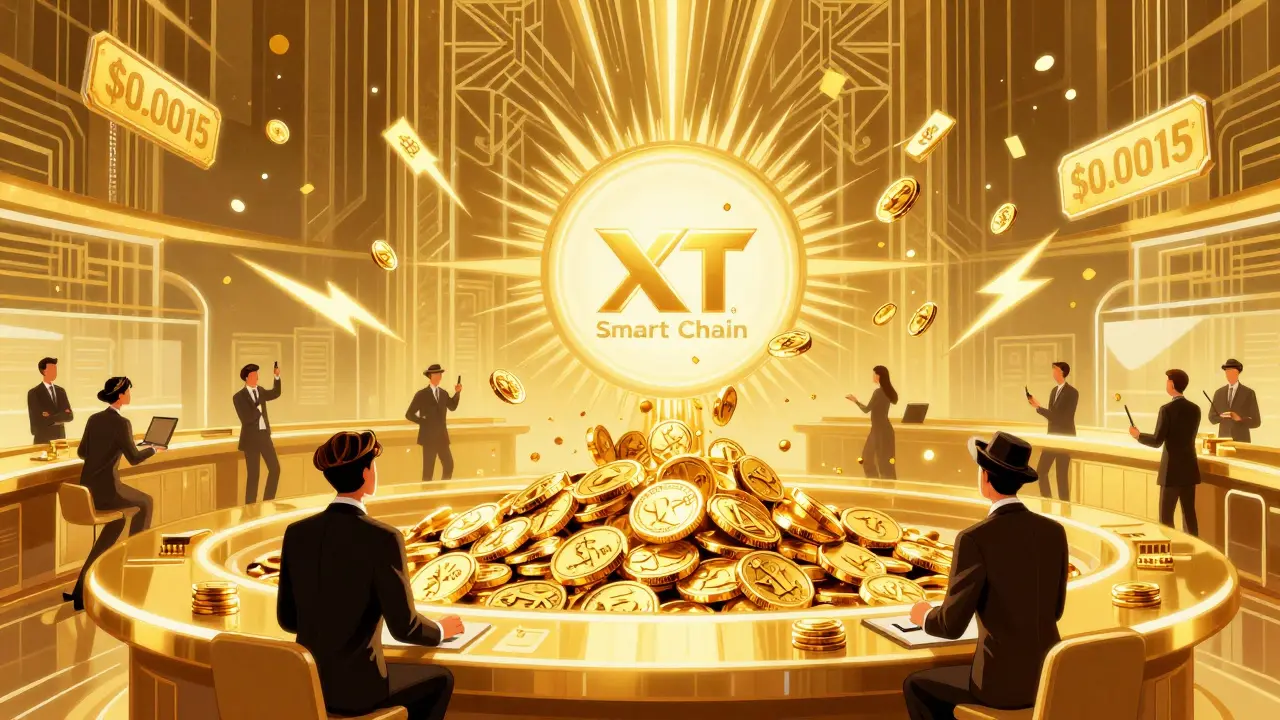
Most blockchains use Proof of Work (like old Bitcoin) or pure Proof of Stake (like Ethereum). XT Smart Chain uses something called Hybrid Proof of Stake (HPoS). Here’s what that means in plain terms: there are only 21 validator nodes running the network. These aren’t random people. They’re chosen by XT token holders through voting. If you hold XT, you can vote for who secures the chain. In return, validators earn rewards and pay penalties if they go offline or fail to process blocks on time. This small, elected group is the reason the network is so fast. Ethereum has over half a million potential validators. Binance Smart Chain has 41. XT Smart Chain keeps it tight at 21. That means blocks confirm in under a second. Transaction fees? Around $0.0015 on average - that’s 800 times cheaper than Ethereum during peak times. But there’s a trade-off. Fewer validators means less decentralization. If just a few big holders control the votes, they could sway the network. That’s a risk. But for users who just want to trade without waiting or paying $5 in gas, it’s a fair deal.What Can You Do With XT Token?
The XT coin isn’t just a trading pair. It’s the fuel for the whole ecosystem. Here’s what it actually does:- Pay transaction fees - Every trade, swap, or NFT mint on XT Smart Chain costs XT to process.
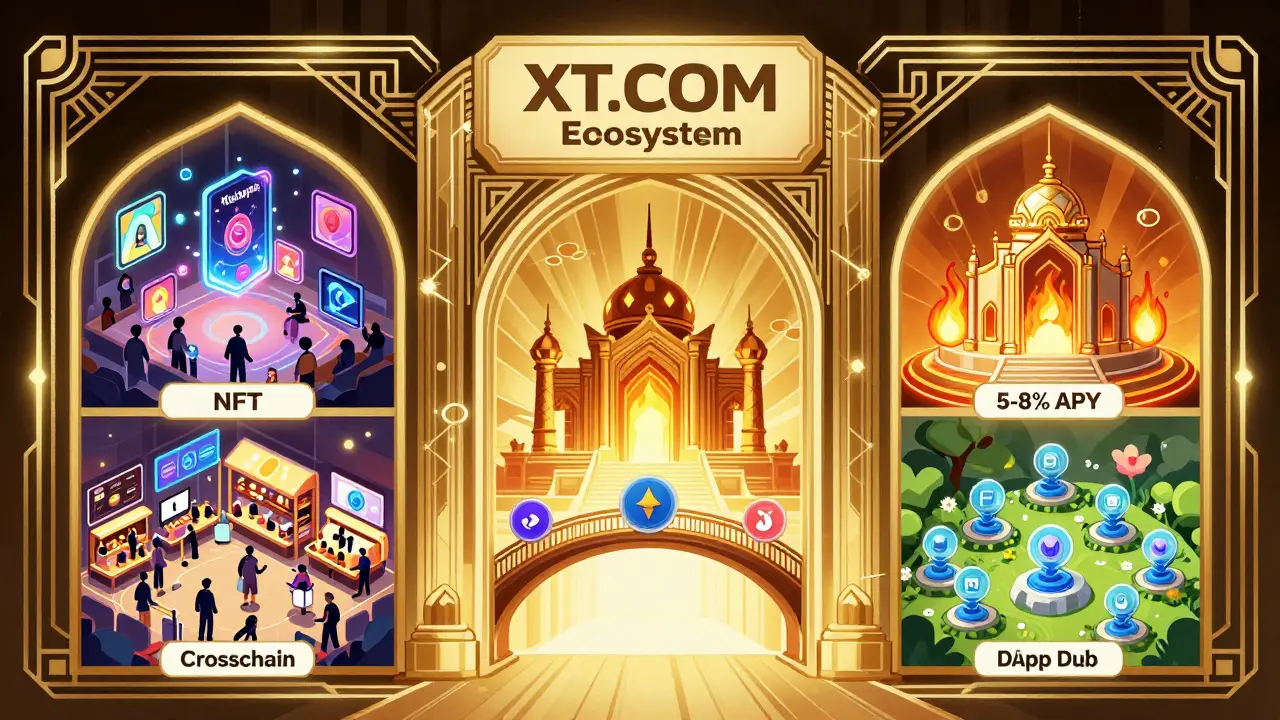
- Stake for rewards - You can lock up XT in the platform’s staking pool and earn more XT, typically around 5-8% APY depending on market conditions.
- Vote on governance - XT holders vote on upgrades, fee changes, and new features. The December 2025 XTIP-22 upgrade, which cut validator rotation time from 24 hours to 4 hours, was approved this way.
- Access exclusive features - Some trading tools, early NFT drops, and reduced fees on XT.COM are only available to users who hold or stake XT.
It’s not a store of value like Bitcoin. It’s a utility token - like paying with a loyalty card that also gives you discounts and voting rights.
The Ecosystem: More Than Just a Wallet
XT Smart Chain isn’t a solo act. It’s tied to a full platform:- XT.COM Exchange - Offers spot trading, 20x leverage futures, and fiat on-ramps (USD, EUR, GBP).
- XT NFT Marketplace - Aggregates NFTs from multiple chains into one place. Users report 40% faster sales than on decentralized marketplaces.
- Cross-chain bridges - Move assets between Ethereum, BSC, Polygon, and now Polkadot (as of November 2025) using XT Smart Chain as the hub.
- 10 core DApps - Including DeFi lending, yield aggregators, and token launchpads built directly on the chain.
The integration is tight. If you’re trading on XT.COM, you’re already using XT Smart Chain. You don’t need to switch wallets or learn new interfaces. That’s the whole point.

How Does It Compare to Other Chains?
Here’s how XT Smart Chain stacks up against similar networks:| Feature | XT Smart Chain | Binance Smart Chain (BSC) | Polygon | Ethereum |
|---|---|---|---|---|
| Consensus | Hybrid PoS (21 validators) | Proof of Stake (41 validators) | Proof of Stake (PoS sidechain) | Proof of Stake (524k+ validators) |
| Avg. Transaction Fee | $0.0015 | $0.05 | $0.01 | $1.25+ |
| Block Time | ~0.8 seconds | ~3 seconds | ~2.1 seconds | ~12 seconds |
| Developer Community Size | 186 active GitHub contributors | 3,200+ | 4,500+ | 4,000+ |
| TVL (Dec 2025) | $48M | $11.2B | $8.9B | $32.4B |
| Exchange Integration | Native to XT.COM | Native to Binance | Integrated with 100+ exchanges | Integrated with all major exchanges |
XT Smart Chain doesn’t compete on scale. It competes on speed and simplicity - especially for users already on XT.COM. If you’re a trader who moves in and out of positions daily, this chain saves you time and money. But if you’re building a DeFi protocol with thousands of users, you’ll likely still choose Polygon or Ethereum.
Market Data: Price, Volume, and Trends
As of December 2, 2025, XT is trading around $5.62. That’s down from its all-time high of $20.22 in November 2021. Market cap numbers vary wildly: Coinbase reports $5.9M, while Phantom.com says $29M. The difference? One includes only listed tokens; the other includes locked or untracked supply. That’s a red flag. Always check multiple sources.Trading volume on XT.COM hit $1.8 billion in 24 hours in November 2025, making it the 23rd largest exchange globally. That volume fuels demand for XT. But the token’s price doesn’t always follow. That’s because most users aren’t buying XT to hold - they’re buying it to trade or pay fees. It’s a utility, not a speculation play.
Who’s Using It? Real User Feedback
On Reddit, 68% of 1,247 users in October 2025 said they liked XT Smart Chain for its low fees and fast trades. One user wrote: “I moved all my small trades here from Ethereum. I save $10 a day in gas.”But complaints exist. On Trustpilot, users report:
- Only MetaMask works reliably - other wallets like Rabby or TokenPocket have issues.
- Cross-chain transfers sometimes stall during high traffic.
- XT NFT platform charges a 5% royalty fee - higher than OpenSea’s 2.5%.
Developers are another story. The XT Developer Portal has 147 APIs and 22 tutorials, but only 186 people are actively contributing code. Compare that to Ethereum’s 4,000+. That means fewer tools, slower innovation, and less third-party support.
Is XT Smart Chain Safe?
Security-wise, it’s solid for its size. Smart contracts have been audited. Validators face penalties for downtime. And since Q2 2024, XT.COM has integrated Chainalysis KYT to comply with FATF travel rules - meaning it tracks suspicious transfers and reports them. That’s rare for smaller chains.But the 21-validator model is a double-edged sword. If three of them collude, they could theoretically censor transactions. That’s why voting matters. If you hold XT, you’re not just a user - you’re a guardian. Your vote keeps the network honest.
What’s Next? Upgrades and Roadmap
The future looks active:- Polkadot integration (Nov 2025) - XT Smart Chain can now talk directly to 50+ other blockchains. No more bridging through intermediaries.
- XTIP-22 (Q1 2026) - Validator rotation will drop from 24 hours to 4 hours. That means faster recovery if a node fails.
- XT NFT platform expansion - Plans to add royalty customization and creator royalties for secondary sales.
Delphi Digital rates XT Smart Chain as “medium risk, medium reward.” It’s not going to replace Ethereum. But it doesn’t need to. It just needs to keep serving XT.COM’s 5 million users well.
Should You Use or Buy XT?
Ask yourself:- Do you trade on XT.COM? - Then you need XT. It’s cheaper and faster than using ETH or BNB.
- Are you a developer? - You can build here, but you’ll have fewer tools and less community support.
- Are you an investor? - Don’t buy XT hoping it’ll hit $20 again. Its value is tied to exchange usage. If XT.COM loses users, XT’s price will fall.
XT Smart Chain isn’t for everyone. But if you’re already in the XT.COM ecosystem, it’s the smartest way to move money. For everyone else? Stick with Ethereum, Polygon, or BSC. There’s no reason to switch unless you’re already trading there.
Is XT Smart Chain the same as XT.COM?
No. XT.COM is the cryptocurrency exchange platform. XT Smart Chain is the blockchain that powers it. Think of XT.COM as the store and XT Smart Chain as the delivery system that gets your trades processed fast and cheap.
Can I use XT Smart Chain with Trust Wallet or Coinbase Wallet?
Technically yes, but it’s not smooth. XT Smart Chain officially supports MetaMask. Other wallets may require manual network setup. Many users report connection issues with Trust Wallet and Coinbase Wallet. For the best experience, use MetaMask and add the XT Smart Chain network manually using its RPC details from XT.COM’s support page.
How do I stake XT tokens?
Go to the XT.COM website, log in, and navigate to the ‘Staking’ section. You’ll see your XT balance and an option to stake. Choose how much to lock, confirm the transaction, and start earning rewards. Rewards are paid daily and are automatically compounded. There’s no lock-up period - you can unstake anytime, but you’ll wait 24 hours to withdraw.
Is XT Smart Chain decentralized?
It’s partially decentralized. The 21 validator nodes are elected by token holders, which gives users control. But with only 21 nodes, it’s more centralized than Ethereum or Polygon. It’s a trade-off: speed and low cost over maximum decentralization. For an exchange-focused chain, that’s intentional.
Why is the market cap so different between platforms?
Because not all platforms count the same tokens. Some include only circulating supply (tokens available to trade), while others include locked, staked, or team-held tokens. XT.COM doesn’t publish full token distribution, so data aggregators guess. Always check the source. The $29M figure likely includes locked tokens; $5.9M is circulating supply.
Can I mine XT tokens?
No. XT Smart Chain uses Hybrid Proof of Stake, not Proof of Work. You can’t mine it. The only ways to get XT are to buy it on an exchange, earn it through staking, or receive it as a reward for using XT.COM services.
What happens if XT.COM shuts down?
The blockchain itself would still run - it’s decentralized. But without XT.COM’s development team, upgrades would stop, liquidity would dry up, and most DApps would become unusable. The value of XT is tied to the exchange. If the exchange dies, XT becomes a ghost chain with little real-world use.



Sarah Roberge
December 3, 2025 AT 11:15Steve Savage
December 4, 2025 AT 23:02Layla Hu
December 6, 2025 AT 21:11Philip Mirchin
December 7, 2025 AT 22:34Lawal Ayomide
December 9, 2025 AT 02:29justin allen
December 10, 2025 AT 15:48Ivanna Faith
December 12, 2025 AT 08:52Christy Whitaker
December 14, 2025 AT 03:25Nancy Sunshine
December 15, 2025 AT 19:31Ann Ellsworth
December 16, 2025 AT 12:39Heather Hartman
December 17, 2025 AT 06:29Mohamed Haybe
December 17, 2025 AT 18:30Althea Gwen
December 19, 2025 AT 00:11Mani Kumar
December 19, 2025 AT 03:44Tatiana Rodriguez
December 19, 2025 AT 23:59Alan Brandon Rivera León
December 21, 2025 AT 09:06Ziv Kruger
December 22, 2025 AT 08:13Paul McNair
December 22, 2025 AT 17:10