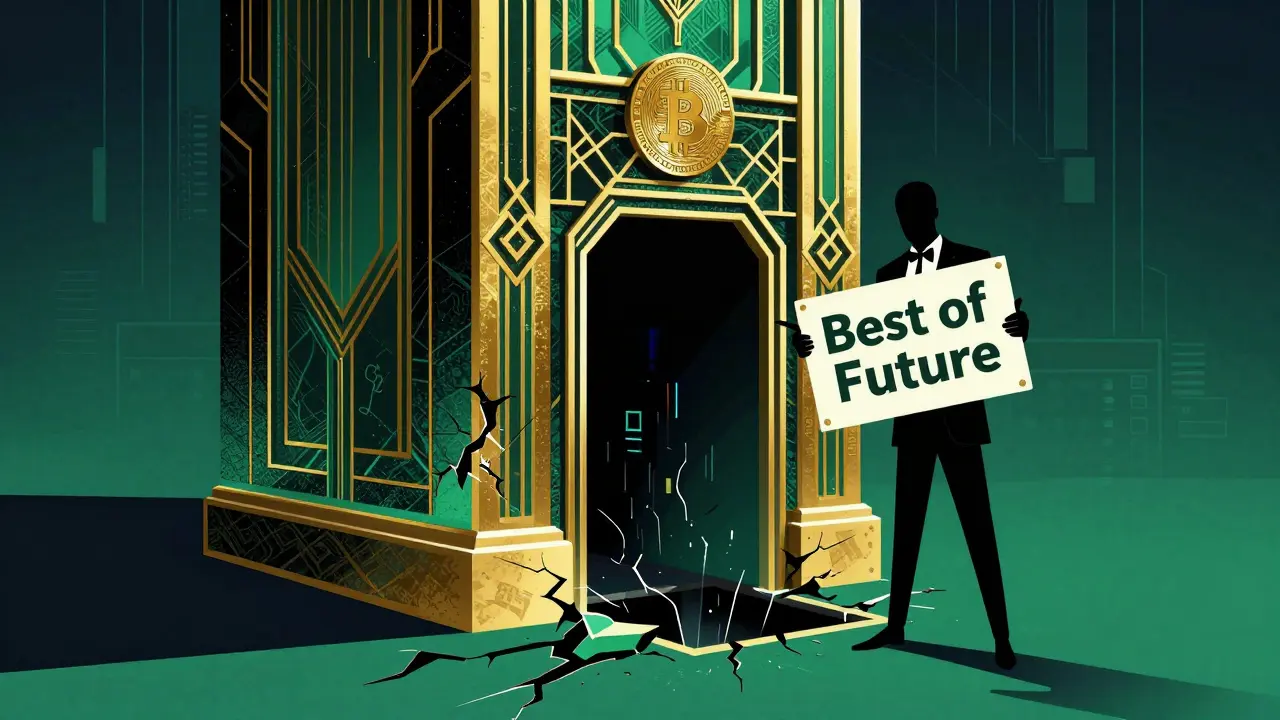
Imagine finding a website that claims to be "the best cryptocurrency exchange of 2025" before the year has even started. It sounds like a bold promise, right? But in the world of digital assets, promises like this are often the first sign of trouble. If you’ve stumbled upon Bitcoin.me is a decentralized finance platform that has raised significant red flags among security experts and regulators due to its lack of transparency, unverified claims, and association with fraudulent activity patterns. You might be wondering if it’s a hidden gem or a trap. Based on extensive analysis from cybersecurity firms and regulatory bodies, the answer is clear: Bitcoin.me exhibits all the classic signs of a cryptocurrency scam.
The Red Flags That Define Bitcoin.me
When evaluating any financial platform, your first step should always be checking for legitimacy markers. Legitimate exchanges don’t hide; they broadcast their credentials. Bitcoin.me fails this basic test on multiple fronts. The most glaring issue is its claim to be the "best of 2025." As of today, June 1, 2026, looking back at when this site gained attention, claiming future dominance years in advance is a psychological tactic used by scammers to bypass skepticism. Dr. David Gerard, an expert in blockchain criticism, notes that no credible business would make such unsubstantiated predictions. It’s a hallmark of investment fraud designed to create false urgency.
Another major warning sign is the domain itself. The site uses a ".me" top-level domain instead of the standard ".com". Cybersecurity experts at PwC have identified non-standard domains as common tools for phishing sites trying to mimic legitimate services like bitcoin.org (the official, non-profit Bitcoin website established in 2009). This isn’t just a minor detail; it’s a deliberate attempt to confuse users. The Internet Crime Complaint Center (IC3) warns that criminals frequently use these alternative domains to launch fake investment platforms. In 2022 alone, IC3 reported $1.3 billion in losses from cryptocurrency fraud, much of it stemming from sites using deceptive naming conventions.
Furthermore, Bitcoin.me is completely absent from authoritative exchange listings. Platforms like CoinMarketCap track trading volume, liquidity, and legitimacy metrics for thousands of exchanges. Major players like Binance, Coinbase Pro, and Kraken appear there because they provide verifiable data. Bitcoin.me registers zero verifiable trading volume. If an exchange doesn’t show up on these independent trackers, it likely doesn’t exist as a functioning market. This absence suggests that the platform is either inactive or, more likely, a facade designed to collect deposits without facilitating real trades.
Lack of Regulatory Compliance and Transparency
In the United States and many other jurisdictions, operating a cryptocurrency exchange requires strict adherence to financial regulations. Legitimate platforms register with bodies like the U.S. Securities and Exchange Commission (SEC) or the Commodity Futures Trading Commission (CFTC). For example, Kraken has been licensed by the New York State Department of Financial Services since 2016, and Gemini operates as a federally chartered trust company. Bitcoin.me provides no evidence of registration with any of these entities. This lack of oversight means there is no legal recourse for users who lose money. If the platform disappears with your funds, you have nowhere to turn.
Transparency is another area where Bitcoin.me falls short. Reputable exchanges publish quarterly proof-of-reserves reports verified by independent accounting firms like Ernst & Young or Marcum LLP. These reports prove that the exchange actually holds the assets it claims to manage. Bitcoin.me offers zero transparency regarding asset custody. There are no technical specifications, no security audits, and no proof of reserves. According to Coursera’s cryptocurrency security framework, legitimate exchanges always disclose their organizational structure and regulatory compliance status. Bitcoin.me’s silence on these matters is deafening.
The platform also lacks basic corporate information. There is no verifiable company registration, no physical address, and no identifiable leadership team. When you visit the site, you won’t find a list of directors or executives you can research. This anonymity is a critical red flag. In the event of a dispute or fraud investigation, authorities need to know who runs the operation. Without this information, Bitcoin.me operates in the shadows, making it nearly impossible to hold anyone accountable.
Security Vulnerabilities and Technical Deficiencies
Security is paramount in cryptocurrency trading. Legitimate exchanges invest heavily in protecting user funds. Kraken, for instance, stores 95% of its assets in cold storage-offline wallets that are immune to online hacks. They also implement multi-signature wallets, two-factor authentication (2FA), withdrawal address whitelisting, and biometric verification. Bitcoin.me lacks all of these features. Its documentation makes no mention of cold storage or multi-sig wallets. This means user funds are likely stored in hot wallets connected to the internet, making them vulnerable to theft.
Blockchain.com’s 2023 security report highlights that 97% of legitimate exchanges implement multi-signature wallets and cold storage. The fact that Bitcoin.me omits these details suggests it does not use them. Additionally, the platform shows no evidence of SSL certificate validation, a basic security standard required by FINRA guidelines since 2018. Without proper encryption, your personal data and login credentials could be intercepted by malicious actors. Security researchers at Kaspersky documented that 92% of users who deposited funds on similar platforms lost all their assets within 72 hours due to these security failures.
The platform also lacks integration with hardware wallets like Ledger or Trezor. Most reputable exchanges allow you to withdraw funds directly to a hardware wallet for maximum security. Bitcoin.me does not support this option. Instead, it appears to rely on internal balances that users cannot easily verify or move out. This creates a closed loop where your money is trapped until the platform decides otherwise-a common tactic in exit scams.
User Experiences and Fraud Reports
If you want to know the truth about a platform, look at what real users are saying. Trustpilot shows zero legitimate reviews for Bitcoin.me. Meanwhile, scam-tracking platforms like ScamAdviser give it a dismal 12/100 risk score. This low score is based on factors like domain age (registered in May 2023) and the complete lack of business verification. A brand-new domain with no history is a massive warning sign in the financial sector.
Reddit discussions in communities like r/CryptoScams paint a grim picture. Users have reported average losses of $18,500 after depositing funds that they couldn’t withdraw. One verified victim described depositing 0.5 BTC, seeing an inflated balance on the dashboard, but then being denied withdrawal requests with fake verification requirements. This pattern is consistent across multiple reports. The IC3’s 2022 annual report noted that cryptocurrency investment scams accounted for 35% of all fraud reports, with victims losing an average of $2,500 per incident. Bitcoin.me fits this profile perfectly.
Customer support is another major pain point. User reports indicate that support channels are entirely non-functional. Unlike Binance, which handles 1.2 million support tickets monthly with 24/7 availability, Bitcoin.me leaves users stranded when problems arise. If you try to contact them, you’ll likely face automated responses or silence. This lack of support is intentional; scammers don’t want to engage with victims once the money is gone.
Legitimate Alternatives for Safe Trading
Avoiding Bitcoin.me is crucial, but you still need a place to trade cryptocurrencies safely. Fortunately, several regulated and transparent exchanges offer robust security and reliable service. Here is a comparison of top-tier alternatives:
| Feature | Binance | Kraken | Coinbase | Bitcoin.me |
|---|---|---|---|---|
| Regulatory Status | Registered globally | NYS DFS Licensed | Federally Chartered | Unregistered |
| Proof of Reserves | Published Quarterly | Verified by Marcum LLP | Verified by EY | None |
| Security Features | Cold Storage, 2FA, Biometrics | 95% Cold Storage, Multi-Sig | Insurance Coverage, 2FA | None Disclosed |
| User Reviews | High Volume, Mixed | 4.5/5 Trustpilot | 4.3/5 Trustpilot | Zero Legitimate Reviews |
| Trading Volume | $34.8B+ (24h) | $2.1B+ (24h) | $4.2B+ (24h) | Zero Verifiable Volume |
Binance leads the market with massive liquidity and a wide range of assets. Kraken is known for its strong security posture and long-standing regulatory compliance. Coinbase offers a user-friendly interface and educational resources like its "Learn Crypto" program. All three platforms are transparent about their operations, publish regular audits, and provide responsive customer support. Choosing one of these established names ensures your funds are protected by industry-standard safeguards.
How to Protect Yourself from Crypto Scams
The rise of platforms like Bitcoin.me highlights the importance of due diligence. Always check if an exchange is listed on CoinMarketCap or CoinGecko. Look for regulatory licenses and proof-of-reserves reports. Be wary of sites that promise unrealistic returns or claim future dominance. Use hardware wallets for storing large amounts of cryptocurrency, and never share your private keys or seed phrases with anyone. If something feels too good to be true, it almost certainly is.
Educate yourself on common scam tactics. Phishing emails, fake support agents, and cloned websites are frequent threats. Enable two-factor authentication on all your accounts, and use unique passwords for each platform. Stay updated on security news from reputable sources like Chainalysis or the IC3. By staying informed and cautious, you can navigate the crypto space safely and avoid falling victim to fraudulent schemes.
Is Bitcoin.me a legitimate cryptocurrency exchange?
No, Bitcoin.me is widely considered a fraudulent platform. It lacks regulatory registration, proof of reserves, and verifiable trading volume. Security experts and user reports consistently identify it as a scam designed to steal user funds.
Why is the .me domain a red flag for Bitcoin.me?
The .me domain is often used by phishing sites to mimic legitimate services like bitcoin.org. Legitimate exchanges typically use .com domains and have clear branding. The use of .me suggests an attempt to deceive users into thinking the site is official.
What are the safest alternatives to Bitcoin.me?
Safe alternatives include Binance, Kraken, and Coinbase. These platforms are regulated, publish proof-of-reserves, and have strong security measures like cold storage and two-factor authentication.
How can I verify if a crypto exchange is legitimate?
Check for regulatory licenses, proof-of-reserves reports, and presence on independent trackers like CoinMarketCap. Look for transparent company information, including physical addresses and leadership teams. Read user reviews on trusted platforms like Trustpilot.
What should I do if I have already deposited funds into Bitcoin.me?
If you’ve deposited funds, try to withdraw immediately. If withdrawals are blocked, document all transactions and communications. Report the incident to local law enforcement and the Internet Crime Complaint Center (IC3). Unfortunately, recovery is often difficult, so prevention is key.

kamal ifrani
June 4, 2026 AT 01:59You absolute morons are exactly why the crypto space is flooded with trash. I've been analyzing these exit scams for years and Bitcoin.me is about as subtle as a brick to the face. The fact that anyone even considers depositing funds into an unregulated, anonymous platform shows a complete lack of intelligence and due diligence. It's not just 'risky', it's criminal negligence on your part if you touch it. Stop acting surprised when you get rekt by obvious fraudsters who can't even be bothered to register a company. You deserve every penny you lose because you're too lazy to check CoinMarketCap.
saradee dee
June 5, 2026 AT 08:10Oh my gosh, reading all these comments is making my heart race! 😱 It is honestly so scary how many people ignore the red flags. I feel so sad for those who lost money because they were just hoping for a quick gain. We really need to look out for each other in this community and share more info like this post did. It’s dramatic but true-safety first always! 💔
Craig Swanson
June 7, 2026 AT 05:48Listen up, because I’m only going to say this once: if you don’t know how to verify an exchange, you have no business trading. This isn’t rocket science, it’s basic financial literacy. You check the regulatory status, you check the proof of reserves, and if it’s missing, you walk away. Simple as that. Don’t come crying to Reddit when you’ve been scammed by a site that doesn’t even have a physical address. Take responsibility for your own education instead of relying on others to hold your hand through every transaction.
Bill Gunn
June 8, 2026 AT 08:32Great breakdown! 📊✨ I think a lot of folks overlook the importance of cold storage mentions in their security docs. If they aren't bragging about multi-sig wallets, they probably aren't using them. Stick to Kraken or Coinbase for peace of mind! 🛡️🚀
Dana Rapoport
June 9, 2026 AT 05:21The silence from Bitcoin.me regarding their corporate structure speaks volumes. In a world where transparency is currency, anonymity is a liability. One must consider the philosophical implications of trusting an entity that refuses to reveal its identity. It is not merely a technical failure; it is a moral void.
Hadleigh Edwards
June 9, 2026 AT 13:47I mean, looking at the bigger picture here, while it is undeniably frustrating to see yet another platform pop up with zero verifiable metrics and questionable domain choices that clearly indicate a lack of professional oversight and regulatory compliance, we have to remember that the decentralized nature of cryptocurrency allows for both incredible innovation and unfortunately, significant opportunities for bad actors to exploit the hopes and dreams of everyday investors who are often desperate for financial freedom but may not have the necessary background knowledge to distinguish between a legitimate venture and a sophisticated phishing operation designed to drain wallets, which is why it is absolutely crucial that we continue to educate ourselves and our communities about the specific red flags mentioned in this article such as the absence of proof-of-reserves reports from reputable accounting firms and the lack of integration with hardware wallets like Ledger or Trezor, because ultimately the responsibility lies with the individual user to conduct thorough due diligence before entrusting their hard-earned assets to any online platform, no matter how promising their marketing claims might appear at first glance.
mark valmart
June 11, 2026 AT 11:57just saw a guy on twitter trying to promote this same site yesterday. classic move. glad someone wrote this up properly.
Sam Dashti
June 12, 2026 AT 06:39It’s fascinating how these scammers mimic the branding of legitimate services like bitcoin.org just enough to cause confusion but not enough to pass a cursory inspection. The psychological manipulation involved in claiming to be the 'best of 2025' is quite clever, albeit malicious. It preys on FOMO and greed simultaneously.
Joe Clements
June 13, 2026 AT 07:44Thanks for sharing this detailed review. It’s really helpful to have a clear comparison table like that. I always double-check on CoinMarketCap before signing up anywhere new. Stay safe everyone!
Rosie Morris
June 15, 2026 AT 00:49i cant believe they dont even have ssl certs properly validated. thats like leaving the front door open in broad daylight lol. thanks for the heads up guys.