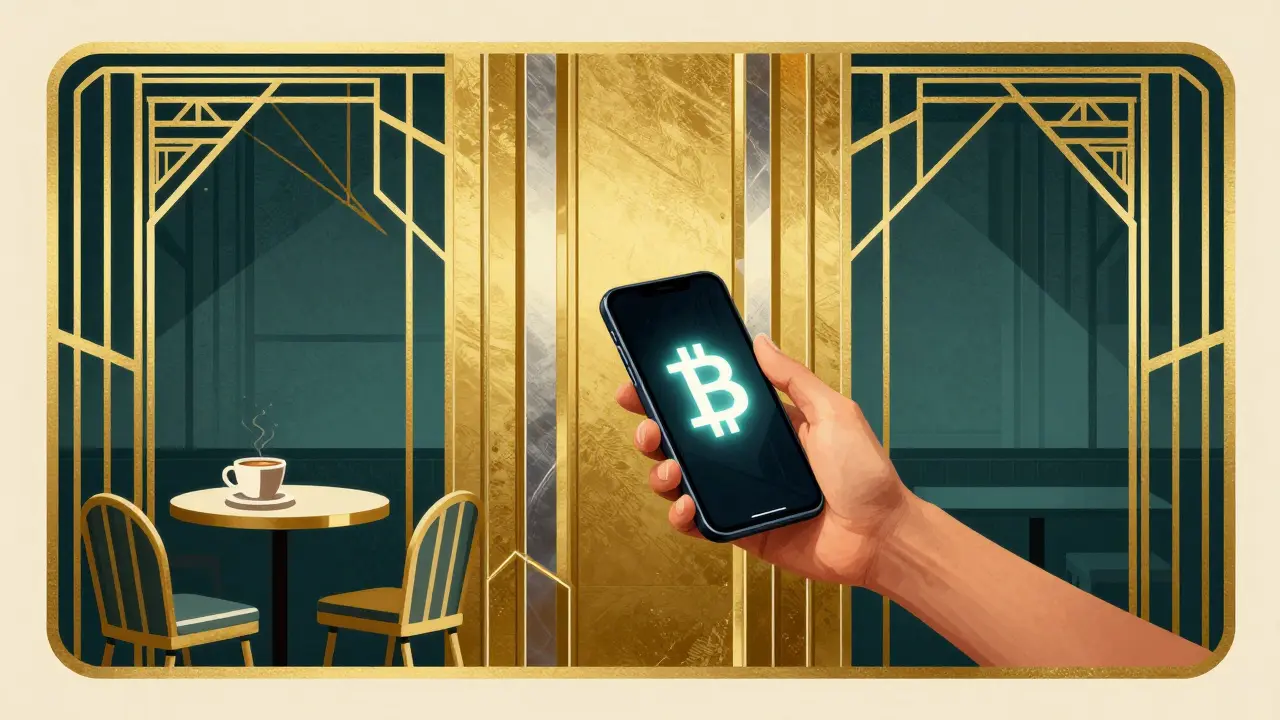
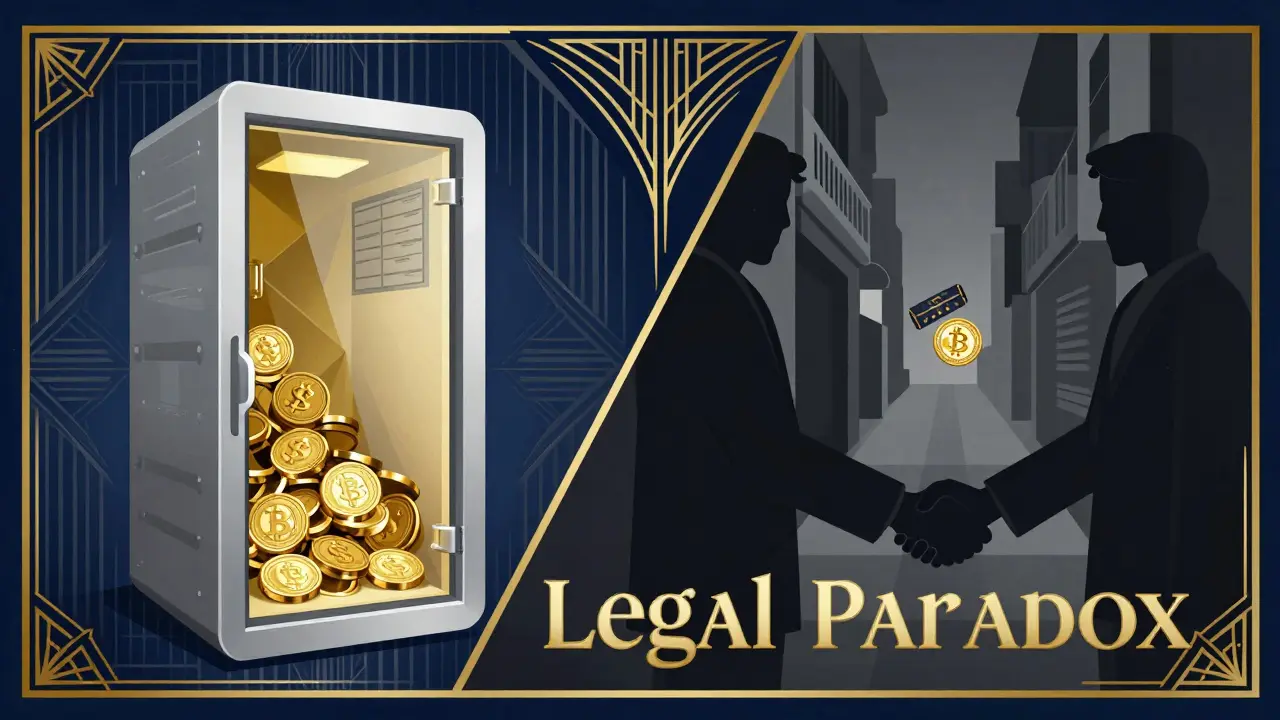
Imagine waking up in Quito and wanting to pay for your morning coffee with Bitcoin. In most developed crypto hubs, that's a quick scan of a QR code. In Ecuador, however, you'll hit a wall. While the government won't throw you in jail for owning digital assets, they've made it clear: underground crypto market in Ecuador is a byproduct of a strange legal paradox where trading is legal, but spending is not.
For years, the Ecuadorian government played a game of regulatory cat-and-mouse. At one point, there was a blanket ban on non-state cryptocurrencies because officials wanted to launch their own national digital currency. That project vanished, but the restrictions stayed. Today, we live in a grey zone. You can buy, sell, and hoard as much Bitcoin as you want, but the moment you try to use it as legal tender for a car or a bag of groceries, you're stepping outside the law.
The Legal Paradox: Trading vs. Spending
To understand why an "underground" sentiment exists, you have to look at the distinction between trading and tender. In Ecuador, the US Dollar is the official currency. The government views cryptocurrencies as assets-like gold or stocks-rather than money. This means if you use an exchange to turn USD into Ethereum, you are perfectly fine. But if a local business accepts crypto as a direct payment for services, they are technically bypassing the legal tender laws.
This gap creates a natural incentive for "under-the-table" transactions. When the law says you can't use a tool for its primary purpose (buying things), people naturally move those transactions into private circles. It's not necessarily a dark-web operation, but rather a network of individuals agreeing to swap digital value for real-world goods without a formal invoice in USD.
How P2P Trading Fills the Gap
Because traditional banks can be prickly about crypto transfers, many Ecuadorians lean heavily on peer-to-peer (P2P) networks. P2P trading is the heartbeat of the local market. Instead of relying on a centralized corporate entity to handle the swap, users deal directly with each other.
Binance P2P is a massive player here. It allows users to buy USDT (Tether) using local bank transfers. For example, a user might spend about $50.80 to get 50 USDT, with a small commission covering the risk. To stop fraud, these platforms often require that the bank account name matches the registered account name exactly. This prevents "triangulation fraud," where a scammer uses a third party's account to hide their tracks.
Another popular route is LocalCoinSwap, which is favored by those who want more flexibility. With over 300 payment methods, it caters to the crowd that doesn't want to rely solely on the big-name exchanges. This flexibility is exactly what keeps the market liquid even when the government remains cautious.
| Platform | Primary Use Case | Payment Methods | Regulatory Focus |
|---|---|---|---|
| Binance P2P | High-volume USDT trading | Bank Transfers | Strict KYC/AML |
| LocalCoinSwap | Flexible, diverse swaps | 300+ options | Peer-to-Peer Trust |
| CEX.IO | All-in-one exchange | Cards, Bank transfers | Institutional Compliance |
| Bit2Me | Education & Easy buying | Credit/Debit cards | EU-Standard Security |
The Compliance Hurdle: KYC and AML
If you're operating legally, you can't avoid the paperwork. Legal exchanges in Ecuador must follow AML (Anti-Money Laundering) and KYC (Know Your Customer) protocols. This means providing your ID, proof of address, and sometimes explaining where your funds came from. For many, this is the primary reason they seek "underground" or non-custodial alternatives.
The tension here is between privacy and legality. A user who values their financial privacy might avoid Gemini or Bybit, despite their security certifications like ISO 27001. They would rather use a decentralized wallet or a P2P swap where the identity verification is less intrusive. This preference for privacy is often mistaken for illegal activity, but in reality, it's just a cultural pushback against total financial surveillance.
Risks of the Unregulated Path
When you step away from the regulated exchanges, you lose the safety net. In a legal exchange, if your account is hacked, you have a customer support team and cold storage systems to protect your assets. In the "underground" or informal P2P market, your only protection is the escrow service of the platform or the honesty of the person you're meeting.
Common pitfalls in the informal Ecuadorian market include:
- Triangulation Scams: Where a middleman tricks both the buyer and seller into sending funds to a third, fraudulent account.
- Price Slippage: Informal traders often charge a premium over the market rate, especially during periods of high volatility.
- Account Freezes: Banks may flag multiple, frequent transfers to unknown individuals as suspicious activity, leading to frozen accounts.
Building a Sustainable Strategy
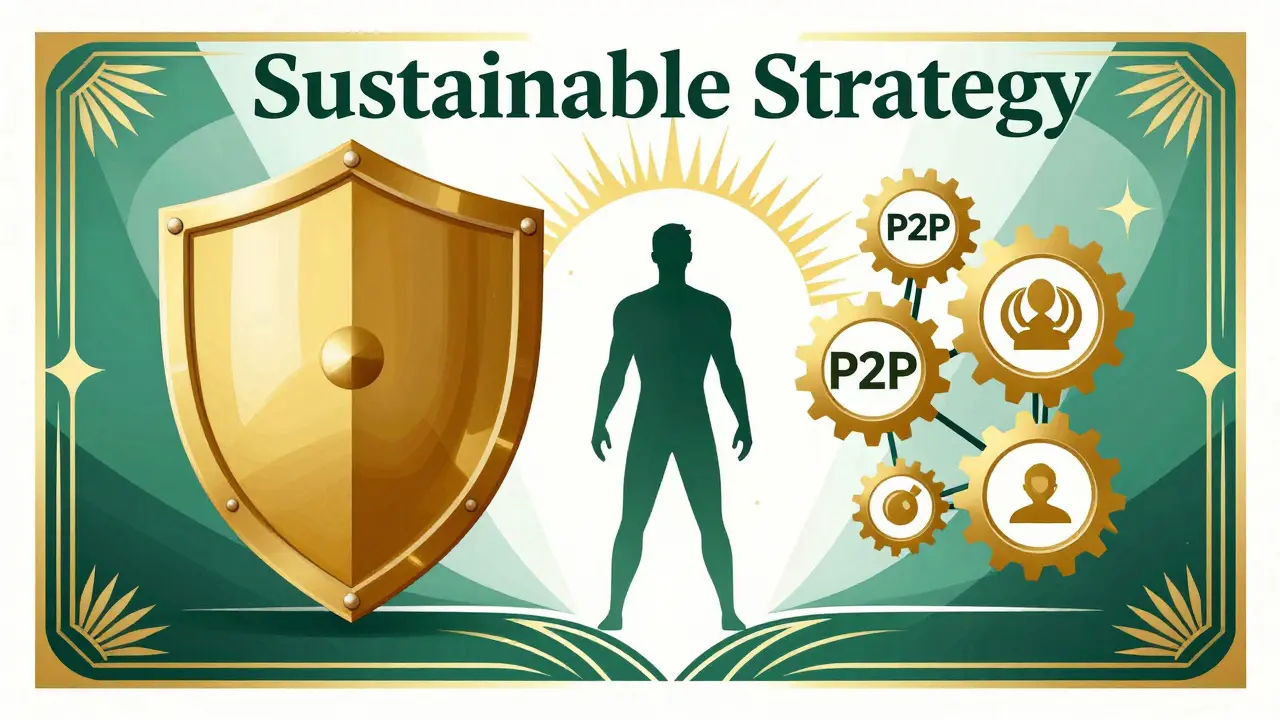
For those looking to enter the market without attracting unwanted attention from tax authorities or banks, the best move is a hybrid approach. Use a regulated exchange like CEX.IO for the bulk of your holdings to ensure security and legal compliance. Then, use P2P platforms for smaller, more frequent liquidity needs.
If you're new to this, don't just jump into a trade. Use educational tools like the Bit2Me Academy to understand how blockchain actually works. Knowing the difference between a spot wallet (where you trade) and a funding wallet (where P2P funds arrive) can save you from a lot of frustration and potential loss of funds.
Is it illegal to own Bitcoin in Ecuador?
No, it is not illegal to buy, sell, or own Bitcoin and other cryptocurrencies in Ecuador. The government has clarified that trading digital assets is legal; however, they are not recognized as legal tender, meaning you cannot legally use them as the primary payment method for commercial goods and services.
How do people typically buy crypto in Ecuador?
Most users utilize a mix of centralized exchanges (CEX) and P2P platforms. Binance P2P is widely used for swapping USD for USDT via bank transfers, while platforms like LocalCoinSwap are used for those seeking a wider variety of payment options.
What are the risks of P2P trading in Ecuador?
The biggest risks include triangulation fraud and bank account freezes. To mitigate this, it is crucial to use platforms with escrow services and ensure that you are sending and receiving funds from accounts that match the registered user's name.
Can I use crypto to buy a house or car in Ecuador?
Legally, no. Since cryptocurrencies are not legal tender, such a transaction would technically be an informal exchange of assets. While people do it privately, it lacks the legal protections and official recognition of a USD-based contract.
Which exchanges are most reliable for Ecuadorians?
CEX.IO is often cited as a top all-in-one choice. Gemini is excellent for those needing multiple fiat currency options, and Bit2Me is highly regarded for its ease of entry via debit/credit cards and its educational resources.
Next Steps for Different Users
For the Beginner: Start with a regulated platform like Bit2Me. Focus on learning the basics before putting in large sums of money. Set up two-factor authentication (2FA) immediately.
For the Regular Trader: Integrate Binance P2P for liquidity but keep your long-term assets in cold storage or a high-security exchange like Gemini to avoid the volatility and risk of P2P-only setups.
For the Privacy-Focused: Explore non-custodial wallets. While you will still need a way to move fiat currency into crypto, keeping your private keys gives you the autonomy the current Ecuadorian legal system doesn't fully provide.

debashish sahu
April 20, 2026 AT 12:36It is quite fascinating to see how different countries handle the transition to digital assets. In India, we have seen a similar struggle with regulatory bodies trying to balance innovation with financial stability. The P2P movement usually thrives wherever the central authority is too slow to adapt.
Miranda Jamieson
April 21, 2026 AT 11:21Imagine thinking P2P is a 'strategy'. It's literally just gambling with your money in a digital alleyway. If you're actually trying to build wealth and not just play pretend with Tether, you'd stick to regulated markets and stop acting like a rebel for using an app. Absolute amateur hour.
Doc Coyle
April 22, 2026 AT 09:04Most people just don't get that laws exist for a reason. Using crypto to buy things under the table is just wrong. It's not a 'grey area', it's avoiding the rules that keep a society stable. We should just follow the USD laws and stop trying to find shortcuts.
Jason M
April 22, 2026 AT 10:58Listen up everyone! This is an absolute goldmine of a topic! For those of you feeling overwhelmed by the legal jargon, just remember that the core of crypto is empowerment! Start small, use those educational tools mentioned, and for the love of everything, GET YOUR KEYS OFF THE EXCHANGE! Your financial future is literally in your hands, so grab it with both fists and don't let go!
Keith Garcia
April 23, 2026 AT 02:05The sheer audacity of attempting to legitimize this 'underground' charade is almost poetic 🎭. One finds the reliance on P2P networks not as a 'heartbeat', but as a desperate gasp for air in a vacuum of actual financial literacy. It's a quaint little dance of deception, really, where the participants imagine themselves as pioneers while merely dodging the inevitable gaze of the taxman. Truly a marvelous spectacle of cognitive dissonance 💸✨.
Ellie Drews
April 23, 2026 AT 09:01I think it's really brave that people are finding ways to maintain their financial autonomy despite the confusing laws. It's all about finding a balance that works for your specific situation.
Kyle Bush
April 24, 2026 AT 01:50WHO CARES ABOUT ECUADOR?! 🇺🇸 USA all the way! We have the real markets! 🦅 This 'grey area' stuff is just a joke compared to how we do things stateside! Get a real currency or get out of the way! 🚀💥🔥
Eric Raines
April 24, 2026 AT 01:57Everyone is talking about P2P but nobody mentions the actual stress of a bank freeze. I once had my account locked for three weeks just because I moved a few hundred bucks to a friend for some USDT and it was the most draining experience of my life. You guys act like it's a game but the anxiety is real when you can't pay your rent because some bot flagged your transfer.
Paige Raulerson
April 24, 2026 AT 22:45I find the obsession with 'privacy' here so dreadfully middle-class. As if moving small amounts of Tether in Quito is somehow a revolutionary act of defiance against surveillance. It's honestly a bit tedious to watch people pretend they're in a techno-thriller when they're just using a basic app. But whatever, do what you want, I'm barely paying attention anyway.
Charlie Queen
April 26, 2026 AT 14:14It's so cool to see how different cultures adapt technology to fit their needs! 🌍 Love seeing the P2P spirit alive and well! Cheers to everyone finding their way through the legal maze! 🥂✨
Findlay Duncan Lyon
April 27, 2026 AT 07:52Spot on analysis. Very clear.
Guy Bianco
April 28, 2026 AT 23:30I would strongly suggest that newcomers prioritize the security of their seed phrases. It is the only way to truly ensure that your assets remain your own in an unstable regulatory environment. Please be cautious with your private keys. 🛡️